Learning objectives
- Definition of a nephrectomy
- Management of a nephrectomy
Definition and mechanisms
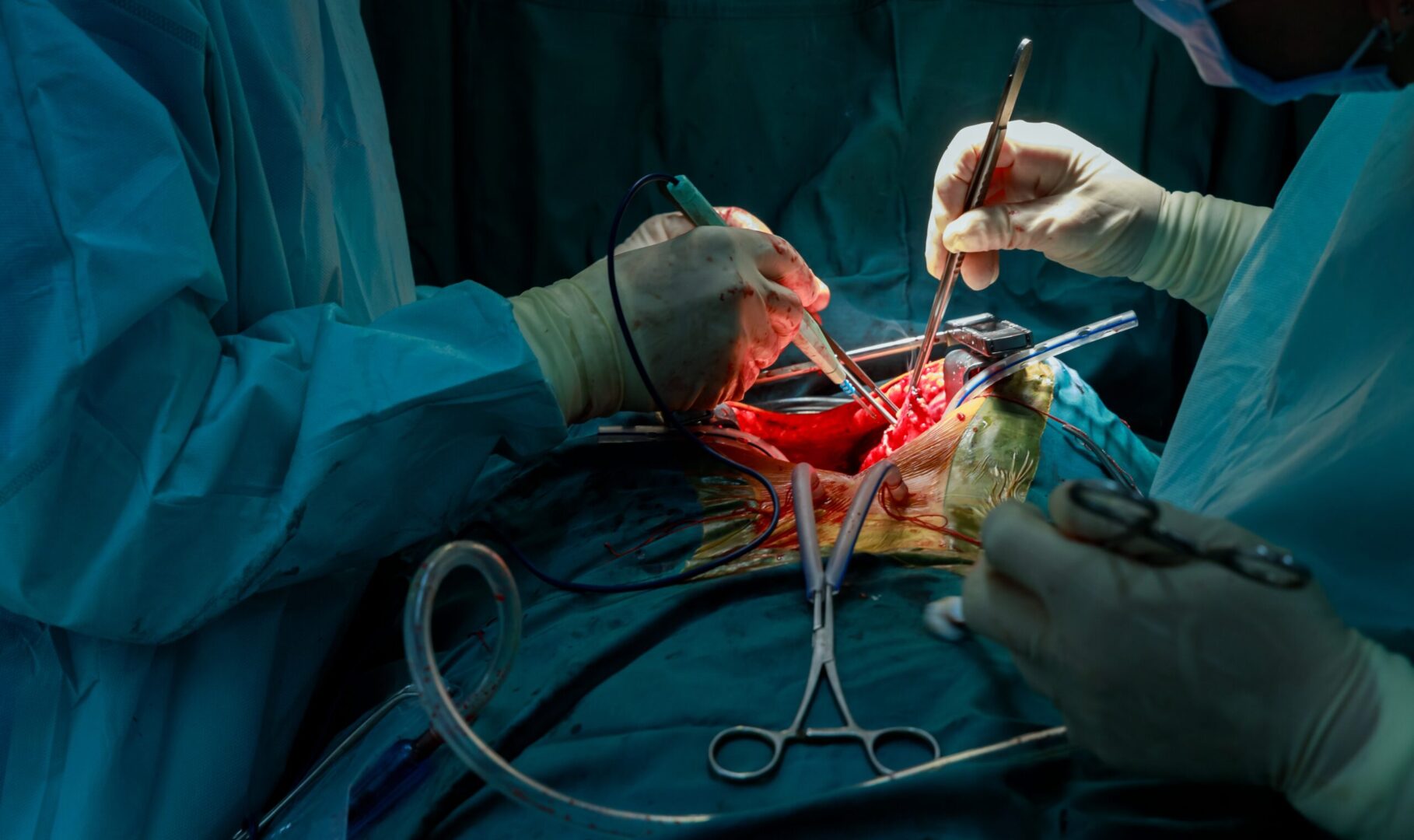
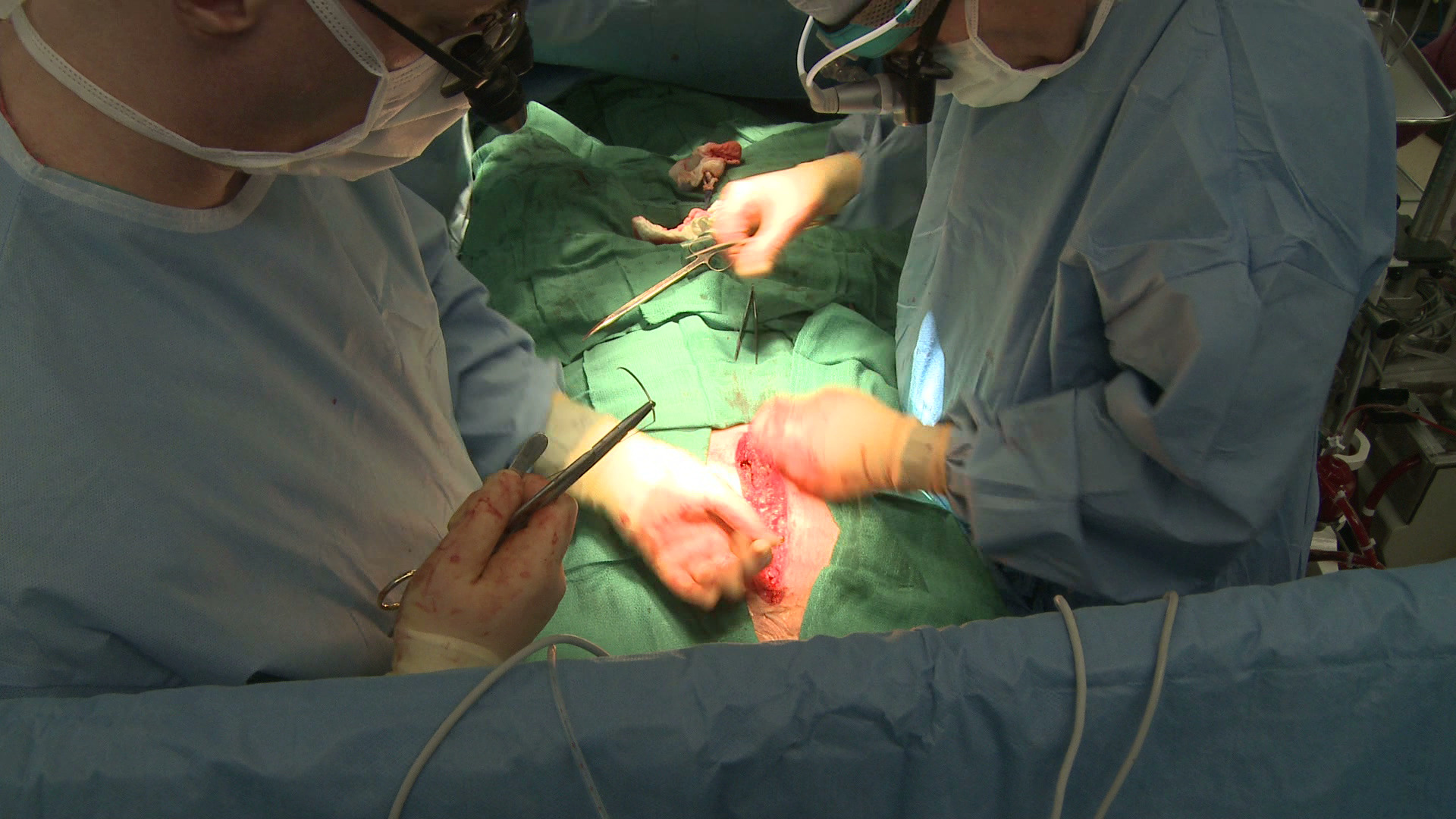
- A nephrectomy involves the removal of a kidney with or without part of the ureter and may be open, laparoscopic or robot-assisted
- Often performed in the treatment of renal cell carcinoma but may also be performed for hydronephrosis, trauma, shrunken kidney, hypertension, or chronic infection
- Nephrectomy is also performed to remove a healthy kidney from a donor (either living or deceased) for transplantation
- In partial nephrectomy or kidney-sparing (nephron-sparing) surgery, only the diseased or injured portion of the kidney is removed
- Radical (complete) nephrectomy involves removing the entire kidney, part of the ureter, the renal fascia, the adrenal gland, and regional lymph nodes are removed
- The open operation is carried out via a dorsal, anterior subcostal, flank, midline, or thoracoabdominal incision
- The laparoscopic approach is associated with less pain and quicker recovery times and may be performed transperitoneal or retro-peritoneal
Complications
- Hemorrhage
- Urinary fistula
- Urethral obstruction
- Infection
- Pneumothorax
- Post-operative pneumonia
- Vascular injury
- Splenic injury
- Bowel injury
- Acute renal failure
- Bowel obstruction
- Peritonitis
- Deep venous thrombosis and pulmonary embolism
- Chronic renal failure
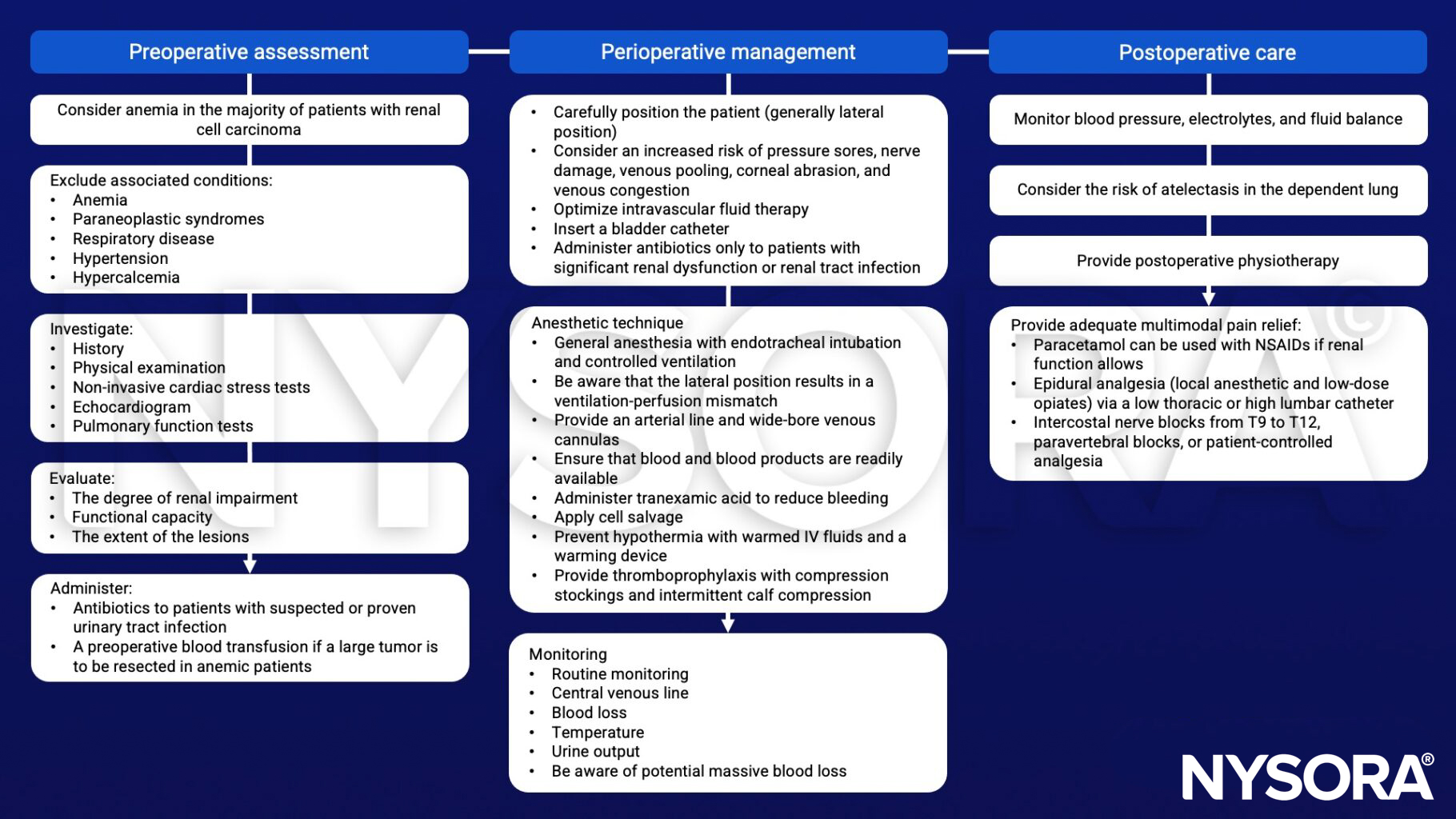
Management
Suggested reading
- Pollard BJ, Kitchen, G. Handbook of Clinical Anaesthesia. Fourth Edition. CRC Press. 2018. 978-1-4987-6289-2.
- Chapman, E., Pichel, A., 2016. Anaesthesia for nephrectomy. BJA Education 16, 98–101.
Clinical updates
Kong et al. (British Journal of Anaesthesia, 2025) report in a large randomised, double-blind trial that perioperative dexmedetomidine (loading 0.6 µg kg⁻¹, infusion 0.4 µg kg⁻¹ h⁻¹ intraoperatively plus postoperative PCIA) did not reduce acute kidney injury after partial nephrectomy compared with placebo (AKI 22% vs 23%), nor improve cystatin C, serum creatinine, or eGFR at 6 months. Although dexmedetomidine modestly reduced postoperative pain scores, there was no renal protective benefit across any subgroup, suggesting it should not be used specifically to prevent AKI in partial nephrectomy.