All Events - NYSORA

NYSORA Educational Events

World-Class Education
for Modern Anesthesia Practice

Join world-renowned faculty for hands-on workshops, conferences, and masterclasses in regional anesthesia, pain medicine, POCUS, and perioperative care. Gain practical skills you can apply in clinical practice immediately.

300+

Events

100+

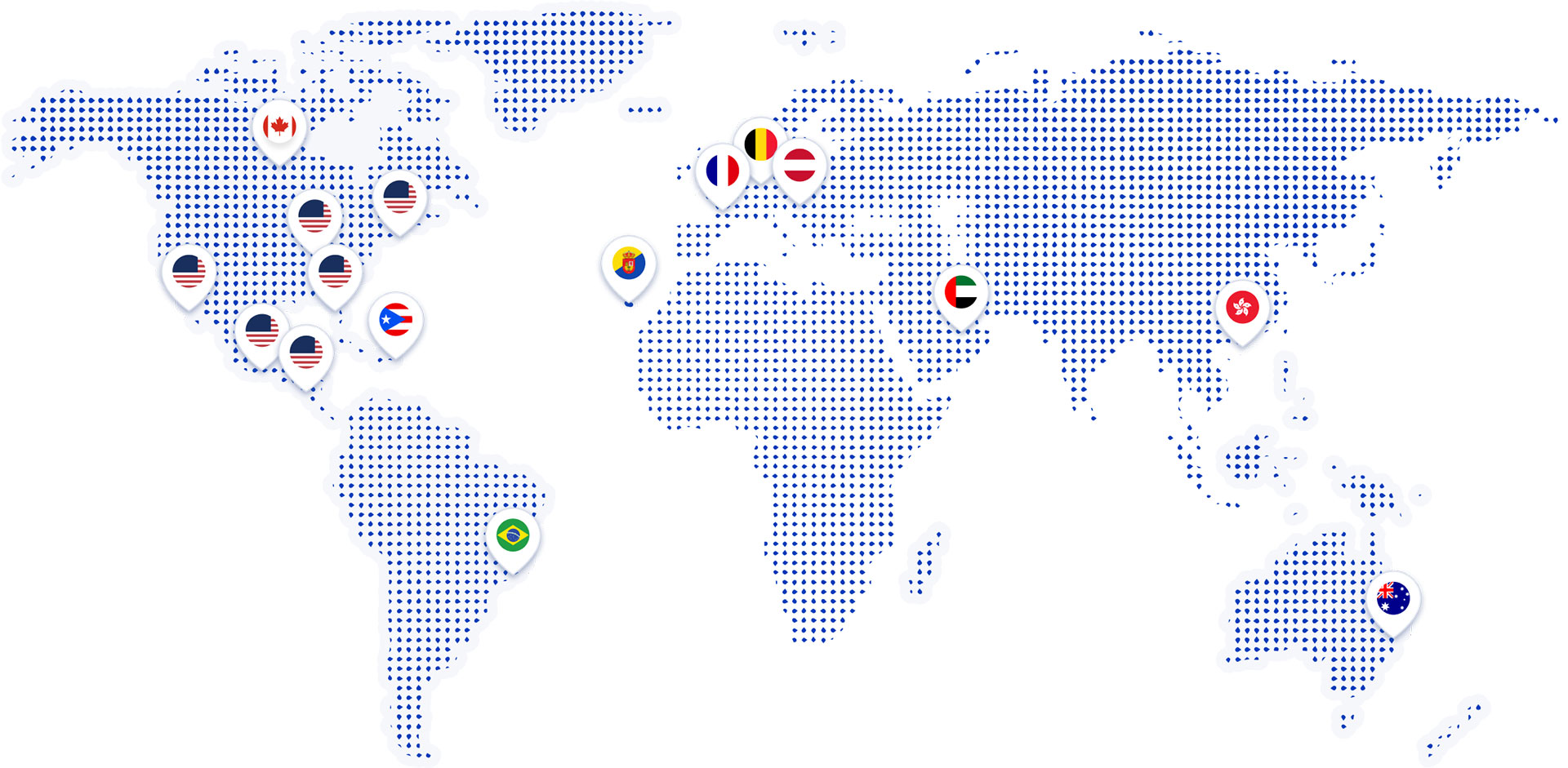
Countries

350+

Speakers

Upcoming Events

Ready to join your peers? Browse our upcoming events, find your perfect fit, and secure your place among leading experts.

June 25, 2026 Boot Camps

Regional Anesthesia Boot Camp

Genk, Belgium

09:00 AM

Register
July 11, 2026 Workshops

Point Of Care Ultrasound (POCUS) Workshop

Toronto, Canada

09:00 AM

Register
July 23, 2026 Boot Camps

Regional Anesthesia Boot Camp

Genk, Belgium

09:00 AM

Register
October 1, 2026 Boot Camps

Regional Anesthesia Boot Camp

Genk, Belgium

09:00 AM

Register
View All Upcoming Events

Discover our Anesthesia and Pain Medicine Events

Find medical programs that support the ongoing growth of healthcare professionals. From intensive boot camps to dynamic conferences and hands-on workshops, there’s something here for every stage of your professional journey.

Conferences

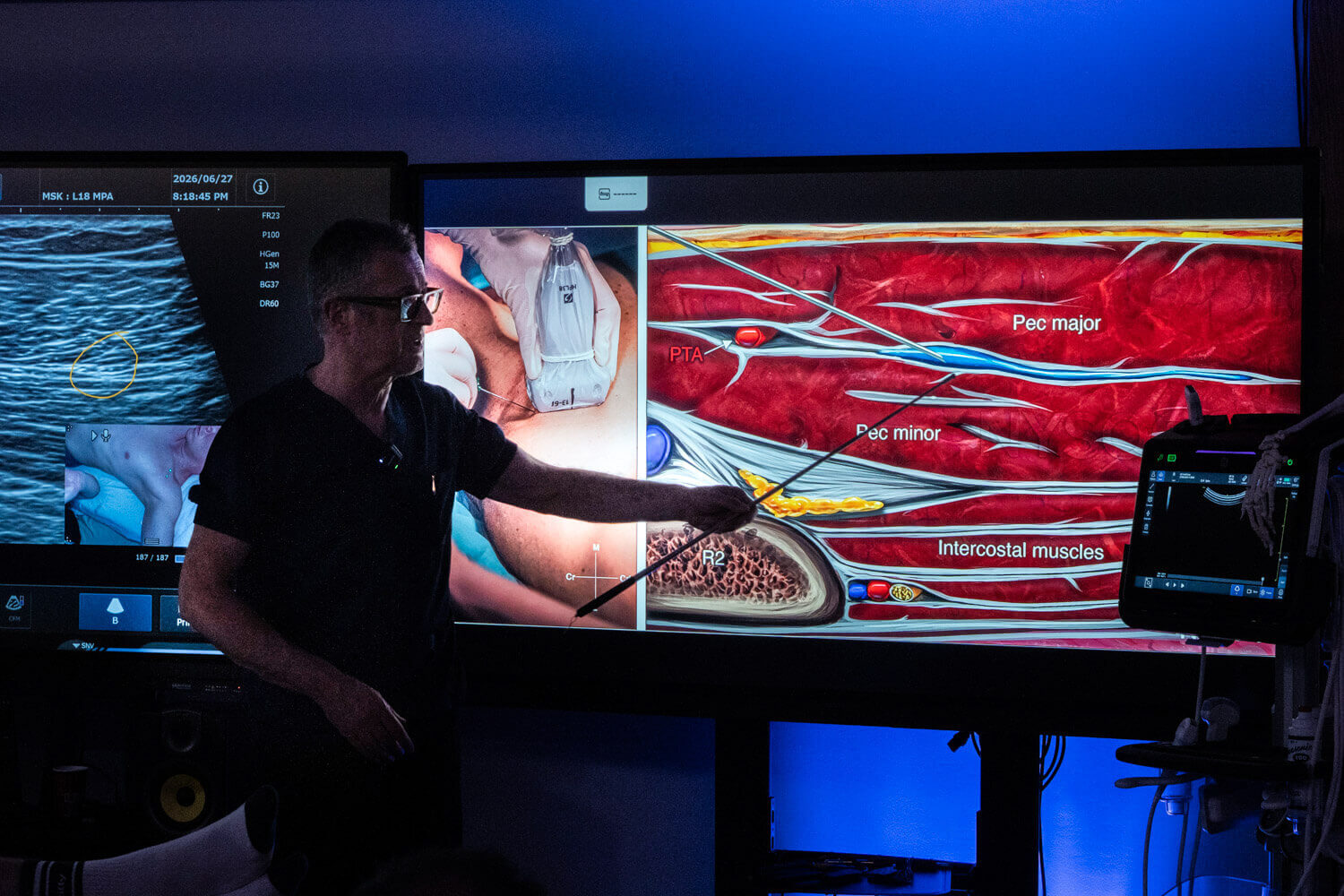
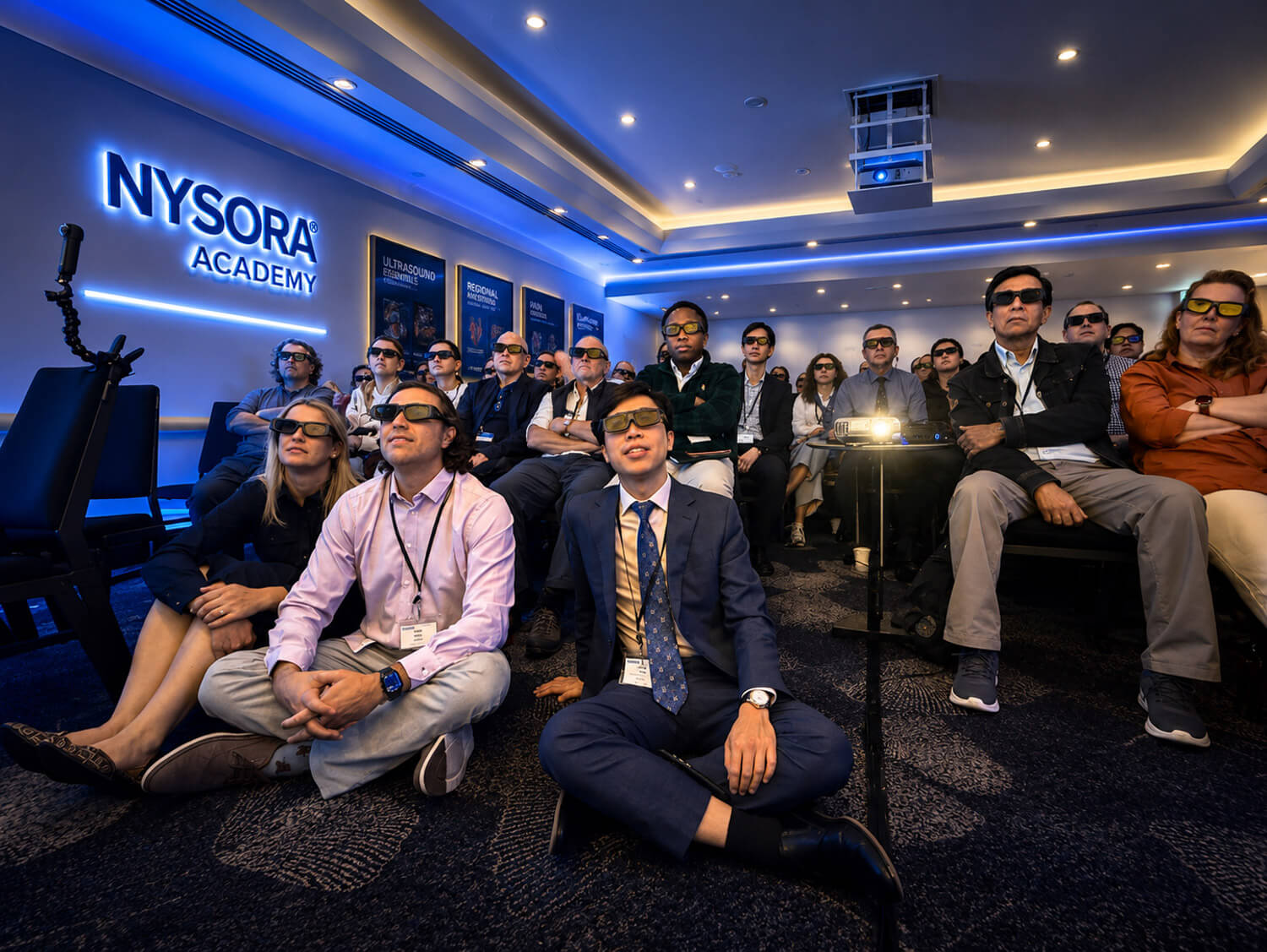
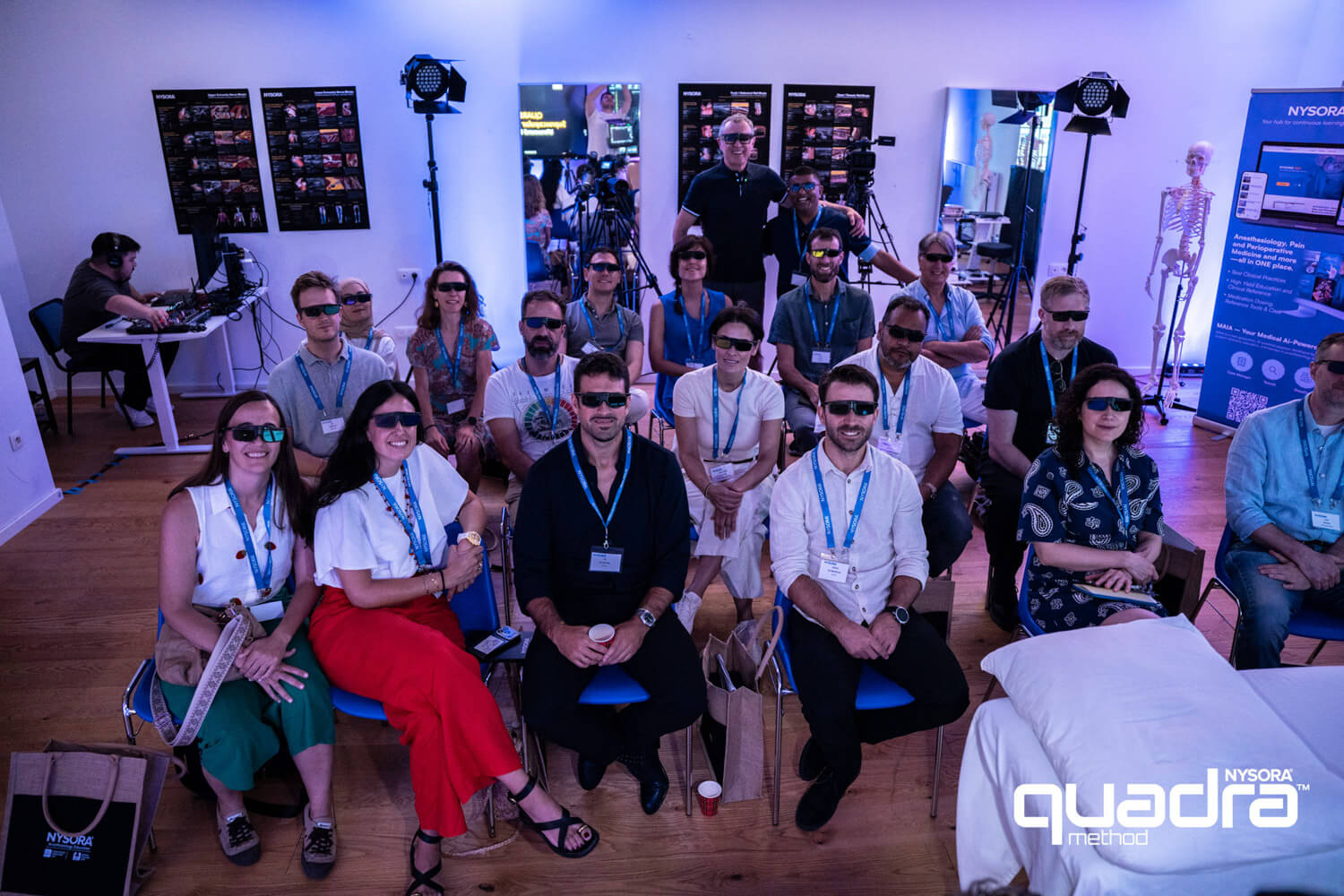
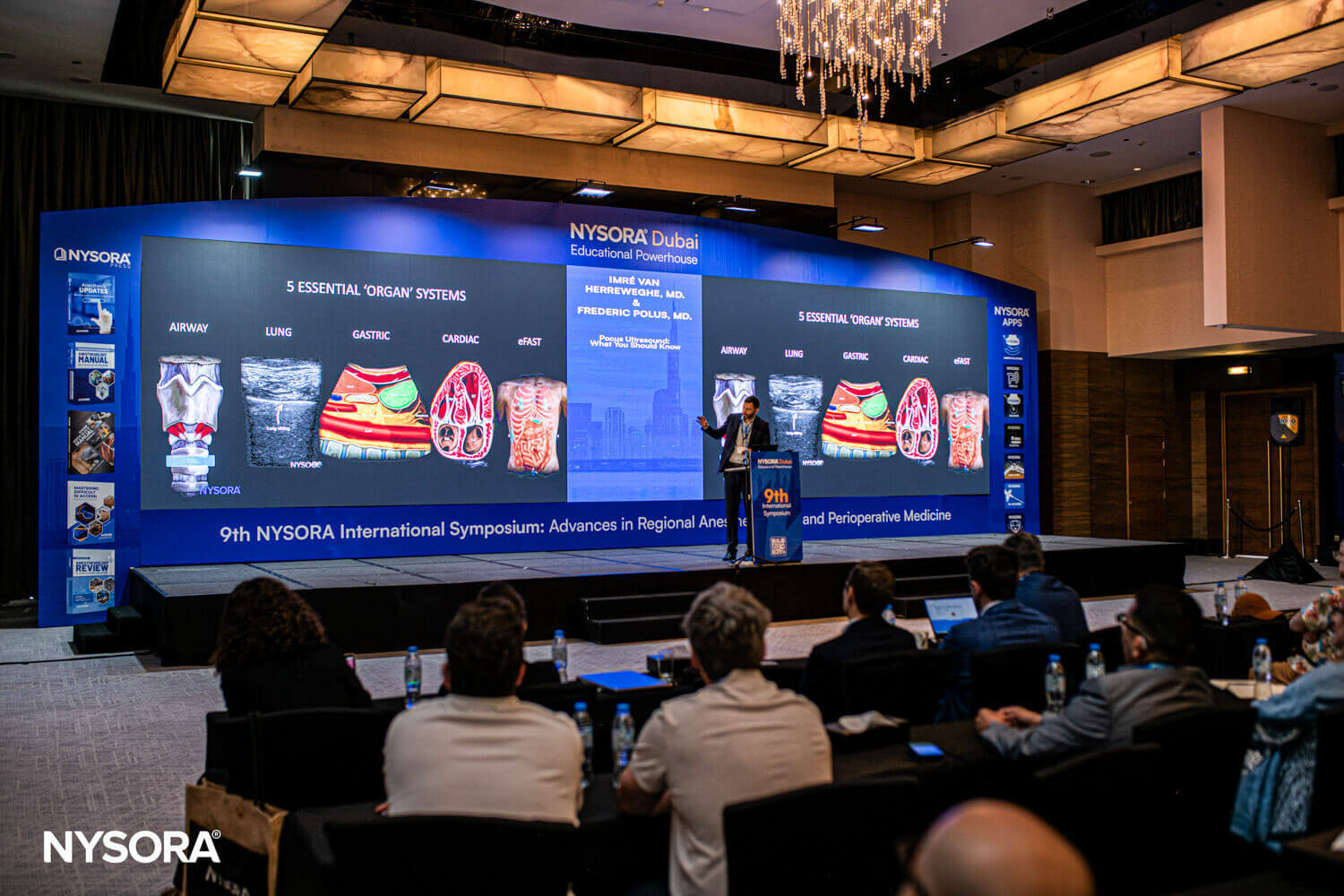
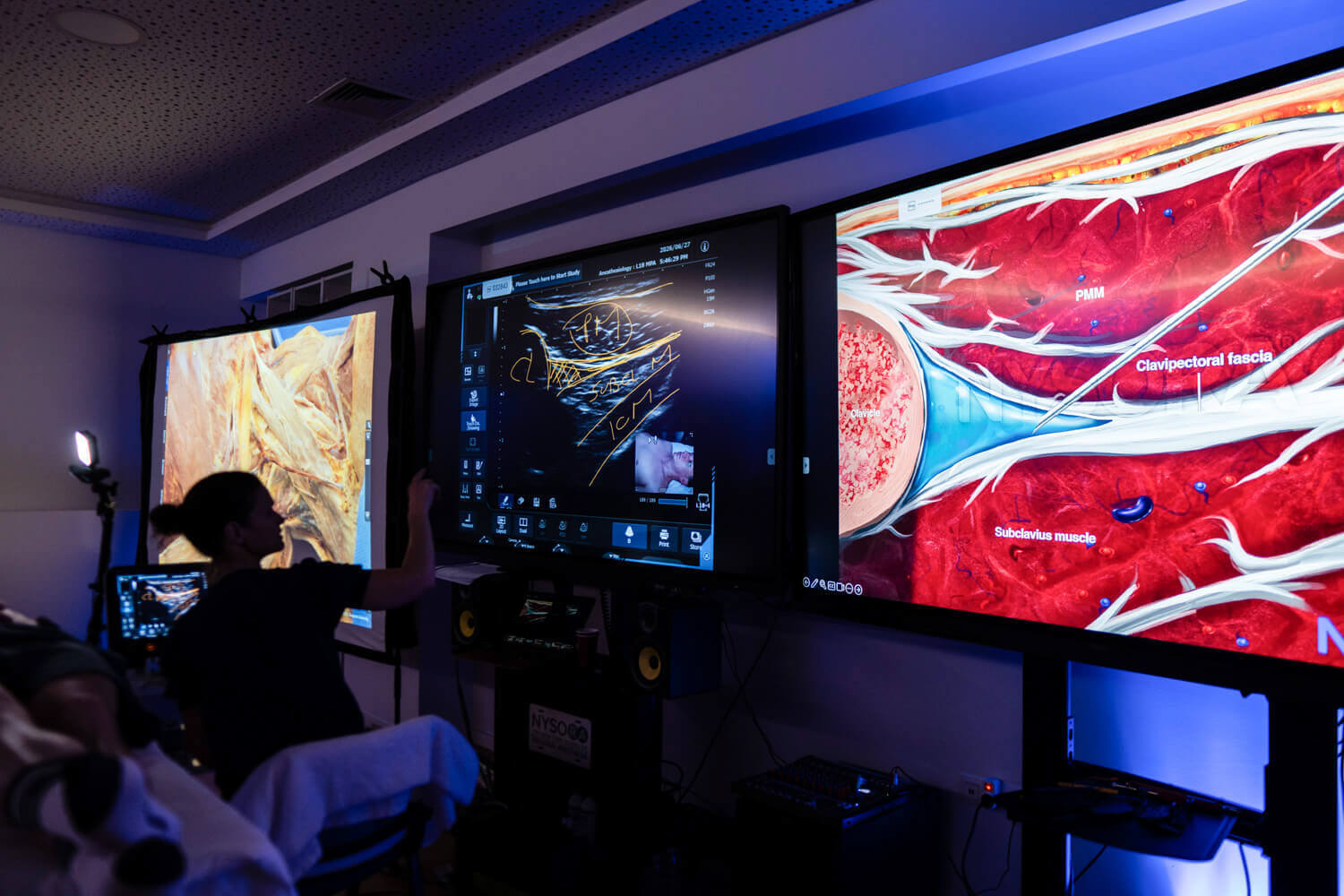
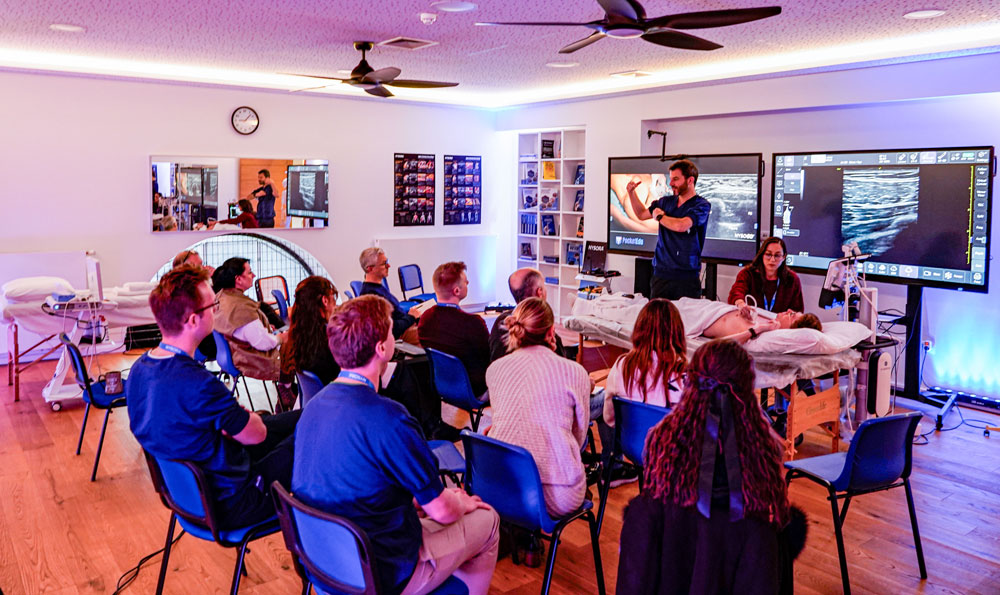
Discover global anesthesia and pain medicine conferences featuring international faculty, the latest clinical advances, and practical education. Built around NYSORA's QUADRA™ system, these events help clinicians integrate anatomy, ultrasound, diagnosis, and interventions into everyday practice.

See all conferences

Workshops

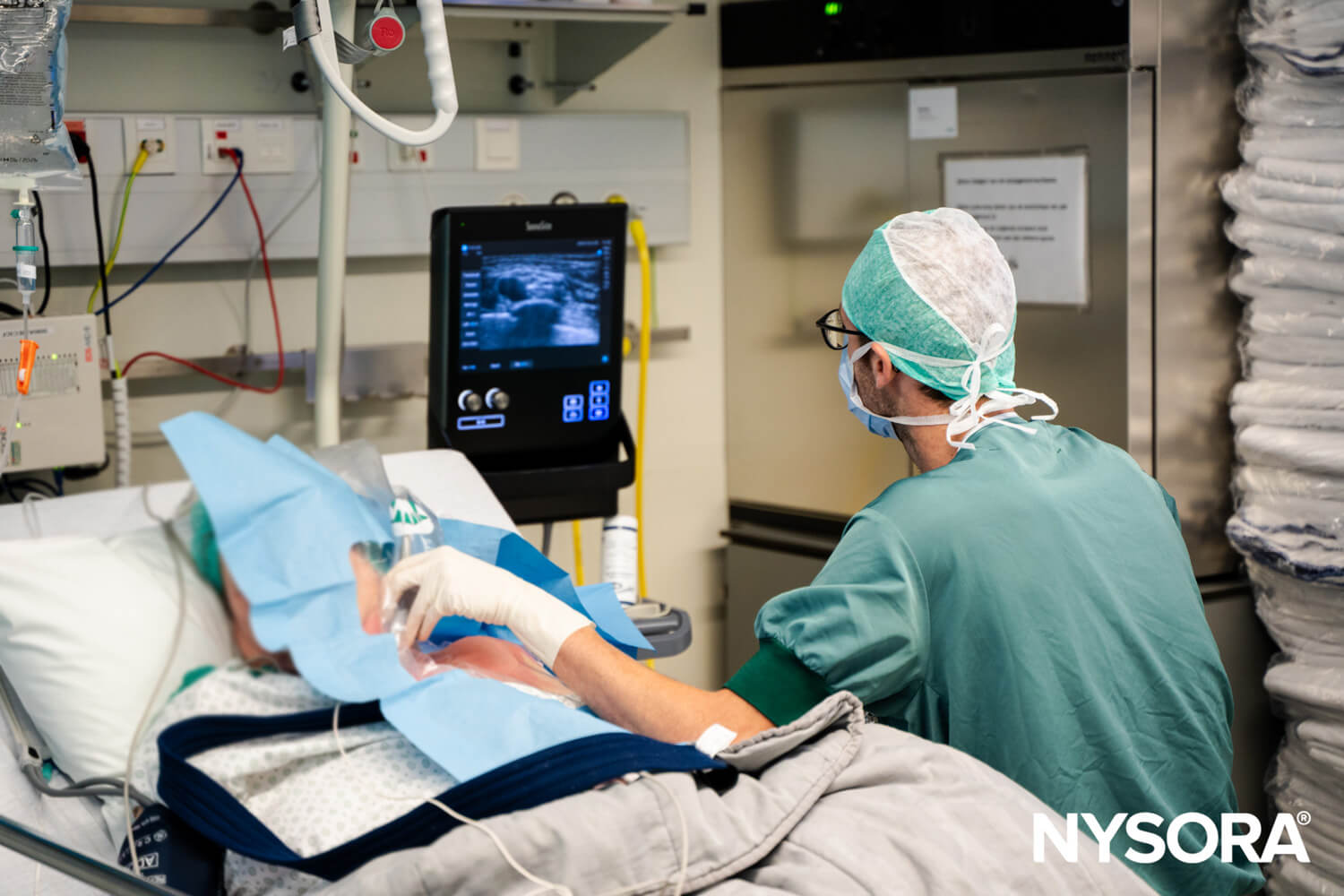
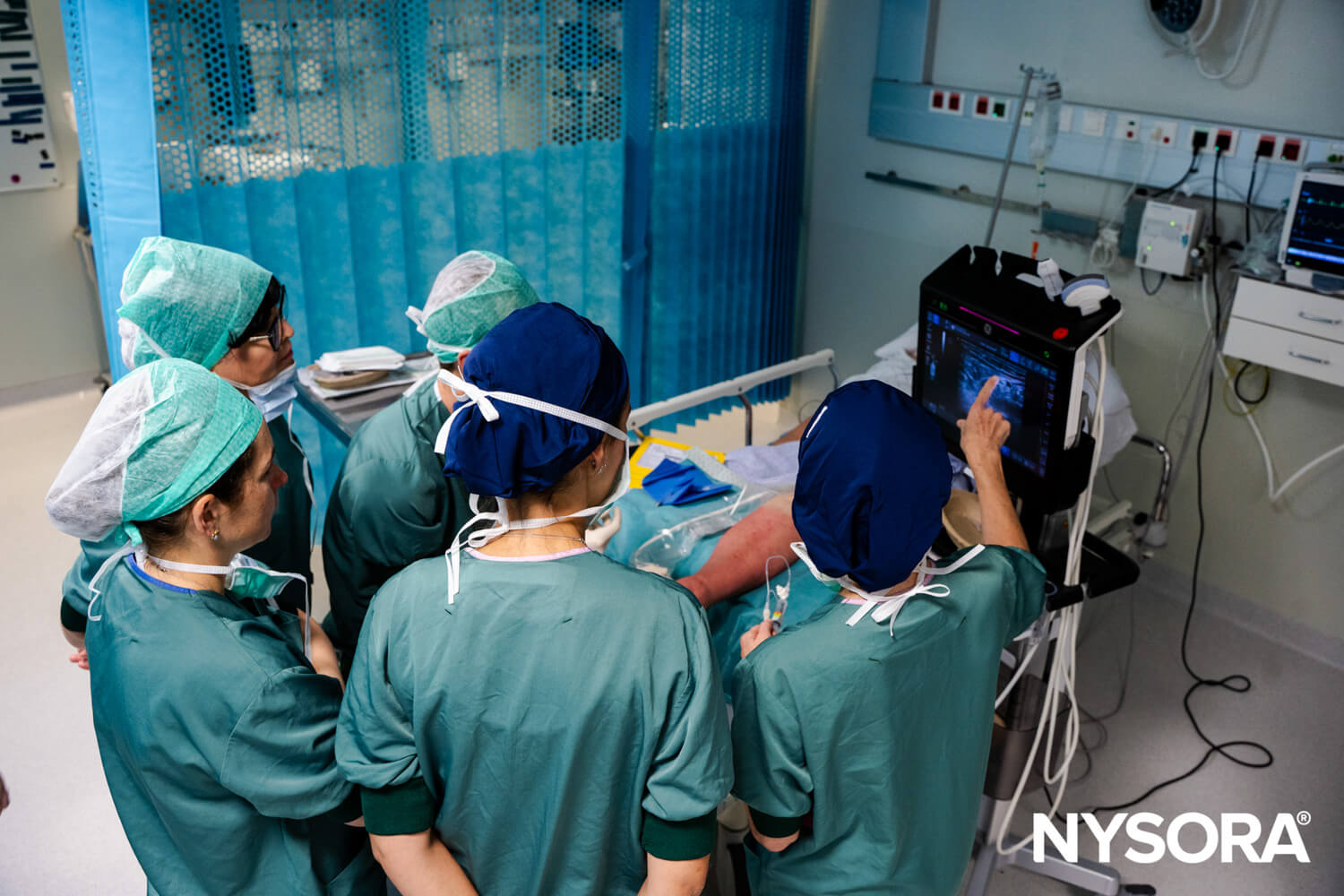
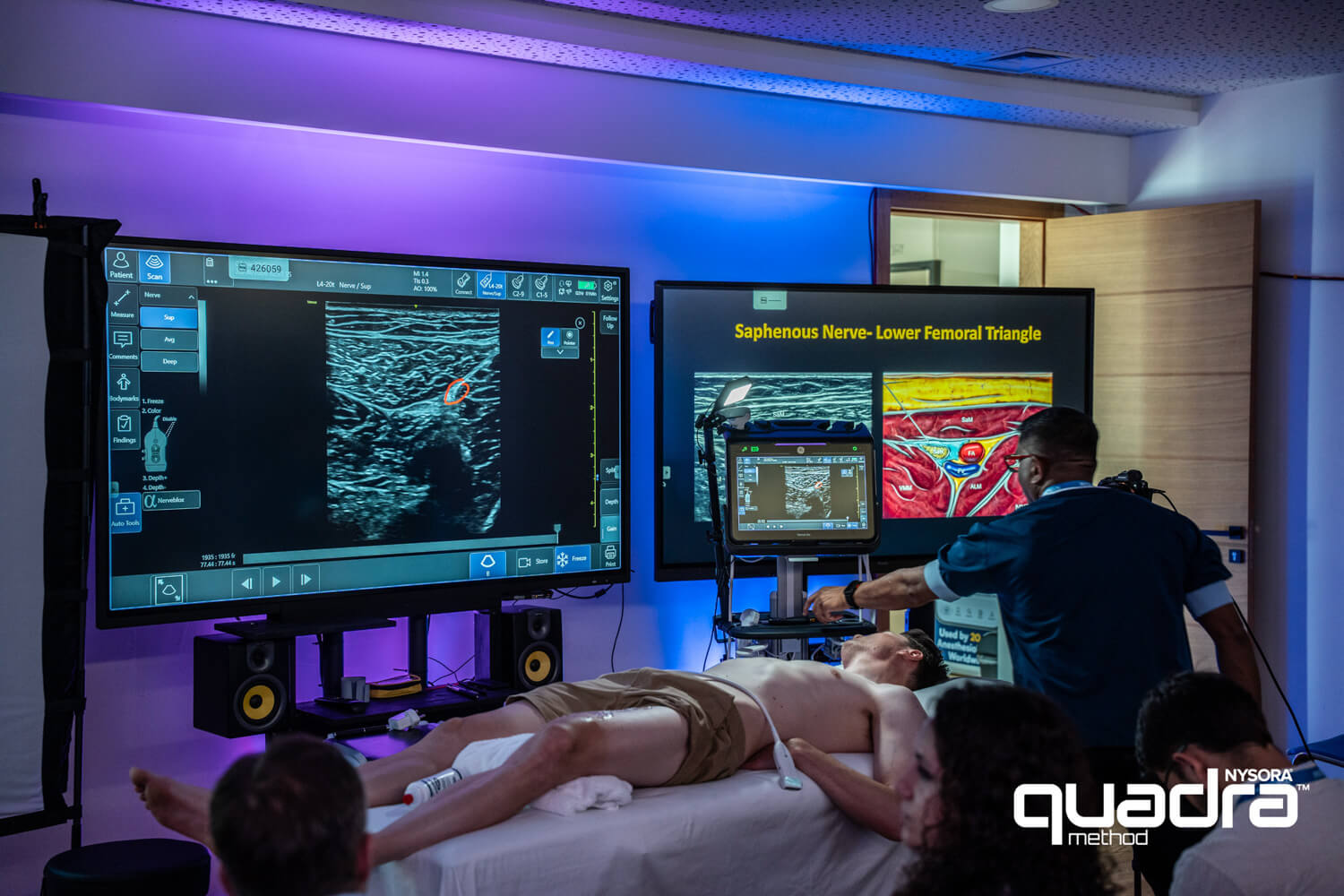
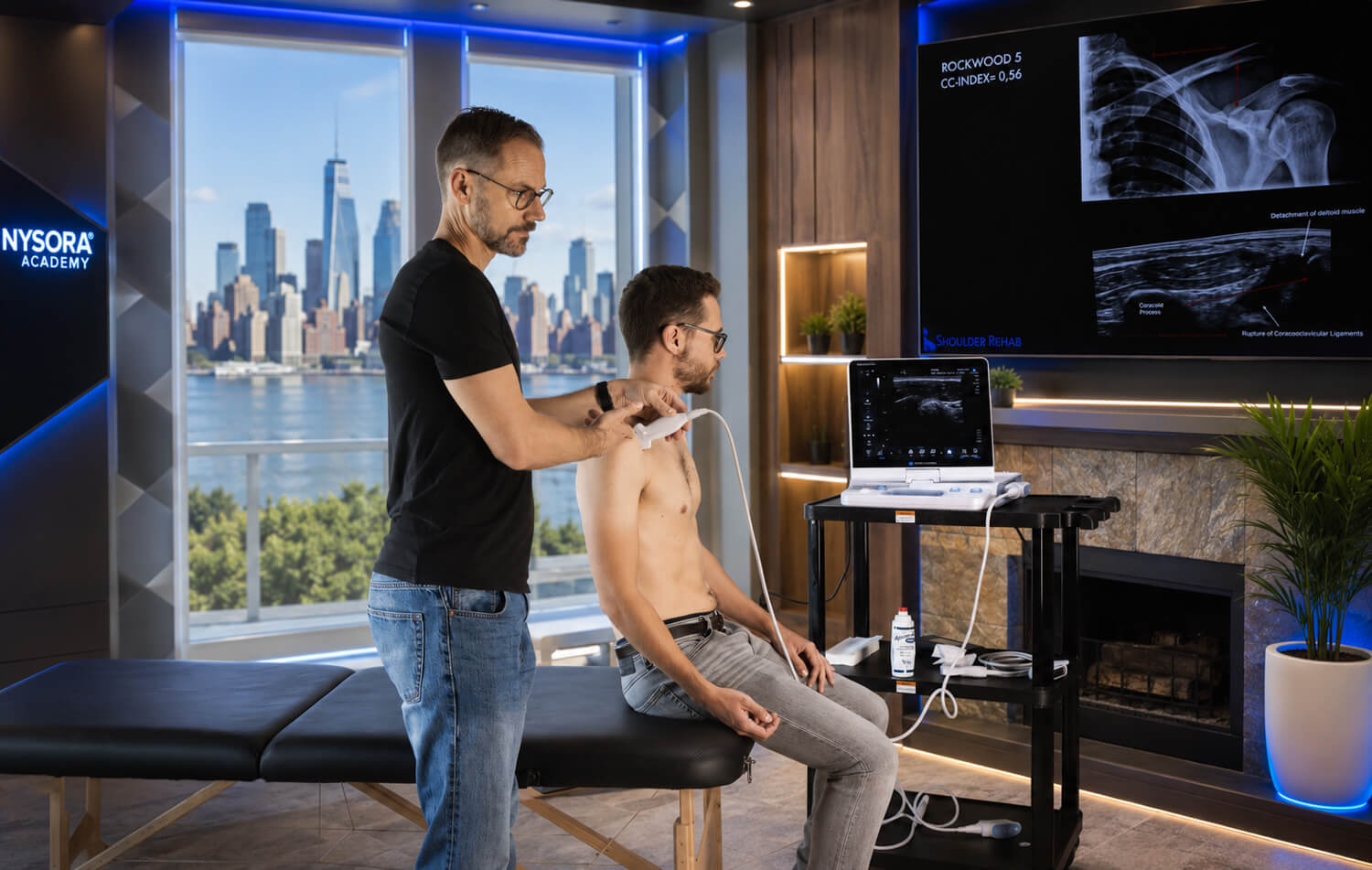
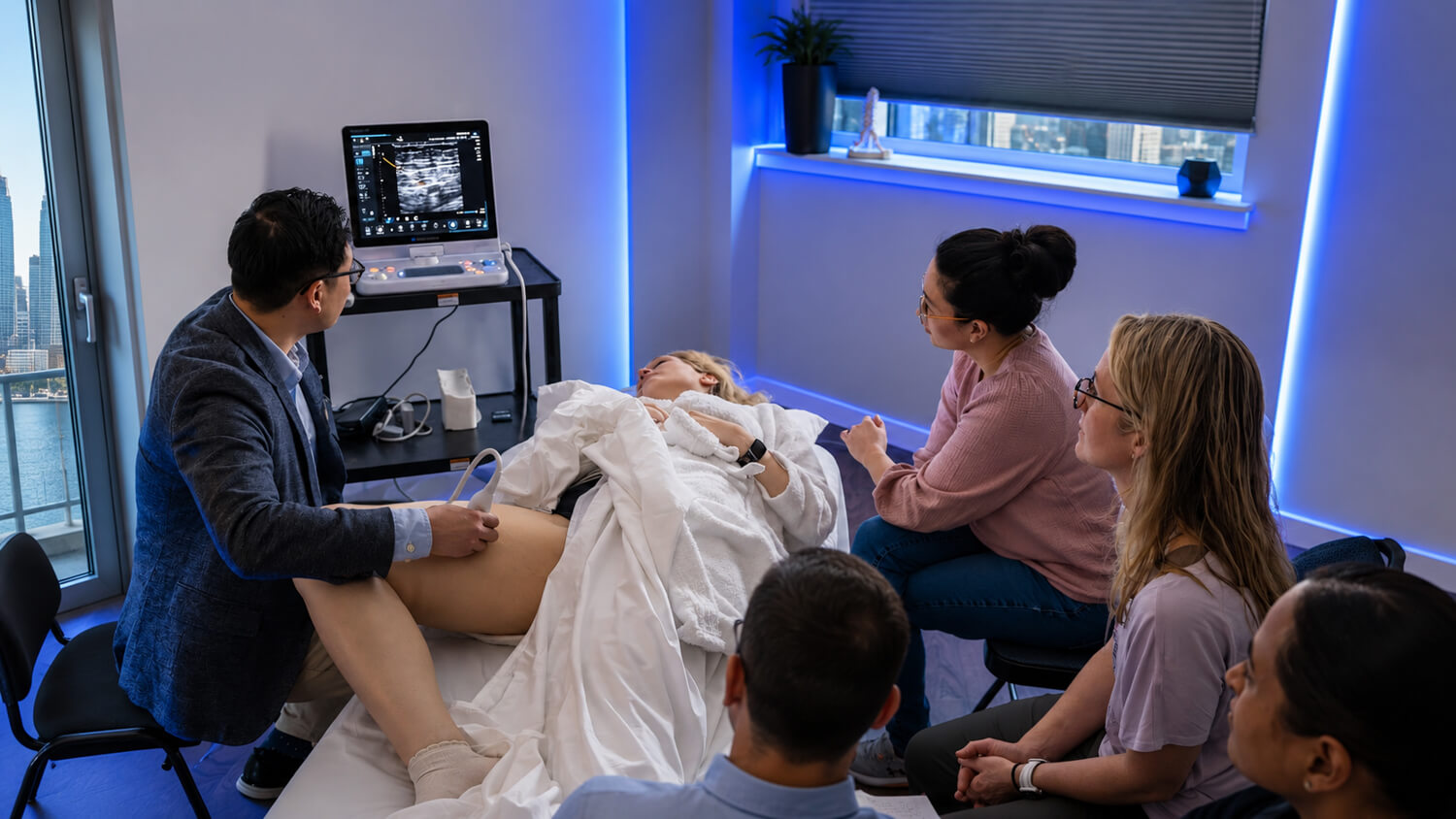
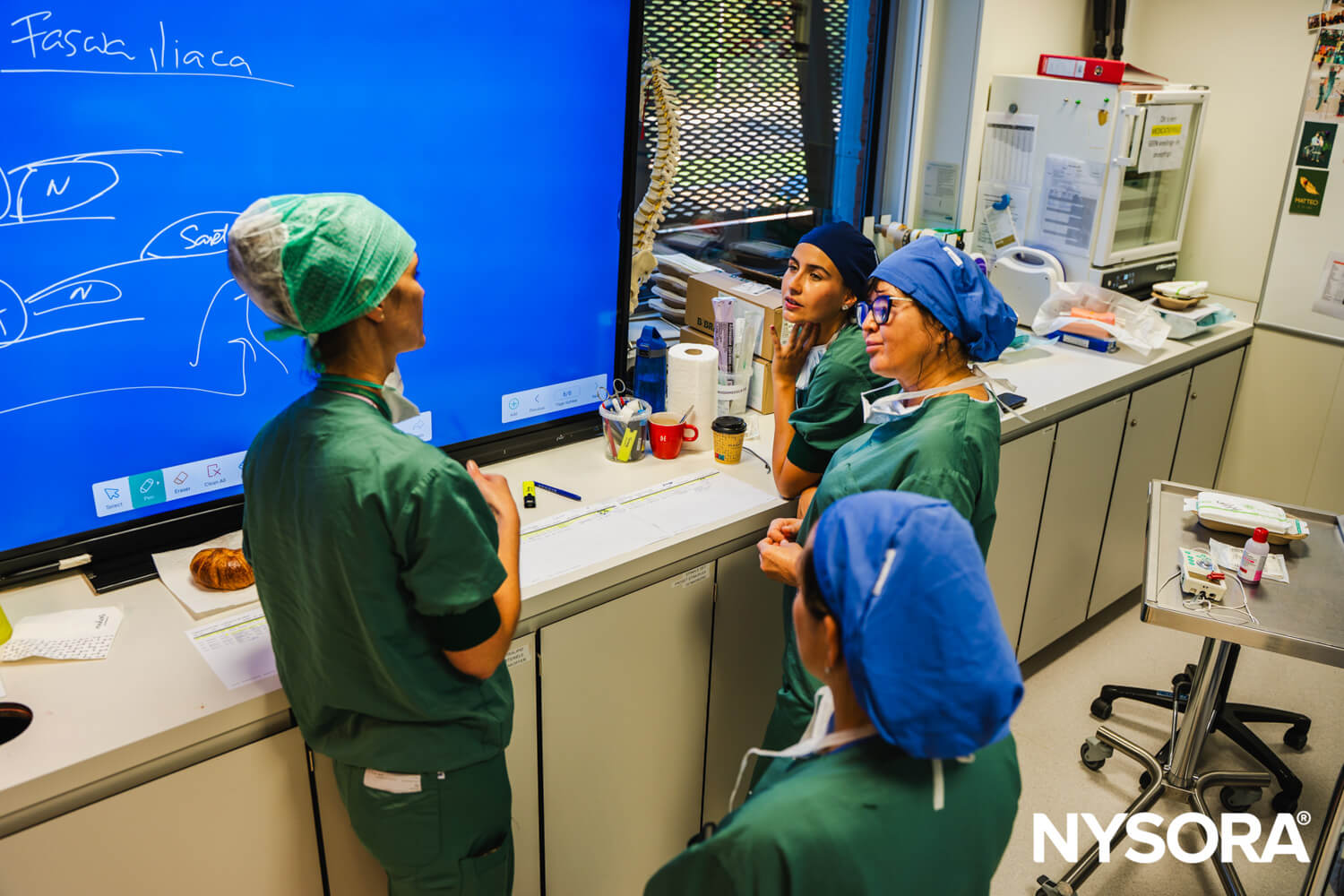
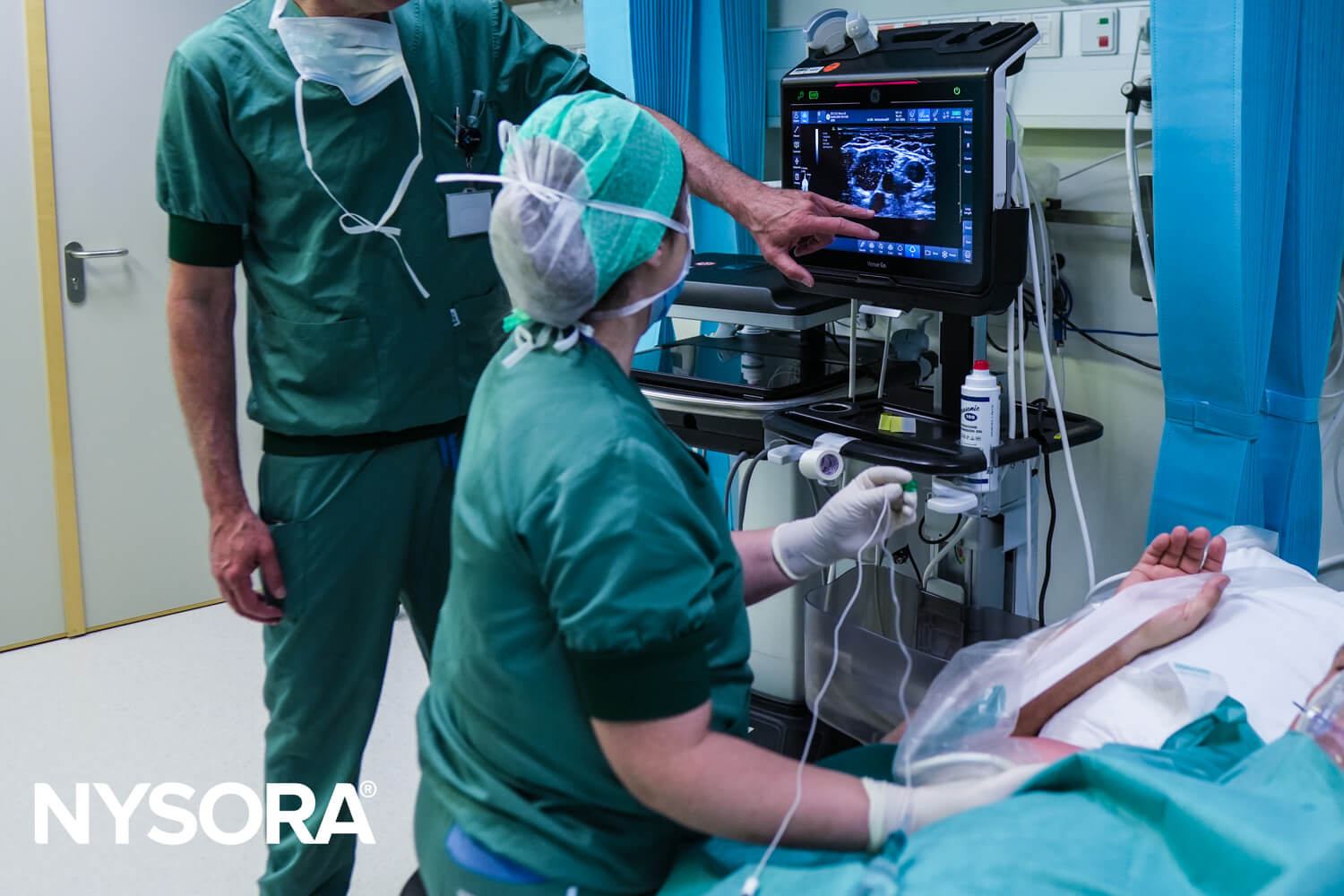
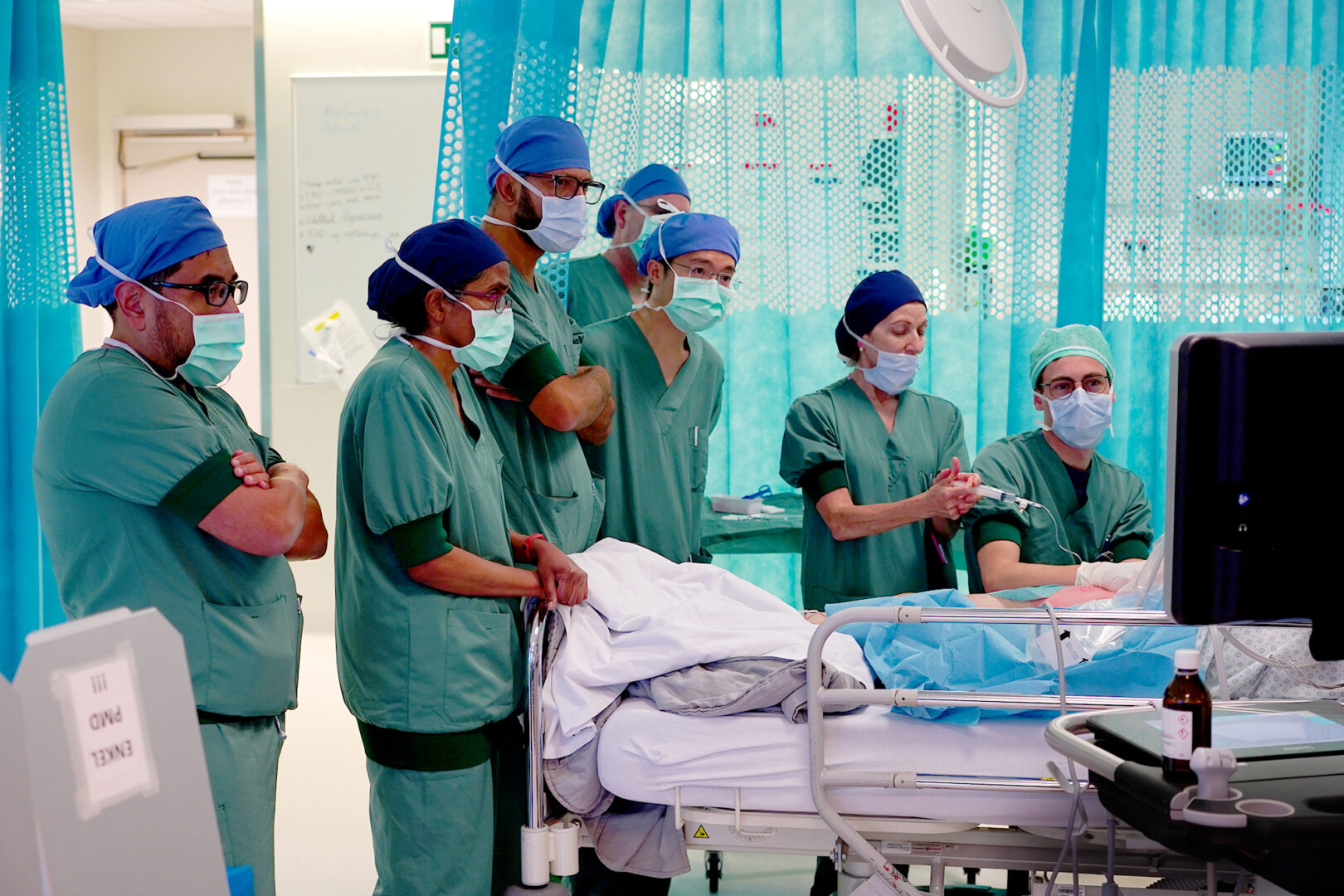
Train in small-group NYSORA workshops across Europe and North America, with hands-on ultrasound learning or join our clinical Boot Camps featuring live regional block observation.

See all workshops

NYSORA All Events Schedule

Complete schedule of all conferences, workshops and bootcamps.

Filters & Sort Events

2026

Boot Camps

Genk, Belgium, Jun 25 - Jun 26

Schedule
Day 1
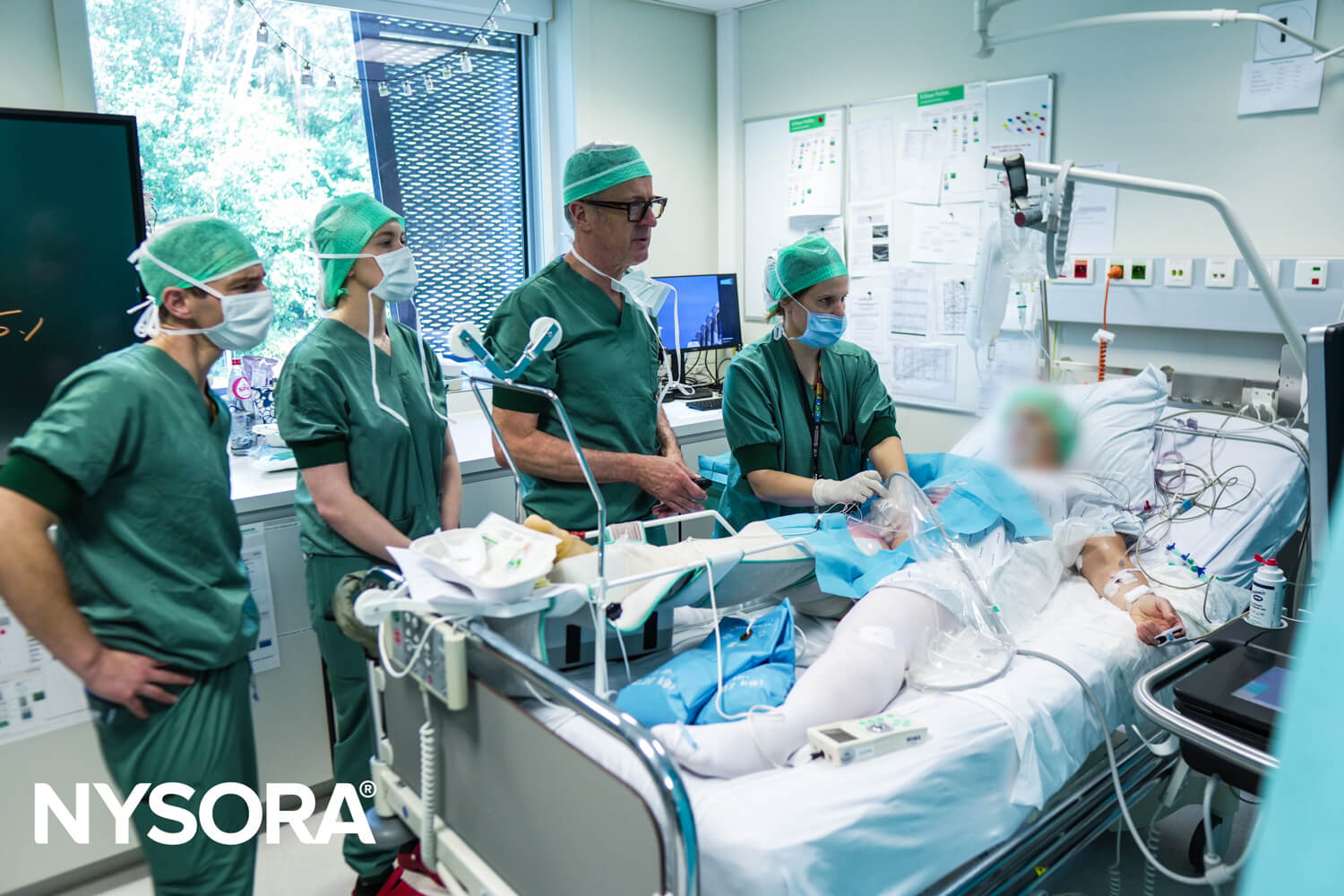
  • Meet in the main lobby of Ziekenhuis Oost-Limburg (ZOL) with one of the NYSORA team - Upon arrival, please use the visitor parking lot and enter the hospital’s main entrance through the revolving glass doors to the main lobby
  • Changing in the dressing room into surgical scrubs, hats and masks
  • Staff meeting and planning for the day at the Orthopedic Anesthesia Operating Room Wing (N-Block)
  • Patient care, performance of ultrasound guided regional anesthesia procedures, scanning on patients and models, phantom practice in between patient care, discussions on protocoled patient care, participation in the intraoperative and perioperative management, performance of ultrasound guided peripheral nerve blocks in patients. Each nerve block procedure will be followed by discussion of principles of safe and successful practice
  • De-briefing, questions and answers, and planning for the second day
  • Adjourn
Day 2
  • Meet in the main lobby of Ziekenhuis Oost-Limburg (ZOL) with one of the NYSORA team
  • Changing in the dressing room into surgical scrubs, hats and masks
  • Staff meeting and planning for the day at the Orthopedic Anesthesia Operating Room Wing (N-Block)
  • Patient care, performance of ultrasound guided regional anesthesia procedures, scanning on patients and models, phantom practice in between patient care, discussions on protocoled patient care, participation in the intraoperative and perioperative management, performance of ultrasound guided peripheral nerve blocks in patients. Each nerve block procedure will be followed by discussion of principles of safe and successful practice
  • De-briefing, questions and answers
  • Adjourn
Highlights
  • What makes these workshops unique is the dynamic, changing environment. Real-life cases and instructors on the go during patient care.
  • Between patients, NYSORA’s experts engage in case discussions, practice on simulators and short, targeted presentations for understanding of the principles of LRA clinical decision-making.
  • During the boot camps experience, our team makes sure that every second is filled with a learning experience.
  • NYSORA’s Boot Camps were devised by leading regional anesthesia professionals, for medical professionals.
  • Boot Camps focus on personalized training for each participant in small groups, with top-pros right by your side.
Faculty
Coming soon.
Workshops

Leuven, Belgium, Jun 27 - Jun 28

Schedule
Day 1

Morning Session (07:30 - 16:00)

  • Registration & Light Breakfast
  • Introduction: How to Make the Most of This Course
  • MODULE 1: Shoulder & Proximal Humerus
  • Coffee Break & Simulation Training
  • MODULE 2: Clavicle & Upper Arm
  • MODULE 3: Upper Extremit er Extremity (Elbow, Forearm & Hand orearm & Hand)
  • Lunch Break & & Simulation Training
  • MODULE 4: Truncal Fascial Plane Blocks - Core Set Every Clinician Should Know
  • LECTURE
  • Q&A Panel Discussion
  • Coffee Break & Simulation Training
  • Scanning Practice: Consolidation and Repetition
Day 2

Morning Session (07:30 - 14:45)

  • Registration & Light Breakfast (Simulation Training)
  • Review of Day 1: What We Learned TIPS & Q&A
  • MODULE 5: Lumbar Paraspinal & Posterior Wall Blocks
  • Coffee Break & Simulation Training
  • LECTURE
  • MODULE 6: Lower Extremity — Hip & Knee Pathways
  • Lunch Break & Simulation Training
  • Lower Extremity: Knee, Foot & Ankle
  • MODULE 7 REVIEW: More Scanning Top Down
  • Final Review & Q&A
Highlights
  • Interpret various sonographic artifacts and outline a plan for troubleshooting these using various transducer maneuvers and ultrasound machine setting adjustments;
  • Demonstrate the correct sonographic technique for identification of the brachial plexus and individual nerves of the lower extremity, and associated vascular and musculoskeletal structures;
  • Demonstrate the correct sonographic technique for performance of truncal blocks including transversus abdominis plane block, rectus sheath block, and paravertebral and neuraxial block;
  • Develop a framework for the establishment of a regional anesthesia service using strategies to increase surgical, anesthetic and hospital buy-in;
  • Discuss the rational choice of local anesthetics and adjuvants for various peripheral nerve blocks.
Faculty
Admir Hadzic
Admir Hadzic

MD, PhD.

Workshops

Toronto, Canada, Jul 11 - Jul 12

Schedule
Day 1
  • Registration and Breakfast
  • Welcome and Introduction
  • Gastric Ultrasound

  • Demonstration & Hands-on Scanning
  • FAST
  • Demonstration & Hands-on Scanning
  • Coffee Break
  • Introduction to Airway
  • Demonstration & Hands-on Scanning
  • Lung Exam
  • Demonstration & Hands-on Scanning
  • Lunch Break
  • DVT
  • Demonstration & Hands-on Scanning
  • Standard Cardiac Views (FATE) and IVC Imaging
  • Demonstration & Hands-on Scanning
  • Coffee Break
  • FEEL Protocol
  • Demonstration & Hands-on Scanning
  • FATE Clinical Cases
Day 2
  • Registration and Breakfast
  • Review of Previous Day: Gastric, Airway, FAST, Lung & DVT
  • Interactive Q&A
  • Hands-on Scanning: Gastric, FAST, Lung & DVT
  • Coffee Break
  • Global Ventricular Function, EF, TAPSE & MAPSE
  • Demonstration & Hands-on Scanning
  • Interactive Q&A on Cardiac FATE
  • Upcoming POCUS Topics (VExUS)
Highlights
  • Extensive Hands-On Ultrasound Training
    The workshop is designed around practical scanning experience, with participants spending significant time performing ultrasound examinations in small groups under expert faculty supervision.
  • Essential POCUS Applications for Acute Care
    Learn how to perform the most clinically relevant ultrasound exams, including vascular access, DVT assessment, lung ultrasound, trauma evaluation (eFAST), gastric ultrasound, and focused cardiac imaging.
  • Ultrasound-Guided Vascular Access
    Develop practical skills in ultrasound-guided peripheral, arterial, and central venous access, improving accuracy, safety, and procedural success in everyday clinical practice.
  • Focused Cardiac and Lung Ultrasound Skills
    Build confidence performing bedside cardiopulmonary ultrasound, including evaluation of ventricular function, lung pathology, and hemodynamic assessment.
  • Practical Integration of POCUS into Clinical Practice
    Learn how to incorporate ultrasound into routine patient assessment, procedural guidance, and rapid bedside decision-making through expert demonstrations and real-world clinical insights.
Faculty
Kris Abbas
Kris Abbas

MD

Cameron Nishi
Cameron Nishi

MD, FRCPC

Joshua Peachey
Joshua Peachey

MD

Andrés Merchán
Andrés Merchán

MD

Boot Camps

Genk, Belgium, Jul 23 - Jul 24

Schedule
Day 1
  • Meet in the main lobby of Ziekenhuis Oost-Limburg (ZOL) with one of the NYSORA team - Upon arrival, please use the visitor parking lot and enter the hospital’s main entrance through the revolving glass doors to the main lobby
  • Changing in the dressing room into surgical scrubs, hats and masks
  • Staff meeting and planning for the day at the Orthopedic Anesthesia Operating Room Wing (N-Block)
  • Patient care, performance of ultrasound guided regional anesthesia procedures, scanning on patients and models, phantom practice in between patient care, discussions on protocoled patient care, participation in the intraoperative and perioperative management, performance of ultrasound guided peripheral nerve blocks in patients. Each nerve block procedure will be followed by discussion of principles of safe and successful practice
  • De-briefing, questions and answers, and planning for the second day
  • Adjourn
Day 2
  • Meet in the main lobby of Ziekenhuis Oost-Limburg (ZOL) with one of the NYSORA team
  • Changing in the dressing room into surgical scrubs, hats and masks
  • Staff meeting and planning for the day at the Orthopedic Anesthesia Operating Room Wing (N-Block)
  • Patient care, performance of ultrasound guided regional anesthesia procedures, scanning on patients and models, phantom practice in between patient care, discussions on protocoled patient care, participation in the intraoperative and perioperative management, performance of ultrasound guided peripheral nerve blocks in patients. Each nerve block procedure will be followed by discussion of principles of safe and successful practice
  • De-briefing, questions and answers
  • Adjourn
Highlights
  • What makes these workshops unique is the dynamic, changing environment. Real-life cases and instructors on the go during patient care.
  • Between patients, NYSORA’s experts engage in case discussions, practice on simulators and short, targeted presentations for understanding of the principles of LRA clinical decision-making.
  • During the boot camps experience, our team makes sure that every second is filled with a learning experience.
  • NYSORA’s Boot Camps were devised by leading regional anesthesia professionals, for medical professionals.
  • Boot Camps focus on personalized training for each participant in small groups, with top-pros right by your side.
Faculty
Coming soon.
Workshops

New York, USA, Jul 25 - Jul 26

Schedule
Day 1

Morning Session (07:30 - 16:00)

  • Registration & Light Breakfast
  • Introduction: How to Make the Most of This Course
  • MODULE 1: Shoulder & Proximal Humerus
  • Coffee Break & Simulation Training
  • MODULE 2: Clavicle & Upper Arm
  • MODULE 3: Upper Extremit er Extremity (Elbow, Forearm & Hand orearm & Hand)
  • Lunch Break & & Simulation Training
  • MODULE 4: Truncal Fascial Plane Blocks - Core Set Every Clinician Should Know
  • LECTURE
  • Q&A Panel Discussion
  • Coffee Break & Simulation Training
  • Scanning Practice: Consolidation and Repetition
Day 2

Morning Session (07:30 - 14:45)

  • Registration & Light Breakfast (Simulation Training)
  • Review of Day 1: What We Learned TIPS & Q&A
  • MODULE 5: Lumbar Paraspinal & Posterior Wall Blocks
  • Coffee Break & Simulation Training
  • LECTURE
  • MODULE 6: Lower Extremity — Hip & Knee Pathways
  • Lunch Break & Simulation Training
  • Lower Extremity: Knee, Foot & Ankle
  • MODULE 7 REVIEW: More Scanning Top Down
  • Final Review & Q&A
Highlights
  • Interpret various sonographic artifacts and outline a plan for troubleshooting these using various transducer maneuvers and ultrasound machine setting adjustments;
  • Demonstrate the correct sonographic technique for identification of the brachial plexus and individual nerves of the lower extremity, and associated vascular and musculoskeletal structures;
  • Demonstrate the correct sonographic technique for performance of truncal blocks including transversus abdominis plane block, rectus sheath block, and paravertebral and neuraxial block;
  • Develop a framework for the establishment of a regional anesthesia service using strategies to increase surgical, anesthetic and hospital buy-in;
  • Discuss the rational choice of local anesthetics and adjuvants for various peripheral nerve blocks.
Faculty
Matthew Colontonio
Matthew Colontonio

MD

Workshops

New York, USA, Aug 22 - Aug 23

Schedule
Day 1

Morning Session (07:30 - 16:00)

  • Registration & Light Breakfast
  • Introduction: How to Make the Most of This Course
  • MODULE 1: Shoulder & Proximal Humerus
  • Coffee Break & Simulation Training
  • MODULE 2: Clavicle & Upper Arm
  • MODULE 3: Upper Extremit er Extremity (Elbow, Forearm & Hand orearm & Hand)
  • Lunch Break & & Simulation Training
  • MODULE 4: Truncal Fascial Plane Blocks - Core Set Every Clinician Should Know
  • LECTURE
  • Q&A Panel Discussion
  • Coffee Break & Simulation Training
  • Scanning Practice: Consolidation and Repetition
Day 2

Morning Session (07:30 - 14:45)

  • Registration & Light Breakfast (Simulation Training)
  • Review of Day 1: What We Learned TIPS & Q&A
  • MODULE 5: Lumbar Paraspinal & Posterior Wall Blocks
  • Coffee Break & Simulation Training
  • LECTURE
  • MODULE 6: Lower Extremity — Hip & Knee Pathways
  • Lunch Break & Simulation Training
  • Lower Extremity: Knee, Foot & Ankle
  • MODULE 7 REVIEW: More Scanning Top Down
  • Final Review & Q&A
Highlights
  • Interpret various sonographic artifacts and outline a plan for troubleshooting these using various transducer maneuvers and ultrasound machine setting adjustments;
  • Demonstrate the correct sonographic technique for identification of the brachial plexus and individual nerves of the lower extremity, and associated vascular and musculoskeletal structures;
  • Demonstrate the correct sonographic technique for performance of truncal blocks including transversus abdominis plane block, rectus sheath block, and paravertebral and neuraxial block;
  • Develop a framework for the establishment of a regional anesthesia service using strategies to increase surgical, anesthetic and hospital buy-in;
  • Discuss the rational choice of local anesthetics and adjuvants for various peripheral nerve blocks.
Faculty
Admir Hadzic
Admir Hadzic

MD, PhD.

Catherine Vandepitte

MD, PhD.

Christian Horazeck
Christian Horazeck

MD, D.ABA

Workshops

Leuven, Belgium, Sep 05 - Sep 06

Schedule
Day 1

Morning Session (07:30 - 16:00)

  • Registration & Light Breakfast
  • Introduction: How to Make the Most of This Course
  • MODULE 1: Shoulder & Proximal Humerus
  • Coffee Break & Simulation Training
  • MODULE 2: Clavicle & Upper Arm
  • MODULE 3: Upper Extremit er Extremity (Elbow, Forearm & Hand orearm & Hand)
  • Lunch Break & Simulation Training
  • MODULE 4: Truncal Fascial Plane Blocks - Core Set Every Clinician Should Know
  • LECTURE
  • Q&A Panel Discussion
  • Coffee Break & Simulation Training
  • Scanning Practice: Consolidation and Repetition
Day 2

Morning Session (07:30 - 14:45)

  • Registration & Light Breakfast (Simulation Training)
  • Review of Day 1: What We Learned TIPS & Q&A
  • MODULE 5: Lumbar Paraspinal & Posterior Wall Blocks
  • Coffee Break & Simulation Training
  • LECTURE
  • MODULE 6: Lower Extremity — Hip & Knee Pathways
  • Lunch Break & Simulation Training
  • Lower Extremity: Knee, Foot & Ankle
  • MODULE 7 REVIEW: More Scanning Top Down
  • Final Review & Q&A
Highlights
  • Interpret various sonographic artifacts and outline a plan for troubleshooting these using various transducer maneuvers and ultrasound machine setting adjustments;
  • Demonstrate the correct sonographic technique for identification of the brachial plexus and individual nerves of the lower extremity, and associated vascular and musculoskeletal structures;
  • Demonstrate the correct sonographic technique for performance of truncal blocks including transversus abdominis plane block, rectus sheath block, and paravertebral and neuraxial block;
  • Develop a framework for the establishment of a regional anesthesia service using strategies to increase surgical, anesthetic and hospital buy-in;
  • Discuss the rational choice of local anesthetics and adjuvants for various peripheral nerve blocks.
Faculty
Coming soon.
Workshops

New York, USA, Sep 12 - Sep 13

Schedule
Day 1

Morning Session (07:30 - 16:00)

  • Registration & Light Breakfast
  • Introduction: How to Make the Most of This Course
  • MODULE 1: Shoulder & Proximal Humerus
  • Coffee Break & Simulation Training
  • MODULE 2: Clavicle & Upper Arm
  • MODULE 3: Upper Extremit er Extremity (Elbow, Forearm & Hand orearm & Hand)
  • Lunch Break & Simulation Training
  • MODULE 4: Truncal Fascial Plane Blocks - Core Set Every Clinician Should Know
  • LECTURE
  • Q&A Panel Discussion
  • Coffee Break & Simulation Training
  • Scanning Practice: Consolidation and Repetition
Day 2

Morning Session (07:30 - 14:45)

  • Registration & Light Breakfast (Simulation Training)
  • Review of Day 1: What We Learned TIPS & Q&A
  • MODULE 5: Lumbar Paraspinal & Posterior Wall Blocks
  • Coffee Break & Simulation Training
  • LECTURE
  • MODULE 6: Lower Extremity — Hip & Knee Pathways
  • Lunch Break & Simulation Training
  • Lower Extremity: Knee, Foot & Ankle
  • MODULE 7 REVIEW: More Scanning Top Down
  • Final Review & Q&A
Highlights
  • Interpret various sonographic artifacts and outline a plan for troubleshooting these using various transducer maneuvers and ultrasound machine setting adjustments;
  • Demonstrate the correct sonographic technique for identification of the brachial plexus and individual nerves of the lower extremity, and associated vascular and musculoskeletal structures;
  • Demonstrate the correct sonographic technique for performance of truncal blocks including transversus abdominis plane block, rectus sheath block, and paravertebral and neuraxial block;
  • Develop a framework for the establishment of a regional anesthesia service using strategies to increase surgical, anesthetic and hospital buy-in;
  • Discuss the rational choice of local anesthetics and adjuvants for various peripheral nerve blocks.
Faculty
Jerry Jones
Jerry Jones

MD

Marc Ghabach
Marc Ghabach

MD

Boot Camps

Genk, Belgium, Oct 01 - Oct 02

Schedule
Day 1
  • Meet in the main lobby of Ziekenhuis Oost-Limburg (ZOL) with one of the NYSORA team - Upon arrival, please use the visitor parking lot and enter the hospital’s main entrance through the revolving glass doors to the main lobby
  • Changing in the dressing room into surgical scrubs, hats and masks
  • Staff meeting and planning for the day at the Orthopedic Anesthesia Operating Room Wing (N-Block)
  • Patient care, performance of ultrasound guided regional anesthesia procedures, scanning on patients and models, phantom practice in between patient care, discussions on protocoled patient care, participation in the intraoperative and perioperative management, performance of ultrasound guided peripheral nerve blocks in patients. Each nerve block procedure will be followed by discussion of principles of safe and successful practice
  • De-briefing, questions and answers, and planning for the second day
  • Adjourn
Day 2
  • Meet in the main lobby of Ziekenhuis Oost-Limburg (ZOL) with one of the NYSORA team
  • Changing in the dressing room into surgical scrubs, hats and masks
  • Staff meeting and planning for the day at the Orthopedic Anesthesia Operating Room Wing (N-Block)
  • Patient care, performance of ultrasound guided regional anesthesia procedures, scanning on patients and models, phantom practice in between patient care, discussions on protocoled patient care, participation in the intraoperative and perioperative management, performance of ultrasound guided peripheral nerve blocks in patients. Each nerve block procedure will be followed by discussion of principles of safe and successful practice
  • De-briefing, questions and answers
  • Adjourn
Highlights
  • What makes these workshops unique is the dynamic, changing environment. Real-life cases and instructors on the go during patient care.
  • Between patients, NYSORA’s experts engage in case discussions, practice on simulators and short, targeted presentations for understanding of the principles of LRA clinical decision-making.
  • During the boot camps experience, our team makes sure that every second is filled with a learning experience.
  • NYSORA’s Boot Camps were devised by leading regional anesthesia professionals, for medical professionals.
  • Boot Camps focus on personalized training for each participant in small groups, with top-pros right by your side.
Faculty
Coming soon.
Workshops

New York, USA, Oct 03 - Oct 04

Schedule
Day 1

Morning Session (07:30 - 16:00)

  • Registration & Light Breakfast
  • Introduction: How to Make the Most of This Course
  • MODULE 1: Shoulder & Proximal Humerus
  • Coffee Break & Simulation Training
  • MODULE 2: Clavicle & Upper Arm
  • MODULE 3: Upper Extremit er Extremity (Elbow, Forearm & Hand orearm & Hand)
  • Lunch Break & Simulation Training
  • MODULE 4: Truncal Fascial Plane Blocks - Core Set Every Clinician Should Know
  • LECTURE
  • Q&A Panel Discussion
  • Coffee Break & Simulation Training
  • Scanning Practice: Consolidation and Repetition
Day 2

Morning Session (07:30 - 14:45)

  • Registration & Light Breakfast (Simulation Training)
  • Review of Day 1: What We Learned TIPS & Q&A
  • MODULE 5: Lumbar Paraspinal & Posterior Wall Blocks
  • Coffee Break & Simulation Training
  • LECTURE
  • MODULE 6: Lower Extremity — Hip & Knee Pathways
  • Lunch Break & Simulation Training
  • Lower Extremity: Knee, Foot & Ankle
  • MODULE 7 REVIEW: More Scanning Top Down
  • Final Review & Q&A
Highlights
  • Interpret various sonographic artifacts and outline a plan for troubleshooting these using various transducer maneuvers and ultrasound machine setting adjustments;
  • Demonstrate the correct sonographic technique for identification of the brachial plexus and individual nerves of the lower extremity, and associated vascular and musculoskeletal structures;
  • Demonstrate the correct sonographic technique for performance of truncal blocks including transversus abdominis plane block, rectus sheath block, and paravertebral and neuraxial block;
  • Develop a framework for the establishment of a regional anesthesia service using strategies to increase surgical, anesthetic and hospital buy-in;
  • Discuss the rational choice of local anesthetics and adjuvants for various peripheral nerve blocks.
Faculty
Admir Hadzic
Admir Hadzic

MD, PhD.

Catherine Vandepitte

MD, PhD.

Chang H. Park
Chang H. Park

MD

Workshops

Leuven, Belgium, Oct 10 - Oct 11

Schedule
Day 1

Morning Session (09:00 - 16:00)

  • Welcome, Introduction & Overview
  • Local Anesthetic Dosing in Pediatrics: Dose, Volume, Concentration
  • Upper Limb Blocks for Elbow, Forearm & Shoulder Surgery
  • Hands-on Scanning: Upper Limb Blocks
  • Coffee Break
  • Lower Limb Blocks for Clubfoot & Hip Pathology
  • Hands-on Scanning: Lower Limb Blocks
  • Lunch Break
  • Case-Based Discussion
  • Comprehensive Hands-on Practice & Live Scanning Demonstrations
Day 2

Morning Session (09:00 - 13:00)

  • Principles of Neonatal & Infant Regional Anesthesia
  • Thoracic Blocks for VATS and Chest Surgery
  • Hands-on Scanning: Thoracic & PECS Blocks
  • Coffee Break
  • Abdominal Wall Blocks for Laparoscopic & Inguinal Surgery
  • Hands-on Scanning: Abdominal Wall Blocks
  • Neuraxial & Perineal Blocks in Pediatrics
  • Hands-on Scanning: Caudal, Spinal & Penile Blocks + Case Review
Highlights
  • Identify the relevant basic anatomy and techniques for performing selected peripheral nerve blocks in children
  • Recognize the key differences in the ultrasound presentation of relevant structures between adults and children
  • Evaluate the correct dose and volume of LA for all age groups
  • Adapt and perfect regional anesthesia techniques to accommodate the more compliant tissues of children
  • Demonstrate use of regional anesthesia equipment tailored for different age groups
Faculty
Emil Bosinci
Emil Bosinci

MD

Peter Kenderessy
Peter Kenderessy

MD

Workshops

Istanbul, Turkey, Oct 24 - Oct 25

Schedule
Day 1

Morning Session (07:30 - 16:00)

  • Registration & Light Breakfast
  • Introduction: How to Make the Most of This Course
  • MODULE 1: Shoulder & Proximal Humerus
  • Coffee Break & Simulation Training
  • MODULE 2: Clavicle & Upper Arm
  • MODULE 3: Upper Extremit er Extremity (Elbow, Forearm & Hand orearm & Hand)
  • Lunch Break & Simulation Training
  • MODULE 4: Truncal Fascial Plane Blocks - Core Set Every Clinician Should Know
  • LECTURE
  • Q&A Panel Discussion
  • Coffee Break & Simulation Training
  • Scanning Practice: Consolidation and Repetition
Day 2

Morning Session (07:30 - 14:45)

  • Registration & Light Breakfast (Simulation Training)
  • Review of Day 1: What We Learned TIPS & Q&A
  • MODULE 5: Lumbar Paraspinal & Posterior Wall Blocks
  • Coffee Break & Simulation Training
  • LECTURE
  • MODULE 6: Lower Extremity — Hip & Knee Pathways
  • Lunch Break & Simulation Training
  • Lower Extremity: Knee, Foot & Ankle
  • MODULE 7 REVIEW: More Scanning Top Down
  • Final Review & Q&A
Highlights
  • Interpret various sonographic artifacts and outline a plan for troubleshooting these using various transducer maneuvers and ultrasound machine setting adjustments;
  • Demonstrate the correct sonographic technique for identification of the brachial plexus and individual nerves of the lower extremity, and associated vascular and musculoskeletal structures;
  • Demonstrate the correct sonographic technique for performance of truncal blocks including transversus abdominis plane block, rectus sheath block, and paravertebral and neuraxial block;
  • Develop a framework for the establishment of a regional anesthesia service using strategies to increase surgical, anesthetic and hospital buy-in;
  • Discuss the rational choice of local anesthetics and adjuvants for various peripheral nerve blocks.
Faculty
Coming soon.
Workshops

New York, USA, Oct 31 - Nov 01

Schedule
Day 1

Morning Session (07:30 - 16:00)

  • Registration & Light Breakfast
  • Introduction: How to Make the Most of This Course
  • MODULE 1: Shoulder & Proximal Humerus
  • Coffee Break & Simulation Training
  • MODULE 2: Clavicle & Upper Arm
  • MODULE 3: Upper Extremit er Extremity (Elbow, Forearm & Hand orearm & Hand)
  • Lunch Break & Simulation Training
  • MODULE 4: Truncal Fascial Plane Blocks - Core Set Every Clinician Should Know
  • LECTURE
  • Q&A Panel Discussion
  • Coffee Break & Simulation Training
  • Scanning Practice: Consolidation and Repetition
Day 2

Morning Session (07:30 - 14:45)

  • Registration & Light Breakfast (Simulation Training)
  • Review of Day 1: What We Learned TIPS & Q&A
  • MODULE 5: Lumbar Paraspinal & Posterior Wall Blocks
  • Coffee Break & Simulation Training
  • MODULE 6: Lower Extremity — Hip & Knee Pathways
  • Lunch Break & Simulation Training
  • Lower Extremity: Knee, Foot & Ankle
  • MODULE 7 REVIEW: More Scanning Top Down
  • Final Review & Q&A
Highlights
  • Interpret various sonographic artifacts and outline a plan for troubleshooting these using various transducer maneuvers and ultrasound machine setting adjustments;
  • Demonstrate the correct sonographic technique for identification of the brachial plexus and individual nerves of the lower extremity, and associated vascular and musculoskeletal structures;
  • Demonstrate the correct sonographic technique for performance of truncal blocks including transversus abdominis plane block, rectus sheath block, and paravertebral and neuraxial block;
  • Develop a framework for the establishment of a regional anesthesia service using strategies to increase surgical, anesthetic and hospital buy-in;
  • Discuss the rational choice of local anesthetics and adjuvants for various peripheral nerve blocks.
Faculty
Daryl Steven Henshaw

MD, MBA

E. Aysu Salviz
E. Aysu Salviz

MD, ESRA - DRA

Oya Cok
Oya Cok

MD, ESRA - DRA

Boot Camps

Genk, Belgium, Nov 12 - Nov 13

Schedule
Day 1
  • Meet in the main lobby of Ziekenhuis Oost-Limburg (ZOL) with one of the NYSORA team - Upon arrival, please use the visitor parking lot and enter the hospital’s main entrance through the revolving glass doors to the main lobby
  • Changing in the dressing room into surgical scrubs, hats and masks
  • Staff meeting and planning for the day at the Orthopedic Anesthesia Operating Room Wing (N-Block)
  • Patient care, performance of ultrasound guided regional anesthesia procedures, scanning on patients and models, phantom practice in between patient care, discussions on protocoled patient care, participation in the intraoperative and perioperative management, performance of ultrasound guided peripheral nerve blocks in patients. Each nerve block procedure will be followed by discussion of principles of safe and successful practice
  • De-briefing, questions and answers, and planning for the second day
  • Adjourn
Day 2
  • Meet in the main lobby of Ziekenhuis Oost-Limburg (ZOL) with one of the NYSORA team
  • Changing in the dressing room into surgical scrubs, hats and masks
  • Staff meeting and planning for the day at the Orthopedic Anesthesia Operating Room Wing (N-Block)
  • Patient care, performance of ultrasound guided regional anesthesia procedures, scanning on patients and models, phantom practice in between patient care, discussions on protocoled patient care, participation in the intraoperative and perioperative management, performance of ultrasound guided peripheral nerve blocks in patients. Each nerve block procedure will be followed by discussion of principles of safe and successful practice
  • De-briefing, questions and answers
  • Adjourn
Highlights
  • What makes these workshops unique is the dynamic, changing environment. Real-life cases and instructors on the go during patient care.
  • Between patients, NYSORA’s experts engage in case discussions, practice on simulators and short, targeted presentations for understanding of the principles of LRA clinical decision-making.
  • During the boot camps experience, our team makes sure that every second is filled with a learning experience.
  • NYSORA’s Boot Camps were devised by leading regional anesthesia professionals, for medical professionals.
  • Boot Camps focus on personalized training for each participant in small groups, with top-pros right by your side.
Faculty
Coming soon.
Workshops

Toronto, Canada, Nov 14 - Nov 15

Schedule
Day 1

Morning Session (07:30 - 16:00)

  • Registration & Light Breakfast
  • Introduction: How to Make the Most of This Course
  • MODULE 1: Shoulder & Proximal Humerus
  • Coffee Break & Simulation Training
  • MODULE 2: Clavicle & Upper Arm
  • MODULE 3: Upper Extremit er Extremity (Elbow, Forearm & Hand orearm & Hand)
  • Lunch Break & Simulation Training
  • MODULE 4: Truncal Fascial Plane Blocks - Core Set Every Clinician Should Know
  • LECTURE
  • Q&A Panel Discussion
  • Coffee Break & Simulation Training
  • Scanning Practice: Consolidation and Repetition
Day 2

Morning Session (07:30 - 14:45)

  • Registration & Light Breakfast (Simulation Training)
  • Review of Day 1: What We Learned TIPS & Q&A
  • MODULE 5: Lumbar Paraspinal & Posterior Wall Blocks
  • Coffee Break & Simulation Training
  • LECTURE
  • MODULE 6: Lower Extremity — Hip & Knee Pathways
  • Lunch Break & Simulation Training
  • Lower Extremity: Knee, Foot & Ankle
  • MODULE 7 REVIEW: More Scanning Top Down
  • Final Review & Q&A
Highlights
  • Interpret various sonographic artifacts and outline a plan for troubleshooting these using various transducer maneuvers and ultrasound machine setting adjustments;
  • Demonstrate the correct sonographic technique for identification of the brachial plexus and individual nerves of the lower extremity, and associated vascular and musculoskeletal structures;
  • Demonstrate the correct sonographic technique for performance of truncal blocks including transversus abdominis plane block, rectus sheath block, and paravertebral and neuraxial block;
  • Develop a framework for the establishment of a regional anesthesia service using strategies to increase surgical, anesthetic and hospital buy-in;
  • Discuss the rational choice of local anesthetics and adjuvants for various peripheral nerve blocks.
Faculty
Kris Abbas
Kris Abbas

MD

Workshops

New York, USA, Nov 21 - Nov 22

Schedule
Day 1

Morning Session (07:30 - 16:00)

  • Registration & Light Breakfast
  • Introduction: How to Make the Most of This Course
  • MODULE 1: Shoulder & Proximal Humerus
  • Coffee Break & Simulation Training
  • MODULE 2: Clavicle & Upper Arm
  • MODULE 3: Upper Extremit er Extremity (Elbow, Forearm & Hand orearm & Hand)
  • Lunch Break & Simulation Training
  • MODULE 4: Truncal Fascial Plane Blocks - Core Set Every Clinician Should Know
  • LECTURE
  • Q&A Panel Discussion
  • Coffee Break & Simulation Training
  • Scanning Practice: Consolidation and Repetition
Day 2

Morning Session (07:30 - 14:45)

  • Registration & Light Breakfast (Simulation Training)
  • Review of Day 1: What We Learned TIPS & Q&A
  • MODULE 5: Lumbar Paraspinal & Posterior Wall Blocks
  • Coffee Break & Simulation Training
  • LECTURE
  • MODULE 6: Lower Extremity — Hip & Knee Pathways
  • Lunch Break & Simulation Training
  • Lower Extremity: Knee, Foot & Ankle
  • MODULE 7 REVIEW: More Scanning Top Down
  • Final Review & Q&A
Highlights
  • Interpret various sonographic artifacts and outline a plan for troubleshooting these using various transducer maneuvers and ultrasound machine setting adjustments;
  • Demonstrate the correct sonographic technique for identification of the brachial plexus and individual nerves of the lower extremity, and associated vascular and musculoskeletal structures;
  • Demonstrate the correct sonographic technique for performance of truncal blocks including transversus abdominis plane block, rectus sheath block, and paravertebral and neuraxial block;
  • Develop a framework for the establishment of a regional anesthesia service using strategies to increase surgical, anesthetic and hospital buy-in;
  • Discuss the rational choice of local anesthetics and adjuvants for various peripheral nerve blocks.
Faculty
Jerry Jones
Jerry Jones

MD

E. Aysu Salviz
E. Aysu Salviz

MD, ESRA - DRA

Workshops

Leuven, Belgium, Nov 28 - Nov 29

Schedule
Day 1

Morning Session (07:30 - 16:00)

  • Registration & Light Breakfast
  • Introduction: How to Make the Most of This Course
  • MODULE 1: Shoulder & Proximal Humerus
  • Coffee Break & Simulation Training
  • MODULE 2: Clavicle & Upper Arm
  • MODULE 3: Upper Extremit er Extremity (Elbow, Forearm & Hand orearm & Hand)
  • Lunch Break & Simulation Training
  • MODULE 4: Truncal Fascial Plane Blocks - Core Set Every Clinician Should Know
  • LECTURE
  • Q&A Panel Discussion
  • Coffee Break & Simulation Training
  • Scanning Practice: Consolidation and Repetition
Day 2

Morning Session (07:30 - 14:45)

  • Registration & Light Breakfast (Simulation Training)
  • Review of Day 1: What We Learned TIPS & Q&A
  • MODULE 5: Lumbar Paraspinal & Posterior Wall Blocks
  • Coffee Break & Simulation Training
  • LECTURE
  • MODULE 6: Lower Extremity — Hip & Knee Pathways
  • Lunch Break & Simulation Training
  • Lower Extremity: Knee, Foot & Ankle
  • MODULE 7 REVIEW: More Scanning Top Down
  • Final Review & Q&A
Highlights
  • Interpret various sonographic artifacts and outline a plan for troubleshooting these using various transducer maneuvers and ultrasound machine setting adjustments;
  • Demonstrate the correct sonographic technique for identification of the brachial plexus and individual nerves of the lower extremity, and associated vascular and musculoskeletal structures;
  • Demonstrate the correct sonographic technique for performance of truncal blocks including transversus abdominis plane block, rectus sheath block, and paravertebral and neuraxial block;
  • Develop a framework for the establishment of a regional anesthesia service using strategies to increase surgical, anesthetic and hospital buy-in;
  • Discuss the rational choice of local anesthetics and adjuvants for various peripheral nerve blocks.
Faculty
Coming soon.
Workshops

New York, USA, Dec 05 - Dec 06

Schedule
Day 1
  • Registration and Breakfast
  • Welcome and Introduction
  • Gastric Ultrasound
  • Demonstration & Hands-on Scanning
  • FAST
  • Demonstration & Hands-on Scanning
  • Coffee Break
  • Introduction to Airway
  • Demonstration & Hands-on Scanning
  • Lung Exam
  • Demonstration & Hands-on Scanning
  • Lunch Break
  • DVT
  • Demonstration & Hands-on Scanning
  • Standard Cardiac Views (FATE) and IVC Imaging
  • Demonstration & Hands-on Scanning
  • Coffee Break
  • FEEL Protocol
  • Demonstration & Hands-on Scanning
  • FATE Clinical Cases
Day 2
  • Registration and Breakfast
  • Review of Previous Day: Gastric, Airway, FAST, Lung & DVT
  • Interactive Q&A
  • Hands-on Scanning: Gastric, FAST, Lung & DVT
  • Coffee Break
  • Global Ventricular Function, EF, TAPSE & MAPSE
  • Demonstration & Hands-on Scanning
  • Interactive Q&A on Cardiac FATE
  • Upcoming POCUS Topics (VExUS)
Highlights
  • Extensive Hands-On Ultrasound Training
    The workshop is built around practical skill development, with the majority of the program dedicated to hands-on scanning sessions. Participants practice core POCUS examinations on live models in small groups with expert faculty guidance, ensuring immediate feedback and skill refinement.
  • Core POCUS Applications for Daily Clinical Practice
    Gain practical experience with the most clinically relevant ultrasound exams, including gastric ultrasound, FAST exam, lung ultrasound, airway assessment, DVT evaluation, and focused cardiac imaging.
  • Focused Cardiac Ultrasound and Hemodynamic Assessment
    Develop the ability to obtain and interpret standard cardiac views using the FATE protocol, assess volume status with IVC imaging, and evaluate ventricular function using EF estimation, TAPSE, and MAPSE.
  • Learn–See–Practice Teaching Format
    Each topic begins with a concise lecture, followed by live demonstration and immediate hands-on scanning, reinforcing knowledge and accelerating skill acquisition.
  • Interactive Case Discussions and Clinical Integration
    Case-based sessions and interactive Q&A help participants integrate ultrasound findings into real-world clinical decision-making, improving diagnostic accuracy and bedside confidence.
Faculty
Coming soon.
Boot Camps

Genk, Belgium, Dec 10 - Dec 11

Schedule
Day 1
  • Meet in the main lobby of Ziekenhuis Oost-Limburg (ZOL) with one of the NYSORA team - Upon arrival, please use the visitor parking lot and enter the hospital’s main entrance through the revolving glass doors to the main lobby
  • Changing in the dressing room into surgical scrubs, hats and masks
  • Staff meeting and planning for the day at the Orthopedic Anesthesia Operating Room Wing (N-Block)
  • Patient care, performance of ultrasound guided regional anesthesia procedures, scanning on patients and models, phantom practice in between patient care, discussions on protocoled patient care, participation in the intraoperative and perioperative management, performance of ultrasound guided peripheral nerve blocks in patients. Each nerve block procedure will be followed by discussion of principles of safe and successful practice
  • De-briefing, questions and answers, and planning for the second day
  • Adjourn
Day 2
  • Meet in the main lobby of Ziekenhuis Oost-Limburg (ZOL) with one of the NYSORA team
  • Changing in the dressing room into surgical scrubs, hats and masks
  • Staff meeting and planning for the day at the Orthopedic Anesthesia Operating Room Wing (N-Block)
  • Patient care, performance of ultrasound guided regional anesthesia procedures, scanning on patients and models, phantom practice in between patient care, discussions on protocoled patient care, participation in the intraoperative and perioperative management, performance of ultrasound guided peripheral nerve blocks in patients. Each nerve block procedure will be followed by discussion of principles of safe and successful practice
  • De-briefing, questions and answers
  • Adjourn
Highlights
  • What makes these workshops unique is the dynamic, changing environment. Real-life cases and instructors on the go during patient care.
  • Between patients, NYSORA’s experts engage in case discussions, practice on simulators and short, targeted presentations for understanding of the principles of LRA clinical decision-making.
  • During the boot camps experience, our team makes sure that every second is filled with a learning experience.
  • NYSORA’s Boot Camps were devised by leading regional anesthesia professionals, for medical professionals.
  • Boot Camps focus on personalized training for each participant in small groups, with top-pros right by your side.
Faculty
Coming soon.
Workshops

Leuven, Belgium, Dec 12 - Dec 13

Schedule
Day 1

Morning Session (08:30 - 17:45)

  • Registration and Light Breakfast
  • Upper Limb MSK Pain Procedures and Peripheral Nerve Entrapments
  • Coffee Break
  • Lower Limb MSK Pain Procedures and Peripheral Nerve Entrapments
  • Coffee Break
  • Cervical Spine Procedures/ Procedures for Neck Pain Management Sonography Demonstration
  • Thoracic Spine Procedures/ Procedures for Thoracic Spine and Chest Wall Pain Management
  • Lunch Break
  • Lumbar Spine & Sacrum Procedures/ Low Back and Buttock Pain Management
  • Abdomen & Pelvic Procedures/ Abdominal Myofascial Pain Syndromes, Pelvic Pain Management
  • Coffee Break
  • Headache & Facial Pain Management
  • How to Prepare for the Ultrasound Certification Examinations
  • Q & A with the Instructors and Instructions for Day 2
Day 2

Morning Session (07:45 - 17:00)

  • Registration and Light Breakfast
  • Head, Neck, Cervical Spine
  • Lumbar Area, Pelvis, Abdomen
  • Thoracic Region
  • Coffee Break
  • Shoulder
  • Elbow, Forearm & Wrist
  • Lunch Break
  • Hip
  • Knee and Ankle
  • NYSORA QUADRA™ - A 360° Immersive Learning Experience
Highlights
  • Develop a step wise approach to various pain management procedures using ultrasound guidance
  • Understand curriculum based procedures as per the CIPS examination curriculum
  • Learn how to prepare and to pass the CIPS examination
  • Learn how to perform in clinical case scenarios, approach and assessment
  • Interpret various sonographic artifacts and outline a plan for troubleshooting these using various transducer manoeuvres and ultrasound machine setting adjustments
Faculty
Sadiq Bhayani
Sadiq Bhayani

FRCA, MD, MBBS

Workshops

New York, USA, Dec 12 - Dec 13

Schedule
Day 1

Morning Session (07:30 - 16:00)

  • Registration & Light Breakfast
  • Introduction: How to Make the Most of This Course
  • MODULE 1: Shoulder & Proximal Humerus
  • Coffee Break & Simulation Training
  • MODULE 2: Clavicle & Upper Arm
  • MODULE 3: Upper Extremit er Extremity (Elbow, Forearm & Hand orearm & Hand)
  • Lunch Break & Simulation Training
  • MODULE 4: Truncal Fascial Plane Blocks - Core Set Every Clinician Should Know
  • LECTURE
  • Q&A Panel Discussion
  • Coffee Break & Simulation Training
  • Scanning Practice: Consolidation and Repetition
Day 2

Morning Session (07:30 - 14:45)

  • Registration & Light Breakfast (Simulation Training)
  • Review of Day 1: What We Learned TIPS & Q&A
  • MODULE 5: Lumbar Paraspinal & Posterior Wall Blocks
  • Coffee Break & Simulation Training
  • LECTURE
  • MODULE 6: Lower Extremity — Hip & Knee Pathways
  • Lunch Break & Simulation Training
  • Lower Extremity: Knee, Foot & Ankle
  • MODULE 7 REVIEW: More Scanning Top Down
  • Final Review & Q&A
Highlights
  • Interpret various sonographic artifacts and outline a plan for troubleshooting these using various transducer maneuvers and ultrasound machine setting adjustments;
  • Demonstrate the correct sonographic technique for identification of the brachial plexus and individual nerves of the lower extremity, and associated vascular and musculoskeletal structures;
  • Demonstrate the correct sonographic technique for performance of truncal blocks including transversus abdominis plane block, rectus sheath block, and paravertebral and neuraxial block;
  • Develop a framework for the establishment of a regional anesthesia service using strategies to increase surgical, anesthetic and hospital buy-in;
  • Discuss the rational choice of local anesthetics and adjuvants for various peripheral nerve blocks.
Faculty
Coming soon.

2027

Conferences

Kitzbühel, Austria, Jan 13 - Jan 16

Schedule
Day 1

Morning Session (08:00 - 10:30)

  • Registration and Welcome
  • US Knobology from A to Z
  • Q&A

Morning Session (17:00 - 19:00)

  • US Knobology from A to Z
  • Elbow Area
  • Wrist & Hand
Day 2

Morning Session (08:00 - 10:00)

  • Registration
  • Hip Blocks
  • Shoulder
  • Elbow And Wrist Procedures
  • Q&A

Afternoon Session (17:00 - 19:00)

  • Pain Management for Lower Limb Pathologies
  • Hip Area and Lower Limb
  • Knee Area & Joint
  • Ankle Area & Joint
Day 3

Morning Session (08:00 - 10:30)

  • Registration
  • Spine Ultrasound
  • Erector Spinae Plane Blocks
  • Quadratus Lumbar Blocks
  • Q&A

Afternoon Session (17:00 - 19:00)

  • Hands-On for Thoracic Plane Blocks
  • Hands-On for Abdominal Plane Blocks
  • Hands-On for Spine Procedures
Day 4

Morning Session (08:15 - 10:00)

  • Regenerative Medicine
  • Ozone and Prolotherapy
  • Cryotherapy for Pain and Spasticity
  • Pain Management in the Era of Artificial Intelligence
  • Q&A
Highlights
  • Move beyond lectures—practice what you learn
    This is not a passive conference. The agenda is built around live demonstrations and hands-on scanning stations, helping you develop skills you can apply immediately in clinical practice.
  • Strengthen your ultrasound-guided procedural confidence
    From peripheral nerve blocks to spine procedures, the workshop focuses on image interpretation, probe positioning, anatomy recognition, and procedural execution.
  • Learn techniques relevant to both acute and chronic pain care
    The program connects regional anesthesia with broader pain management strategies—from postoperative analgesia to chronic musculoskeletal and rheumatic pain interventions.
  • Train with anatomy in context
    Applied anatomy sessions and cadaver-based teaching help translate sonoanatomy into procedural understanding.
  • Stay current with evolving pain medicine
    Gain updates on innovations including regenerative therapies, cryotherapy, and AI-related applications in pain management.
  • Exchange knowledge with peers in an immersive setting
    Designed for engaged learning, discussion, and clinical interaction with faculty and fellow practitioners.
  • Learn in a destination worth traveling for
    Combine high-level education with a unique winter setting in Kitzbühel, creating an experience that is both professionally valuable and personally memorable.
Faculty
Dr. Amar Salti
Dr. Amar Salti
Dr. Tolga Ergonenc
Dr. Tolga Ergonenc
Conferences

Val D’Isere, France, Feb 08 - Feb 11

Schedule
Day 1

Morning Session (08:00 - 10:00)

  • How to Get Good at US & Regional Anesthesia: 5 NYSORA Steps
  • Endoscopic Intercostal Blocks
  • Perioperative OSA Assessment and Risk Stratification
  • How to Choose Local Anesthetics and Additives
  • Discussion

Afternoon Session (17:00 - 19:00)

  • Why Basic Blocks Fail: Common Errors and How to Prevent Them
  • Management of Patients with Sleep Disorders Postoperatively
  • Asepsis in Regional Anaesthesia - Update
  • Spinal vs General Anesthesia for Hip Surgery
Day 2

Morning Session (08:00 - 10:00)

  • Literature Review in Regional Anesthesia
  • Fundamentals of Diving Medicine
  • Best Uses of AI in Anesthesiology
  • Liposome Bupivacaine: What You Need to Know

Afternoon Session (17:00 - 19:00)

  • Additives to Local Anesthetics: What & How?
  • Distal Upper Limb Blocks: the Visible and the Invisible in Regional Anesthesia
  • ERAS Protocols for Thoracic Surgery
  • QUADRA™ Cervical Plexus and Brachial Plexus Above the Clavicle
Day 3

Morning Session (08:00 - 10:00)

  • Anesthesia Literature Updates That Will Change Your Practice I
  • Post-Anesthesia Sleep Disturbances and Parasomnias
  • Future of Education in Anesthesiology - Including AI

Afternoon Session (17:00 - 19:00)

  • Anesthesia Literature Updates That Will Change Your Practice II
  • QUADRA™ Infraclavicular and Axillary Block Anatomy Secrets
  • Discussion & Q&A
Day 4

Morning Session (08:00 - 10:00)

  • QUADRA™ Live Scanning Demonstration: Upper Extremity Blocks
  • Discussion & Q&A
  • Live Scanning Demonstration: Lower Extremity Blocks
  • Discussion & Q&A

Afternoon Session (17:00 - 19:00)

  • How to Make a Great PPP Talk
  • Joint Denervation for Inoperable Hip Fracture Patients
  • QUADRA™ Live Scaning Demonstration Truncal Blocks
  • Discussion & Q&A
Highlights
  • Latest Evidence & Clinical Updates
    Stay ahead of the curve with expert analysis of the most important studies, guidelines, and emerging trends shaping modern anesthesiology.
  • Interactive NYSORA QUADRA™ Demonstrations
    Experience regional anesthesia from every angle through synchronized 3D anatomy, real-time ultrasound imaging, live scanning techniques, and animated local anesthetic spread.
  • Practical Regional Anesthesia Strategies
    Learn proven approaches to block selection, troubleshooting, and performance that can be immediately implemented in clinical practice.
  • Artificial Intelligence in Anesthesiology
    Explore how AI is transforming perioperative care, ultrasound-guided procedures, education, and clinical decision-making.
  • Perioperative Medicine & ERAS Updates
    Discover practical strategies to optimize patient outcomes through enhanced recovery pathways, risk reduction, and evidence-based perioperative care.
  • Expert-Led Live Scanning Sessions
    Watch leading educators demonstrate ultrasound-guided techniques, anatomical recognition, probe positioning, and image optimization in real time.
  • Clinical Pearls You Can Use Monday Morning
    Gain practical tips, shortcuts, and decision-making frameworks developed from decades of clinical experience and teaching.
  • Interactive Discussions & Case-Based Learning
    Engage directly with faculty through clinical scenarios, expert panels, audience interaction, and Q&A sessions that bridge the gap between theory and practice.
  • World-Class Faculty
    Learn alongside internationally recognized anesthesiologists and educators who are shaping the future of regional anesthesia and perioperative medicine.
  • Education in an Unforgettable Destination
    Combine high-yield learning with the stunning alpine setting of Val d’Isère, one of Europe’s most iconic mountain destinations.
Faculty
Admir Hadzic
Admir Hadzic

MD, PhD.

Catherine Vandepitte

MD, PhD.

Peter Merjavy
Peter Merjavy

MD, EDRA Board Member

Emir Festic
Emir Festic

MD

Herbert Decaluwé
Herbert Decaluwé

MD, PhD.

Conferences

Singapore, Singapore, May 08 - May 09

Schedule
Day 1

Morning Session (09:30 - 12:45)

  • Welcome & QUADRA™ Introduction
  • Quadra™ Module 1: Shoulder & Proximal Upper Extremity
  • Live Quadra™ Demonstration: Anatomy → Ultrasound → Procedure
  • Coffee Break
  • Quadra™ Module 2: Clavicle To Hand High-Yield Techniques
  • Demonstration & Scanning Correlation

Afternoon Session (12:45 - 17:00)

  • Lunch Break
  • Lecture: Understanding Joint Innervation (Practical Focus)
  • Clinical Takeaway: Anatomy That Changes What You Do On Monday
  • Quadra™ Module 3: Truncal & Fascial Plane Blocks
  • Live Demonstration & Technique Refinement
  • Coffee Break
  • Lecture: Current Techniques For Surgical & Analgesia Indications
  • Quadra™ Integration Session
  • Case-Based Discussion & Audience Q&A
Day 2

Morning Session (09:00 - 13:00)

  • Review & Clinical Pearls
  • Quadra™ Module 4: Lower Extremity – Hip & Knee
  • Live Demonstration & Decision-Making
  • Coffee Break
  • Lecture: Joint Denervation – Where It Fits Today
  • Focus: Clinical Relevance, Not Complexity
  • Quadra™ Module 5: Foot, Ankle & Distal Techniques
  • Final Session: From Knowledge To Practice
  • Final Q&A & Key Take-Home Messages
Highlights
  • Master High-Yield Regional Anesthesia Techniques That Translate Directly Into PracticeLearn how to confidently select and perform the most clinically relevant upper limb, lower limb, truncal, and fascial plane blocks using the QUADRA™ approach — integrating anatomy, ultrasound, and real-world procedural strategy.
  • Watch Expert Live Demonstrations That Bridge Theory and Real Clinical ApplicationExperience step-by-step live QUADRA™ demonstrations showing the full workflow from anatomy interpretation and ultrasound optimization to needle guidance and procedural execution.
  • Improve Clinical Decision-Making With Practical “Which Block, When & Why” TeachingGain actionable strategies for matching the right block to the right surgery, improving analgesia outcomes, minimizing complications, and refining efficiency in everyday practice.
  • Stay Ahead With Current and Emerging Pain & Denervation TechniquesExplore modern approaches to surgical analgesia, diaphragm-sparing strategies, multimodal pain pathways, and the evolving role of RF and cryoneurolysis in joint denervation.
  • Learn Practical Clinical Pearls You Can Apply Immediately on Monday MorningThrough case-based discussions, troubleshooting sessions, workflow integration, and expert Q&A, leave with simplified clinical algorithms and high-impact take-home strategies designed for immediate implementation.
Faculty
Admir Hadzic
Admir Hadzic

MD, PhD.

Conferences

Sydney, Australia, May 15 - May 16

Schedule
Day 1

Morning Session (09:30 - 12:45)

  • Welcome & QUADRA™ Introduction
  • Quadra™ Module 1: Shoulder & Proximal Upper Extremity
  • Live Quadra™ Demonstration: Anatomy → Ultrasound → Procedure
  • Coffee Break
  • Quadra™ Module 2: Clavicle to Hand High-Yield Techniques
  • Demonstration & Scanning Correlation

Afternoon Session (12:45 - 17:00)

  • Lunch Break
  • Lecture: Understanding Joint Innervation (Practical Focus)
  • Clinical Takeaway: Anatomy that Changes What You Do on Monday
  • Quadra™ Module 3: Truncal & Fascial Plane Blocks
  • Pecs, Serratus Anterior Plane;TAP (Approaches Compared);Quadratus Lumborum Basics
  • Coffee Break
  • Lecture: Current Techniques for Surgical & Analgesia Indications
  • Quadra™ Integration Session
  • Case-Based Discussion & Audience Q&A
Day 2

Morning Session (09:00 - 13:00)

  • Review & Clinical Pearls
  • Quadra™ Module 4: Lower Extremity – Hip & Knee
  • Live Demonstration & Decision-Making
  • Coffee Break
  • Lecture: Joint Denervation – Where it Fits Today
  • Focus: Clinical Relevance, Not Complexity
  • Quadra™ Module 5: Foot, Ankle & Distal Techniques
  • Final Session: From Knowledge to Practice
  • Final Q&A & Key Take-Home Messages
Highlights

Master High-Yield Regional Anesthesia Techniques That Translate Directly Into PracticeLearn how to confidently select and perform the most clinically relevant upper limb, lower limb, truncal, and fascial plane blocks using the QUADRA™ approach — integrating anatomy, ultrasound, and real-world procedural strategy.Watch Expert Live Demonstrations That Bridge Theory and Real Clinical ApplicationExperience step-by-step live QUADRA™ demonstrations showing the full workflow from anatomy interpretation and ultrasound optimization to needle guidance and procedural execution.Improve Clinical Decision-Making With Practical “Which Block, When & Why” TeachingGain actionable strategies for matching the right block to the right surgery, improving analgesia outcomes, minimizing complications, and refining efficiency in everyday practice.Stay Ahead With Current and Emerging Pain & Denervation TechniquesExplore modern approaches to surgical analgesia, diaphragm-sparing strategies, multimodal pain pathways, and the evolving role of RF and cryoneurolysis in joint denervation.Learn Practical Clinical Pearls You Can Apply Immediately on Monday MorningThrough case-based discussions, troubleshooting sessions, workflow integration, and expert Q&A, leave with simplified clinical algorithms and high-impact take-home strategies designed for immediate implementation.


Faculty
Admir Hadzic
Admir Hadzic

MD, PhD.

Hawn Trinh
Hawn Trinh

MBBS GradCertClinEd FANZCA

Conferences

Auckland, New Zeland, May 23 - May 24

Schedule
Day 1

Morning Session (09:30 - 12:45)

  • Welcome & QUADRA™ Introduction
  • Quadra™ Module 1: Shoulder & Proximal Upper Extremity
  • Live Quadra™ Demonstration: Anatomy → Ultrasound → Procedure
  • Coffee Break
  • Quadra™ Module 2: Clavicle to Hand High-Yield Techniques
  • Demonstration & Scanning Correlation

Afternoon Session (12:45 - 17:00)

  • Lunch Break
  • Lecture: Understanding Joint Innervation (Practical Focus)
  • Clinical Takeaway: Anatomy That Changes What You Do on Monday
  • Quadra™ Module 3: Truncal & Fascial Plane Blocks
  • Live Demonstration & Technique Refinement
  • Coffee Break
  • Lecture: Current Techniques for Surgical & Analgesia Indications
  • Quadra™ Integration Session
  • Case-Based Discussion & Audience Q&A
Day 2

Morning Session (09:00 - 13:00)

  • Review & Clinical Pearls
  • Quadra™ Module 4: Lower Extremity – Hip & Knee
  • Live Demonstration & Decision-Making
  • Coffee Break
  • Lecture: Joint Denervation – Where it Fits Today
  • Focus: Clinical Relevance, Not Complexity
  • Quadra™ Module 5: Foot, Ankle & Distal Techniques
  • Final Session: From Knowledge to Practice
  • Final Q&A & Key Take-Home Messages
Highlights

Master High-Yield Regional Anesthesia Techniques That Translate Directly Into PracticeLearn how to confidently select and perform the most clinically relevant upper limb, lower limb, truncal, and fascial plane blocks using the QUADRA™ approach — integrating anatomy, ultrasound, and real-world procedural strategy.Watch Expert Live Demonstrations That Bridge Theory and Real Clinical ApplicationExperience step-by-step live QUADRA™ demonstrations showing the full workflow from anatomy interpretation and ultrasound optimization to needle guidance and procedural execution.Improve Clinical Decision-Making With Practical “Which Block, When & Why” TeachingGain actionable strategies for matching the right block to the right surgery, improving analgesia outcomes, minimizing complications, and refining efficiency in everyday practice.Stay Ahead With Current and Emerging Pain & Denervation TechniquesExplore modern approaches to surgical analgesia, diaphragm-sparing strategies, multimodal pain pathways, and the evolving role of RF and cryoneurolysis in joint denervation.Learn Practical Clinical Pearls You Can Apply Immediately on Monday MorningThrough case-based discussions, troubleshooting sessions, workflow integration, and expert Q&A, leave with simplified clinical algorithms and high-impact take-home strategies designed for immediate implementation.

Faculty
Admir Hadzic
Admir Hadzic

MD, PhD.

Date Event Location Type

2026

Jun 25 - Jun 26 Genk, Belgium Boot Camps Register
Schedule
Day 1
  • Meet in the main lobby of Ziekenhuis Oost-Limburg (ZOL) with one of the NYSORA team - Upon arrival, please use the visitor parking lot and enter the hospital’s main entrance through the revolving glass doors to the main lobby
  • Changing in the dressing room into surgical scrubs, hats and masks
  • Staff meeting and planning for the day at the Orthopedic Anesthesia Operating Room Wing (N-Block)
  • Patient care, performance of ultrasound guided regional anesthesia procedures, scanning on patients and models, phantom practice in between patient care, discussions on protocoled patient care, participation in the intraoperative and perioperative management, performance of ultrasound guided peripheral nerve blocks in patients. Each nerve block procedure will be followed by discussion of principles of safe and successful practice
  • De-briefing, questions and answers, and planning for the second day
  • Adjourn
Day 2
  • Meet in the main lobby of Ziekenhuis Oost-Limburg (ZOL) with one of the NYSORA team
  • Changing in the dressing room into surgical scrubs, hats and masks
  • Staff meeting and planning for the day at the Orthopedic Anesthesia Operating Room Wing (N-Block)
  • Patient care, performance of ultrasound guided regional anesthesia procedures, scanning on patients and models, phantom practice in between patient care, discussions on protocoled patient care, participation in the intraoperative and perioperative management, performance of ultrasound guided peripheral nerve blocks in patients. Each nerve block procedure will be followed by discussion of principles of safe and successful practice
  • De-briefing, questions and answers
  • Adjourn
Highlights
  • What makes these workshops unique is the dynamic, changing environment. Real-life cases and instructors on the go during patient care.
  • Between patients, NYSORA’s experts engage in case discussions, practice on simulators and short, targeted presentations for understanding of the principles of LRA clinical decision-making.
  • During the boot camps experience, our team makes sure that every second is filled with a learning experience.
  • NYSORA’s Boot Camps were devised by leading regional anesthesia professionals, for medical professionals.
  • Boot Camps focus on personalized training for each participant in small groups, with top-pros right by your side.
Faculty
Coming soon.
Jun 27 - Jun 28 Leuven, Belgium Workshops Register
Schedule
Day 1

Morning Session (07:30 - 16:00)

  • Registration & Light Breakfast
  • Introduction: How to Make the Most of This Course
  • MODULE 1: Shoulder & Proximal Humerus
  • Coffee Break & Simulation Training
  • MODULE 2: Clavicle & Upper Arm
  • MODULE 3: Upper Extremit er Extremity (Elbow, Forearm & Hand orearm & Hand)
  • Lunch Break & & Simulation Training
  • MODULE 4: Truncal Fascial Plane Blocks - Core Set Every Clinician Should Know
  • LECTURE
  • Q&A Panel Discussion
  • Coffee Break & Simulation Training
  • Scanning Practice: Consolidation and Repetition
Day 2

Morning Session (07:30 - 14:45)

  • Registration & Light Breakfast (Simulation Training)
  • Review of Day 1: What We Learned TIPS & Q&A
  • MODULE 5: Lumbar Paraspinal & Posterior Wall Blocks
  • Coffee Break & Simulation Training
  • LECTURE
  • MODULE 6: Lower Extremity — Hip & Knee Pathways
  • Lunch Break & Simulation Training
  • Lower Extremity: Knee, Foot & Ankle
  • MODULE 7 REVIEW: More Scanning Top Down
  • Final Review & Q&A
Highlights
  • Interpret various sonographic artifacts and outline a plan for troubleshooting these using various transducer maneuvers and ultrasound machine setting adjustments;
  • Demonstrate the correct sonographic technique for identification of the brachial plexus and individual nerves of the lower extremity, and associated vascular and musculoskeletal structures;
  • Demonstrate the correct sonographic technique for performance of truncal blocks including transversus abdominis plane block, rectus sheath block, and paravertebral and neuraxial block;
  • Develop a framework for the establishment of a regional anesthesia service using strategies to increase surgical, anesthetic and hospital buy-in;
  • Discuss the rational choice of local anesthetics and adjuvants for various peripheral nerve blocks.
Faculty
Admir Hadzic
Admir Hadzic

MD, PhD.

Jul 11 - Jul 12 Toronto, Canada Workshops Register
Schedule
Day 1
  • Registration and Breakfast
  • Welcome and Introduction
  • Gastric Ultrasound

  • Demonstration & Hands-on Scanning
  • FAST
  • Demonstration & Hands-on Scanning
  • Coffee Break
  • Introduction to Airway
  • Demonstration & Hands-on Scanning
  • Lung Exam
  • Demonstration & Hands-on Scanning
  • Lunch Break
  • DVT
  • Demonstration & Hands-on Scanning
  • Standard Cardiac Views (FATE) and IVC Imaging
  • Demonstration & Hands-on Scanning
  • Coffee Break
  • FEEL Protocol
  • Demonstration & Hands-on Scanning
  • FATE Clinical Cases
Day 2
  • Registration and Breakfast
  • Review of Previous Day: Gastric, Airway, FAST, Lung & DVT
  • Interactive Q&A
  • Hands-on Scanning: Gastric, FAST, Lung & DVT
  • Coffee Break
  • Global Ventricular Function, EF, TAPSE & MAPSE
  • Demonstration & Hands-on Scanning
  • Interactive Q&A on Cardiac FATE
  • Upcoming POCUS Topics (VExUS)
Highlights
  • Extensive Hands-On Ultrasound Training
    The workshop is designed around practical scanning experience, with participants spending significant time performing ultrasound examinations in small groups under expert faculty supervision.
  • Essential POCUS Applications for Acute Care
    Learn how to perform the most clinically relevant ultrasound exams, including vascular access, DVT assessment, lung ultrasound, trauma evaluation (eFAST), gastric ultrasound, and focused cardiac imaging.
  • Ultrasound-Guided Vascular Access
    Develop practical skills in ultrasound-guided peripheral, arterial, and central venous access, improving accuracy, safety, and procedural success in everyday clinical practice.
  • Focused Cardiac and Lung Ultrasound Skills
    Build confidence performing bedside cardiopulmonary ultrasound, including evaluation of ventricular function, lung pathology, and hemodynamic assessment.
  • Practical Integration of POCUS into Clinical Practice
    Learn how to incorporate ultrasound into routine patient assessment, procedural guidance, and rapid bedside decision-making through expert demonstrations and real-world clinical insights.
Faculty
Kris Abbas
Kris Abbas

MD

Cameron Nishi
Cameron Nishi

MD, FRCPC

Joshua Peachey
Joshua Peachey

MD

Andrés Merchán
Andrés Merchán

MD

Jul 23 - Jul 24 Genk, Belgium Boot Camps Register
Schedule
Day 1
  • Meet in the main lobby of Ziekenhuis Oost-Limburg (ZOL) with one of the NYSORA team - Upon arrival, please use the visitor parking lot and enter the hospital’s main entrance through the revolving glass doors to the main lobby
  • Changing in the dressing room into surgical scrubs, hats and masks
  • Staff meeting and planning for the day at the Orthopedic Anesthesia Operating Room Wing (N-Block)
  • Patient care, performance of ultrasound guided regional anesthesia procedures, scanning on patients and models, phantom practice in between patient care, discussions on protocoled patient care, participation in the intraoperative and perioperative management, performance of ultrasound guided peripheral nerve blocks in patients. Each nerve block procedure will be followed by discussion of principles of safe and successful practice
  • De-briefing, questions and answers, and planning for the second day
  • Adjourn
Day 2
  • Meet in the main lobby of Ziekenhuis Oost-Limburg (ZOL) with one of the NYSORA team
  • Changing in the dressing room into surgical scrubs, hats and masks
  • Staff meeting and planning for the day at the Orthopedic Anesthesia Operating Room Wing (N-Block)
  • Patient care, performance of ultrasound guided regional anesthesia procedures, scanning on patients and models, phantom practice in between patient care, discussions on protocoled patient care, participation in the intraoperative and perioperative management, performance of ultrasound guided peripheral nerve blocks in patients. Each nerve block procedure will be followed by discussion of principles of safe and successful practice
  • De-briefing, questions and answers
  • Adjourn
Highlights
  • What makes these workshops unique is the dynamic, changing environment. Real-life cases and instructors on the go during patient care.
  • Between patients, NYSORA’s experts engage in case discussions, practice on simulators and short, targeted presentations for understanding of the principles of LRA clinical decision-making.
  • During the boot camps experience, our team makes sure that every second is filled with a learning experience.
  • NYSORA’s Boot Camps were devised by leading regional anesthesia professionals, for medical professionals.
  • Boot Camps focus on personalized training for each participant in small groups, with top-pros right by your side.
Faculty
Coming soon.
Jul 25 - Jul 26 New York, USA Workshops Register
Schedule
Day 1

Morning Session (07:30 - 16:00)

  • Registration & Light Breakfast
  • Introduction: How to Make the Most of This Course
  • MODULE 1: Shoulder & Proximal Humerus
  • Coffee Break & Simulation Training
  • MODULE 2: Clavicle & Upper Arm
  • MODULE 3: Upper Extremit er Extremity (Elbow, Forearm & Hand orearm & Hand)
  • Lunch Break & & Simulation Training
  • MODULE 4: Truncal Fascial Plane Blocks - Core Set Every Clinician Should Know
  • LECTURE
  • Q&A Panel Discussion
  • Coffee Break & Simulation Training
  • Scanning Practice: Consolidation and Repetition
Day 2

Morning Session (07:30 - 14:45)

  • Registration & Light Breakfast (Simulation Training)
  • Review of Day 1: What We Learned TIPS & Q&A
  • MODULE 5: Lumbar Paraspinal & Posterior Wall Blocks
  • Coffee Break & Simulation Training
  • LECTURE
  • MODULE 6: Lower Extremity — Hip & Knee Pathways
  • Lunch Break & Simulation Training
  • Lower Extremity: Knee, Foot & Ankle
  • MODULE 7 REVIEW: More Scanning Top Down
  • Final Review & Q&A
Highlights
  • Interpret various sonographic artifacts and outline a plan for troubleshooting these using various transducer maneuvers and ultrasound machine setting adjustments;
  • Demonstrate the correct sonographic technique for identification of the brachial plexus and individual nerves of the lower extremity, and associated vascular and musculoskeletal structures;
  • Demonstrate the correct sonographic technique for performance of truncal blocks including transversus abdominis plane block, rectus sheath block, and paravertebral and neuraxial block;
  • Develop a framework for the establishment of a regional anesthesia service using strategies to increase surgical, anesthetic and hospital buy-in;
  • Discuss the rational choice of local anesthetics and adjuvants for various peripheral nerve blocks.
Faculty
Matthew Colontonio
Matthew Colontonio

MD

Aug 22 - Aug 23 New York, USA Workshops Register
Schedule
Day 1

Morning Session (07:30 - 16:00)

  • Registration & Light Breakfast
  • Introduction: How to Make the Most of This Course
  • MODULE 1: Shoulder & Proximal Humerus
  • Coffee Break & Simulation Training
  • MODULE 2: Clavicle & Upper Arm
  • MODULE 3: Upper Extremit er Extremity (Elbow, Forearm & Hand orearm & Hand)
  • Lunch Break & & Simulation Training
  • MODULE 4: Truncal Fascial Plane Blocks - Core Set Every Clinician Should Know
  • LECTURE
  • Q&A Panel Discussion
  • Coffee Break & Simulation Training
  • Scanning Practice: Consolidation and Repetition
Day 2

Morning Session (07:30 - 14:45)

  • Registration & Light Breakfast (Simulation Training)
  • Review of Day 1: What We Learned TIPS & Q&A
  • MODULE 5: Lumbar Paraspinal & Posterior Wall Blocks
  • Coffee Break & Simulation Training
  • LECTURE
  • MODULE 6: Lower Extremity — Hip & Knee Pathways
  • Lunch Break & Simulation Training
  • Lower Extremity: Knee, Foot & Ankle
  • MODULE 7 REVIEW: More Scanning Top Down
  • Final Review & Q&A
Highlights
  • Interpret various sonographic artifacts and outline a plan for troubleshooting these using various transducer maneuvers and ultrasound machine setting adjustments;
  • Demonstrate the correct sonographic technique for identification of the brachial plexus and individual nerves of the lower extremity, and associated vascular and musculoskeletal structures;
  • Demonstrate the correct sonographic technique for performance of truncal blocks including transversus abdominis plane block, rectus sheath block, and paravertebral and neuraxial block;
  • Develop a framework for the establishment of a regional anesthesia service using strategies to increase surgical, anesthetic and hospital buy-in;
  • Discuss the rational choice of local anesthetics and adjuvants for various peripheral nerve blocks.
Faculty
Admir Hadzic
Admir Hadzic

MD, PhD.

Catherine Vandepitte

MD, PhD.

Christian Horazeck
Christian Horazeck

MD, D.ABA

Sep 05 - Sep 06 Leuven, Belgium Workshops Register
Schedule
Day 1

Morning Session (07:30 - 16:00)

  • Registration & Light Breakfast
  • Introduction: How to Make the Most of This Course
  • MODULE 1: Shoulder & Proximal Humerus
  • Coffee Break & Simulation Training
  • MODULE 2: Clavicle & Upper Arm
  • MODULE 3: Upper Extremit er Extremity (Elbow, Forearm & Hand orearm & Hand)
  • Lunch Break & Simulation Training
  • MODULE 4: Truncal Fascial Plane Blocks - Core Set Every Clinician Should Know
  • LECTURE
  • Q&A Panel Discussion
  • Coffee Break & Simulation Training
  • Scanning Practice: Consolidation and Repetition
Day 2

Morning Session (07:30 - 14:45)

  • Registration & Light Breakfast (Simulation Training)
  • Review of Day 1: What We Learned TIPS & Q&A
  • MODULE 5: Lumbar Paraspinal & Posterior Wall Blocks
  • Coffee Break & Simulation Training
  • LECTURE
  • MODULE 6: Lower Extremity — Hip & Knee Pathways
  • Lunch Break & Simulation Training
  • Lower Extremity: Knee, Foot & Ankle
  • MODULE 7 REVIEW: More Scanning Top Down
  • Final Review & Q&A
Highlights
  • Interpret various sonographic artifacts and outline a plan for troubleshooting these using various transducer maneuvers and ultrasound machine setting adjustments;
  • Demonstrate the correct sonographic technique for identification of the brachial plexus and individual nerves of the lower extremity, and associated vascular and musculoskeletal structures;
  • Demonstrate the correct sonographic technique for performance of truncal blocks including transversus abdominis plane block, rectus sheath block, and paravertebral and neuraxial block;
  • Develop a framework for the establishment of a regional anesthesia service using strategies to increase surgical, anesthetic and hospital buy-in;
  • Discuss the rational choice of local anesthetics and adjuvants for various peripheral nerve blocks.
Faculty
Coming soon.
Sep 12 - Sep 13 New York, USA Workshops Register
Schedule
Day 1

Morning Session (07:30 - 16:00)

  • Registration & Light Breakfast
  • Introduction: How to Make the Most of This Course
  • MODULE 1: Shoulder & Proximal Humerus
  • Coffee Break & Simulation Training
  • MODULE 2: Clavicle & Upper Arm
  • MODULE 3: Upper Extremit er Extremity (Elbow, Forearm & Hand orearm & Hand)
  • Lunch Break & Simulation Training
  • MODULE 4: Truncal Fascial Plane Blocks - Core Set Every Clinician Should Know
  • LECTURE
  • Q&A Panel Discussion
  • Coffee Break & Simulation Training
  • Scanning Practice: Consolidation and Repetition
Day 2

Morning Session (07:30 - 14:45)

  • Registration & Light Breakfast (Simulation Training)
  • Review of Day 1: What We Learned TIPS & Q&A
  • MODULE 5: Lumbar Paraspinal & Posterior Wall Blocks
  • Coffee Break & Simulation Training
  • LECTURE
  • MODULE 6: Lower Extremity — Hip & Knee Pathways
  • Lunch Break & Simulation Training
  • Lower Extremity: Knee, Foot & Ankle
  • MODULE 7 REVIEW: More Scanning Top Down
  • Final Review & Q&A
Highlights
  • Interpret various sonographic artifacts and outline a plan for troubleshooting these using various transducer maneuvers and ultrasound machine setting adjustments;
  • Demonstrate the correct sonographic technique for identification of the brachial plexus and individual nerves of the lower extremity, and associated vascular and musculoskeletal structures;
  • Demonstrate the correct sonographic technique for performance of truncal blocks including transversus abdominis plane block, rectus sheath block, and paravertebral and neuraxial block;
  • Develop a framework for the establishment of a regional anesthesia service using strategies to increase surgical, anesthetic and hospital buy-in;
  • Discuss the rational choice of local anesthetics and adjuvants for various peripheral nerve blocks.
Faculty
Jerry Jones
Jerry Jones

MD

Marc Ghabach
Marc Ghabach

MD

Oct 01 - Oct 02 Genk, Belgium Boot Camps Register
Schedule
Day 1
  • Meet in the main lobby of Ziekenhuis Oost-Limburg (ZOL) with one of the NYSORA team - Upon arrival, please use the visitor parking lot and enter the hospital’s main entrance through the revolving glass doors to the main lobby
  • Changing in the dressing room into surgical scrubs, hats and masks
  • Staff meeting and planning for the day at the Orthopedic Anesthesia Operating Room Wing (N-Block)
  • Patient care, performance of ultrasound guided regional anesthesia procedures, scanning on patients and models, phantom practice in between patient care, discussions on protocoled patient care, participation in the intraoperative and perioperative management, performance of ultrasound guided peripheral nerve blocks in patients. Each nerve block procedure will be followed by discussion of principles of safe and successful practice
  • De-briefing, questions and answers, and planning for the second day
  • Adjourn
Day 2
  • Meet in the main lobby of Ziekenhuis Oost-Limburg (ZOL) with one of the NYSORA team
  • Changing in the dressing room into surgical scrubs, hats and masks
  • Staff meeting and planning for the day at the Orthopedic Anesthesia Operating Room Wing (N-Block)
  • Patient care, performance of ultrasound guided regional anesthesia procedures, scanning on patients and models, phantom practice in between patient care, discussions on protocoled patient care, participation in the intraoperative and perioperative management, performance of ultrasound guided peripheral nerve blocks in patients. Each nerve block procedure will be followed by discussion of principles of safe and successful practice
  • De-briefing, questions and answers
  • Adjourn
Highlights
  • What makes these workshops unique is the dynamic, changing environment. Real-life cases and instructors on the go during patient care.
  • Between patients, NYSORA’s experts engage in case discussions, practice on simulators and short, targeted presentations for understanding of the principles of LRA clinical decision-making.
  • During the boot camps experience, our team makes sure that every second is filled with a learning experience.
  • NYSORA’s Boot Camps were devised by leading regional anesthesia professionals, for medical professionals.
  • Boot Camps focus on personalized training for each participant in small groups, with top-pros right by your side.
Faculty
Coming soon.
Oct 03 - Oct 04 New York, USA Workshops Register
Schedule
Day 1

Morning Session (07:30 - 16:00)

  • Registration & Light Breakfast
  • Introduction: How to Make the Most of This Course
  • MODULE 1: Shoulder & Proximal Humerus
  • Coffee Break & Simulation Training
  • MODULE 2: Clavicle & Upper Arm
  • MODULE 3: Upper Extremit er Extremity (Elbow, Forearm & Hand orearm & Hand)
  • Lunch Break & Simulation Training
  • MODULE 4: Truncal Fascial Plane Blocks - Core Set Every Clinician Should Know
  • LECTURE
  • Q&A Panel Discussion
  • Coffee Break & Simulation Training
  • Scanning Practice: Consolidation and Repetition
Day 2

Morning Session (07:30 - 14:45)

  • Registration & Light Breakfast (Simulation Training)
  • Review of Day 1: What We Learned TIPS & Q&A
  • MODULE 5: Lumbar Paraspinal & Posterior Wall Blocks
  • Coffee Break & Simulation Training
  • LECTURE
  • MODULE 6: Lower Extremity — Hip & Knee Pathways
  • Lunch Break & Simulation Training
  • Lower Extremity: Knee, Foot & Ankle
  • MODULE 7 REVIEW: More Scanning Top Down
  • Final Review & Q&A
Highlights
  • Interpret various sonographic artifacts and outline a plan for troubleshooting these using various transducer maneuvers and ultrasound machine setting adjustments;
  • Demonstrate the correct sonographic technique for identification of the brachial plexus and individual nerves of the lower extremity, and associated vascular and musculoskeletal structures;
  • Demonstrate the correct sonographic technique for performance of truncal blocks including transversus abdominis plane block, rectus sheath block, and paravertebral and neuraxial block;
  • Develop a framework for the establishment of a regional anesthesia service using strategies to increase surgical, anesthetic and hospital buy-in;
  • Discuss the rational choice of local anesthetics and adjuvants for various peripheral nerve blocks.
Faculty
Admir Hadzic
Admir Hadzic

MD, PhD.

Catherine Vandepitte

MD, PhD.

Chang H. Park
Chang H. Park

MD

Oct 10 - Oct 11 Leuven, Belgium Workshops Register
Schedule
Day 1

Morning Session (09:00 - 16:00)

  • Welcome, Introduction & Overview
  • Local Anesthetic Dosing in Pediatrics: Dose, Volume, Concentration
  • Upper Limb Blocks for Elbow, Forearm & Shoulder Surgery
  • Hands-on Scanning: Upper Limb Blocks
  • Coffee Break
  • Lower Limb Blocks for Clubfoot & Hip Pathology
  • Hands-on Scanning: Lower Limb Blocks
  • Lunch Break
  • Case-Based Discussion
  • Comprehensive Hands-on Practice & Live Scanning Demonstrations
Day 2

Morning Session (09:00 - 13:00)

  • Principles of Neonatal & Infant Regional Anesthesia
  • Thoracic Blocks for VATS and Chest Surgery
  • Hands-on Scanning: Thoracic & PECS Blocks
  • Coffee Break
  • Abdominal Wall Blocks for Laparoscopic & Inguinal Surgery
  • Hands-on Scanning: Abdominal Wall Blocks
  • Neuraxial & Perineal Blocks in Pediatrics
  • Hands-on Scanning: Caudal, Spinal & Penile Blocks + Case Review
Highlights
  • Identify the relevant basic anatomy and techniques for performing selected peripheral nerve blocks in children
  • Recognize the key differences in the ultrasound presentation of relevant structures between adults and children
  • Evaluate the correct dose and volume of LA for all age groups
  • Adapt and perfect regional anesthesia techniques to accommodate the more compliant tissues of children
  • Demonstrate use of regional anesthesia equipment tailored for different age groups
Faculty
Emil Bosinci
Emil Bosinci

MD

Peter Kenderessy
Peter Kenderessy

MD

Oct 24 - Oct 25 Istanbul, Turkey Workshops Register
Schedule
Day 1

Morning Session (07:30 - 16:00)

  • Registration & Light Breakfast
  • Introduction: How to Make the Most of This Course
  • MODULE 1: Shoulder & Proximal Humerus
  • Coffee Break & Simulation Training
  • MODULE 2: Clavicle & Upper Arm
  • MODULE 3: Upper Extremit er Extremity (Elbow, Forearm & Hand orearm & Hand)
  • Lunch Break & Simulation Training
  • MODULE 4: Truncal Fascial Plane Blocks - Core Set Every Clinician Should Know
  • LECTURE
  • Q&A Panel Discussion
  • Coffee Break & Simulation Training
  • Scanning Practice: Consolidation and Repetition
Day 2

Morning Session (07:30 - 14:45)

  • Registration & Light Breakfast (Simulation Training)
  • Review of Day 1: What We Learned TIPS & Q&A
  • MODULE 5: Lumbar Paraspinal & Posterior Wall Blocks
  • Coffee Break & Simulation Training
  • LECTURE
  • MODULE 6: Lower Extremity — Hip & Knee Pathways
  • Lunch Break & Simulation Training
  • Lower Extremity: Knee, Foot & Ankle
  • MODULE 7 REVIEW: More Scanning Top Down
  • Final Review & Q&A
Highlights
  • Interpret various sonographic artifacts and outline a plan for troubleshooting these using various transducer maneuvers and ultrasound machine setting adjustments;
  • Demonstrate the correct sonographic technique for identification of the brachial plexus and individual nerves of the lower extremity, and associated vascular and musculoskeletal structures;
  • Demonstrate the correct sonographic technique for performance of truncal blocks including transversus abdominis plane block, rectus sheath block, and paravertebral and neuraxial block;
  • Develop a framework for the establishment of a regional anesthesia service using strategies to increase surgical, anesthetic and hospital buy-in;
  • Discuss the rational choice of local anesthetics and adjuvants for various peripheral nerve blocks.
Faculty
Coming soon.
Oct 31 - Nov 01 New York, USA Workshops Register
Schedule
Day 1

Morning Session (07:30 - 16:00)

  • Registration & Light Breakfast
  • Introduction: How to Make the Most of This Course
  • MODULE 1: Shoulder & Proximal Humerus
  • Coffee Break & Simulation Training
  • MODULE 2: Clavicle & Upper Arm
  • MODULE 3: Upper Extremit er Extremity (Elbow, Forearm & Hand orearm & Hand)
  • Lunch Break & Simulation Training
  • MODULE 4: Truncal Fascial Plane Blocks - Core Set Every Clinician Should Know
  • LECTURE
  • Q&A Panel Discussion
  • Coffee Break & Simulation Training
  • Scanning Practice: Consolidation and Repetition
Day 2

Morning Session (07:30 - 14:45)

  • Registration & Light Breakfast (Simulation Training)
  • Review of Day 1: What We Learned TIPS & Q&A
  • MODULE 5: Lumbar Paraspinal & Posterior Wall Blocks
  • Coffee Break & Simulation Training
  • MODULE 6: Lower Extremity — Hip & Knee Pathways
  • Lunch Break & Simulation Training
  • Lower Extremity: Knee, Foot & Ankle
  • MODULE 7 REVIEW: More Scanning Top Down
  • Final Review & Q&A
Highlights
  • Interpret various sonographic artifacts and outline a plan for troubleshooting these using various transducer maneuvers and ultrasound machine setting adjustments;
  • Demonstrate the correct sonographic technique for identification of the brachial plexus and individual nerves of the lower extremity, and associated vascular and musculoskeletal structures;
  • Demonstrate the correct sonographic technique for performance of truncal blocks including transversus abdominis plane block, rectus sheath block, and paravertebral and neuraxial block;
  • Develop a framework for the establishment of a regional anesthesia service using strategies to increase surgical, anesthetic and hospital buy-in;
  • Discuss the rational choice of local anesthetics and adjuvants for various peripheral nerve blocks.
Faculty
Daryl Steven Henshaw

MD, MBA

E. Aysu Salviz
E. Aysu Salviz

MD, ESRA - DRA

Oya Cok
Oya Cok

MD, ESRA - DRA

Nov 12 - Nov 13 Genk, Belgium Boot Camps Register
Schedule
Day 1
  • Meet in the main lobby of Ziekenhuis Oost-Limburg (ZOL) with one of the NYSORA team - Upon arrival, please use the visitor parking lot and enter the hospital’s main entrance through the revolving glass doors to the main lobby
  • Changing in the dressing room into surgical scrubs, hats and masks
  • Staff meeting and planning for the day at the Orthopedic Anesthesia Operating Room Wing (N-Block)
  • Patient care, performance of ultrasound guided regional anesthesia procedures, scanning on patients and models, phantom practice in between patient care, discussions on protocoled patient care, participation in the intraoperative and perioperative management, performance of ultrasound guided peripheral nerve blocks in patients. Each nerve block procedure will be followed by discussion of principles of safe and successful practice
  • De-briefing, questions and answers, and planning for the second day
  • Adjourn
Day 2
  • Meet in the main lobby of Ziekenhuis Oost-Limburg (ZOL) with one of the NYSORA team
  • Changing in the dressing room into surgical scrubs, hats and masks
  • Staff meeting and planning for the day at the Orthopedic Anesthesia Operating Room Wing (N-Block)
  • Patient care, performance of ultrasound guided regional anesthesia procedures, scanning on patients and models, phantom practice in between patient care, discussions on protocoled patient care, participation in the intraoperative and perioperative management, performance of ultrasound guided peripheral nerve blocks in patients. Each nerve block procedure will be followed by discussion of principles of safe and successful practice
  • De-briefing, questions and answers
  • Adjourn
Highlights
  • What makes these workshops unique is the dynamic, changing environment. Real-life cases and instructors on the go during patient care.
  • Between patients, NYSORA’s experts engage in case discussions, practice on simulators and short, targeted presentations for understanding of the principles of LRA clinical decision-making.
  • During the boot camps experience, our team makes sure that every second is filled with a learning experience.
  • NYSORA’s Boot Camps were devised by leading regional anesthesia professionals, for medical professionals.
  • Boot Camps focus on personalized training for each participant in small groups, with top-pros right by your side.
Faculty
Coming soon.
Nov 14 - Nov 15 Toronto, Canada Workshops Register
Schedule
Day 1

Morning Session (07:30 - 16:00)

  • Registration & Light Breakfast
  • Introduction: How to Make the Most of This Course
  • MODULE 1: Shoulder & Proximal Humerus
  • Coffee Break & Simulation Training
  • MODULE 2: Clavicle & Upper Arm
  • MODULE 3: Upper Extremit er Extremity (Elbow, Forearm & Hand orearm & Hand)
  • Lunch Break & Simulation Training
  • MODULE 4: Truncal Fascial Plane Blocks - Core Set Every Clinician Should Know
  • LECTURE
  • Q&A Panel Discussion
  • Coffee Break & Simulation Training
  • Scanning Practice: Consolidation and Repetition
Day 2

Morning Session (07:30 - 14:45)

  • Registration & Light Breakfast (Simulation Training)
  • Review of Day 1: What We Learned TIPS & Q&A
  • MODULE 5: Lumbar Paraspinal & Posterior Wall Blocks
  • Coffee Break & Simulation Training
  • LECTURE
  • MODULE 6: Lower Extremity — Hip & Knee Pathways
  • Lunch Break & Simulation Training
  • Lower Extremity: Knee, Foot & Ankle
  • MODULE 7 REVIEW: More Scanning Top Down
  • Final Review & Q&A
Highlights
  • Interpret various sonographic artifacts and outline a plan for troubleshooting these using various transducer maneuvers and ultrasound machine setting adjustments;
  • Demonstrate the correct sonographic technique for identification of the brachial plexus and individual nerves of the lower extremity, and associated vascular and musculoskeletal structures;
  • Demonstrate the correct sonographic technique for performance of truncal blocks including transversus abdominis plane block, rectus sheath block, and paravertebral and neuraxial block;
  • Develop a framework for the establishment of a regional anesthesia service using strategies to increase surgical, anesthetic and hospital buy-in;
  • Discuss the rational choice of local anesthetics and adjuvants for various peripheral nerve blocks.
Faculty
Kris Abbas
Kris Abbas

MD

Nov 21 - Nov 22 New York, USA Workshops Register
Schedule
Day 1

Morning Session (07:30 - 16:00)

  • Registration & Light Breakfast
  • Introduction: How to Make the Most of This Course
  • MODULE 1: Shoulder & Proximal Humerus
  • Coffee Break & Simulation Training
  • MODULE 2: Clavicle & Upper Arm
  • MODULE 3: Upper Extremit er Extremity (Elbow, Forearm & Hand orearm & Hand)
  • Lunch Break & Simulation Training
  • MODULE 4: Truncal Fascial Plane Blocks - Core Set Every Clinician Should Know
  • LECTURE
  • Q&A Panel Discussion
  • Coffee Break & Simulation Training
  • Scanning Practice: Consolidation and Repetition
Day 2

Morning Session (07:30 - 14:45)

  • Registration & Light Breakfast (Simulation Training)
  • Review of Day 1: What We Learned TIPS & Q&A
  • MODULE 5: Lumbar Paraspinal & Posterior Wall Blocks
  • Coffee Break & Simulation Training
  • LECTURE
  • MODULE 6: Lower Extremity — Hip & Knee Pathways
  • Lunch Break & Simulation Training
  • Lower Extremity: Knee, Foot & Ankle
  • MODULE 7 REVIEW: More Scanning Top Down
  • Final Review & Q&A
Highlights
  • Interpret various sonographic artifacts and outline a plan for troubleshooting these using various transducer maneuvers and ultrasound machine setting adjustments;
  • Demonstrate the correct sonographic technique for identification of the brachial plexus and individual nerves of the lower extremity, and associated vascular and musculoskeletal structures;
  • Demonstrate the correct sonographic technique for performance of truncal blocks including transversus abdominis plane block, rectus sheath block, and paravertebral and neuraxial block;
  • Develop a framework for the establishment of a regional anesthesia service using strategies to increase surgical, anesthetic and hospital buy-in;
  • Discuss the rational choice of local anesthetics and adjuvants for various peripheral nerve blocks.
Faculty
Jerry Jones
Jerry Jones

MD

E. Aysu Salviz
E. Aysu Salviz

MD, ESRA - DRA

Nov 28 - Nov 29 Leuven, Belgium Workshops Register
Schedule
Day 1

Morning Session (07:30 - 16:00)

  • Registration & Light Breakfast
  • Introduction: How to Make the Most of This Course
  • MODULE 1: Shoulder & Proximal Humerus
  • Coffee Break & Simulation Training
  • MODULE 2: Clavicle & Upper Arm
  • MODULE 3: Upper Extremit er Extremity (Elbow, Forearm & Hand orearm & Hand)
  • Lunch Break & Simulation Training
  • MODULE 4: Truncal Fascial Plane Blocks - Core Set Every Clinician Should Know
  • LECTURE
  • Q&A Panel Discussion
  • Coffee Break & Simulation Training
  • Scanning Practice: Consolidation and Repetition
Day 2

Morning Session (07:30 - 14:45)

  • Registration & Light Breakfast (Simulation Training)
  • Review of Day 1: What We Learned TIPS & Q&A
  • MODULE 5: Lumbar Paraspinal & Posterior Wall Blocks
  • Coffee Break & Simulation Training
  • LECTURE
  • MODULE 6: Lower Extremity — Hip & Knee Pathways
  • Lunch Break & Simulation Training
  • Lower Extremity: Knee, Foot & Ankle
  • MODULE 7 REVIEW: More Scanning Top Down
  • Final Review & Q&A
Highlights
  • Interpret various sonographic artifacts and outline a plan for troubleshooting these using various transducer maneuvers and ultrasound machine setting adjustments;
  • Demonstrate the correct sonographic technique for identification of the brachial plexus and individual nerves of the lower extremity, and associated vascular and musculoskeletal structures;
  • Demonstrate the correct sonographic technique for performance of truncal blocks including transversus abdominis plane block, rectus sheath block, and paravertebral and neuraxial block;
  • Develop a framework for the establishment of a regional anesthesia service using strategies to increase surgical, anesthetic and hospital buy-in;
  • Discuss the rational choice of local anesthetics and adjuvants for various peripheral nerve blocks.
Faculty
Coming soon.
Dec 05 - Dec 06 New York, USA Workshops Register
Schedule
Day 1
  • Registration and Breakfast
  • Welcome and Introduction
  • Gastric Ultrasound
  • Demonstration & Hands-on Scanning
  • FAST
  • Demonstration & Hands-on Scanning
  • Coffee Break
  • Introduction to Airway
  • Demonstration & Hands-on Scanning
  • Lung Exam
  • Demonstration & Hands-on Scanning
  • Lunch Break
  • DVT
  • Demonstration & Hands-on Scanning
  • Standard Cardiac Views (FATE) and IVC Imaging
  • Demonstration & Hands-on Scanning
  • Coffee Break
  • FEEL Protocol
  • Demonstration & Hands-on Scanning
  • FATE Clinical Cases
Day 2
  • Registration and Breakfast
  • Review of Previous Day: Gastric, Airway, FAST, Lung & DVT
  • Interactive Q&A
  • Hands-on Scanning: Gastric, FAST, Lung & DVT
  • Coffee Break
  • Global Ventricular Function, EF, TAPSE & MAPSE
  • Demonstration & Hands-on Scanning
  • Interactive Q&A on Cardiac FATE
  • Upcoming POCUS Topics (VExUS)
Highlights
  • Extensive Hands-On Ultrasound Training
    The workshop is built around practical skill development, with the majority of the program dedicated to hands-on scanning sessions. Participants practice core POCUS examinations on live models in small groups with expert faculty guidance, ensuring immediate feedback and skill refinement.
  • Core POCUS Applications for Daily Clinical Practice
    Gain practical experience with the most clinically relevant ultrasound exams, including gastric ultrasound, FAST exam, lung ultrasound, airway assessment, DVT evaluation, and focused cardiac imaging.
  • Focused Cardiac Ultrasound and Hemodynamic Assessment
    Develop the ability to obtain and interpret standard cardiac views using the FATE protocol, assess volume status with IVC imaging, and evaluate ventricular function using EF estimation, TAPSE, and MAPSE.
  • Learn–See–Practice Teaching Format
    Each topic begins with a concise lecture, followed by live demonstration and immediate hands-on scanning, reinforcing knowledge and accelerating skill acquisition.
  • Interactive Case Discussions and Clinical Integration
    Case-based sessions and interactive Q&A help participants integrate ultrasound findings into real-world clinical decision-making, improving diagnostic accuracy and bedside confidence.
Faculty
Coming soon.
Dec 10 - Dec 11 Genk, Belgium Boot Camps Register
Schedule
Day 1
  • Meet in the main lobby of Ziekenhuis Oost-Limburg (ZOL) with one of the NYSORA team - Upon arrival, please use the visitor parking lot and enter the hospital’s main entrance through the revolving glass doors to the main lobby
  • Changing in the dressing room into surgical scrubs, hats and masks
  • Staff meeting and planning for the day at the Orthopedic Anesthesia Operating Room Wing (N-Block)
  • Patient care, performance of ultrasound guided regional anesthesia procedures, scanning on patients and models, phantom practice in between patient care, discussions on protocoled patient care, participation in the intraoperative and perioperative management, performance of ultrasound guided peripheral nerve blocks in patients. Each nerve block procedure will be followed by discussion of principles of safe and successful practice
  • De-briefing, questions and answers, and planning for the second day
  • Adjourn
Day 2
  • Meet in the main lobby of Ziekenhuis Oost-Limburg (ZOL) with one of the NYSORA team
  • Changing in the dressing room into surgical scrubs, hats and masks
  • Staff meeting and planning for the day at the Orthopedic Anesthesia Operating Room Wing (N-Block)
  • Patient care, performance of ultrasound guided regional anesthesia procedures, scanning on patients and models, phantom practice in between patient care, discussions on protocoled patient care, participation in the intraoperative and perioperative management, performance of ultrasound guided peripheral nerve blocks in patients. Each nerve block procedure will be followed by discussion of principles of safe and successful practice
  • De-briefing, questions and answers
  • Adjourn
Highlights
  • What makes these workshops unique is the dynamic, changing environment. Real-life cases and instructors on the go during patient care.
  • Between patients, NYSORA’s experts engage in case discussions, practice on simulators and short, targeted presentations for understanding of the principles of LRA clinical decision-making.
  • During the boot camps experience, our team makes sure that every second is filled with a learning experience.
  • NYSORA’s Boot Camps were devised by leading regional anesthesia professionals, for medical professionals.
  • Boot Camps focus on personalized training for each participant in small groups, with top-pros right by your side.
Faculty
Coming soon.
Dec 12 - Dec 13 Leuven, Belgium Workshops Register
Schedule
Day 1

Morning Session (08:30 - 17:45)

  • Registration and Light Breakfast
  • Upper Limb MSK Pain Procedures and Peripheral Nerve Entrapments
  • Coffee Break
  • Lower Limb MSK Pain Procedures and Peripheral Nerve Entrapments
  • Coffee Break
  • Cervical Spine Procedures/ Procedures for Neck Pain Management Sonography Demonstration
  • Thoracic Spine Procedures/ Procedures for Thoracic Spine and Chest Wall Pain Management
  • Lunch Break
  • Lumbar Spine & Sacrum Procedures/ Low Back and Buttock Pain Management
  • Abdomen & Pelvic Procedures/ Abdominal Myofascial Pain Syndromes, Pelvic Pain Management
  • Coffee Break
  • Headache & Facial Pain Management
  • How to Prepare for the Ultrasound Certification Examinations
  • Q & A with the Instructors and Instructions for Day 2
Day 2

Morning Session (07:45 - 17:00)

  • Registration and Light Breakfast
  • Head, Neck, Cervical Spine
  • Lumbar Area, Pelvis, Abdomen
  • Thoracic Region
  • Coffee Break
  • Shoulder
  • Elbow, Forearm & Wrist
  • Lunch Break
  • Hip
  • Knee and Ankle
  • NYSORA QUADRA™ - A 360° Immersive Learning Experience
Highlights
  • Develop a step wise approach to various pain management procedures using ultrasound guidance
  • Understand curriculum based procedures as per the CIPS examination curriculum
  • Learn how to prepare and to pass the CIPS examination
  • Learn how to perform in clinical case scenarios, approach and assessment
  • Interpret various sonographic artifacts and outline a plan for troubleshooting these using various transducer manoeuvres and ultrasound machine setting adjustments
Faculty
Sadiq Bhayani
Sadiq Bhayani

FRCA, MD, MBBS

Dec 12 - Dec 13 New York, USA Workshops Register
Schedule
Day 1

Morning Session (07:30 - 16:00)

  • Registration & Light Breakfast
  • Introduction: How to Make the Most of This Course
  • MODULE 1: Shoulder & Proximal Humerus
  • Coffee Break & Simulation Training
  • MODULE 2: Clavicle & Upper Arm
  • MODULE 3: Upper Extremit er Extremity (Elbow, Forearm & Hand orearm & Hand)
  • Lunch Break & Simulation Training
  • MODULE 4: Truncal Fascial Plane Blocks - Core Set Every Clinician Should Know
  • LECTURE
  • Q&A Panel Discussion
  • Coffee Break & Simulation Training
  • Scanning Practice: Consolidation and Repetition
Day 2

Morning Session (07:30 - 14:45)

  • Registration & Light Breakfast (Simulation Training)
  • Review of Day 1: What We Learned TIPS & Q&A
  • MODULE 5: Lumbar Paraspinal & Posterior Wall Blocks
  • Coffee Break & Simulation Training
  • LECTURE
  • MODULE 6: Lower Extremity — Hip & Knee Pathways
  • Lunch Break & Simulation Training
  • Lower Extremity: Knee, Foot & Ankle
  • MODULE 7 REVIEW: More Scanning Top Down
  • Final Review & Q&A
Highlights
  • Interpret various sonographic artifacts and outline a plan for troubleshooting these using various transducer maneuvers and ultrasound machine setting adjustments;
  • Demonstrate the correct sonographic technique for identification of the brachial plexus and individual nerves of the lower extremity, and associated vascular and musculoskeletal structures;
  • Demonstrate the correct sonographic technique for performance of truncal blocks including transversus abdominis plane block, rectus sheath block, and paravertebral and neuraxial block;
  • Develop a framework for the establishment of a regional anesthesia service using strategies to increase surgical, anesthetic and hospital buy-in;
  • Discuss the rational choice of local anesthetics and adjuvants for various peripheral nerve blocks.
Faculty
Coming soon.

2027

Jan 13 - Jan 16 Kitzbühel, Austria Conferences Register
Schedule
Day 1

Morning Session (08:00 - 10:30)

  • Registration and Welcome
  • US Knobology from A to Z
  • Q&A

Morning Session (17:00 - 19:00)

  • US Knobology from A to Z
  • Elbow Area
  • Wrist & Hand
Day 2

Morning Session (08:00 - 10:00)

  • Registration
  • Hip Blocks
  • Shoulder
  • Elbow And Wrist Procedures
  • Q&A

Afternoon Session (17:00 - 19:00)

  • Pain Management for Lower Limb Pathologies
  • Hip Area and Lower Limb
  • Knee Area & Joint
  • Ankle Area & Joint
Day 3

Morning Session (08:00 - 10:30)

  • Registration
  • Spine Ultrasound
  • Erector Spinae Plane Blocks
  • Quadratus Lumbar Blocks
  • Q&A

Afternoon Session (17:00 - 19:00)

  • Hands-On for Thoracic Plane Blocks
  • Hands-On for Abdominal Plane Blocks
  • Hands-On for Spine Procedures
Day 4

Morning Session (08:15 - 10:00)

  • Regenerative Medicine
  • Ozone and Prolotherapy
  • Cryotherapy for Pain and Spasticity
  • Pain Management in the Era of Artificial Intelligence
  • Q&A
Highlights
  • Move beyond lectures—practice what you learn
    This is not a passive conference. The agenda is built around live demonstrations and hands-on scanning stations, helping you develop skills you can apply immediately in clinical practice.
  • Strengthen your ultrasound-guided procedural confidence
    From peripheral nerve blocks to spine procedures, the workshop focuses on image interpretation, probe positioning, anatomy recognition, and procedural execution.
  • Learn techniques relevant to both acute and chronic pain care
    The program connects regional anesthesia with broader pain management strategies—from postoperative analgesia to chronic musculoskeletal and rheumatic pain interventions.
  • Train with anatomy in context
    Applied anatomy sessions and cadaver-based teaching help translate sonoanatomy into procedural understanding.
  • Stay current with evolving pain medicine
    Gain updates on innovations including regenerative therapies, cryotherapy, and AI-related applications in pain management.
  • Exchange knowledge with peers in an immersive setting
    Designed for engaged learning, discussion, and clinical interaction with faculty and fellow practitioners.
  • Learn in a destination worth traveling for
    Combine high-level education with a unique winter setting in Kitzbühel, creating an experience that is both professionally valuable and personally memorable.
Faculty
Dr. Amar Salti
Dr. Amar Salti
Dr. Tolga Ergonenc
Dr. Tolga Ergonenc
Feb 08 - Feb 11 Val D’Isere, France Conferences Register
Schedule
Day 1

Morning Session (08:00 - 10:00)

  • How to Get Good at US & Regional Anesthesia: 5 NYSORA Steps
  • Endoscopic Intercostal Blocks
  • Perioperative OSA Assessment and Risk Stratification
  • How to Choose Local Anesthetics and Additives
  • Discussion

Afternoon Session (17:00 - 19:00)

  • Why Basic Blocks Fail: Common Errors and How to Prevent Them
  • Management of Patients with Sleep Disorders Postoperatively
  • Asepsis in Regional Anaesthesia - Update
  • Spinal vs General Anesthesia for Hip Surgery
Day 2

Morning Session (08:00 - 10:00)

  • Literature Review in Regional Anesthesia
  • Fundamentals of Diving Medicine
  • Best Uses of AI in Anesthesiology
  • Liposome Bupivacaine: What You Need to Know

Afternoon Session (17:00 - 19:00)

  • Additives to Local Anesthetics: What & How?
  • Distal Upper Limb Blocks: the Visible and the Invisible in Regional Anesthesia
  • ERAS Protocols for Thoracic Surgery
  • QUADRA™ Cervical Plexus and Brachial Plexus Above the Clavicle
Day 3

Morning Session (08:00 - 10:00)

  • Anesthesia Literature Updates That Will Change Your Practice I
  • Post-Anesthesia Sleep Disturbances and Parasomnias
  • Future of Education in Anesthesiology - Including AI

Afternoon Session (17:00 - 19:00)

  • Anesthesia Literature Updates That Will Change Your Practice II
  • QUADRA™ Infraclavicular and Axillary Block Anatomy Secrets
  • Discussion & Q&A
Day 4

Morning Session (08:00 - 10:00)

  • QUADRA™ Live Scanning Demonstration: Upper Extremity Blocks
  • Discussion & Q&A
  • Live Scanning Demonstration: Lower Extremity Blocks
  • Discussion & Q&A

Afternoon Session (17:00 - 19:00)

  • How to Make a Great PPP Talk
  • Joint Denervation for Inoperable Hip Fracture Patients
  • QUADRA™ Live Scaning Demonstration Truncal Blocks
  • Discussion & Q&A
Highlights
  • Latest Evidence & Clinical Updates
    Stay ahead of the curve with expert analysis of the most important studies, guidelines, and emerging trends shaping modern anesthesiology.
  • Interactive NYSORA QUADRA™ Demonstrations
    Experience regional anesthesia from every angle through synchronized 3D anatomy, real-time ultrasound imaging, live scanning techniques, and animated local anesthetic spread.
  • Practical Regional Anesthesia Strategies
    Learn proven approaches to block selection, troubleshooting, and performance that can be immediately implemented in clinical practice.
  • Artificial Intelligence in Anesthesiology
    Explore how AI is transforming perioperative care, ultrasound-guided procedures, education, and clinical decision-making.
  • Perioperative Medicine & ERAS Updates
    Discover practical strategies to optimize patient outcomes through enhanced recovery pathways, risk reduction, and evidence-based perioperative care.
  • Expert-Led Live Scanning Sessions
    Watch leading educators demonstrate ultrasound-guided techniques, anatomical recognition, probe positioning, and image optimization in real time.
  • Clinical Pearls You Can Use Monday Morning
    Gain practical tips, shortcuts, and decision-making frameworks developed from decades of clinical experience and teaching.
  • Interactive Discussions & Case-Based Learning
    Engage directly with faculty through clinical scenarios, expert panels, audience interaction, and Q&A sessions that bridge the gap between theory and practice.
  • World-Class Faculty
    Learn alongside internationally recognized anesthesiologists and educators who are shaping the future of regional anesthesia and perioperative medicine.
  • Education in an Unforgettable Destination
    Combine high-yield learning with the stunning alpine setting of Val d’Isère, one of Europe’s most iconic mountain destinations.
Faculty
Admir Hadzic
Admir Hadzic

MD, PhD.

Catherine Vandepitte

MD, PhD.

Peter Merjavy
Peter Merjavy

MD, EDRA Board Member

Emir Festic
Emir Festic

MD

Herbert Decaluwé
Herbert Decaluwé

MD, PhD.

May 08 - May 09 Singapore, Singapore Conferences Register
Schedule
Day 1

Morning Session (09:30 - 12:45)

  • Welcome & QUADRA™ Introduction
  • Quadra™ Module 1: Shoulder & Proximal Upper Extremity
  • Live Quadra™ Demonstration: Anatomy → Ultrasound → Procedure
  • Coffee Break
  • Quadra™ Module 2: Clavicle To Hand High-Yield Techniques
  • Demonstration & Scanning Correlation

Afternoon Session (12:45 - 17:00)

  • Lunch Break
  • Lecture: Understanding Joint Innervation (Practical Focus)
  • Clinical Takeaway: Anatomy That Changes What You Do On Monday
  • Quadra™ Module 3: Truncal & Fascial Plane Blocks
  • Live Demonstration & Technique Refinement
  • Coffee Break
  • Lecture: Current Techniques For Surgical & Analgesia Indications
  • Quadra™ Integration Session
  • Case-Based Discussion & Audience Q&A
Day 2

Morning Session (09:00 - 13:00)

  • Review & Clinical Pearls
  • Quadra™ Module 4: Lower Extremity – Hip & Knee
  • Live Demonstration & Decision-Making
  • Coffee Break
  • Lecture: Joint Denervation – Where It Fits Today
  • Focus: Clinical Relevance, Not Complexity
  • Quadra™ Module 5: Foot, Ankle & Distal Techniques
  • Final Session: From Knowledge To Practice
  • Final Q&A & Key Take-Home Messages
Highlights
  • Master High-Yield Regional Anesthesia Techniques That Translate Directly Into PracticeLearn how to confidently select and perform the most clinically relevant upper limb, lower limb, truncal, and fascial plane blocks using the QUADRA™ approach — integrating anatomy, ultrasound, and real-world procedural strategy.
  • Watch Expert Live Demonstrations That Bridge Theory and Real Clinical ApplicationExperience step-by-step live QUADRA™ demonstrations showing the full workflow from anatomy interpretation and ultrasound optimization to needle guidance and procedural execution.
  • Improve Clinical Decision-Making With Practical “Which Block, When & Why” TeachingGain actionable strategies for matching the right block to the right surgery, improving analgesia outcomes, minimizing complications, and refining efficiency in everyday practice.
  • Stay Ahead With Current and Emerging Pain & Denervation TechniquesExplore modern approaches to surgical analgesia, diaphragm-sparing strategies, multimodal pain pathways, and the evolving role of RF and cryoneurolysis in joint denervation.
  • Learn Practical Clinical Pearls You Can Apply Immediately on Monday MorningThrough case-based discussions, troubleshooting sessions, workflow integration, and expert Q&A, leave with simplified clinical algorithms and high-impact take-home strategies designed for immediate implementation.
Faculty
Admir Hadzic
Admir Hadzic

MD, PhD.

May 15 - May 16 Sydney, Australia Conferences Register
Schedule
Day 1

Morning Session (09:30 - 12:45)

  • Welcome & QUADRA™ Introduction
  • Quadra™ Module 1: Shoulder & Proximal Upper Extremity
  • Live Quadra™ Demonstration: Anatomy → Ultrasound → Procedure
  • Coffee Break
  • Quadra™ Module 2: Clavicle to Hand High-Yield Techniques
  • Demonstration & Scanning Correlation

Afternoon Session (12:45 - 17:00)

  • Lunch Break
  • Lecture: Understanding Joint Innervation (Practical Focus)
  • Clinical Takeaway: Anatomy that Changes What You Do on Monday
  • Quadra™ Module 3: Truncal & Fascial Plane Blocks
  • Pecs, Serratus Anterior Plane;TAP (Approaches Compared);Quadratus Lumborum Basics
  • Coffee Break
  • Lecture: Current Techniques for Surgical & Analgesia Indications
  • Quadra™ Integration Session
  • Case-Based Discussion & Audience Q&A
Day 2

Morning Session (09:00 - 13:00)

  • Review & Clinical Pearls
  • Quadra™ Module 4: Lower Extremity – Hip & Knee
  • Live Demonstration & Decision-Making
  • Coffee Break
  • Lecture: Joint Denervation – Where it Fits Today
  • Focus: Clinical Relevance, Not Complexity
  • Quadra™ Module 5: Foot, Ankle & Distal Techniques
  • Final Session: From Knowledge to Practice
  • Final Q&A & Key Take-Home Messages
Highlights

Master High-Yield Regional Anesthesia Techniques That Translate Directly Into PracticeLearn how to confidently select and perform the most clinically relevant upper limb, lower limb, truncal, and fascial plane blocks using the QUADRA™ approach — integrating anatomy, ultrasound, and real-world procedural strategy.Watch Expert Live Demonstrations That Bridge Theory and Real Clinical ApplicationExperience step-by-step live QUADRA™ demonstrations showing the full workflow from anatomy interpretation and ultrasound optimization to needle guidance and procedural execution.Improve Clinical Decision-Making With Practical “Which Block, When & Why” TeachingGain actionable strategies for matching the right block to the right surgery, improving analgesia outcomes, minimizing complications, and refining efficiency in everyday practice.Stay Ahead With Current and Emerging Pain & Denervation TechniquesExplore modern approaches to surgical analgesia, diaphragm-sparing strategies, multimodal pain pathways, and the evolving role of RF and cryoneurolysis in joint denervation.Learn Practical Clinical Pearls You Can Apply Immediately on Monday MorningThrough case-based discussions, troubleshooting sessions, workflow integration, and expert Q&A, leave with simplified clinical algorithms and high-impact take-home strategies designed for immediate implementation.


Faculty
Admir Hadzic
Admir Hadzic

MD, PhD.

Hawn Trinh
Hawn Trinh

MBBS GradCertClinEd FANZCA

May 23 - May 24 Auckland, New Zeland Conferences Register
Schedule
Day 1

Morning Session (09:30 - 12:45)

  • Welcome & QUADRA™ Introduction
  • Quadra™ Module 1: Shoulder & Proximal Upper Extremity
  • Live Quadra™ Demonstration: Anatomy → Ultrasound → Procedure
  • Coffee Break
  • Quadra™ Module 2: Clavicle to Hand High-Yield Techniques
  • Demonstration & Scanning Correlation

Afternoon Session (12:45 - 17:00)

  • Lunch Break
  • Lecture: Understanding Joint Innervation (Practical Focus)
  • Clinical Takeaway: Anatomy That Changes What You Do on Monday
  • Quadra™ Module 3: Truncal & Fascial Plane Blocks
  • Live Demonstration & Technique Refinement
  • Coffee Break
  • Lecture: Current Techniques for Surgical & Analgesia Indications
  • Quadra™ Integration Session
  • Case-Based Discussion & Audience Q&A
Day 2

Morning Session (09:00 - 13:00)

  • Review & Clinical Pearls
  • Quadra™ Module 4: Lower Extremity – Hip & Knee
  • Live Demonstration & Decision-Making
  • Coffee Break
  • Lecture: Joint Denervation – Where it Fits Today
  • Focus: Clinical Relevance, Not Complexity
  • Quadra™ Module 5: Foot, Ankle & Distal Techniques
  • Final Session: From Knowledge to Practice
  • Final Q&A & Key Take-Home Messages
Highlights

Master High-Yield Regional Anesthesia Techniques That Translate Directly Into PracticeLearn how to confidently select and perform the most clinically relevant upper limb, lower limb, truncal, and fascial plane blocks using the QUADRA™ approach — integrating anatomy, ultrasound, and real-world procedural strategy.Watch Expert Live Demonstrations That Bridge Theory and Real Clinical ApplicationExperience step-by-step live QUADRA™ demonstrations showing the full workflow from anatomy interpretation and ultrasound optimization to needle guidance and procedural execution.Improve Clinical Decision-Making With Practical “Which Block, When & Why” TeachingGain actionable strategies for matching the right block to the right surgery, improving analgesia outcomes, minimizing complications, and refining efficiency in everyday practice.Stay Ahead With Current and Emerging Pain & Denervation TechniquesExplore modern approaches to surgical analgesia, diaphragm-sparing strategies, multimodal pain pathways, and the evolving role of RF and cryoneurolysis in joint denervation.Learn Practical Clinical Pearls You Can Apply Immediately on Monday MorningThrough case-based discussions, troubleshooting sessions, workflow integration, and expert Q&A, leave with simplified clinical algorithms and high-impact take-home strategies designed for immediate implementation.

Faculty
Admir Hadzic
Admir Hadzic

MD, PhD.

NYSORA’s clinical presence and affiliate instructors worldwide

Frequently Asked Questions

Common questions about our workshop programs

NYSORA offers two main types of educational events: Conferences and Workshops.

Conferences are CME-accredited anesthesia and pain conferences that range from large international meetings to focused Anesthesia & Pain Review programs in destination settings. These events feature expert-led lectures, clinical updates in regional anesthesia and pain management, and structured networking opportunities.

Workshops provide hands-on, small-group ultrasound-guided training in regional anesthesia, pain procedures, and POCUS. This section also includes our exclusive Boot Camps, immersive hospital-based clinical observation experiences. For full agendas, CME details, and registration information, visit the specific event page.

To register, select the event directly from this All Events page. You can browse by choosing either Conferences or Workshops, or use the Agenda filter to search by location, date, or event type.

Once you open the specific event page, you’ll find online registration details, early-bird and standard pricing options, CME accreditation information (when applicable), and a clear breakdown of what’s included in your registration.

Depending on the event, registration may also include complimentary access to NYSORA’s Apps, such as NYSORA Nerve Blocks, Anesthesia Assistant, POCUS or the Ultrasound-Guided Pain App.

For the most accurate and up-to-date information, always refer to the individual event page before completing your registration.

Many NYSORA anesthesia and pain conferences and selected hands-on workshops are CME accredited, allowing participants to earn recognized continuing medical education (CME) credits while advancing their clinical skills.

However, not all events offer CME. In particular, Boot Camps are not CME accredited. They are designed as exclusive, small-group clinical immersion experiences where participants observe live ultrasound-guided regional anesthesia procedures in a real hospital setting.

CME accreditation details - including the number of credits and accrediting body - are always listed on the individual event page. We recommend reviewing the specific event description before registering.

NYSORA hosts anesthesia and pain conferences and workshops in major cities around the world. Events take place across the United States, Europe, the Middle East, and Asia-Pacific, offering both international destinations and accessible regional locations.

Whether you’re looking for a large anesthesia conference or a focused regional anesthesia workshop, you can explore upcoming locations using the Agenda filter on this page, where events can be sorted by city, country, date, or event type.

Because locations vary each year, we recommend checking the event listing for the most current schedule and destination details.

Registration for a NYSORA anesthesia conference or hands-on workshop typically includes full access to the educational program—such as expert lectures, live demonstrations, case discussions, or practical ultrasound training sessions.

Participants also receive course materials, faculty-led instruction, and structured networking opportunities with peers and international experts in anesthesiology and pain management.

Many events include complimentary access to NYSORA’s Apps — such as NYSORA Nerve Blocks, Anesthesia Assistant, POCUS or the Ultrasound-Guided Pain App—to extend learning beyond the event.

Specific inclusions (meals, CME credits, digital access, etc.) are listed on each individual event page.

NYSORA Workshops focus on hands-on, small-group ultrasound-guided training in regional anesthesia, pain procedures, and POCUS. Participants spend the majority of their time practicing scanning techniques, refining procedural skills, and receiving direct faculty feedback. Workshops are designed for immediate clinical application.

Conferences, on the other hand, provide broader updates in anesthesiology and pain medicine through expert lectures, clinical reviews, and evidence-based discussions. Many follow a structured daily format that balances education with networking and destination-based experiences and live demonstrations.

In short:
Workshops = skill-building and hands-on ultrasound training
Conferences = clinical updates, CME education, and expert-led discussions.

Yes. Each NYSORA conference and workshop page includes a gallery featuring photos from previous events, highlighting faculty sessions, hands-on training, and participant interaction.

Some event pages also feature short videos that showcase the learning environment and overall experience - whether it’s a hands-on ultrasound workshop or a destination-based anesthesia conference.

These galleries help you preview the format and atmosphere before registering.

For questions about NYSORA anesthesia conferences, workshops, or Boot Camps - including registration details, CME accreditation, program information, or policies - please contact the NYSORA team at [email protected].

Please note that NYSORA cannot assume responsibility for personal injury, travel disruptions, or loss of personal belongings. Participants are strongly encouraged to arrange their own travel and health insurance.

For the most accurate information regarding refund policies, CME credits, and event-specific terms, always review the individual event page.