Learning objectives
- Understand the effects of Electroconvulsive therapy (ECT)
- Anesthetic management of ECT
Definitions and mechanisms
- Electroconvulsive therapy (ECT) is a procedure in which small electric currents are passed through the brain to intentionally trigger a brief tonic-clonic epileptic seizure
- Is a safe and effective treatment for severe medication-resistant depression
- Can also be beneficial in:
- Severe mania
- Catatonia
- Agitation and aggression in people with dementia
- Schizophrenia
- Performed under general anesthesia
- Modern ECT devices deliver brief electrical stimuli via two electrodes and are equipped with controls to adjust the duration and frequency of the stimulus
- The electrodes can either be attached on both sides of the head, typically bitemporal, for bilateral ECT or on the dominant hemisphere for unilateral ECT
Effects
| Cardiovascular effects | Bradycardia Hypotension Possibly asystole Systolic arterial pressure may increase by 30-40% Heart rate may increase by 20% or peak at 3-5 min Myocardial oxygen consumption increases while myocardial oxygen supply may be reduced due to Left ventricular systolic and diastolic function can remain decreased up to 6 h after ECT |
| Cerebral effects | Increase in: Cerebral oxygen consumption Blood flow Intracranial pressure Reports of: Transient ischemic deficits Intracranial hemorrhage Cortical blindness Prolonged Seizures Status epilepticus Postictal: Disorientation Impaired attention Memory problems Short-term memory impairment lasting several weeks Permanent memory loss Retrograde and aterograde amnesia |
| Other physiological effects | Increased intraocular pressure Increased intragastric pressure |
| General physical effects | Headaches Myalgia Drowsiness Weakness Nausea Anorexia Increased salivation Dental damage Oral cavity lacerations |
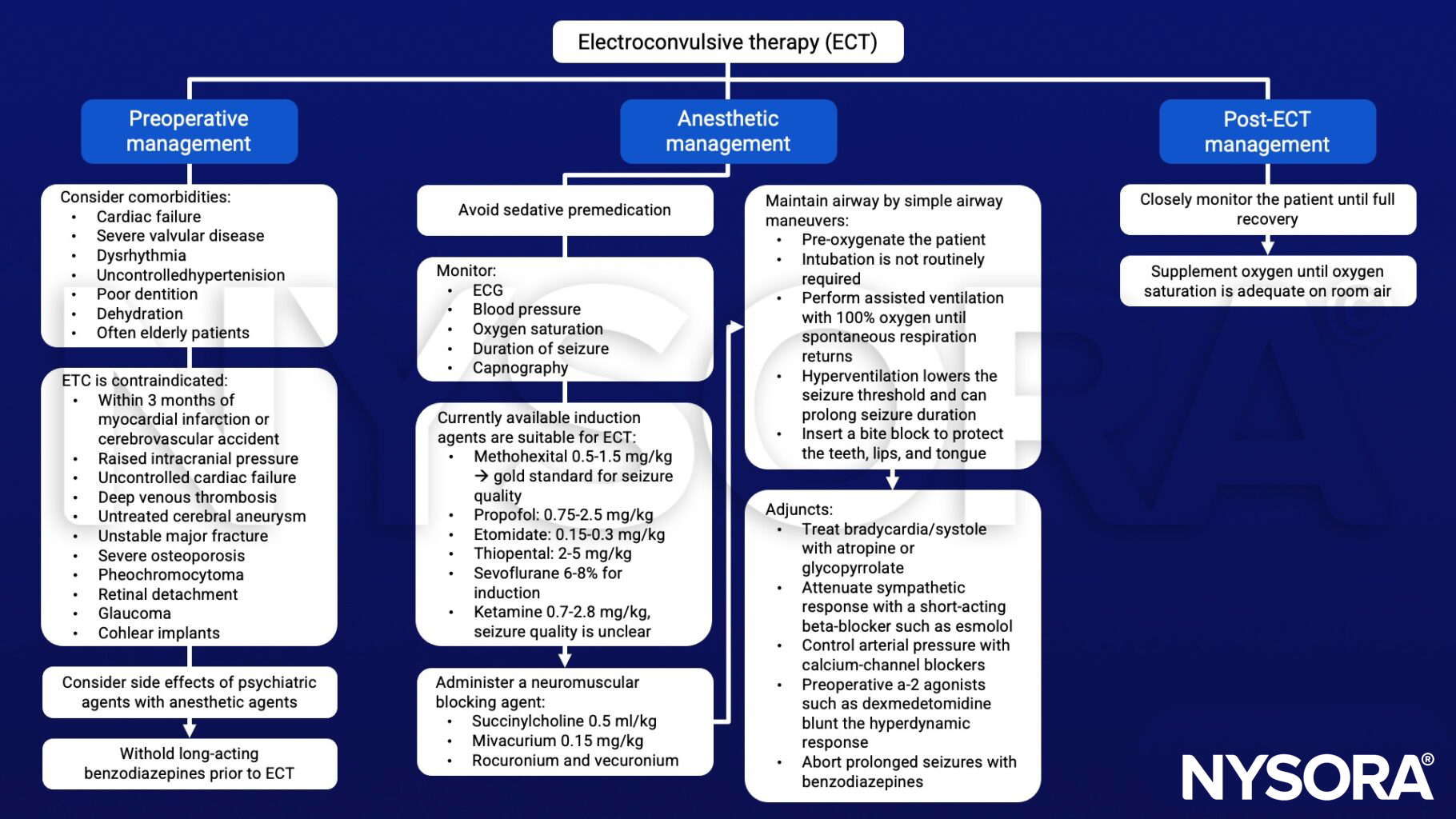
Management
Suggested reading
- Pollard BJ, Kitchen, G. Handbook of Clinical Anaesthesia. Fourth Edition. CRC Press. 2018. 978-1-4987-6289-2.
- Uppa Vl, Dourish J, Macfarlane A. Anaesthesia for electroconvulsive therapy. Continuing Education in Anaesthesia Critical Care & Pain. 2010. 10;(6); 192-196.
Clinical updates
Brenna et al. (Anesthesiology, 2024) highlight a paradigm shift in electroconvulsive therapy (ECT)–related practice, emphasizing that general anesthetic drugs themselves, particularly ketamine, nitrous oxide, propofol, and isoflurane, demonstrate rapid antidepressant effects that may rival or complement ECT. The review details that IV ketamine (0.5 mg/kg) produces antidepressant responses within hours (up to 71% response at 24 h in treatment-resistant depression), and that isoflurane-induced burst suppression and propofol infusions have shown antidepressant efficacy comparable to ECT in selected studies.