 Nerve Blocks App
 Anesthesia Assistant App
 Ultrasound Pain App
 Pain Medicine Assistant App
 POCUS App
 IV Access App
 MSK Knee App
 VetRA App
 Nerve Block Manual
 Regional Anesthesia Updates
 Anesthesiology Manual
 Anesthesiology Review
 Anesthesia Updates 2025
 Anesthesia Updates 2026
 Pediatric Anesthesia Updates
 Airway Management Updates
 US Interventional Pain Manual
 Pain Medicine Updates
 Mastering Difficult IV Access
 PACU Nursing Manual
 RA Veterinary Manual
 Books
Books About
About
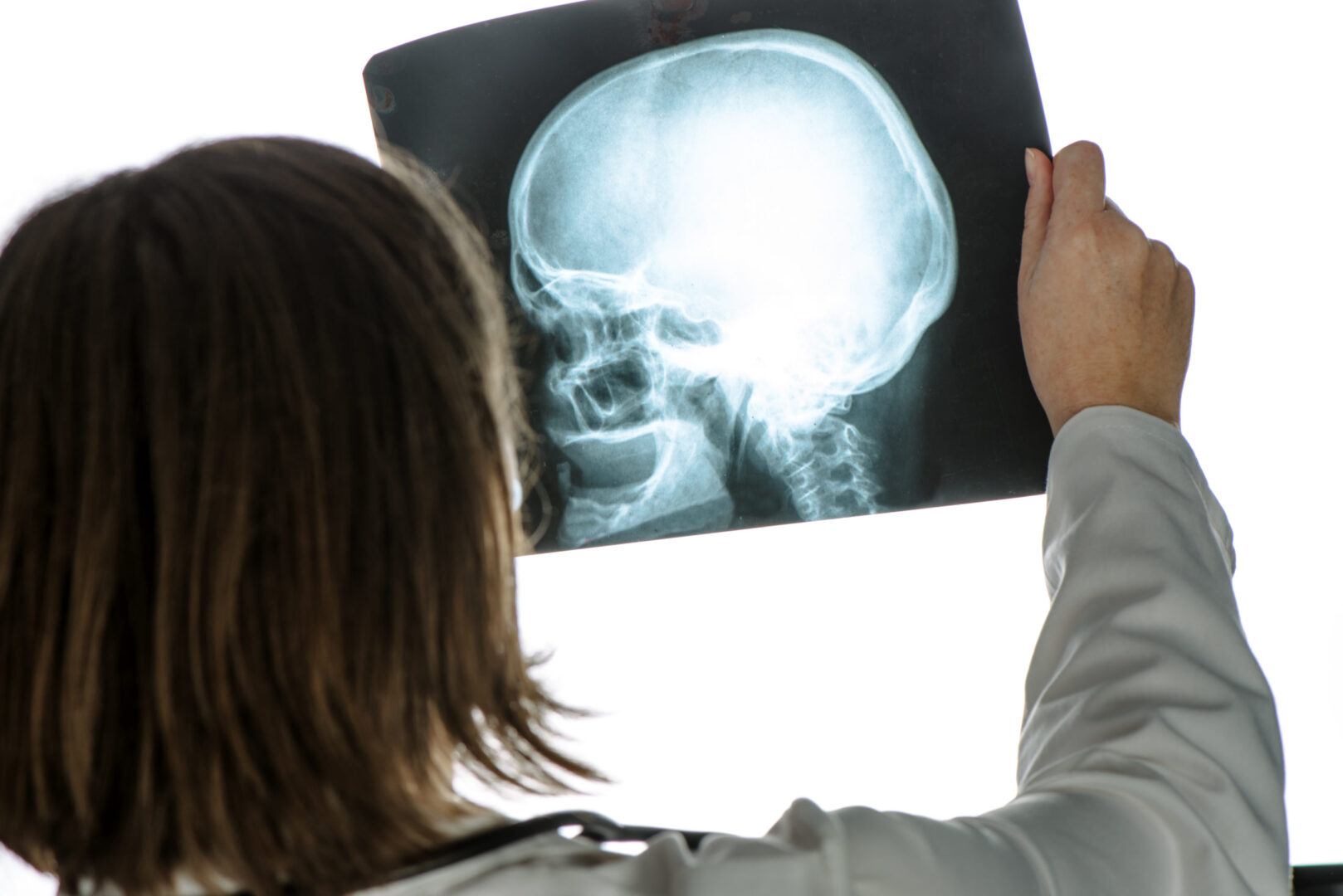
Learning objectives
- Describe and classify traumatic brain injury
- Describe the acute management goals for traumatic brain injury patients
- Manage traumatic brain injury patients
Background
- Traumatic brain injury is the leading cause of death and disability in young adults in the developed world
- Heterogeneous condition in terms of etiology, severity, and outcome
- Can be divided into primary and secondary brain injury
- Primary injury occurs as a consequence of the initial physical insult (skull fracture, contusions, intracranial hematoma, cerebral edema, diffuse brain injury)
- Secondary injury results from inflammatory and neurotoxic processes: Increased intracranial pressure, hypoperfusion, cerebral ischemia
Classification
Glasgow Coma Scale:
- 15-13: Mild
- 13-9: Moderate
- <8: Severe
| Component | Score | |
|---|---|---|
| Eye opening | Spontaneous | 4 |
| To speech | 3 | |
| To pain | 2 | |
| None | 1 | |
| Best verbal response | Orientated | 5 |
| Confused | 4 | |
| Inappropriate | 3 | |
| Incomprehensible | 2 | |
| None | 1 | |
| Best motor response | Obeying | 6 |
| Localizing | 5 | |
| Withdrawing | 4 | |
| Flexing | 3 | |
| Extending | 2 | |
| None | 1 |
Immediate management
| System | Management goals |
|---|---|
| Airway | Early tracheal intubation if GCS≤8 or unable to maintain respiratory goals |
| Respiratory | Avoid hypoxia, maintain SaO2>97%, PaO2>11 kPa |
| Maintain a PaCO2 value of 4.5 –5.0 kPa | |
| Hyperventilation, a PaCO2 value of 4.0 – 4.5 kPa reserved for impending herniation |
|
| Cardiovascular | Avoid hypotension, maintain MAP>80 mmHg |
| Replace intravascular volume, avoid hypotonic and glucose-containing solutions | |
| Use blood as necessary, reverse existing coagulopathy | |
| Vasopressor agents as necessary to maintain CPP | |
| Brain | Monitor ICP, avoid ICP>20 mmHg |
| Maintain CPP>60 mmHg | |
| Adequate sedation and analgesia | |
| Hyperosmolar therapy, keep Na+,<155 mmol/L, Posm<320 mosm/L | |
| CSF drainage | |
| Treat seizures | |
| Barbiturate coma, decompressive craniectomy, hypothermia, all reserved for elevated ICP refractory to standard medical care |
|
| Metabolic | Monitor blood glucose, aim for blood glucose 6– 10 mmol/L |
| Avoid hyperthermia | |
| DVT thromboprophylaxis |
Anesthetic management

Suggested reading
- Dinsmore J. Traumatic brain injury: an evidence-based review of management. Continuing Education in Anaesthesia Critical Care & Pain. 2013;13(6):189-95.
- Curry P, Viernes D, Sharma D. Perioperative management of traumatic brain injury. Int J Crit Illn Inj Sci. 2011;1(1):27-35.
- Moppett IK. Traumatic brain injury: assessment, resuscitation and early management. Br J Anaesth. 2007;99(1):18-31.
Clinical updates
Larcipretti et al. (Critical Care Medicine, 2025) analyzed 1,533 patients across five randomized trials and found that a liberal transfusion strategy (hemoglobin threshold ≥9–10 g/dL) in traumatic brain injury (TBI) was associated with a trend toward improved 6-month neurologic outcomes (Glasgow Outcome Scale), with statistical significance emerging on sensitivity analysis, compared with a restrictive threshold (<7 g/dL). Mortality and length of stay were similar between groups, but the liberal strategy resulted in an average of 2.9 more RBC units transfused and a higher incidence of ARDS, suggesting that in TBI, transfusion thresholds may need to prioritize neurologic recovery while carefully balancing pulmonary complications and transfusion-related risks.
Diz et al. (Anesthesia & Analgesia, 2025) analyzed 15 randomized trials including 35,388 critically ill adults and found that while balanced crystalloids reduced 90-day mortality in non-TBI patients, they were associated with increased mortality in traumatic brain injury (TBI), with an estimated 4–83 additional deaths per 1000 compared with normal saline. The findings suggest that in TBI, normal saline should remain the preferred resuscitation fluid, highlighting that fluid choice in TBI must prioritize neuroprotection over generalized critical care benefits seen with balanced solutions.
- Read more about this study HERE.