 Nerve Blocks App
 Anesthesia Assistant App
 US Pain Management App
 Pain Medicine Assistant App
 POCUS App
 IV Access App
 MSK Knee App
 VetRA App
 Nerve Block Manual
 Regional Anesthesia Updates
 Anesthesiology Manual
 Anesthesiology Review
 Anesthesia Updates 2025
 Anesthesia Updates 2026
 Pediatric Anesthesia Updates
 Airway Management Updates
 US Interventional Pain Manual
 Pain Medicine Updates
 Mastering Difficult IV Access
 PACU Nursing Manual
 RA Veterinary Manual
 Books
Books About
About

Learning objectives
- Recognize signs and symptoms of hypoglycemia
- Manage and prevent hypoglycemia
Definition and mechanism
- Hypoglycemia is a fall in blood sugar to levels below normal, typically below 70 mg/dL or 3.9 mmol/L
- Hypoglycemia during general anesthesia is rarely reported in the general population
- May cause cerebral damage
Signs and symptoms
- Diaphoresis is a marked sign of hypoglycemia
- Other symptoms are usually masked under anesthesia
- In the awake patient, hypoglycemia is characterized by neuroglypenic and adrenergic symptoms
| Neuroglycopenic symptoms | Adrenergic symptoms |
|---|---|
| Dizziness | Tachycardia |
| Blurred vision | Palpitations |
| Headache | Diaphoresis |
| Unusal behavior | Clamminess |
| Confusion | Feeling shaky or trembling |
| Altered mental status (like being drunk) | Hunger |
| Seizures | Nausea |
| Loss of consciousness | Tingling sensation |
| Coma | Pale skin color |
| Easily irritated, tearful, anxious, or moody |
Management and prevention
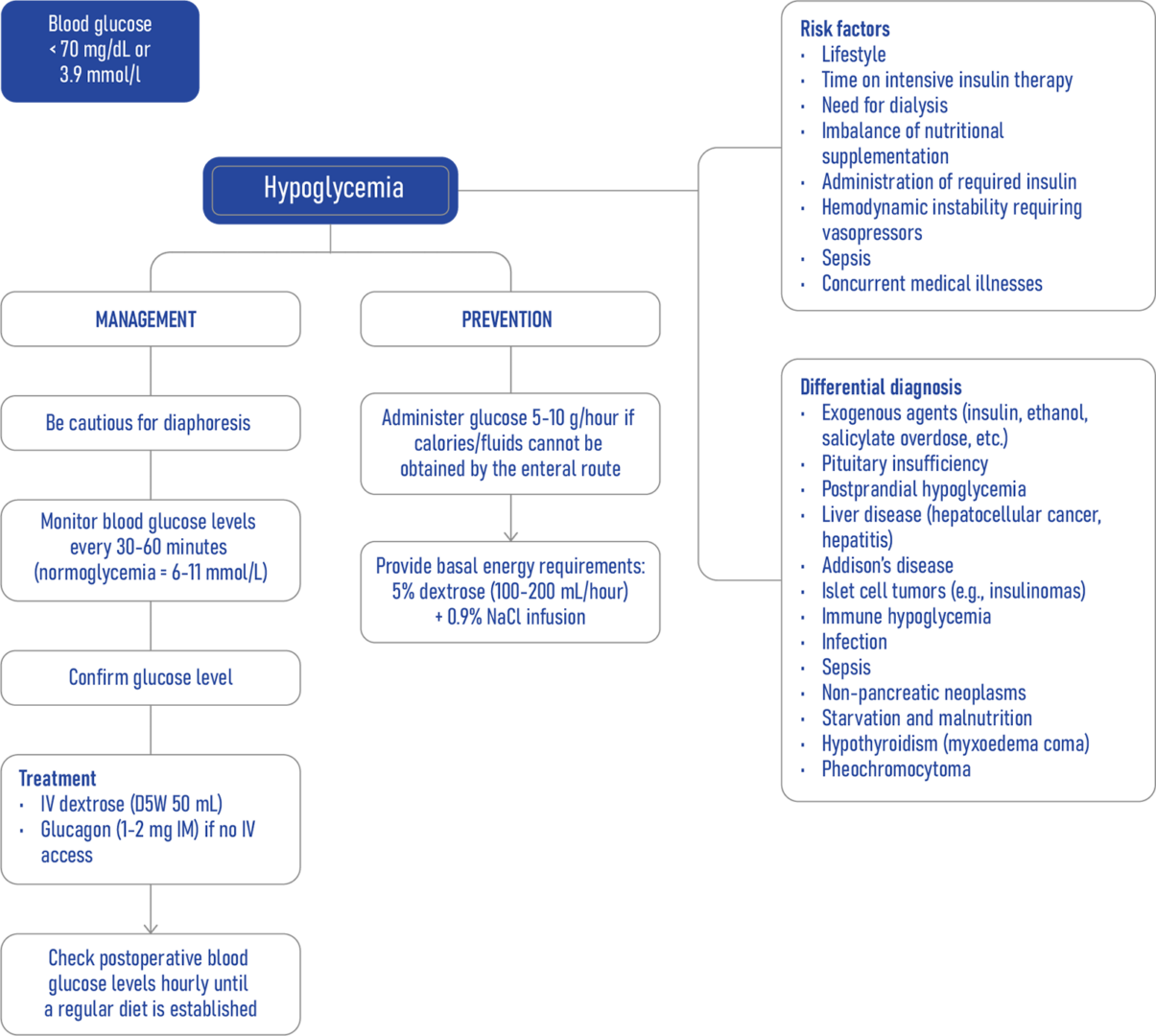
Keep in mind
- Monitor blood glucose levels closely in starved patients with a history of significant alcohol intake as anesthesia masks cognitive dysfuntion
Suggested reading
- Pollard BJ, Kitchen, G. Handbook of Clinical Anaesthesia. Fourth Edition. CRC Press. 2018. 978-1-4987-6289-2.
- Kalra S, Bajwa SJ, Baruah M, Sehgal V. Hypoglycaemia in anesthesiology practice: Diagnostic, preventive, and management strategies. Saudi J Anaesth. 2013;7(4):447-452.
- Ackland, Gareth L. PhD, FRCA; Smith, Megan MBBS; McGlennan, Alan P. FRCA. Acute, Severe Hypoglycemia Occurring During General Anesthesia in a Nondiabetic Adult. Anesthesia & Analgesia: August 2007 – Volume 105 – Issue 2 – p 553-554.
Clinical updates
Tinsley et al. (BJA, 2025) provide updated perioperative recommendations for non-insulin diabetes medications with direct relevance to hypoglycemia risk in surgical patients. The review emphasizes that sulfonylureas and meglitinides carry the highest perioperative hypoglycemia risk, particularly during fasting, supporting omission on the day of surgery. While metformin, DPP-4 inhibitors, and thiazolidinediones have lower hypoglycemia risk when used alone, combination therapies may still predispose to glucose instability. The authors stress structured preoperative medication review, withholding high-risk agents, and close perioperative glucose monitoring to prevent fasting-related hypoglycemia and associated hemodynamic or neurologic complications.
- Read more about this study HERE.
Rogers et al. (Anesthesiology, 2025) provide updated guidance on diabetes management in pregnancy with direct implications for perioperative hypoglycemia prevention in obstetric anesthesia. The review emphasizes tighter intrapartum glucose targets and highlights that intensive insulin therapy, reduced oral intake, and increased metabolic demand during labor increase hypoglycemia risk, particularly in women with T1DM and insulin-treated T2DM or GDM A2. The authors recommend structured insulin dose reductions before scheduled cesarean delivery, avoidance of insulin interruption in T1DM to prevent DKA, and rapid treatment protocols to maintain maternal and fetal safety. These updated recommendations reinforce the need for continuous glucose monitoring, proactive insulin adjustment, and dedicated IV access during labor and surgery to minimize hypoglycemia-related maternal and neonatal complications.
- Read more about this study HERE.
Lindestam et al. (BJA, 2025) report prospective data from 365 infants receiving a balanced electrolyte solution with 1% glucose for intraoperative maintenance, demonstrating no cases of hypoglycemia and only rare mild hyperglycemia. Mean glucose increased modestly, while sodium changes were small and clinically insignificant, with no relevant acidosis or ketosis despite prolonged fasting in some patients. These findings support 1% glucose-balanced isotonic fluids as a safe strategy to prevent intraoperative hypoglycemia while minimizing hyponatremia and metabolic instability in infants.
- Read more about this study HERE.