 Nerve Blocks App
 Anesthesia Assistant App
 Ultrasound Pain App
 Pain Medicine Assistant App
 POCUS App
 IV Access App
 MSK Knee App
 VetRA App
 Nerve Block Manual
 Regional Anesthesia Updates
 Anesthesiology Manual
 Anesthesiology Review
 Anesthesia Updates 2025
 Anesthesia Updates 2026
 Pediatric Anesthesia Updates
 Airway Management Updates
 US Interventional Pain Manual
 Pain Medicine Updates
 Mastering Difficult IV Access
 PACU Nursing Manual
 RA Veterinary Manual
 Books
Books About
About
 Back to News
 9 min read

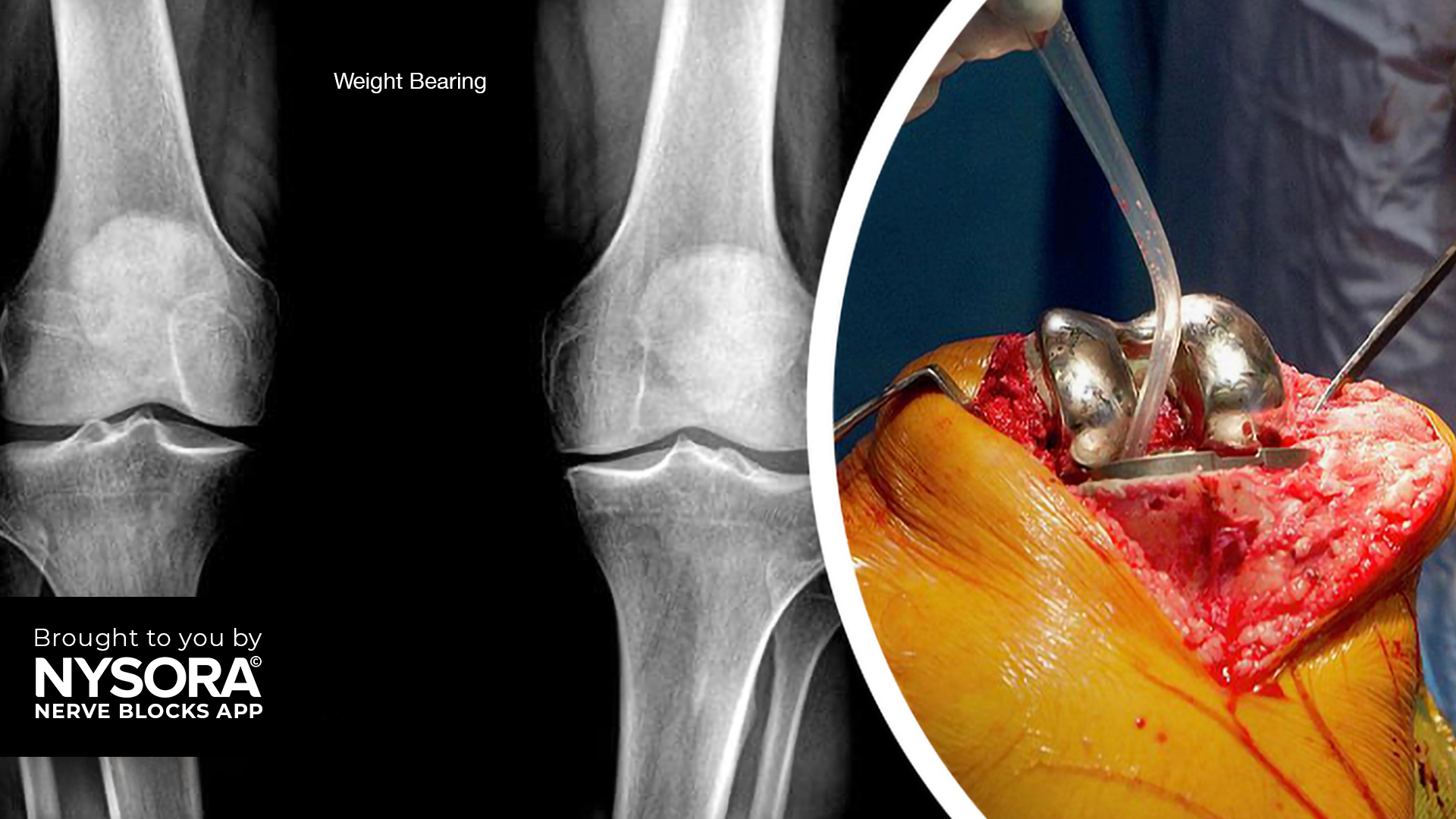
Total knee arthroplasty is one of the most commonly performed orthopedic operations worldwide, but it remains associated with substantial postoperative pain, impaired mobility and a risk of delayed recovery.
A 2026 review published in BJA Education outlines how modern perioperative care is moving toward a more individualised, opioid-sparing and mobility-preserving approach. The article focuses on preoperative optimisation, the choice between neuraxial and general anesthesia, blood conservation, multimodal analgesia and motor-sparing regional anesthesia.
The central message is clear: successful total knee arthroplasty depends not on a single anesthetic technique, but on a coordinated enhanced recovery pathway that starts before surgery and continues through rehabilitation.
Why anesthesia for knee replacement is changing
Patients undergoing total knee arthroplasty often have chronic pain, restricted movement and multiple comorbidities.
At the same time, healthcare systems are increasingly performing knee replacement as a short-stay or same-day-discharge procedure in appropriately selected patients.
This creates a clinical balancing act. Anesthesia and analgesia must provide sufficient surgical conditions and pain relief while also supporting:
- Early mobilisation
- Rapid return of motor function
- Reduced opioid exposure
- Lower rates of nausea and sedation
- Safe discharge
- Reduced risk of complications
- Long-term functional recovery
The review places these goals within enhanced recovery after surgery, or ERAS, pathways.
Preoperative optimisation is a key part of treatment
The perioperative plan begins well before the patient enters the operating theatre.
Preoperative education can reduce anxiety, improve engagement with care and help patients understand the importance of rehabilitation.
The article also recommends identifying and addressing modifiable risk factors.
Important areas include:
- Smoking cessation for at least four weeks before surgery
- Reduction of heavy alcohol consumption
- Assessment and treatment of anemia
- Optimisation of relevant medical comorbidities
- Identification of psychological and pain-related risk factors
Preoperative anemia is particularly important because it is associated with perioperative complications, prolonged hospitalisation and increased mortality.
The review advises further assessment and appropriate management when hemoglobin is below 130 g L−1, regardless of sex.
Who is at risk of persistent pain?
A proportion of patients continue to experience pain long after the surgical wound has healed.
The review reports that persistent postoperative pain affects approximately 15% of patients after total knee arthroplasty.
Factors associated with persistent pain include:
- High preoperative pain intensity
- Pain catastrophising
- Moderate-to-severe acute postoperative pain
- Younger age
- Female sex
- Preoperative anxiety
- Depression
These factors do not necessarily mean that a patient will develop chronic pain.
However, they can help clinicians stratify risk, plan more intensive perioperative analgesia and arrange earlier referral to specialist pain services when necessary.
Spinal or general anesthesia?
Both general anesthesia and neuraxial anesthesia are accepted options for total knee arthroplasty.
The decision should be individualised according to:
- Patient comorbidities
- Surgical complexity
- Expected operating time
- Contraindications
- Local resources
- Patient preference
- Anesthetic and surgical expertise
Spinal anesthesia is commonly preferred because observational evidence has associated neuraxial techniques with lower odds of several postoperative complications compared with general anesthesia.
The article reports reduced odds of pulmonary complications, pneumonia, acute kidney injury, deep vein thrombosis, pulmonary embolism, infection, blood transfusion and critical care admission with neuraxial anesthesia.
These associations do not mean spinal anesthesia is always the correct choice.
General anesthesia remains appropriate when spinal anesthesia is contraindicated, declined by the patient or unlikely to last long enough for the planned procedure.
Choosing the spinal anesthetic
The choice of intrathecal local anesthetic should reflect the expected duration of surgery and the recovery plan.
For operations lasting up to approximately 90 minutes, hyperbaric prilocaine 2% may offer rapid onset, early resolution of motor block and a low risk of urinary retention.
For longer procedures, bupivacaine or levobupivacaine may provide more reliable surgical anesthesia.
The review notes that short-acting spinal agents may appear attractive for same-day discharge, but longer-acting agents do not necessarily prevent early mobilisation when used appropriately.
Intrathecal opioids are no longer routine everywhere
Many centres have moved away from routine intrathecal opioid administration.
Reasons include:
- Pruritus
- Nausea and vomiting
- Urinary retention
- Respiratory monitoring requirements
- Limited additional benefit when effective regional analgesia is already used
Intrathecal morphine at a dose of 100 micrograms may still be considered for selected patients in whom severe postoperative pain is anticipated.
Intrathecal diamorphine is also used in the United Kingdom, although the review describes the supporting evidence as limited and of low certainty.
Multimodal analgesia reduces reliance on opioids
Modern pain control after knee replacement combines several treatments that act through different mechanisms.
This approach aims to improve analgesia while limiting the dose and adverse effects of any single drug.
Core components generally include:
- Paracetamol
- Non-steroidal anti-inflammatory drugs
- Cyclooxygenase-2 selective inhibitors
- Dexamethasone
- Local infiltration analgesia
- Peripheral nerve blocks
- Rescue immediate-release opioids when required
Paracetamol and NSAIDs or COX-2 inhibitors can reduce pain scores, opioid consumption and opioid-related adverse effects.
Dexamethasone at doses of at least 10 mg intravenously is also recommended in the review because it can reduce pain, opioid requirements and postoperative nausea and vomiting.
In patients with diabetes, a single dose appears generally safe, but transient perioperative hyperglycemia may occur and should be monitored.
Which drugs are not routinely recommended?
The review does not support routine use of every analgesic drug.
Gabapentinoids are not recommended routinely because they have not shown a clinically meaningful benefit in this setting and can cause sedation, dizziness and other adverse effects.
Alpha-2 adrenergic agonists, including dexmedetomidine, have not demonstrated sufficiently consistent benefit for routine early postoperative pain management.
Low-dose ketamine may be considered selectively, particularly for patients with chronic opioid use or difficult-to-control pain.
However, clinicians should use caution in patients who are vulnerable to delirium.
Regional anesthesia is becoming more motor-sparing
Traditional femoral nerve blocks can provide strong analgesia but may weaken the quadriceps.
Quadriceps weakness can delay mobilisation and increase concern about falls.
For this reason, modern practice increasingly favours distal, sensory-predominant regional techniques.
The goal is to relieve pain while preserving motor function.
Common approaches include:
- Adductor canal block
- Femoral triangle block
- IPACK block
- Genicular nerve blocks
- Anterior femoral cutaneous nerve blocks
- Selective blocks of nerves to the vastus muscles
- Local infiltration analgesia
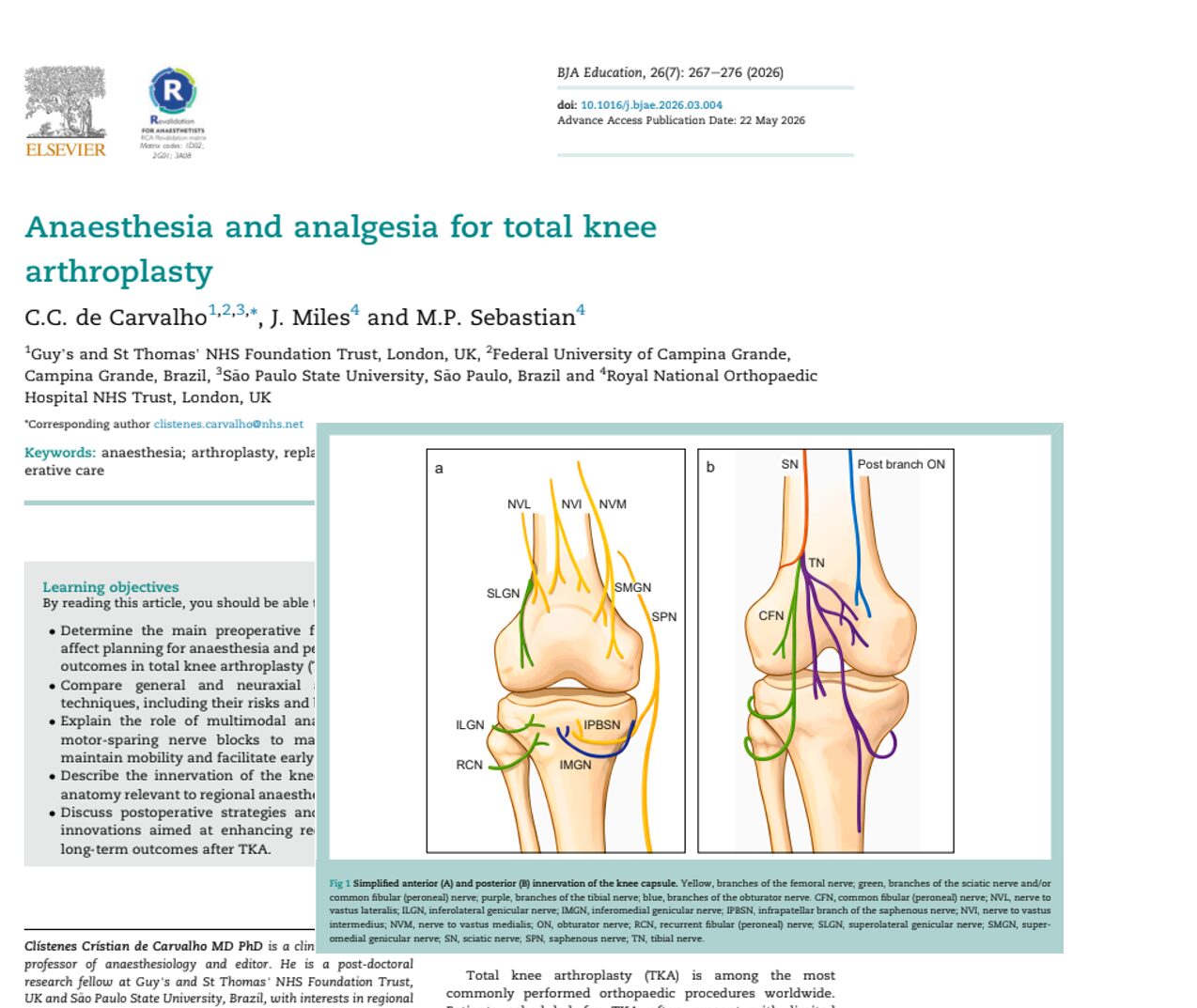
The review illustrates the overlapping contribution of the femoral, sciatic, tibial, common fibular and obturator nerves to the knee capsule.
This complex innervation helps explain why no single nerve block reliably covers all postoperative pain.
Adductor canal and femoral triangle blocks
Adductor canal and femoral triangle blocks are often grouped together, but they are anatomically distinct.
A femoral triangle block is performed more proximally and can cover the saphenous nerve, the nerve to vastus medialis and the medial femoral cutaneous nerve.
This may provide broader analgesia but carries a greater risk of quadriceps weakness.
An adductor canal block is performed more distally.
It primarily targets the saphenous nerve and its infrapatellar branch, making it more motor-sparing.
Clinicians must also consider injection volume. Large volumes may spread proximally and unintentionally affect motor branches of the femoral nerve.
What is an IPACK block?
IPACK stands for infiltration between the popliteal artery and capsule of the knee.
It is designed to provide analgesia to the posterior knee while avoiding a dense sciatic nerve block.
A dense sciatic block can impair lower-limb motor function and contribute to foot drop.
The IPACK technique deposits local anesthetic in the tissue plane between the posterior femur and the popliteal artery.
The review notes that IPACK may provide broader articular coverage than initially assumed.
However, adding IPACK to an already effective local infiltration technique may not provide further benefit in every patient.
Genicular nerve blocks may add analgesia
Genicular nerve blocks target sensory branches supplying the knee joint.
The principal targets are usually:
- Superomedial genicular nerve
- Superolateral genicular nerve
- Inferomedial genicular nerve
The inferolateral genicular nerve and recurrent fibular branch are generally avoided because of their proximity to the common fibular nerve.
Unintentional involvement of the common fibular nerve can cause foot drop and interfere with mobilisation.
The review cites a randomised trial in which adding genicular nerve blocks to an adductor canal block and IPACK block reduced opioid consumption by 60% during the first 24 hours after total knee arthroplasty.
Local infiltration analgesia remains central
Local infiltration analgesia is administered by the surgical team during the operation.
It commonly includes a local anesthetic such as ropivacaine, sometimes combined with adrenaline, ketorolac or other adjuncts.
The technique can cover tissues that may not be reached reliably by a single peripheral nerve block.
Current guidance described in the review supports combining an adductor canal block with local infiltration analgesia as a standard approach.
Evidence for adding multiple other selective blocks is promising but remains heterogeneous.
No randomised controlled trial has yet compared a four-block combination of adductor canal or femoral triangle block, anterior femoral cutaneous nerve block, genicular nerve blocks and IPACK against local infiltration analgesia.
Blood conservation and tranexamic acid
Total knee arthroplasty can result in significant blood loss.
Tranexamic acid plays a central role in reducing bleeding and transfusion requirements.
The review describes a practical regimen that may include:
- Administering 1 g of intravenous tranexamic acid at the time of surgery
- Adding 1–2 g of topical intra-articular tranexamic acid before wound closure
- Keeping the total dose at or below 3 g in patients with normal renal function
- Reducing the intravenous dose and avoiding topical use in severe renal impairment
The routine use of a tourniquet is discouraged because it may increase postoperative pain and is associated with serious compression-related complications, including nerve injury, limb ischemia and compartment syndrome.
Recovery continues after surgery
Early mobilisation and physiotherapy should begin within 24 hours.
This can shorten hospital stay, improve recovery and reduce complications.
Postoperative care should also include:
- Early oral intake
- Avoidance of unnecessary intravenous fluids
- Early removal of urinary catheters
- Avoidance of routine drains
- Individualised thromboprophylaxis
- Regular pain assessment
- Delirium prevention
- Objective discharge criteria
Opioids should be reserved for rescue treatment when multimodal measures are insufficient.
Immediate-release formulations are preferred.
Modified-release opioids are no longer recommended for routine postoperative pain because of the risks of respiratory depression and persistent opioid use.
Conclusion
Modern anesthesia for total knee arthroplasty is increasingly centred on enhanced recovery, multimodal opioid-sparing analgesia and motor-sparing regional anesthesia. Careful preoperative optimisation, evidence-based anesthetic selection and coordinated multidisciplinary care can improve pain control, facilitate early mobilisation and reduce postoperative complications. As regional anesthesia techniques continue to evolve, personalized, anatomy-guided approaches are expected to further enhance patient outcomes while supporting faster and safer recovery after knee replacement surgery.
Reference: de Carvalho CC et al. Anaesthesia and analgesia for total knee arthroplasty. BJA Educ. 2026;26:267-276.
Download the Nerve Blocks App HERE for instant access to step-by-step guidance on the paravertebral block and other regional anesthesia techniques. Prefer a physical copy? The bestselling NYSORA Nerve Blocks App is available in book format – an essential resource for mastering nerve blocks! And for a digital learning experience, check out the Nerve Blocks Module on NYSORA360!