 Nerve Blocks App
 Anesthesia Assistant App
 Ultrasound Pain App
 Pain Medicine Assistant App
 POCUS App
 IV Access App
 MSK Knee App
 VetRA App
 Nerve Block Manual
 Regional Anesthesia Updates
 Anesthesiology Manual
 Anesthesiology Review
 Anesthesia Updates 2025
 Anesthesia Updates 2026
 Pediatric Anesthesia Updates
 Airway Management Updates
 US Interventional Pain Manual
 Pain Medicine Updates
 Mastering Difficult IV Access
 PACU Nursing Manual
 RA Veterinary Manual
 Books
Books About
About
 Back to News
 6 min read
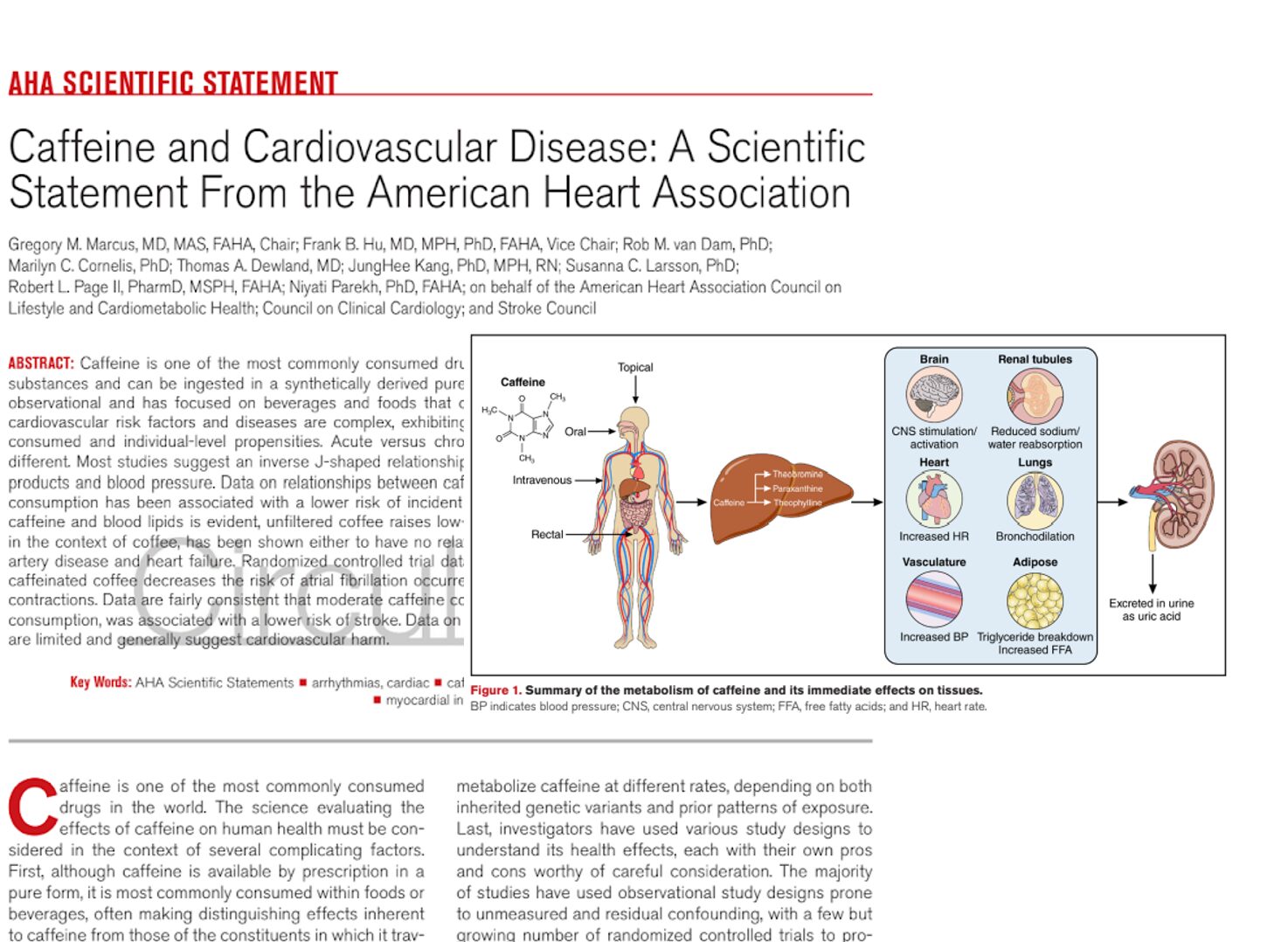
A new American Heart Association (AHA) Scientific Statement concludes that moderate caffeine consumption, primarily through coffee, is safe for most adults and is associated with a lower risk of several cardiovascular diseases. However, the statement also highlights important differences between naturally occurring caffeine in coffee and tea versus high-dose caffeine found in many energy drinks.
What the new AHA statement found
Caffeine is the world’s most widely consumed psychoactive substance. While it is often discussed as a single compound, the AHA emphasizes that most research has actually evaluated coffee, not purified caffeine.
This distinction is important because coffee contains numerous biologically active compounds besides caffeine, including:
- Chlorogenic acids
- Polyphenols
- Trigonelline
- Melanoidins
- Diterpenes
Many of these compounds may contribute to the health benefits observed in epidemiological studies.
Moderate coffee appears beneficial for heart health
After reviewing decades of observational studies, randomized clinical trials, and genetic analyses, the AHA concludes that:
- Moderate caffeine intake (up to 400 mg/day) is generally safe for healthy adults.
- This equals approximately 3–5 cups of brewed coffee (8-ounce cups).
- Moderate coffee consumption is associated with lower risks of:
- Coronary artery disease
- Heart failure
- Stroke
- Atrial fibrillation
- Hypertension
- Type 2 diabetes
The statement notes that these benefits are most consistently observed with habitual coffee consumption, not occasional caffeine intake.
How caffeine affects the cardiovascular system
Caffeine exerts multiple physiological effects by acting on several molecular pathways.
Primary mechanisms include
- Adenosine receptor antagonism
- Phosphodiesterase inhibition (primarily at high doses)
- Calcium mobilization
- Central nervous system stimulation
These mechanisms can produce:
- Increased alertness
- Temporary increases in heart rate
- Mild elevations in blood pressure
- Increased urine production
- Bronchodilation
- Enhanced skeletal muscle performance
Most of these acute effects diminish in regular coffee drinkers because tolerance develops over time.
Blood pressure: the relationship is complex
The scientific statement reports that caffeine’s effects on blood pressure depend on:
- Habitual intake
- Individual sensitivity
- Genetics
- Existing hypertension
Research suggests a J-shaped relationship, meaning:
- Moderate coffee intake is generally associated with lower long-term hypertension risk.
- Very high intake or acute caffeine exposure can temporarily raise blood pressure.
- Individuals with severe hypertension may experience larger blood pressure increases.
Energy drinks consistently produced significantly greater blood pressure elevations than coffee.
Coffee and diabetes
One of the strongest findings involves type 2 diabetes.
Large prospective studies consistently show that habitual coffee drinkers have lower diabetes risk.
Examples cited include:
- Around 20% lower risk with approximately 3.5 cups/day
- Around 30% lower risk with approximately 5 cups/day
Interestingly, similar benefits have been observed with decaffeinated coffee, suggesting that compounds other than caffeine contribute to improved glucose metabolism.
Coffee and cholesterol
Not all coffee preparation methods are equal.
The AHA highlights that unfiltered coffee contains cafestol, a diterpene known to increase LDL cholesterol.
Examples include:
- French press
- Turkish coffee
- Scandinavian boiled coffee
By contrast:
- Paper-filtered coffee
- Instant coffee
contain much lower cafestol concentrations and have little effect on LDL cholesterol.
What about heart rhythm disorders?
One of the most common concerns is whether caffeine causes arrhythmias.
The AHA found reassuring evidence regarding atrial fibrillation.
Atrial fibrillation
Most studies demonstrate:
- No increased risk
- Possible reduction in risk among moderate coffee drinkers
One randomized clinical trial even showed fewer recurrent atrial fibrillation episodes among regular coffee drinkers.
Premature ventricular contractions (PVCs)
The picture is more nuanced.
Randomized trials suggest caffeinated coffee may increase PVC frequency in some individuals, although this has not translated into higher rates of major cardiovascular events.
Coronary artery disease
Earlier research raised concerns about coffee increasing coronary disease risk.
Modern evidence no longer supports this.
Instead:
- Up to six cups daily was not associated with increased coronary artery disease.
- The lowest cardiovascular risk generally occurred around 2–3 cups daily.
Again, researchers believe coffee’s non-caffeine components may contribute substantially to these protective associations.
Heart failure
Large cohort studies consistently found:
- No increased heart failure risk
- Often a modest reduction in heart failure incidence
Several analyses suggest the lowest risk occurs around 4 cups of coffee per day, although excessive intake may lose this benefit.
Stroke
Coffee consumption also appears favorable regarding stroke prevention.
Meta-analyses identified:
- Lower ischemic stroke risk
- Approximately 21% risk reduction with moderate coffee intake
- Greatest benefit at 3–4 cups daily
Tea consumption was likewise associated with modest reductions in stroke risk.
Genetics influence caffeine metabolism
Not everyone metabolizes caffeine equally.
The statement explains that genetic variation, particularly involving the CYP1A2 enzyme, affects:
- Caffeine metabolism
- Tolerance
- Withdrawal symptoms
- Individual responses
Some people metabolize caffeine rapidly, whereas others experience prolonged effects after relatively small amounts.
These differences may explain why one person sleeps normally after evening coffee while another develops palpitations or insomnia.
Energy drinks are different
Perhaps the strongest warning in the scientific statement concerns energy drinks.
Unlike coffee, available evidence suggests that high-dose caffeine products may increase cardiovascular risk.
Reported concerns include:
- Significant blood pressure elevation
- Increased heart rate
- Greater arrhythmia risk
- Case reports of atrial fibrillation
- Rare reports of ventricular fibrillation and sudden cardiac arrest after extremely high caffeine exposure
The authors caution that health benefits observed with coffee should not be extrapolated to synthetic caffeine products or high-dose energy drinks.
Practical recommendations
Based on current evidence, the AHA concludes that most adults can safely consume:
- Up to 400 mg caffeine daily.
- Approximately 3–5 cups of brewed coffee.
- Filtered coffee rather than unfiltered coffee if LDL cholesterol is elevated.
- Minimal added sugar and flavored syrups to preserve cardiovascular benefits.
- Limited intake of high-caffeine energy drinks.
People who are pregnant, have uncontrolled hypertension, significant caffeine sensitivity, or specific cardiovascular conditions should discuss individualized recommendations with their healthcare provider.
Conclusion
The American Heart Association’s comprehensive review reinforces an increasingly consistent message: moderate coffee consumption can be part of a heart-healthy lifestyle. While caffeine has complex physiological effects, the overall body of evidence indicates that drinking approximately 3–5 cups of coffee per day is not only safe for most adults but may also reduce the risk of coronary artery disease, stroke, heart failure, atrial fibrillation, hypertension, and type 2 diabetes.
The notable exception is high-dose caffeine, particularly from energy drinks and concentrated supplements, where available evidence points toward potential cardiovascular harm rather than benefit.
Read more about recent evidence like this in NYSORA’s Anesthesia Assistant app. Simulate case, check dosages and search through NYSORA knowledge database!
Reference: Marcus GM et al. Caffeine and Cardiovascular Disease: A Scientific Statement From the American Heart Association. Circulation. Published online July 20, 2026.