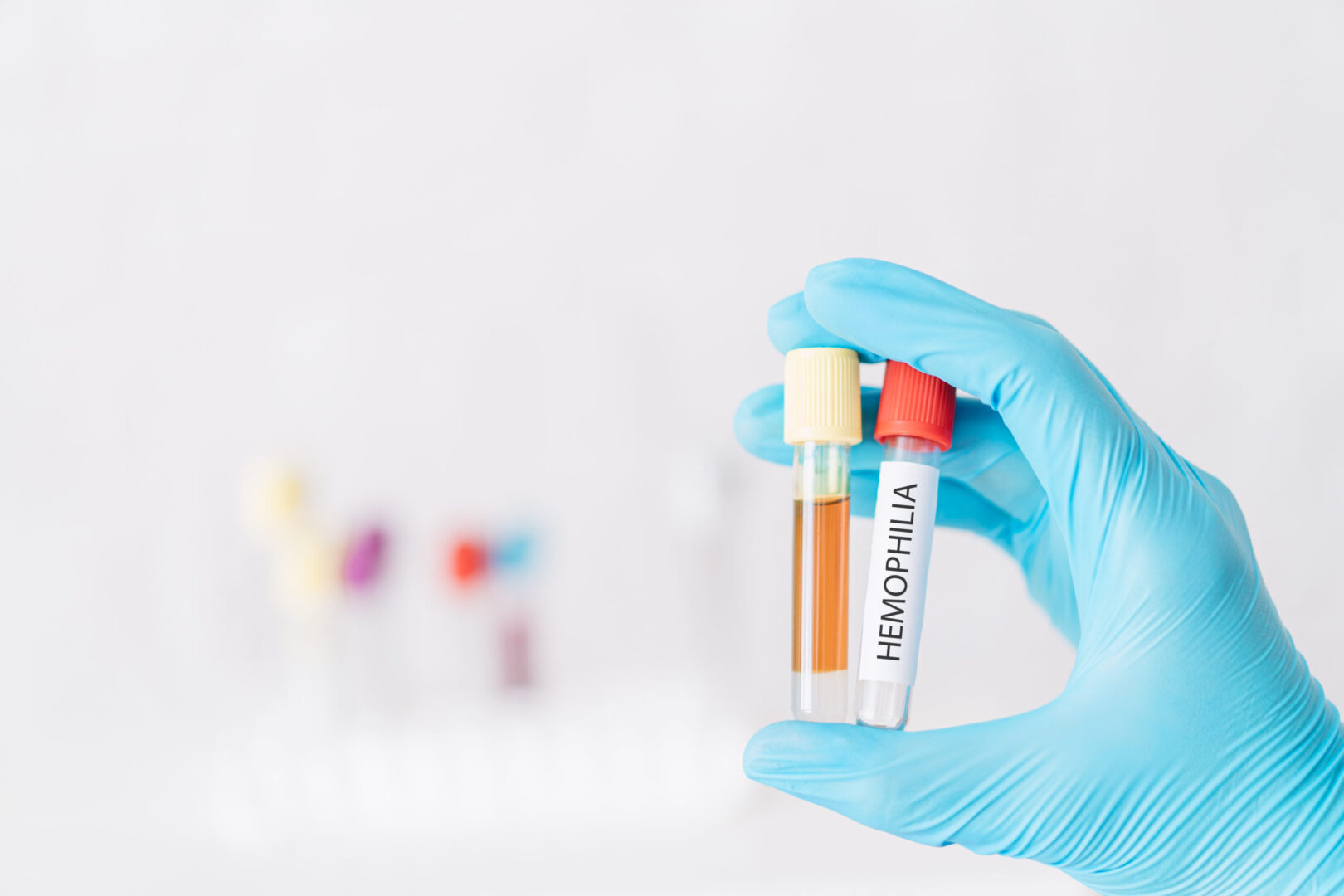
Learning objectives
- Definition and types of hemophilia
- Management of hemophilia
Definition and mechanisms
- Inherited bleeding disorder in which the blood does not clot properly
- Resulting in a longer bleeding time: ↑ PTT, normal INR
- Spontaneous bleeding as well as bleeding following injuries or surgery
- Severity depends on the amount of factor in the blood
- Two types of hemophilia:
- Hemophilia A (Classic Hemophilia): caused by a lack or decrease of clotting factor VIII
- Hemophilia B (Christmas Disease): caused by a lack or decrease of clotting factor IX
- Hemophilia is 4 times as common as hemophilia B
- A normal value of coagulation factor is 0.5-1.5 IU/ml or 50-150%
| Hemophilia | Mild | Moderate | Severe |
|---|---|---|---|
| % activity of factors Factor levels (IU/ml) | 5-40 0.05-0.40 | 1-5 0.01-0.05 | <1 <0.01 |
Signs and symptoms
- Unexplained and excessive bleeding from cuts or injuries, or after surgery or dental work
- Many large or deep bruises
- Unusual bleeding after vaccinations
- Pain, swelling, or tightness in the joints
- Blood in your urine or stool
- Nosebleeds without a known cause
- Unexplained irritability in infants
Causes
- Congenital:
- Caused by an X-linked genetic mutation
- Occurs in 1/5000 male births
- Acquired hemophilia:
- Pregnancy
- Autoimmune disorders
- Cancer
- Multiple sclerosis
- Drug reactions
Complications
- Deep internal bleeding
- Bleeding into the throat or neck
- Damage to joints
- Infection: hepatitis C
- Adverse reaction to clotting factor treatment
Management

Specific treatment

Suggested reading
Shah UJ, Madan Narayanan M, J Graham Smith JH. Anaesthetic considerations in patients with inherited disorders of coagulation, Continuing Education in Anaesthesia Critical Care & Pain, Volume 15, Issue 1, February 2015, Pages 26–31.
Clinical updates
Khambaty M et al. (British Journal of Anaesthesia, 2025) provide updated perioperative guidance for patients with hemophilia A and B, recommending target factor VIII or IX levels of 80–100% for major surgery, with recombinant factor replacement as first-line therapy and DDAVP reserved for mild hemophilia A. For patients with inhibitors, bypassing agents and antifibrinolytics (e.g., tranexamic acid) are emphasized, alongside structured multidisciplinary planning and postoperative monitoring for at least 5–7 days.
- Read more about this study HERE.