Back to News
 7 min read

In intensive care units (ICUs) worldwide, the use of diuretics is nearly universal among patients requiring management of fluid overload. Despite their frequent use, a wide range of questions remains regarding the most suitable diuretic agents, optimal dosing strategies, and the physiological consequences of their administration.
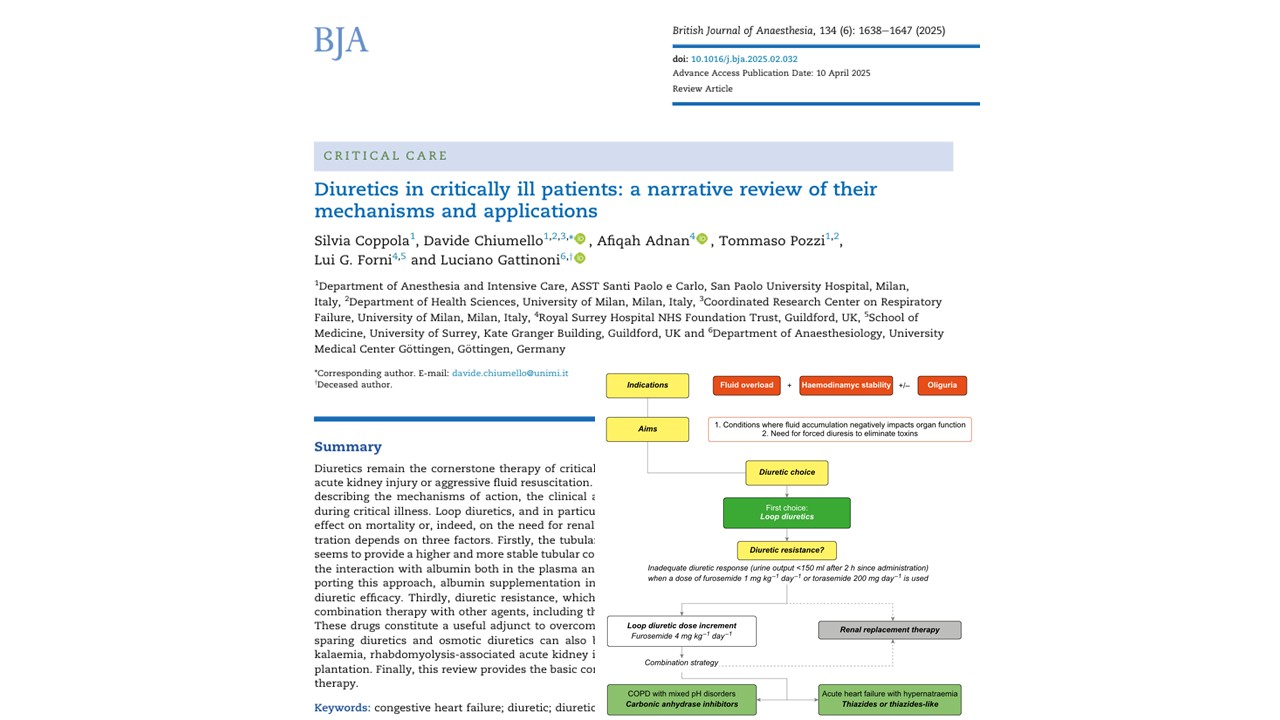
A 2025 narrative review published in the British Journal of Anaesthesia synthesizes the current knowledge of renal physiology, drug mechanisms, and clinical indications of diuretics in critically ill patients. The review highlights practical insights into how diuretics can be used more effectively while identifying areas where further evidence is required. This comprehensive summary addresses both the pharmacodynamic principles and the nuanced clinical applications of diuretic therapy, providing a structured framework for decision-making in ICU fluid management.
Renal physiology as the foundation for diuretic strategy
Effective use of diuretics in critical care hinges on a sound understanding of renal function. The nephron, the kidney’s functional unit, reabsorbs over 99% of the filtered water and solutes, primarily in the proximal tubule and loop of Henle. Different classes of diuretics target distinct nephron segments to interrupt sodium and water reabsorption.
Crucial physiological processes involved include:
- Tubular transport mechanisms, such as the Na⁺-H⁺ exchanger and the NKCC co-transporter, are essential for sodium and bicarbonate reabsorption.
- Tubuloglomerular feedback is mediated by the macula densa, which regulates glomerular filtration rate (GFR) in response to tubular solute load.
- Hormonal regulation through the renin–angiotensin–aldosterone system (RAAS) affects sodium reabsorption and fluid balance in the distal nephron.
In the context of critical illness, factors such as capillary leak, altered renal perfusion, and systemic inflammation often disrupt these regulatory mechanisms, thereby complicating fluid management.
Loop diuretics: clinical utility and considerations
Loop diuretics, particularly furosemide, are the cornerstone of diuretic therapy in the intensive care unit (ICU) due to their potency in inducing natriuresis and promoting fluid loss.
Mechanism of action
Loop diuretics primarily act on the NKCC co-transporter in the thick ascending limb (TAL) of the loop of Henle, which reabsorbs approximately 25–30% of filtered sodium. By blocking this transporter:
- Sodium, potassium, and chloride reabsorption are inhibited.
- Medullary hypertonicity is disrupted, impairing water reabsorption.
- The net effect is increased sodium and water excretion.
Pharmacokinetics
- Highly protein-bound (>90%), furosemide reaches its site of action via active tubular secretion.
- Rapid onset (within minutes) when given intravenously.
- Short half-life (1.5–2 hours), requiring frequent dosing or infusion in certain settings.
Clinical application
Furosemide is commonly used to manage volume overload in acute kidney injury (AKI), heart failure, and after aggressive fluid resuscitation. Though it reliably increases urine output, evidence supporting its benefit on mortality or the need for renal replacement therapy (RRT) is inconclusive.
Administration methods
- Continuous infusion yields steadier plasma and tubular concentrations, thereby improving diuresis and reducing fluctuations in fluid balance.
- Bolus dosing is more variable and may lead to peaks and troughs in effectiveness.
Meta-analyses and retrospective studies suggest that continuous infusion can:
- Produce greater overall urine output.
- Improve net fluid balance.
- Result in fewer adverse hemodynamic fluctuations compared to intermittent boluses.
Adverse effects
- Electrolyte imbalances (hypokalemia, hypochloremia).
- Hypotension and renal hypoperfusion.
- Metabolic alkalosis due to increased bicarbonate reabsorption and hydrogen ion loss.
Diuretic resistance and therapeutic adaptations
Resistance to loop diuretics, defined as a suboptimal diuretic response despite high dosing, is a common challenge in ICU patients, particularly those with ongoing fluid overload and organ dysfunction.
Mechanisms of resistance
- Reduced drug delivery to the nephron due to poor renal perfusion or hypoalbuminemia.
- Compensatory distal sodium reabsorption in the distal convoluted and collecting tubules.
- Nephron remodeling and RAAS activation are often due to prolonged diuretic exposure or underlying disease states.
Management strategies
- Escalate loop diuretic dose up to 4 mg/kg/day.
- Switch to continuous infusion if the response is inadequate.
- Introduce combination therapy:
- Thiazide diuretics to inhibit sodium reabsorption in the distal tubule.
- Carbonic anhydrase inhibitors (e.g., acetazolamide) to enhance sodium bicarbonate excretion and synergize with loop diuretics.
Studies indicate that these strategies can increase natriuresis and urine volume, although patient response may vary based on comorbidities and kidney function.
Role of albumin supplementation
Hypoalbuminaemia is prevalent in critically ill patients and may diminish the efficacy of loop diuretics by:
- Decreasing plasma-bound furosemide, thus reducing tubular secretion.
- Increasing the drug’s volume of distribution, limiting concentration at the site of action.
Several clinical trials have examined whether combining furosemide with intravenous albumin improves diuresis:
- Results are inconsistent; some show modest improvements in urine output, while others report no significant benefit in net sodium excretion or clinical outcomes.
- Current evidence does not support routine co-administration of albumin with diuretics in critically ill patients.
Supplementary diuretic classes
Beyond loop diuretics, several other agents can be considered, particularly in cases that are resistant or complex.
Thiazide diuretics
- Inhibit Na⁺/Cl⁻ reabsorption in the distal tubule.
- Modest natriuretic effect due to low sodium reabsorption at this site.
- Used mainly in combination with loop diuretics to overcome resistance.
Potential side effects include:
- Hyponatremia.
- Hypokalemia.
- Rare hypersensitivity reactions (e.g., interstitial nephritis, pancreatitis).
Carbonic anhydrase inhibitors (acetazolamide)
- Reduce bicarbonate and sodium reabsorption in the proximal tubule.
- Weak as monotherapy, but enhances distal sodium delivery and diuretic synergy.
- Useful in correcting metabolic alkalosis, especially in ventilated patients with COPD.
Osmotic diuretics (mannitol)
- Create an osmotic gradient in the proximal tubule and loop of Henle, promoting water excretion.
- Used in cases like rhabdomyolysis or to protect renal function during transplantation.
- Risks include osmotic nephrosis, electrolyte disturbances, volume shifts, and worsening pulmonary or cerebral edema.
Potassium-sparing diuretics
- Spironolactone and amiloride inhibit sodium reabsorption in the distal nephron, preserving potassium.
- Limited role in acute diuresis but valuable in correcting diuretic-induced hypokalemia or magnesium loss.
- Risk of hyperkalemia, especially in patients on ACE inhibitors or with reduced renal function.
Emerging therapies: SGLT-2 inhibitors
Originally developed for glycemic control in type 2 diabetes mellitus, SGLT-2 inhibitors reduce sodium and glucose reabsorption in the proximal tubule, promoting mild natriuresis.
Early ICU studies suggest:
- Increased diuretic response when used with furosemide.
- Potential renal protection with reduced need for RRT.
- Good tolerability, although vigilance is required for infections and rare cases of ketoacidosis.
Ongoing trials will determine whether these agents have a lasting place in critical care.
Diuretic effects on acid–base balance
Diuretics significantly impact acid–base homeostasis. Loop and thiazide diuretics commonly cause metabolic alkalosis through:
- Volume depletion.
- Increased distal sodium delivery, enhancing hydrogen ion secretion.
In contrast, acetazolamide promotes metabolic acidosis by increasing bicarbonate loss in the urine.
Close monitoring of arterial blood gases and serum electrolytes is crucial, particularly in patients with respiratory failure, where pH disturbances can have substantial clinical consequences.
Clinical recommendations and practice framework
An effective, physiology-informed approach to diuretic use in critically ill patients involves:
- Initial assessment:
- Confirm fluid overload through clinical and imaging criteria.
- Start with loop diuretics (1 mg/kg/day), titrating the dose based on response.
- Response evaluation:
- Adequate diuresis: urine output >150 mL/hour within 2 hours.
- Inadequate response: increase dose or switch to continuous infusion.
- Combination therapy:
- Add thiazides or acetazolamide if resistance occurs.
- Tailor adjuncts to underlying acid–base or electrolyte abnormalities.
- Monitoring and reassessment:
- Regular checks of serum sodium, potassium, chloride, and bicarbonate.
- Evaluate for signs of volume depletion or overcorrection.
- Special populations:
- Adjust dosing and combinations in hypoalbuminemia, hepatic failure, or post-surgical patients.
- Consider newer agents like SGLT-2 inhibitors based on emerging data.
Conclusion
Diuretic therapy remains a fundamental intervention in the ICU, particularly for managing fluid overload in the context of critical illness. While loop diuretics are central to this strategy, their effectiveness is modulated by several physiological and pathological factors. Resistance is common but can be mitigated through combination therapies and optimized dosing strategies. Awareness of acid–base consequences, renal physiology, and drug interactions is crucial for the safe and effective use of medications. Despite their ubiquity in critical care, many aspects of diuretic therapy are still informed more by tradition than by robust evidence. Continued research is needed to refine protocols, individualize treatment, and ultimately improve patient outcomes in the high-stakes environment of intensive care.
For more information, refer to the full article in the British Journal of Anaesthesia.
Coppola S, Chiumello D, Adnan A, Pozzi T, Forni LG, Gattinoni L. Diuretics in critically ill patients: a narrative review of their mechanisms and applications. Br J Anaesth. 2025 Jun;134(6):1638-1647.
Read more about renal failure in our Anesthesiology Manual: Best Practices & Case Management.