Learning objectives
- Definition of idiopathic thrombocytopenia purpura (ITP)
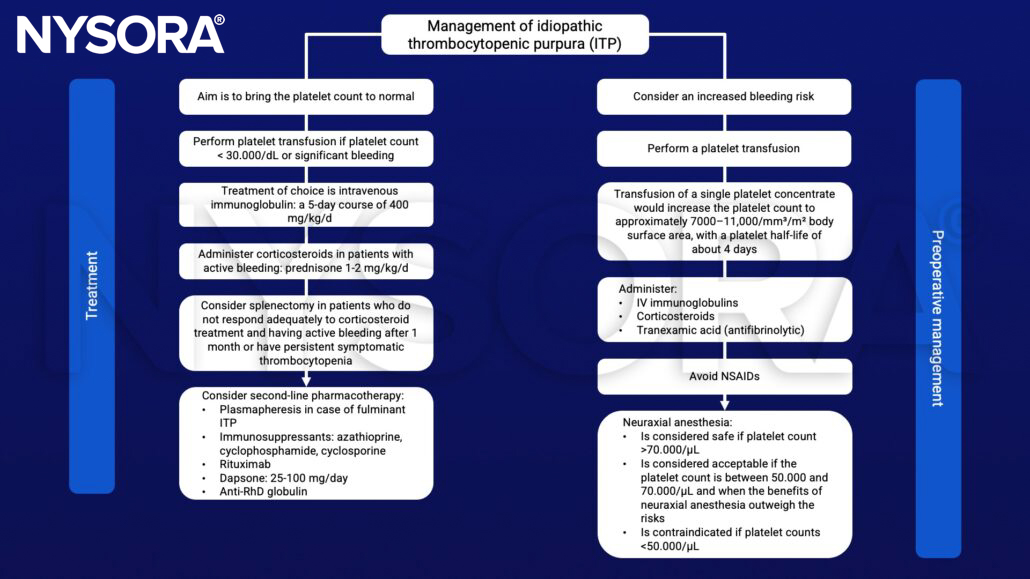
- Treatment and perioperative management of ITP
Definitions and mechanisms
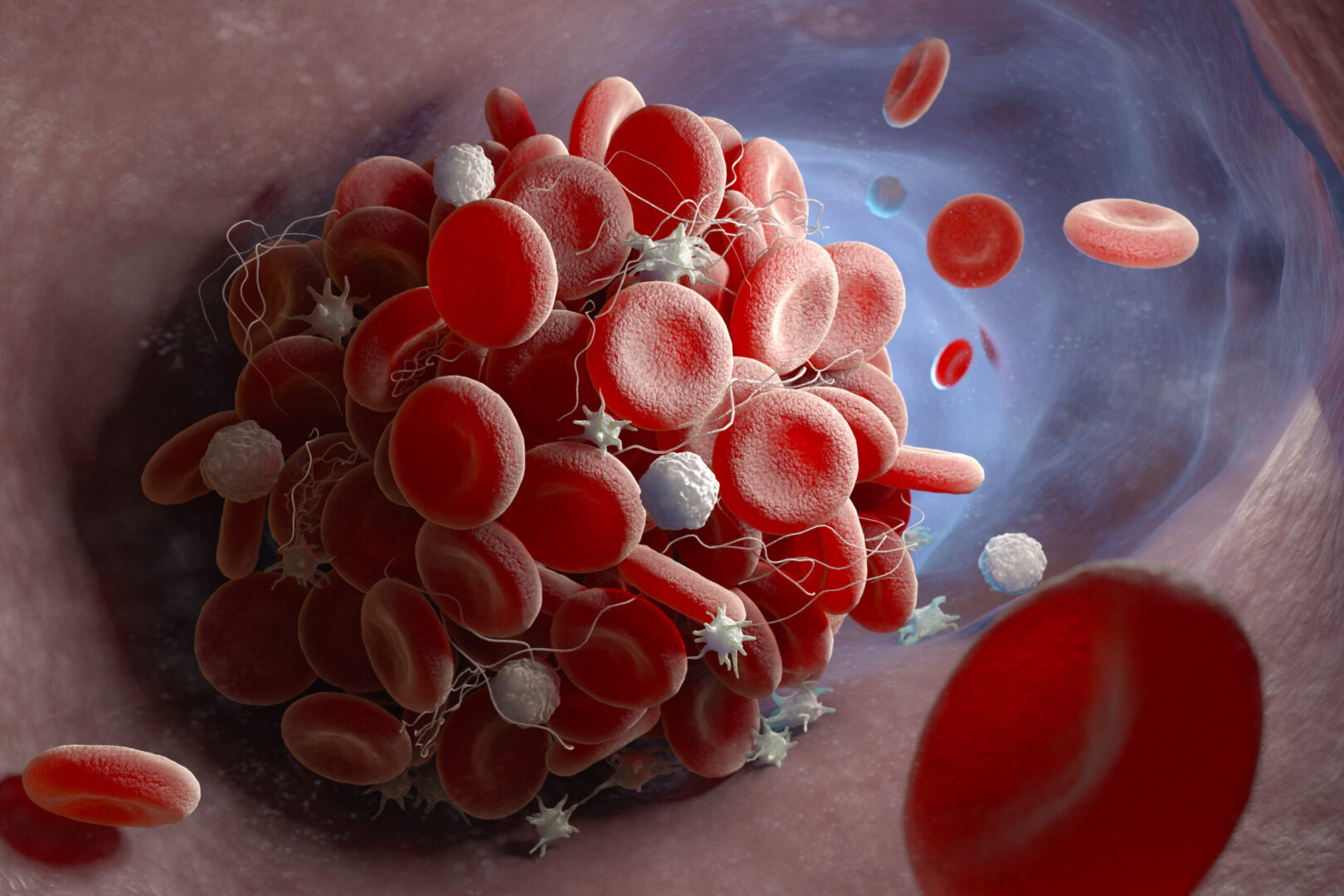
- Idiopathic thrombocytopenic purpura (ITP) is an autoimmune disease characterized by a low platelet count, purpura, and hemorrhagic episodes
- Resulting in easy or excessive bruising and bleeding due to unusually low levels of platelets
- The immune system produces antibodies against platelets
- Most often against platelet membrane glycoproteins IIB-IIIa or Ib-IX
- Normal platelet count is between 150.000 and 450.000, the platelet count is less than 10.000 with ITP
- Pregnant women with ITP have an increased incidence of fetal loss, a low fetal birth rate, and a higher incidence of premature births
- Two types:
- Acute thrombocytopenic purpura
- Affects young children between 2-6 years, often following a coral infection
- Starts suddenly and symptoms usually disappear in less than 6 months, often within a few weeks
- Most common form and resolves spontaneously
- Chronic thrombocytopenic purpura
- Onset can happen at any age
- Symptoms can last a minimum of 6 months to several years or a lifetime
- More common in adults and in females
- Requires continual follow-up care
- Acute thrombocytopenic purpura
Signs and symptoms
- Easy or excessive bruising
- Petechiae
- Bleeding from the gums or nose
- Blood in urine or stools
- Unusually heavy menstrual flow
Complications
- Subarachnoid or intracerebral hemorrhage
- Lower gastrointestinal bleeding
Causes
- Medication (the medication absorbs the platelet cell membrane)
- Infection: the virus that causes chickenpox, hepatitis C, and AIDS
- Pregnancy
- Immune disorders: rheumatoid arthritis, lupus
- Cancer: low-grade lymphomas and leukemia
- The cause is sometimes unknown
Diagnosis
- Complete blood count
- Low platelet count, usually <40×10^9/L for over three months
- Bleeding time
- Blood and urine tests to detect a possible infection
- Antiplatelet antibody test
- Bone marrow examination shows an increased number of megakaryocytes
Management
Suggested reading
- Toyomasu Y, Shimabukuro R, Moriyama H, et al. Successful perioperative management of a patient with idiopathic thrombocytopenic purpura undergoing emergent appendectomy: Report of a case. Int J Surg Case Rep. 2013;4(10):898-900.
- Ramalingam, G., Jones, N., Besser, M., 2016. Platelets for anaesthetists—part 1: physiology and pathology. BJA Education 16, 134–139.
- Warrier R, Chauhan A. Management of immune thrombocytopenic purpura: an update. Ochsner J. 2012;12(3):221-227.
- Guidelines for the investigation and management of idiopathic thrombocytopenic purpura in adults, children and in pregnancy. 2003. British Journal of Haematology 120, 574–596.