Learning objectives
- Describe the mechanisms and clinical effects of cannabis
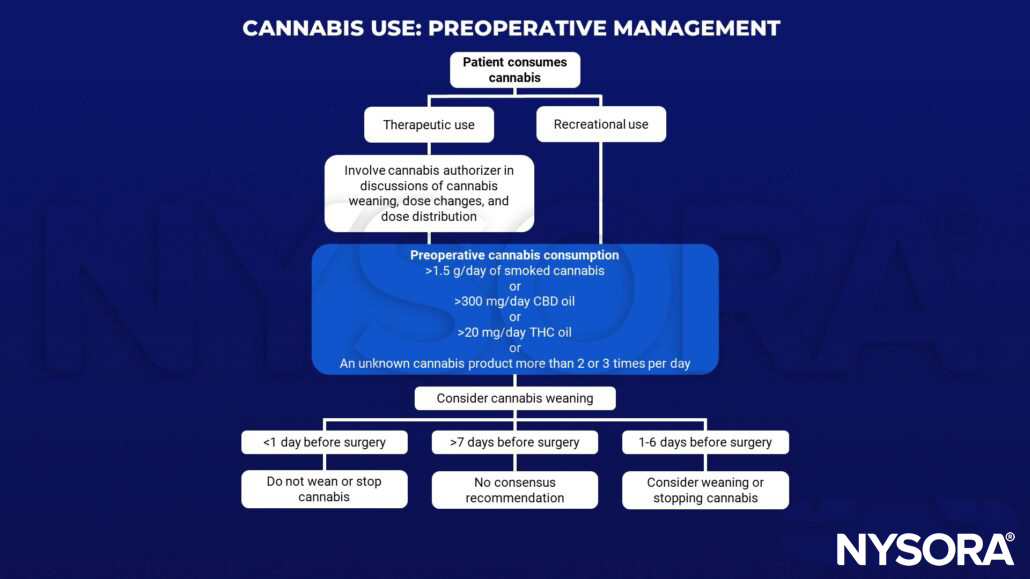
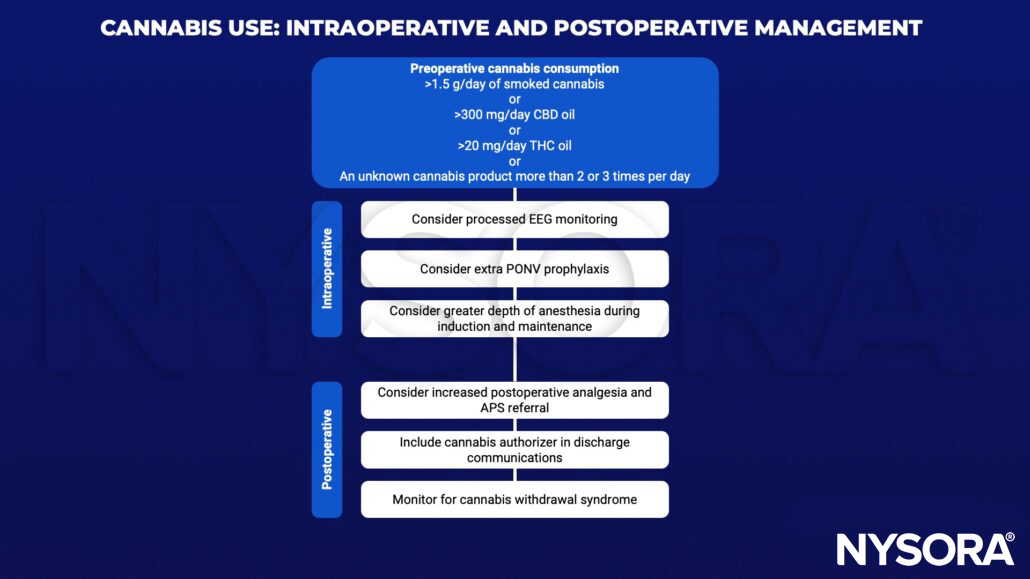
- Manage patients who consumed cannabis preoperatively
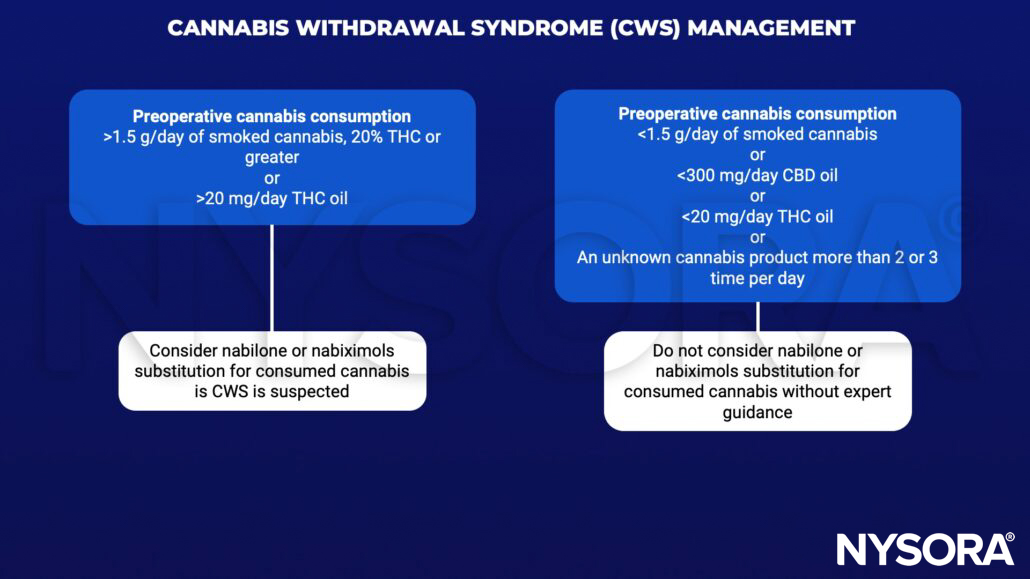
- Manage patients who present with cannabis withdrawal syndrome postoperatively
Background
- According to the United Nations, approximately 284 million individuals used cannabis in 2020
- This number is expected to grow as many countries are starting to legalize cannabis use
- The number of patients who use cannabis perioperatively will consequently rise
Mechanisms
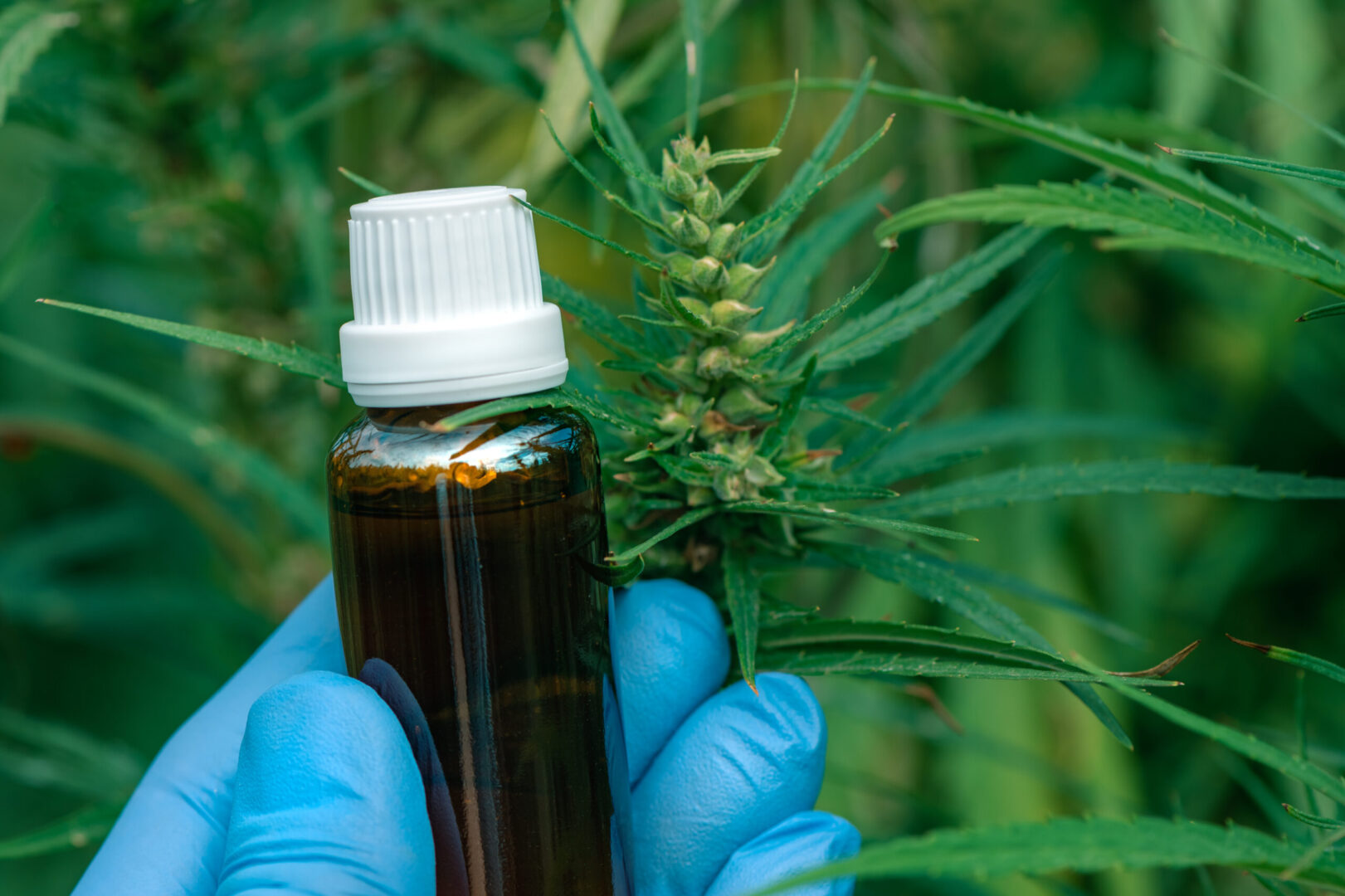
- Tetrahydrocannabinol (THC) and cannabidiol (CBD) are the most studied cannabinoid constituents of cannabis
- THC is a cannabinoid receptor type 1 and type 2 partial agonist
- CBD is a negative allosteric modulator of the cannabinoid receptor
- Clinical effects of cannabis vary with the quantity and chronicity of its use
Clinical effects
| Acute | Chronic | |
|---|---|---|
| Cardiovascular | Tachycardia | Atheromatous disease |
| Vasodilation | ||
| Orthostasis | ||
| Pulmonary | Bronchodilation | Chronic bronchitis |
| Hyperreactivity | Emphysema | |
| Airway edema | ||
| Central nervous system | Anxiolysis | Similar to acute effects but tolerance develops, requiring higher doses for similar effects |
| Anxiety | ||
| Paranoia/psychosis | ||
| Euphoria | ||
| Dizziness | ||
| Headache | ||
| Memory dysfunction | ||
| Analgesia | ||
| Gastrointestinal | Antinausea | Hyperemesis |
| Increased appetite | ||
| Abdominal pain | ||
| Endocrine | None | Gynecomastia |
| Anovulation | ||
| Galactorrhea |
Withdrawal syndrome
- Withdrawal symptoms can develop within a day of cessation for high-dose chronic users and may take weeks to resolve fully:
| Signs & symptoms | Irritability/anger |
| Anxiety/depressed mood | |
| Insomnia | |
| Altered dreams | |
| Anorexia | |
| Abdominal cramping | |
| Headaches | |
| Tremors | |
| Fevers/chills | |
| Onset | <1 day for high-dose, chronic users |
| Duration | Up to several weeks |
| Treatment | Symptomatic therapy, synthetic THC |
Management
Suggested reading
- UNODC World Drug Report 2022 highlights trends on cannabis post-legalization, environmental impacts of illicit drugs, and drug use among women and Youth. United Nations: Office on Drugs and Crime. https://www.unodc.org/unodc/en/press/releases/2022/June/unodc-world-drug-report-2022-highlights-trends-on-cannabis-post-legalization–environmental-impacts-of-illicit-drugs–and-drug-use-among-women-and-youth.html. Published June 27, 2022. Accessed February 3, 2023.
- Ladha KS, McLaren-Blades A, Goel A, Buys MJ, Farquhar-Smith P, Haroutounian S, et al. Perioperative Pain and Addiction Interdisciplinary Network (PAIN): consensus recommendations for perioperative management of cannabis and cannabinoid-based medicine users by a modified Delphi process. British Journal of Anaesthesia. 2021;126(1):304-18.
- Alexander JC, Joshi GP. A review of the anesthetic implications of marijuana use. Proc (Bayl Univ Med Cent). 2019;32(3):364-371. Published 2019 May 21.
Clinical updates
Sajdeya et al. (Regional Anesthesia & Pain Medicine, 2025) report that adults ≥ 65 years with cannabis use within 60 days before major inpatient surgery had higher postoperative pain scores and required more opioids in the first 24 hours than matched non-users (median DVPRS +0.8; median OME +12.5 mg). Cannabis users were 58–71% more likely to experience moderate–severe pain despite adjustment for opioid dose, supporting routine preoperative cannabis screening and anticipatory multimodal analgesia as recommended by the American Society of Regional Anesthesia and Pain Medicine.
Piland et al. (Anesthesia & Analgesia, 2025) report that substance use disorders now complicate nearly 25% of ICU admissions and are associated with longer stays, higher sedation and ventilation requirements, and worse outcomes. Their narrative review highlights that alcohol and opioid use disorders drive significant ICU morbidity through withdrawal syndromes, opioid-induced hyperalgesia, and post-ICU dependence, while chronic cannabis use is linked to increased sedation needs and pulmonary complications.
- Read more about this study HERE.