 Nerve Blocks App
 Anesthesia Assistant App
 Ultrasound Pain App
 Pain Medicine Assistant App
 POCUS App
 IV Access App
 MSK Knee App
 VetRA App
 Nerve Block Manual
 Regional Anesthesia Updates
 Anesthesiology Manual
 Anesthesiology Review
 Anesthesia Updates 2025
 Anesthesia Updates 2026
 Pediatric Anesthesia Updates
 Airway Management Updates
 US Interventional Pain Manual
 Pain Medicine Updates
 Mastering Difficult IV Access
 PACU Nursing Manual
 RA Veterinary Manual
 Books
Books About
About
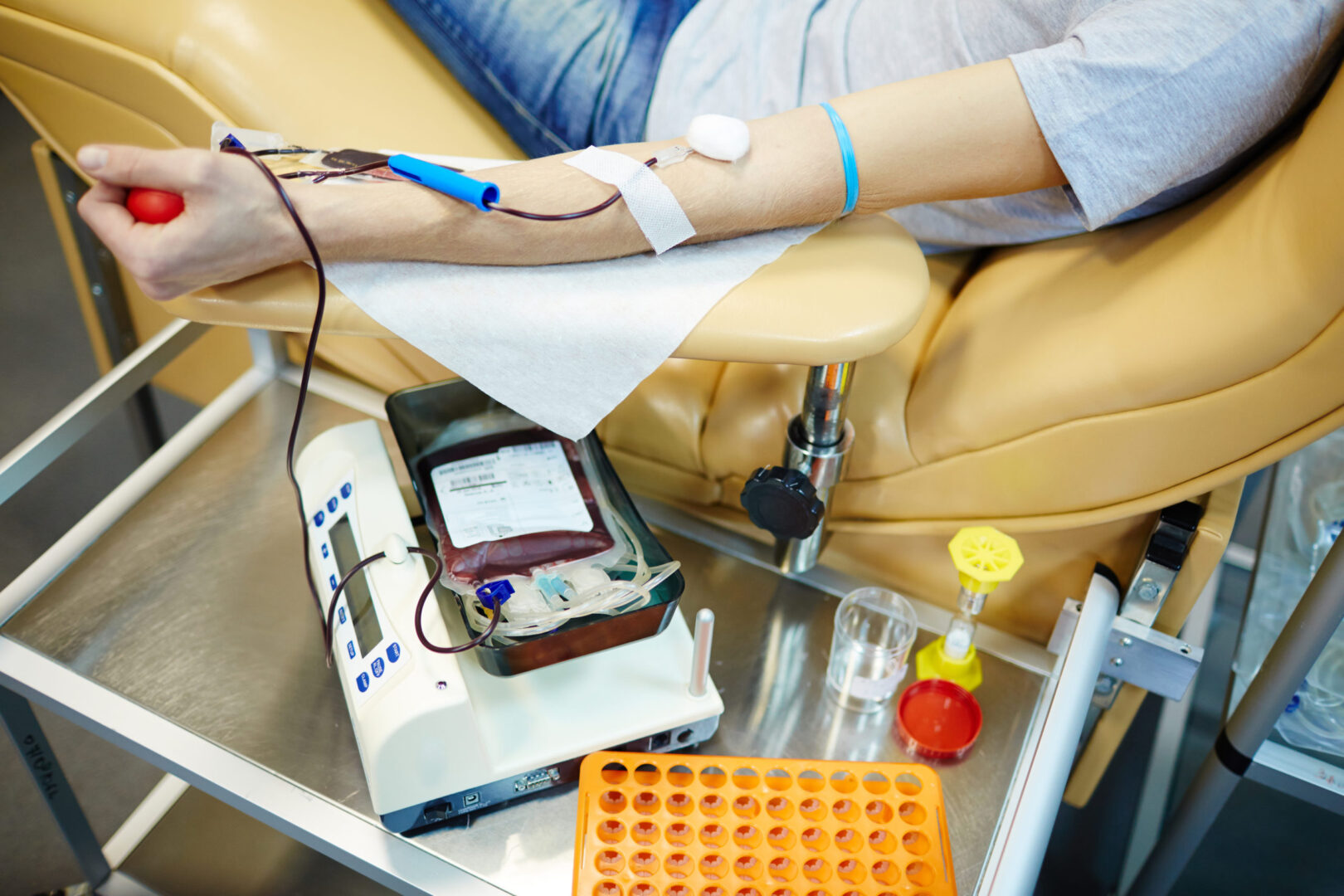
Learning objectives
- Describe the different types of transfusion reactions
- Recognize the signs of the different types of transfusion reactions
- Take preventative measures against transfusion reactions
- Manage the occurrence of transfusion reactions
Definition & mechanisms
- Transfusion reactions are the most frequent adverse event associated with the administration of blood products, occurring in up to one in 100 transfusions
- There are several types of adverse reactions:
- Allergic/Anaphylactic reactions
- Acute hemolytic reactions
- Delayed hemolytic reactions
- Febrile non-hemolytic reactions
- Hyperhemolytic reactions
- Hypotensive reactions
- Massive transfusion-associated reactions
- Post-transfusion purpura
- Septic reactions
- Transfusion-associated circulatory overload
- Transfusion-associated graft versus host disease
- Transfusion-associated necrotizing enterocolitis
- Transfusion-related acute lung injury
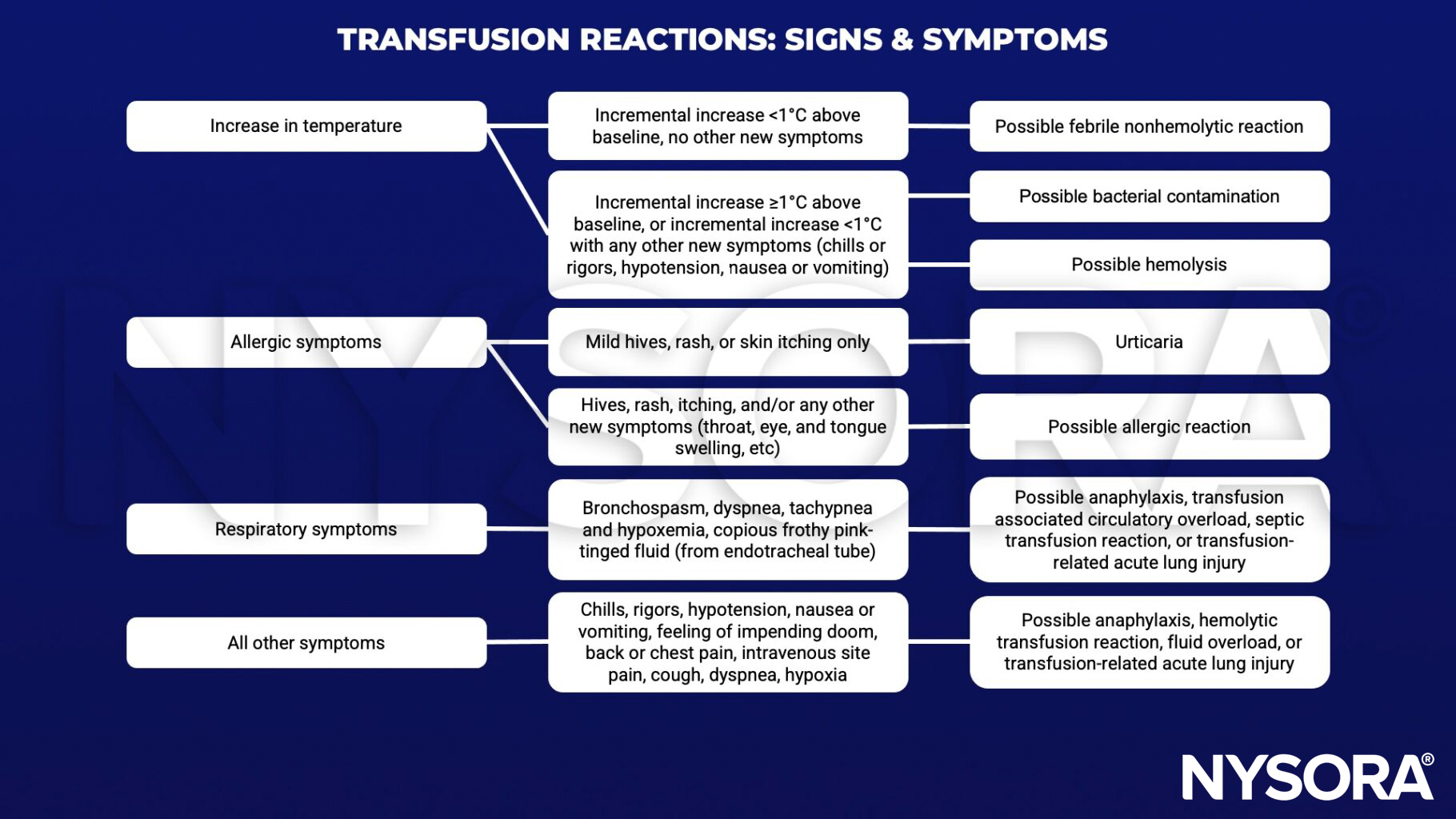
Signs & symptoms
Prevention
- Comprehensive training of staff
- Close adherence to blood handling and administration policies
- Laboratory testing
- Prospective monitoring and planning
- A restrictive transfusion strategy to avoid unnecessary transfusions
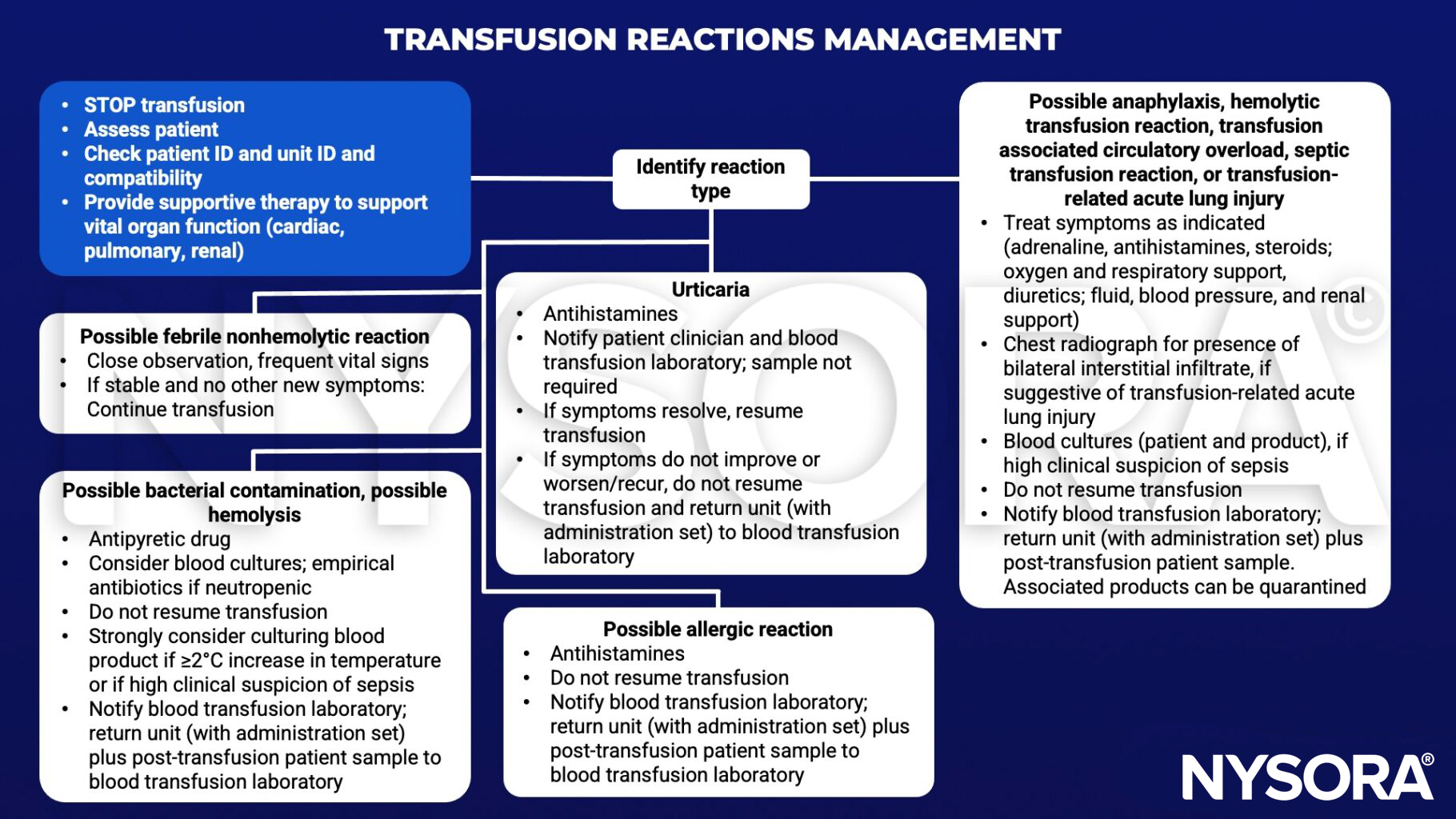
Management
Suggested reading
- Delaney M, Wendel S, Bercovitz RS, et al. Transfusion reactions: prevention, diagnosis, and treatment. Lancet. 2016;388(10061):2825-2836.
Clinical updates
Metcalf et al. (JAMA, 2025) report updated AABB/ICTMG international platelet transfusion guidelines supporting a restrictive transfusion strategy, based on 21 RCTs and 13 observational studies showing no increase in mortality or major bleeding with lower transfusion thresholds. The recommendations lower prophylactic platelet triggers to < 10,000/μL in stable oncology and critical care patients, < 25,000/μL in non-bleeding neonates, and discourage transfusion in settings such as dengue without bleeding, cardiovascular surgery without thrombocytopenia, and intracranial hemorrhage with platelet counts > 100,000/μL. By reducing unnecessary platelet exposure, the guidelines aim to decrease transfusion-related complications while preserving limited blood product resources and improving overall transfusion safety.
- Read more about this study HERE.