 Nerve Blocks App
 Anesthesia Assistant App
 Ultrasound Pain App
 Pain Medicine Assistant App
 POCUS App
 IV Access App
 MSK Knee App
 VetRA App
 Nerve Block Manual
 Regional Anesthesia Updates
 Anesthesiology Manual
 Anesthesiology Review
 Anesthesia Updates 2025
 Anesthesia Updates 2026
 Pediatric Anesthesia Updates
 Airway Management Updates
 US Interventional Pain Manual
 Pain Medicine Updates
 Mastering Difficult IV Access
 PACU Nursing Manual
 RA Veterinary Manual
 Books
Books About
About
Learning objectives
- Definition of nephrotic syndrome
- Management of nephrotic syndrome
Definition and mechanisms
- Nephrotic syndrome is a collection of symptoms due to kidney damage including protein in the urine, low blood albumin levels, high blood lipids, and edema
- Characterized by glomerular injury
- Can be primary, being a disease specific to the kidneys, or secondary to a systemic condition
- Primary causes:
- Minimal-change disease (nephropathy)
- Focal segmental glomerulosclerosis
- Membranous glomerulonephritis
- Membranoproliferative glomerulonephritis
- Hereditary nephropathies
- Secondary causes:
- Diabetes mellitus
- Systemic lupus erythematosus
- Sarcoidosis
- Amyloidosis and paraproteinemias
- Viral infections (e.g. hepatitis B, hepatitis C, HIV)
- Pre-eclampsia
- Sjögren’s syndrome
- Multiple myeloma
- Vasculitis
- Cancer
- Medications: penicillin, captopril
- A defect in the glomerular barrier leads to an increased glomerular permeability resulting in proteinuria/albuminuria
- Leading to a decrease in plasma oncotic pressure, retention of sodium and water, peripheral edema, ascites, pleural effusions, and hypovolemia
- Most cases spontaneously remit without treatment, hypertension occurs commonly, and renal failure is rare
- Patients may develop renal failure as well as secondary complications including arterial and venous thromboembolism and infection
Signs and symptoms
- Proteinuria (>3 g/24 h) and foamy urine
- Hypoalbuminemia (< 3.5 g/dl)
- Hypercholesterolemia and hyperlipidemia
- Thromboembolic episodes
- Puffy eyelids and swelling in the legs, ankles, feet, or lower abdomen
- Weight gain
- Fatigue
- Loss of appetite
Risk factors
- Nephrotoxic medication
- Diabetes mellitus
- Systemic lupus erythematosus
- Amyloidosis
- Reflux nephropathy
- Infections: HIV, hepatitis B, hepatitis C, malaria
Complications
- Arterial and venous thrombosis
- Infections
- Hypertension
- High blood cholesterol and elevated blood triglycerides
- Acute kidney injury
- Chronic kidney disease
- Pulmonary edema
- Hypothyroidism
- Vitamin D deficiency
- Hypocalcemia
- Microcytic hypochromic anemia
- Protein malnutrition
- Growth retardation
- Cushing’s syndrome
Diagnosis
- Urine dipstick test to check for albuminuria
- 24-hour urine collection
- Urine albumin-to-creatinine ratio
- Blood tests: serum albumin level, creatinine concentrations
- Kidney ultrasound
- Kidney biopsy
Treatment
- Diuretics
- ACE inhibitors and angiotensin-receptor blockers are used alone or in combination
- Prednisolone
- Cyclophosphamide
- Mycophenolate
- Cyclosporin
- Low salt diet and limited fluid intake
- Specific treatment depending on etiology:
- Statins to lower cholesterol
- Glucocorticosteroids for minimal-change nephropathy
- Prednisone and cyclophosphamide are useful in some forms of lupus nephritis
- Secondary amyloidosis with nephrotic syndrome may respond to anti-inflammatory treatment of the primary disease
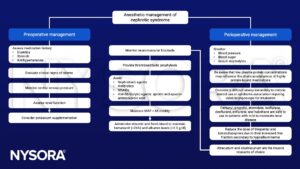
Management
Suggested reading
- Pollard BJ, Kitchen, G. Handbook of Clinical Anaesthesia. Fourth Edition. CRC Press. 2018. 978-1-4987-6289-2.
- Vishnu D, Tempe D, Arora K, Virmani S, Chander J, Agarwal S.(2012). Anesthetic management of a child with nephrotic syndrome undergoing open heart surgery: Report of a rare case. Annals of cardiac anaesthesia. 15. 305-8.