Back to News
 3 min read
Introduction
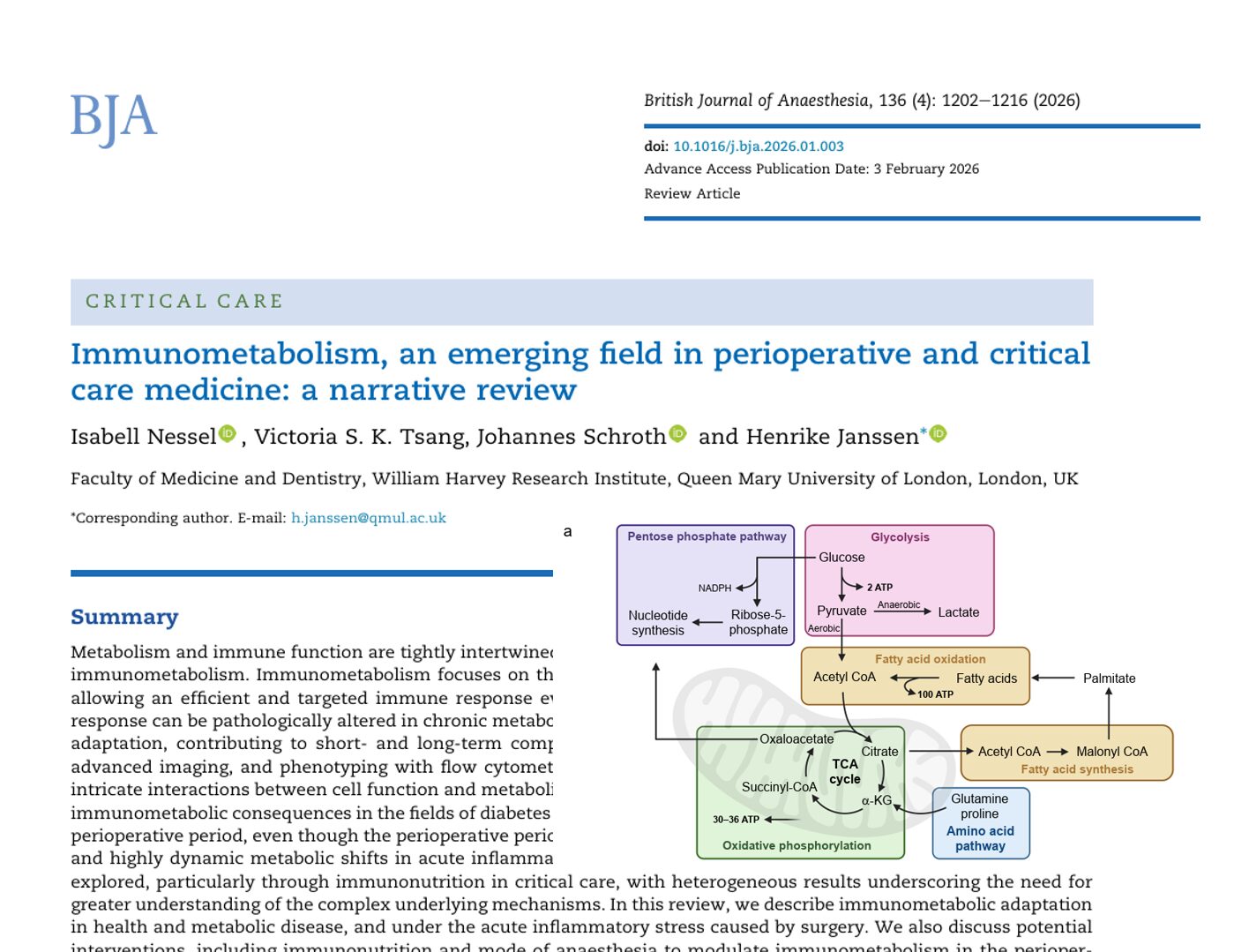
A 2026 publication in BJA (British Journal of Anaesthesia), highlights a rapidly evolving concept in modern medicine: immunometabolism. This field explores how metabolic processes influence immune cell function, particularly in the perioperative setting.
Understanding immunometabolism is becoming increasingly important for anesthesiologists, surgeons, and critical care specialists. It provides insight into how surgical stress, anesthesia, and systemic inflammation interact at a cellular level.
What is immunometabolism?
Immunometabolism refers to the interplay between metabolic pathways and immune system activity.
Instead of viewing metabolism as merely energy production, it is now recognized as a key regulator of immune responses.
Key concepts
- Immune cells shift metabolic pathways depending on activation state
- Inflammation is tightly linked to metabolic reprogramming
- Cellular energy production influences immune signaling and cytokine release
Major metabolic pathways involved
- Glycolysis
- Oxidative phosphorylation (OXPHOS)
- Fatty acid oxidation
- Amino acid metabolism
Why immunometabolism matters in surgery
Surgery induces a profound systemic stress response, triggering both metabolic and immune changes.
Perioperative physiological changes
- Increased cortisol and catecholamines
- Hyperglycemia and insulin resistance
- Activation of the innate immune system
- Release of pro-inflammatory cytokines
These changes can lead to:
- Postoperative complications
- Delayed wound healing
- Increased infection risk
- Organ dysfunction
Immune cell metabolism: a closer look
Different immune cells rely on distinct metabolic programs.
Macrophages
- Pro-inflammatory (M1):
- Depend on glycolysis
- Produce reactive oxygen species (ROS)
- Anti-inflammatory (M2):
- Use oxidative phosphorylation
- Promote tissue repair
T lymphocytes
- Effector T cells:
- High glycolytic activity
- Regulatory T cells (Tregs):
- Prefer fatty acid oxidation
Neutrophils
- Primarily glycolytic
- Rapid responders during acute inflammation
Metabolic reprogramming during surgical stress
Surgical trauma causes a shift toward catabolic metabolism.
Key features
- Increased glucose utilization
- Enhanced lactate production
- Mitochondrial dysfunction
- Altered lipid metabolism
This metabolic shift supports immune activation but can become maladaptive.
Role of mitochondria in immunometabolism
Mitochondria are central to both energy production and immune signaling.
Functions in immune regulation
- ATP generation
- Reactive oxygen species production
- Regulation of apoptosis
- Control of inflammatory signaling pathways
Mitochondrial dysfunction is associated with:
- Sepsis
- Organ failure
- Poor postoperative outcomes
Clinical implications for anesthesia
Anesthetic agents can influence immunometabolic pathways.
Effects of common anesthetics
- Propofol
- Modulates mitochondrial function
- Anti-inflammatory properties
- Volatile anesthetics
- Affect oxidative phosphorylation
- May alter immune responses
- Opioids
- Can suppress immune function
- Influence cytokine production
Nutrition and immunometabolism
Perioperative nutrition plays a critical role in modulating immune responses.
Key strategies
- Avoid prolonged fasting
- Optimize glucose control
- Provide adequate protein intake
- Consider immunonutrition
Important nutrients
- Glutamine
- Arginine
- Omega-3 fatty acids
- Vitamins (A, C, D, E)
Enhanced recovery and metabolic optimization
Enhanced Recovery After Surgery (ERAS) protocols incorporate immunometabolic principles.
ERAS components
- Minimal fasting
- Early feeding
- Multimodal analgesia
- Reduced surgical stress
Benefits
- Reduced complications
- Shorter hospital stay
- Improved immune function
Potential therapeutic targets
Immunometabolism opens new avenues for targeted therapies.
Emerging interventions
- Metabolic modulators
- Mitochondrial protectants
- Anti-inflammatory agents
- Personalized nutrition strategies
Conclusion
Immunometabolism represents a paradigm shift in perioperative medicine. By understanding how metabolism shapes immune responses, clinicians can better manage surgical patients and improve outcomes.
This emerging field bridges anesthesia, surgery, critical care, and molecular biology, offering a more integrated approach to patient care.
As research progresses, immunometabolism is expected to become a cornerstone of precision perioperative medicine.
Reference: Nessel I et al. Immunometabolism, an emerging field in perioperative and critical care medicine: a narrative review. Br J Anaesth. 2026;136:1202-1216.
For real-time clinical educational support, dosing information, and case simulations, explore the NYSORA Anesthesia Assistant App.