 Nerve Blocks App
 Anesthesia Assistant App
 US Pain Management App
 Pain Medicine Assistant App
 POCUS App
 IV Access App
 MSK Knee App
 VetRA App
 Nerve Block Manual
 Regional Anesthesia Updates
 Anesthesiology Manual
 Anesthesiology Review
 Anesthesia Updates 2025
 Anesthesia Updates 2026
 Pediatric Anesthesia Updates
 Airway Management Updates
 US Interventional Pain Manual
 Pain Medicine Updates
 Mastering Difficult IV Access
 PACU Nursing Manual
 RA Veterinary Manual
 Books
Books About
About
 Back to News
 2 min read

An intercostal nerve block anesthetizes the skin and musculature of the chest and abdominal wall. The technique is indicated for analgesia for rib fractures, and chest and upper abdominal surgery.
As part of our “US Pain Blocks from the App” series, we’re sharing 4 easy-to-apply tips to get you started.
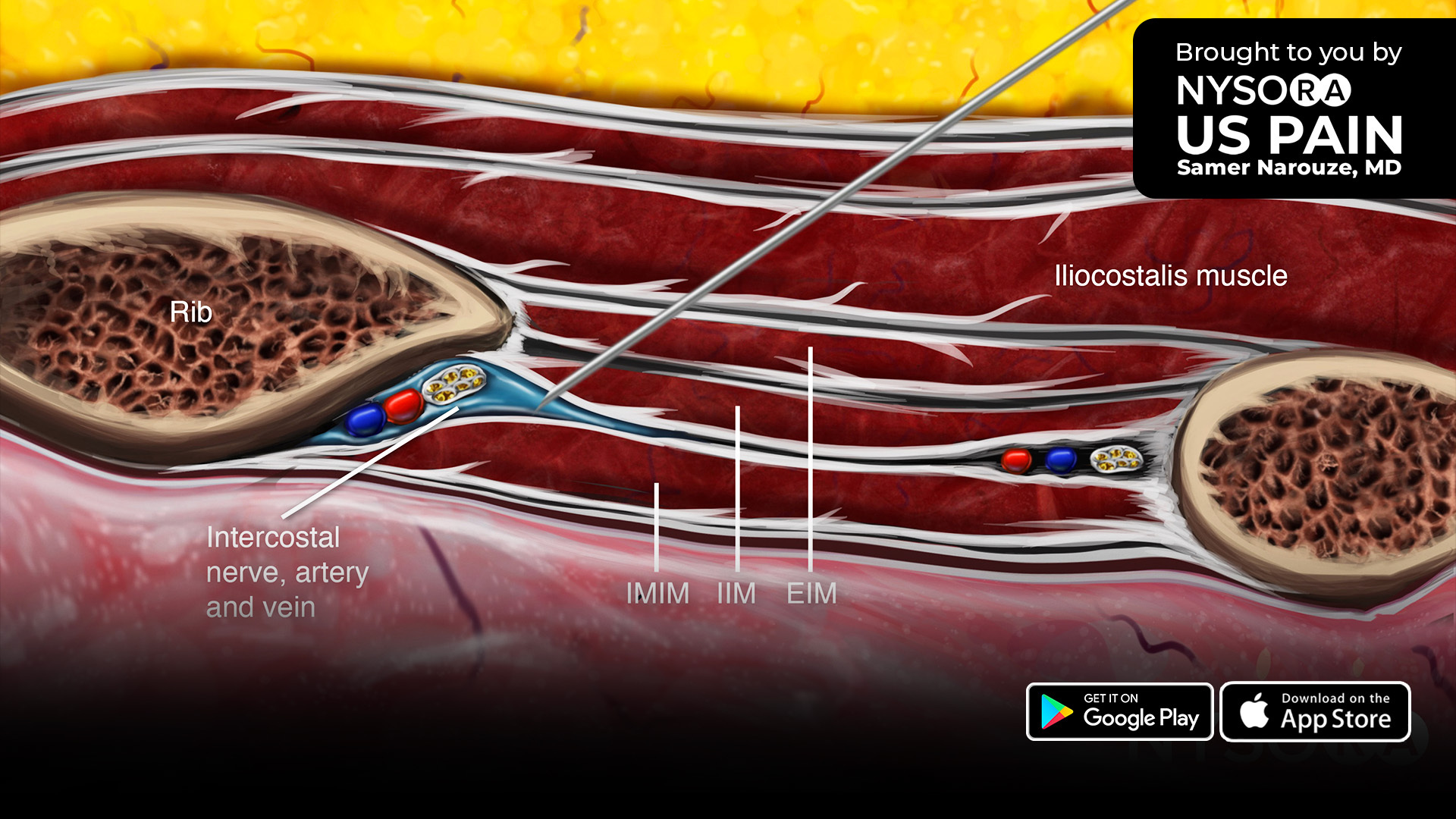
- Position the transducer in the short axis to the ribs to visualize two consecutive ribs with their typical dorsal shadowing.
- Identify the internal and external intercostal muscles. The pleura appears as a hyperechoic line with gliding action during respiration.
- The intercostal space of interest is located by scanning upward from the 12th rib.
- The ideal injection site is the angle of the rib (6-7.5 cm from the vertebral spinous process) where the costal groove is at its broadest and deepest, and the lateral branch of the intercostal nerve has not yet branched.
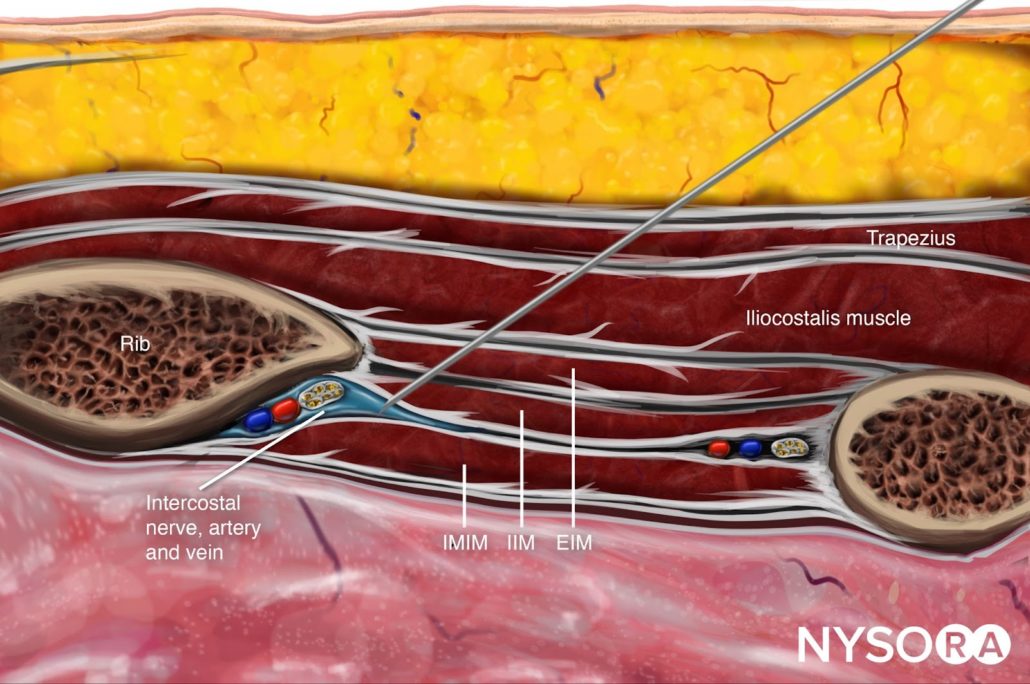
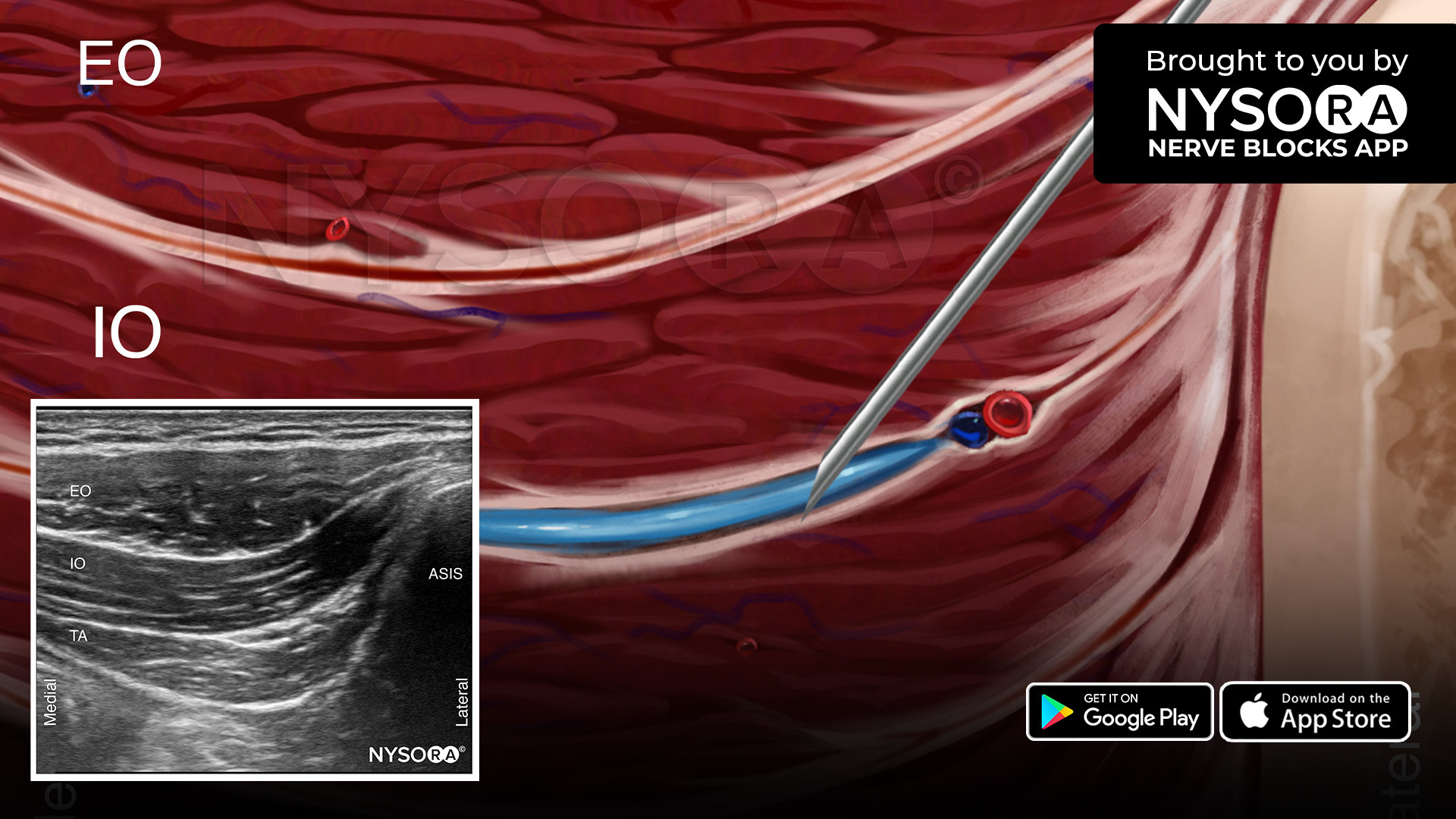
Reverse ultrasound anatomy for an intercostal nerve block.
Check out the all-new reverse ultrasound anatomy illustration added in “Intercostal Nerve Block > Technique” in the Ultrasound Pain App by Samer Narouze for a complete understanding of the principles of the technique.
For more tips like these and the complete guide to the ultrasound-guided chronic pain blocks, learn more about the US Pain App HERE.