Goal
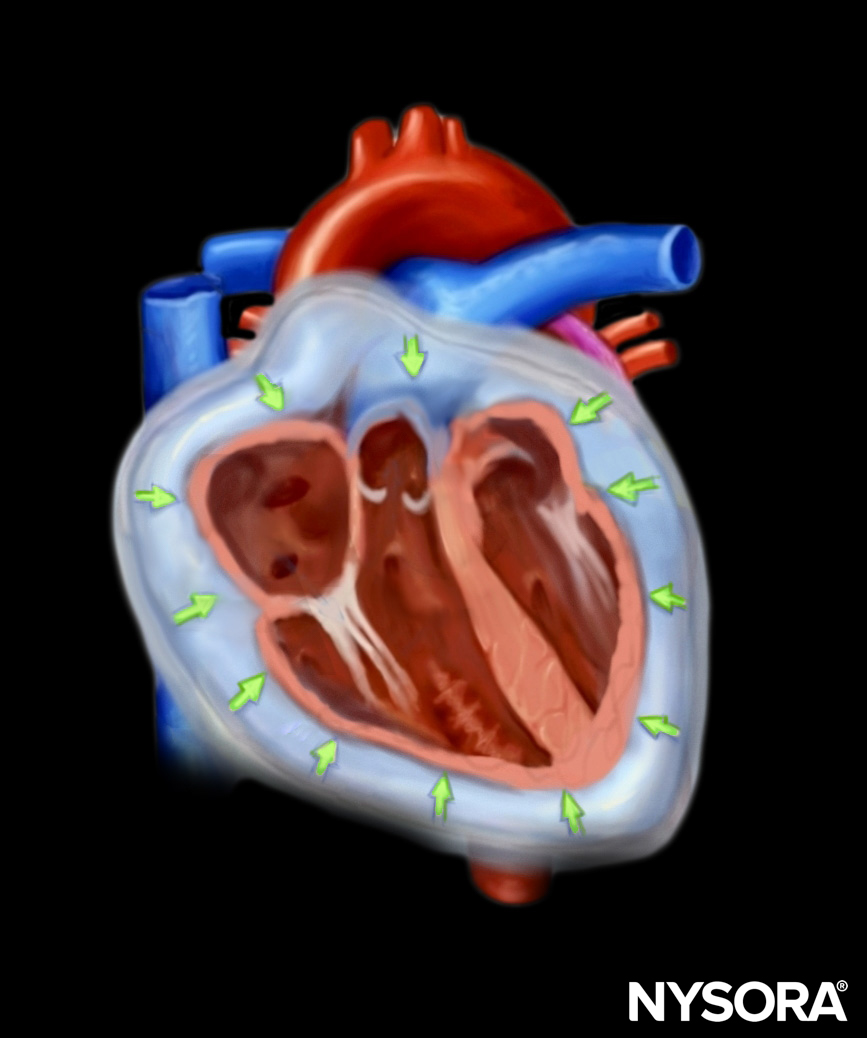
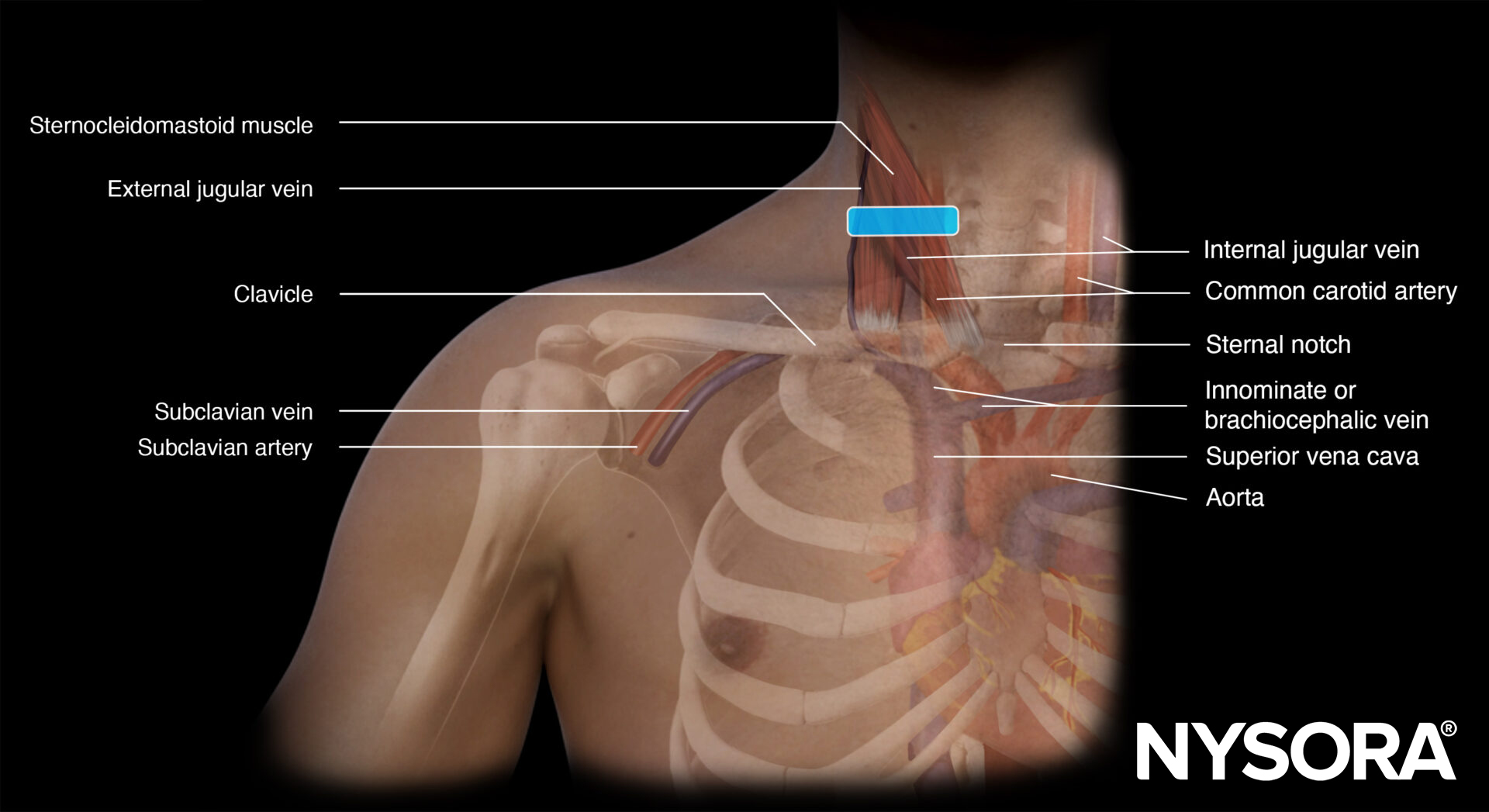
Following internal jugular vein or subclavian catheter insertion, the correct positioning of the catheter can be evaluated by using the rapid atrial swirl sign (RASS). The tip of a central venous line should be positioned in a central vein between the superior vena cava and the atrium.
View
Subcostal four-chamber view (S4C)
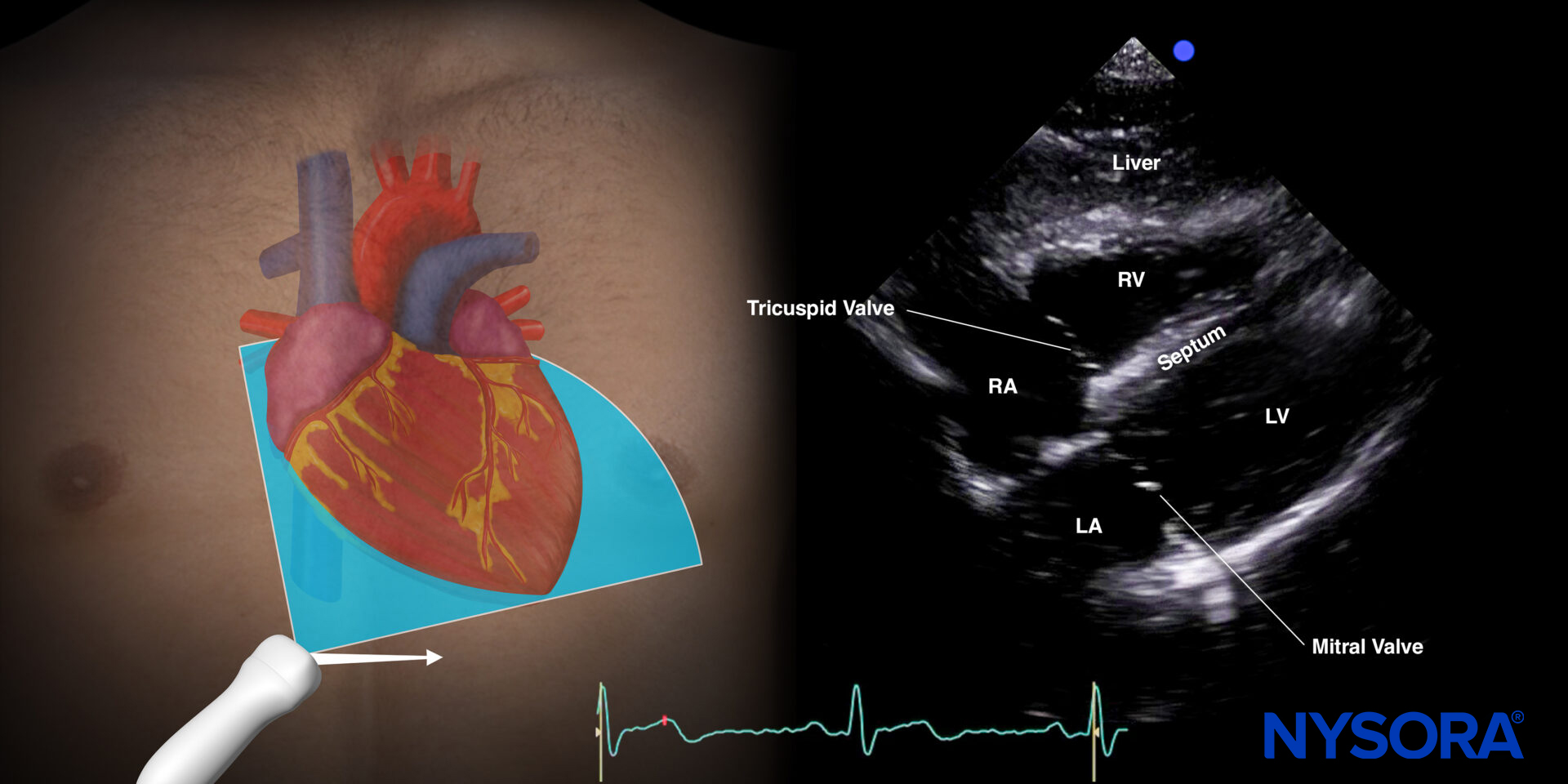
Transducer position and sonoanatomy of the subcostal four-chamber view.
Note
For this view, either a phased array transducer or a curvilinear transducer can be used.
Assessment
For the rapid atrial swirl sign, 9 mL of a saline with 1 mL air mixture (‘shaken’/’agitated’ ) is injected rapidly through the distal port of the central venous line while visualizing the right atrium in the subcostal 4-chamber view.
- Immediate air bubbles: If a transient opacification in the right atrium appears immediately (<2s) following the injection of the mixture, the catheter is in the right position in a large central vein.
- Delayed air bubbles: If the opacification is delayed and appears slower (>2s), the catheter is probably placed at an atypical position in the internal jugular, subclavian, or brachiocephalic vein.
- Absent air bubbles: If the opacification does not appear at all, the catheter is probably malpositioned and may be placed in an artery or extravascular.
Clinical updates
Tampe et al. (The Journal of Vascular Access, 2023) evaluated the rapid atrial swirl sign (RASS) for ultrasound-guided tip positioning of antegrade-tunneled hemodialysis catheters (HDCs) in 15 insertions and found a 100% success rate confirmed by chest radiography, with tip location in the right atrium (66.7%) or cavoatrial junction (33.3%) . RASS was defined as visualization of immediate (< 1s) saline turbulence in the right atrium on subcostal echocardiography after a 10 mL saline flush (Figure 2), eliminating the need for fluoroscopy and avoiding air-based bubble studies. No major adverse events or catheter malfunctions occurred, and dialysis performance was preserved (median blood flow 250 mL/min), supporting RASS as a feasible, radiation-free, and safe ultrasound technique for antegrade HDC placement.
- Tampe D, Plüß M, Kuczera T, Tampe B. The rapid atrial swirl sign for ultrasound-guided tip positioning of antegrade-tunneled hemodialysis catheters: A cross-sectional pilot study. J Vasc Access. 2023;24(6):1407-1411.