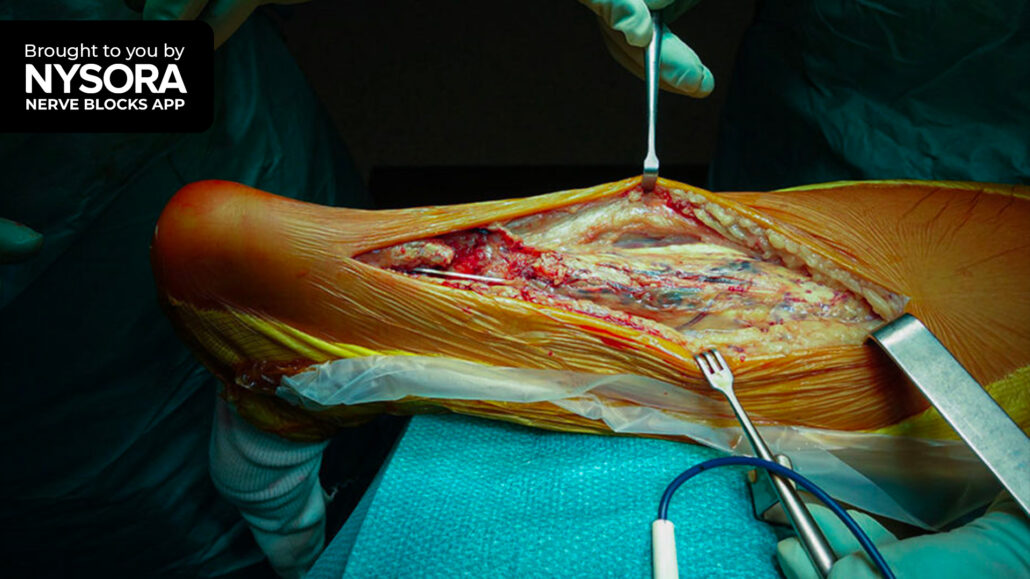
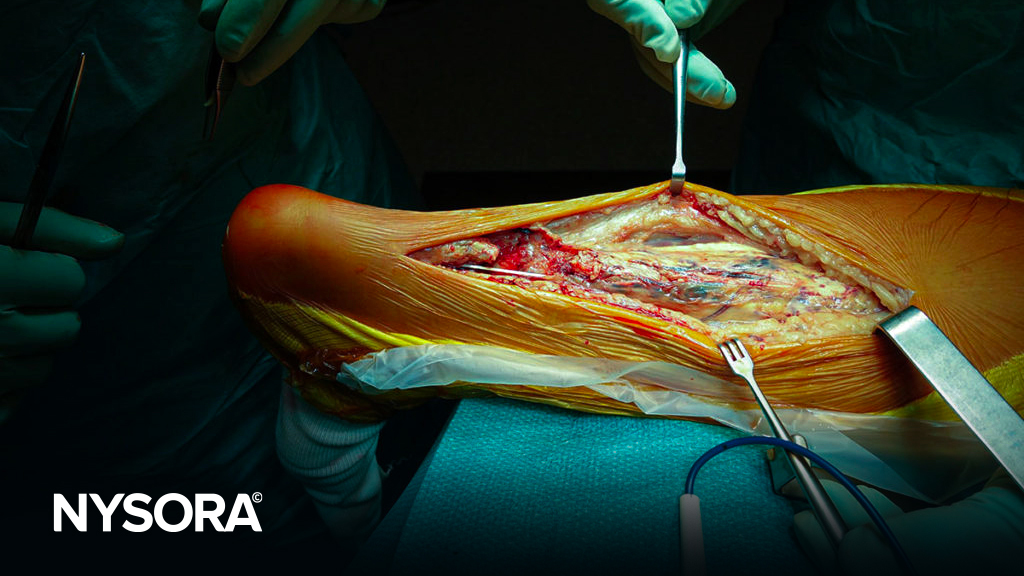
Open sublay mesh hernia repair is associated with significant postoperative pain, often requiring substantial opioid supplementation in the first 48–72 hours after surgery. Effective pain control is essential—not only for patient comfort but also to enable early ambulation, reduce pulmonary complications, and support enhanced recovery protocols. However, providing consistent analgesia in complex abdominal wall reconstruction remains challenging. Systemic analgesics alone often produce side effects such as nausea, sedation, and constipation, while epidural techniques may be limited by contraindications or institutional preferences.
Regional anesthesia of the abdominal wall—particularly transverse abdominis plane (TAP) approaches—has become an important adjunct for surgeries below the umbilicus. The oblique subcostal TAP (OSTAP) block extends coverage cephalad toward the epigastrium and upper abdominal wall, making it theoretically attractive for sublay mesh hernioplasty, where pain arises from both the incision and extensive subfascial dissection. Previous studies have suggested that OSTAP may reduce opioid consumption in laparoscopic cholecystectomy, hysterectomy, and liver resections, but evidence in open mesh hernia repair has been lacking.
This randomized, placebo-controlled clinical trial sought to address that gap by evaluating whether a preoperative bilateral OSTAP block with ropivacaine provides sustained opioid-sparing analgesia compared with placebo in patients undergoing open sublay mesh hernia repair.
Study objective and methods
The primary objective was to determine whether preoperative bilateral oblique subcostal TAP (OSTAP) blocks with ropivacaine reduce patient-controlled total morphine consumption at 8:00 p.m. on postoperative day (POD) 2 in patients undergoing open sublay mesh hernia repair.
- Design: Prospective, double-blind, randomized, placebo-controlled clinical trial (single center, Germany).
- Participants: 36 adult patients (ropivacaine n = 19; placebo n = 17) undergoing elective open sublay mesh hernioplasty.
- Ropivacaine group: Bilateral OSTAP using 60 mL of 0.375% ropivacaine (30 mL/side).
- Placebo group: Identical technique using 60 mL isotonic saline.
- Analgesia: All patients received standardized general anesthesia, PACU morphine PCA, and regular metamizole or acetaminophen postoperatively.
- Primary outcome: Total PCA morphine consumption at 8:00 p.m. on POD2.
- Secondary outcomes: Morphine use at earlier postoperative time points, NRS pain scores, PACU and hospital length of stay, adverse events, and patient satisfaction.
Key findings
-
No reduction in morphine use at POD2 (primary outcome)
Patients receiving ropivacaine consumed more morphine by 8:00 p.m. on POD2 compared with placebo (39 mg vs 24 mg; p = 0.04). The lack of opioid-sparing benefit at the primary time point indicates that a single-shot OSTAP block does not provide sustained analgesia for sublay mesh repair.
-
Early postoperative opioid use was lower with OSTAP
During the PACU stay, the ropivacaine group required 2 mg less morphine (4 mg vs 2 mg; p = 0.04), confirming the block’s short-term analgesic effect. This early benefit, however, dissipated within the first postoperative day.
-
Evidence of rebound pain after block resolution
From POD1 (8 a.m.) onward, ropivacaine patients used significantly more morphine at multiple intervals, and they reported higher maximum pain scores by POD2 morning (NRS 5 vs 4; p = 0.03). This pattern strongly suggests rebound pain once the block wore off, potentially overwhelming any early benefit.
-
Pain at rest did not differ between groups
Across all time points, NRS pain at rest was similar between groups, highlighting that OSTAP did not provide sustained analgesia beyond the immediate postoperative period.
-
Safety outcomes, PONV, and satisfaction were similar
There were no differences in adverse events, PACU duration, hospital length of stay, or patient satisfaction. OSTAP was safe and well-tolerated but did not meaningfully influence recovery metrics.
Conclusion
A preoperative bilateral OSTAP block did not reduce total morphine consumption at 48 hours after open sublay mesh hernia repair. While patients receiving ropivacaine experienced improved analgesia only in the immediate postoperative period, this benefit reversed after block resolution, leading to increased opioid needs and higher peak pain scores consistent with rebound pain. Single-shot OSTAP appears insufficient as a standalone strategy for sustained postoperative analgesia in this population.
Future research
- Evaluation of catheter-based continuous OSTAP techniques to prevent rebound phenomena.
- Assessment of adjuncts such as dexmedetomidine or dexamethasone to prolong block duration and reduce rebound pain.
- Comparative studies between OSTAP, TAP, and rectus sheath blocks for open hernia repair.
- Larger, multicenter trials to confirm analgesic patterns and safety signals.
Clinical implications
For clinicians managing patients undergoing complex open hernia repair, this trial suggests that a single-shot OSTAP block may provide early benefit but falls short of offering sustained opioid reduction or improved pain control at later postoperative time points. Given the presence of rebound pain, clinicians may need to supplement OSTAP with robust multimodal analgesia, consider timing the block after wound closure, or use continuous catheter techniques to prevent abrupt offset of analgesia. While safe and feasible, OSTAP alone should not be expected to substantially impact opioid use beyond the immediate postoperative window.
Clinical pearls
- Early opioid reduction with OSTAP is short-lived; no benefit persists to POD2.
- Rebound pain occurred after block resolution, driving higher morphine use later.
- Pain at rest was similar at all times, regardless of block.
- OSTAP was safe but did not shorten PACU stay or hospitalization.
Practical tip: Use OSTAP cautiously and pair it with strong multimodal analgesia to mitigate rebound pain.
For more detailed information, refer to the full article in RAPM.
Keller M. et al. Oblique subcostal transverse abdominis plane block for postoperative pain control in patients undergoing open sublay mesh hernia repair: a prospective double-blind randomized placebo-controlled clinical trial. Reg Anesth Pain Med. 2025;50:786-793.
Maximize your learning with the NYSORA Nerve Blocks App—60+ techniques, PRO pearls, videos, and updates at your fingertips.