 Nerve Blocks App
 Anesthesia Assistant App
 Ultrasound Pain App
 Pain Medicine Assistant App
 POCUS App
 IV Access App
 MSK Knee App
 VetRA App
 Nerve Block Manual
 Regional Anesthesia Updates
 Anesthesiology Manual
 Anesthesiology Review
 Anesthesia Updates 2025
 Anesthesia Updates 2026
 Pediatric Anesthesia Updates
 Airway Management Updates
 US Interventional Pain Manual
 Pain Medicine Updates
 Mastering Difficult IV Access
 PACU Nursing Manual
 RA Veterinary Manual
 Books
Books About
About
 Back to News
 2 min read
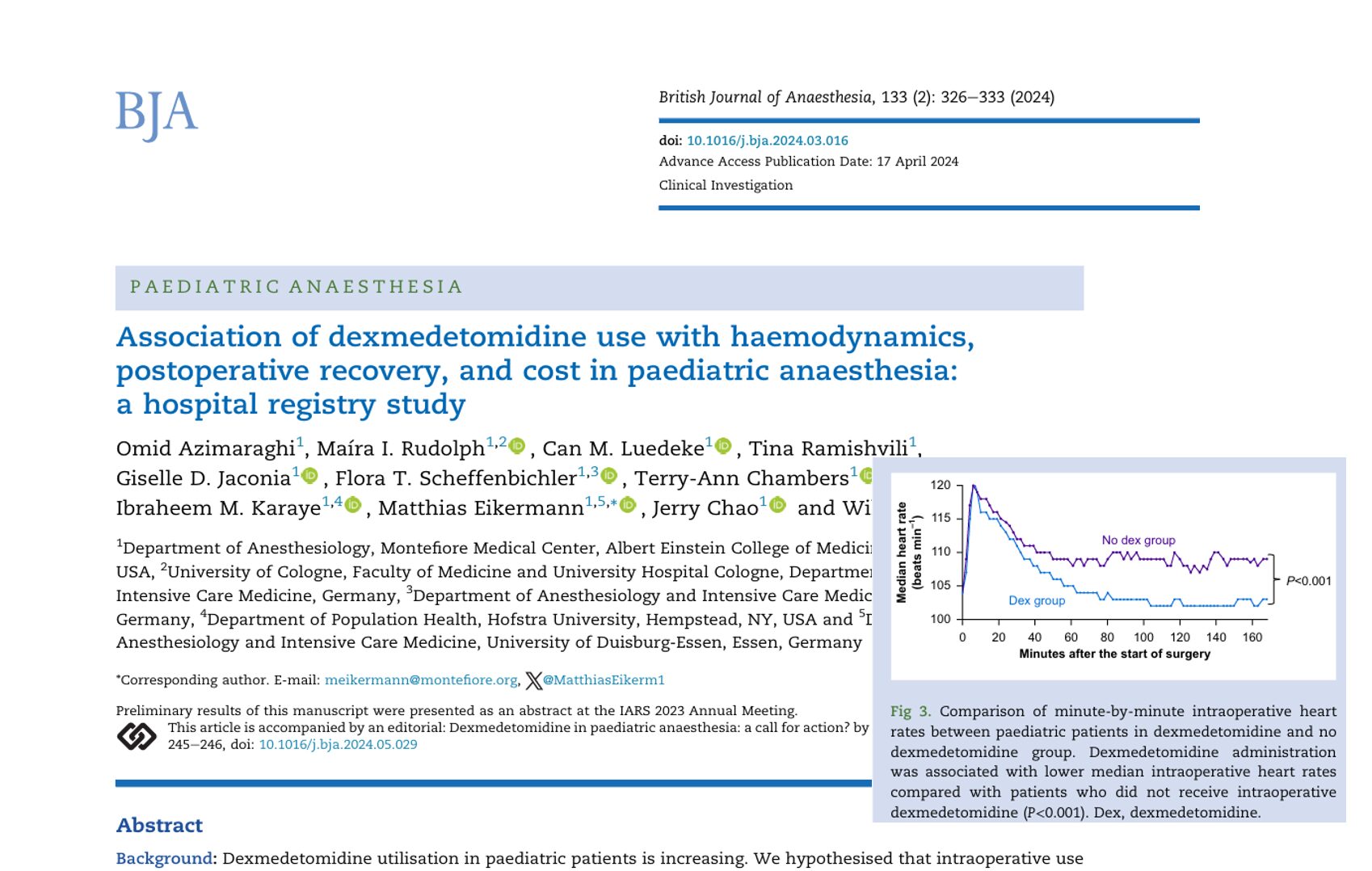
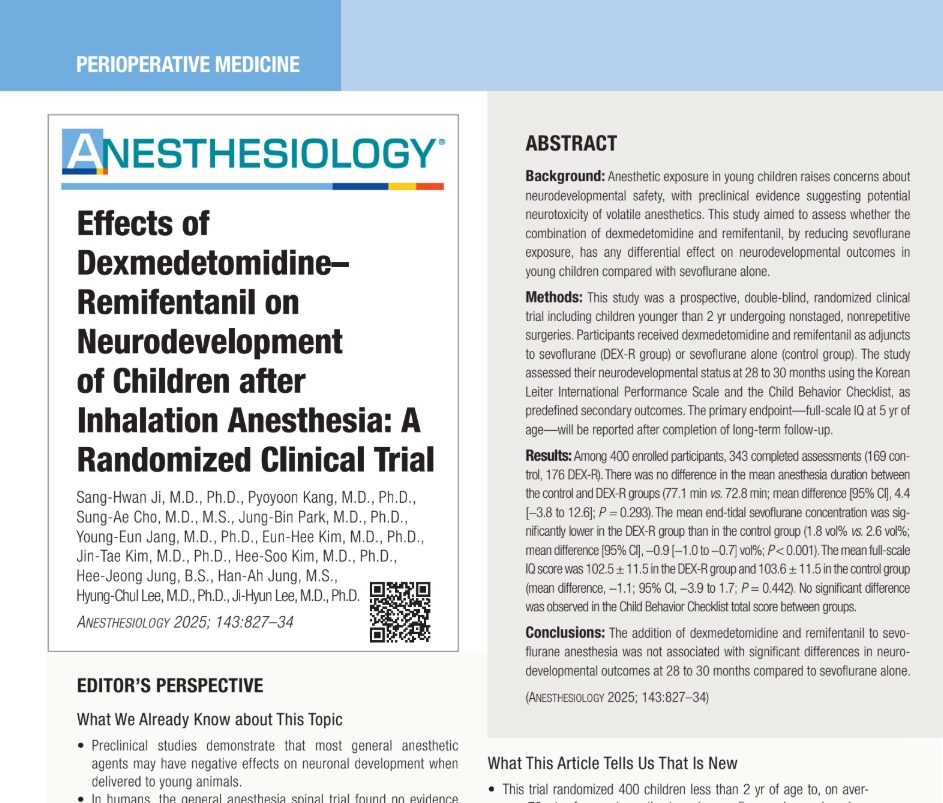
Can a modified anesthesia regimen reduce neurodevelopmental risks in young children? A 2025 randomized clinical trial by Ji et al. explores whether adding dexmedetomidine and remifentanil to sevoflurane can protect brain development during surgery in infants and toddlers.
Background: why neurodevelopment and anesthesia matter
- Preclinical animal studies show that volatile anesthetics (like sevoflurane) can cause neuronal damage and cognitive impairments when administered during critical periods of brain development.
- Human studies such as GAS, PANDA, and MASK found no substantial cognitive deficits from short-term anesthesia exposure, but concerns persist.
- Dexmedetomidine, a sedative with minimal neurotoxic effects, and remifentanil, a short-acting opioid, are proposed as safer adjuncts to reduce sevoflurane exposure.
Study overview: randomized, double-blind, controlled design
- Population: 400 Korean children under age 2 undergoing elective, non-repetitive surgery.
- Intervention groups:
- Control group: Sevoflurane alone.
- DEX-R group: Low-dose sevoflurane plus dexmedetomidine and remifentanil.
- Control group: Sevoflurane alone.
- Primary aim: Assess neurodevelopmental outcomes at 28–30 months using:
- Korean Leiter International Performance Scale (nonverbal IQ)
- Child Behavior Checklist (CBCL) (behavioral/emotional development)
- Korean Leiter International Performance Scale (nonverbal IQ)
- Follow-up planned: Full-Scale IQ assessment at 5 years (not yet reported).
Key results
- Sample size analyzed: 343 children (169 control, 176 DEX-R).
- Anesthesia duration: ~73–77 minutes, comparable between groups.
- Sevoflurane exposure:
- Significantly lower in the DEX-R group (1.8% vs. 2.6%; P < 0.001).
- Significantly lower in the DEX-R group (1.8% vs. 2.6%; P < 0.001).
- IQ and behavior outcomes:
- No significant differences in:
- Full-scale IQ (102.5 vs. 103.6; P = 0.442)
- Behavioral outcomes (CBCL total score: 46.8 vs. 47.6; P = 0.469)
- Full-scale IQ (102.5 vs. 103.6; P = 0.442)
- No increase in behavioral disorders (ADHD, internalizing/externalizing problems).
- No significant differences in:
Conclusion: cautious optimism with balanced anesthesia
- The dexmedetomidine–remifentanil combination reduced anesthetic exposure but did not improve developmental outcomes at 30 months.
- No evidence of harm was found from a single short-duration general anesthesia session.
- Future results at age 5 will be crucial to determine long-term cognitive effects.
Reference: Ji SH et al. Effects of Dexmedetomidine-Remifentanil on Neurodevelopment of Children after Inhalation Anesthesia: A Randomized Clinical Trial. Anesthesiology. 2025;143:827-834.
Download the AA App now to put trusted anesthesia guidance in your pocket.