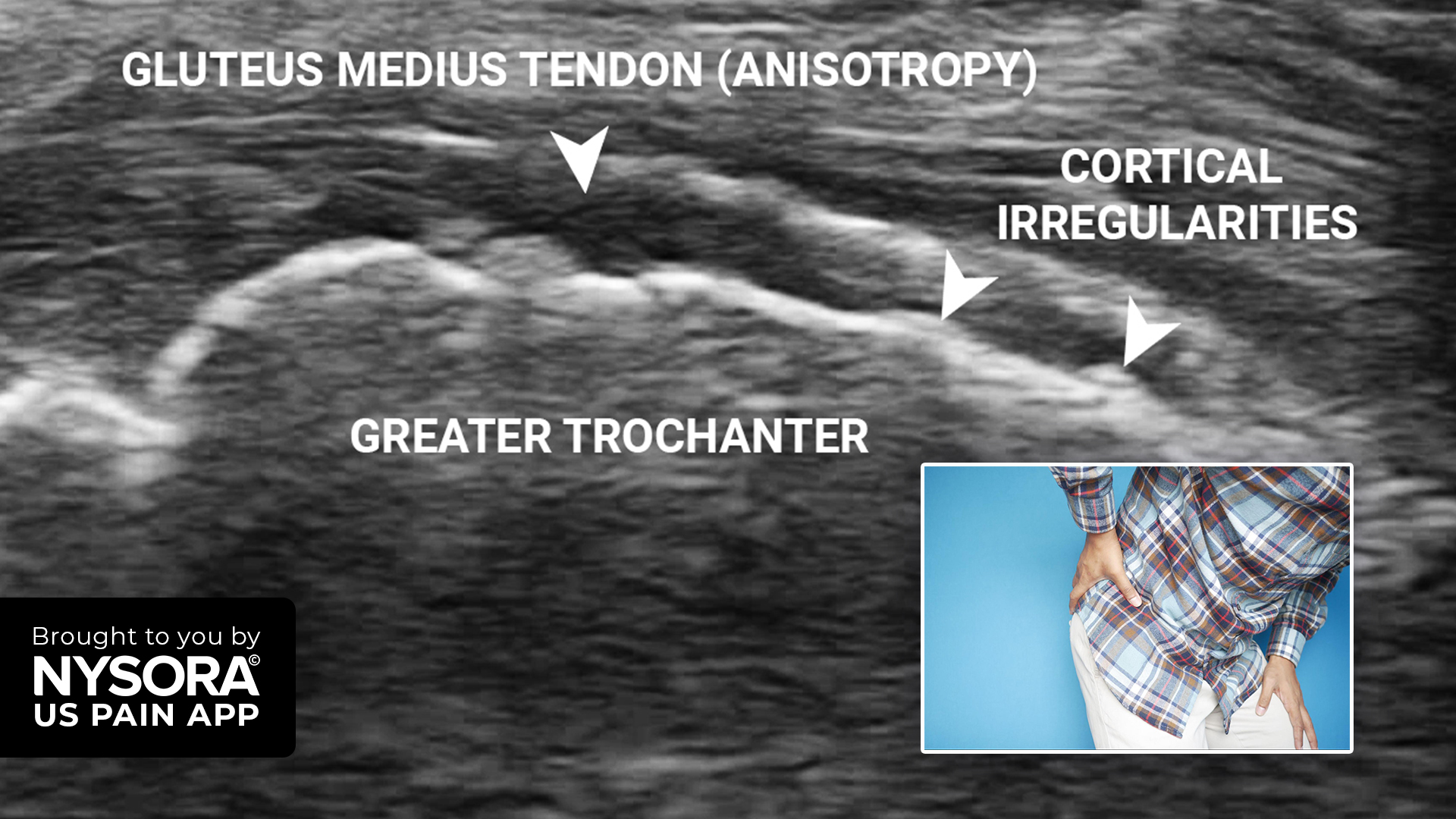
Chronic hip pain from osteoarthritis, also known as coxarthrosis, is a debilitating condition that affects millions worldwide, particularly among the elderly. While total hip replacement remains the gold standard for severe cases, not all patients qualify for surgery due to age, comorbidities, or limited access to specialized care.
Fortunately, a novel, minimally invasive technique is gaining traction: ultrasound-guided chemical ablation of the pericapsular nerve group (PENG) using 95% ethanol.
A 2025 double-blinded, randomized controlled trial (RCT) by Reysner et al., published in the British Journal of Anaesthesia, sheds light on this promising intervention.
What is PENG neurolysis?
PENG neurolysis targets specific articular branches of the femoral, obturator, and accessory obturator nerves that innervate the anterior hip capsule. These nerves transmit the pain signals commonly associated with hip osteoarthritis.
Why ethanol?
Ethanol acts as a neurolytic agent by causing coagulative necrosis, permanently disabling the nerve’s ability to transmit pain signals. When injected with precision using ultrasound guidance, it offers long-lasting pain relief without requiring repeat procedures.
Study design at a glance
- Location: Pain Treatment Clinic, Poznan University of Medical Sciences, Poland
- Participants: 100 elderly patients (median age: 82 years) with chronic hip osteoarthritis unresponsive to NSAIDs or opioids
- Groups:
-
- Treatment group: Received ultrasound-guided 95% ethanol PENG neurolysis
- Sham group: Received saline injection (placebo)
- Duration: 6-month follow-up
Inclusion criteria
-
- Diagnosed with moderate to severe hip osteoarthritis
- Numeric Rating Scale (NRS) pain score > 3
- No improvement with conservative therapy (NSAIDs, acetaminophen, co-analgesics)
Exclusion criteria
-
- Opioid dependency
- Active cancer
- Cognitive impairment (e.g., dementia)
Results
-
Significant pain reduction
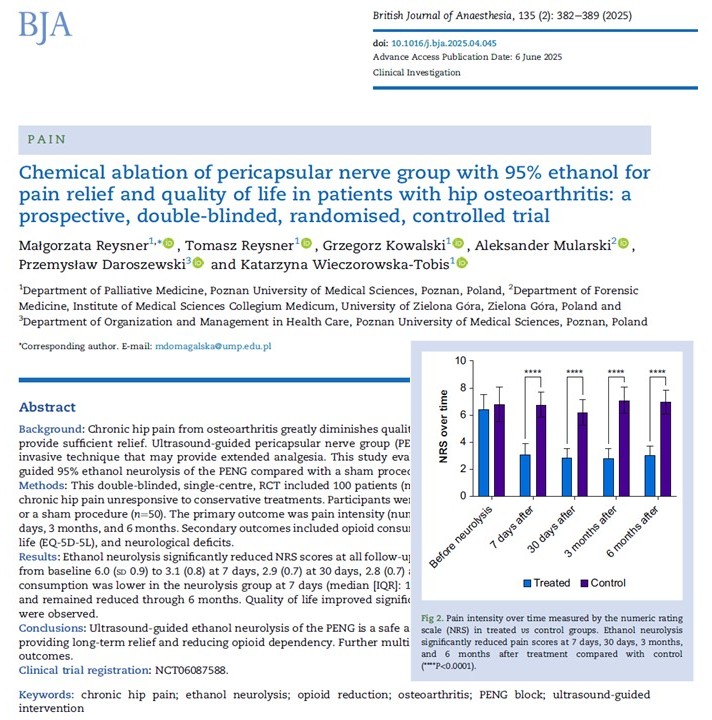
Patients in the ethanol neurolysis group showed substantial and sustained decreases in pain intensity at all follow-up points:

Statistical significance: p < 0.0001 at all time points
2. Reduced opioid use
Patients who received ethanol neurolysis virtually eliminated their opioid use over 6 months:

p < 0.0001 at every checkpoint
This result is particularly important amid the global opioid crisis, showing that effective alternatives to chronic opioid therapy are achievable.
3. Improved quality of life
Using the EQ-5D-5L questionnaire, the study measured multiple health domains:
- Mobility
- Self-care
- Usual activities
- Pain/discomfort
- Anxiety/depression
Total EQ-5D-5L scores improved significantly in the treatment group:
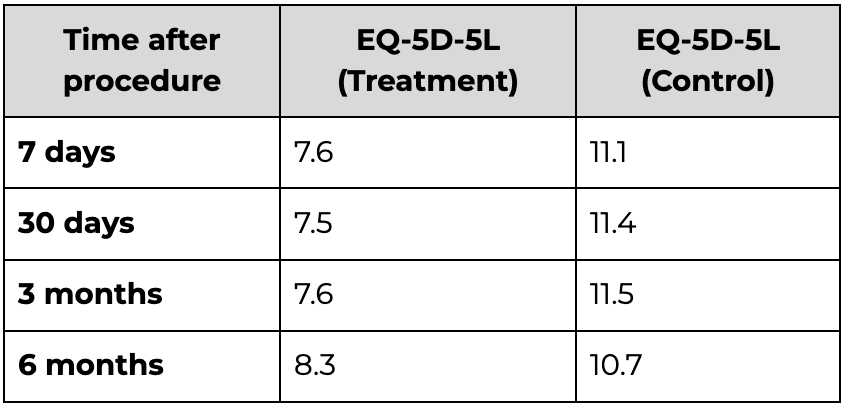
Lower scores indicate better health status. The consistent improvements in all five domains affirm the holistic impact of PENG neurolysis.
Step-by-step: How PENG ethanol neurolysis is done
Here’s a simplified breakdown of the procedure:
1. Pre-procedure diagnostic block
-
- Patient lies supine
- High-frequency ultrasound transducer locates anatomical landmarks (e.g., the iliopubic eminence)
- Local anesthetic (ropivacaine or bupivacaine) is injected to test efficacy
2. Evaluation of response
- If pain reduces by ≥50% for ≥6 hours, the patient qualifies for neurolysis
3. Neurolytic block
-
- Lidocaine 2% (5 mL) is administered for comfort
- Then, 2.5 mL of 95% ethanol is injected into the same site under ultrasound guidance
How does ethanol compare to other techniques?
Cryoablation
-
- Freezes nerves, causing reversible damage
- Pain relief is often temporary
- Requires repeat procedures and specialized equipment
Radiofrequency ablation (RFA)
- Burns nerves using thermal energy
- Effective, but:
-
-
- More complex
- More expensive
-
- Needs periodic reapplication
Ethanol neurolysis
- Irreversible nerve damage
- Low cost
- Easy to administer with minimal equipment
- Ideal for outpatient settings
Advantages at a glance
- Long-lasting analgesia (≥6 months)
- Reduces or eliminates opioid use
- Improves quality of life
- Cost-effective
- No motor impairment
- Safe with no neurological complications
Study limitations
- Conducted at a single center
- Follow-up limited to 6 months
- Results may not apply to:
- Patients with dementia
- Those with opioid dependence
- Cancer-related hip pain
Still, the high-quality design (RCT, double-blinded, placebo-controlled) ensures strong internal validity.
Final thoughts: a new era in osteoarthritis pain management?
The use of 95% ethanol for PENG neurolysis could mark a turning point in the management of chronic hip osteoarthritis pain, especially for elderly patients or those contraindicated for surgery.
This study demonstrates:
- Safe, long-term pain relief
- Opioid independence
- Improved physical and psychological well-being
As healthcare systems worldwide seek cost-effective, minimally invasive, and opioid-sparing solutions, PENG neurolysis with ethanol offers a clear pathway forward.
For more detailed information, refer to the full article in BJA.
Reysner M et al. Chemical ablation of pericapsular nerve group with 95% ethanol for pain relief and quality of life in patients with hip osteoarthritis: a prospective, double-blinded, randomised, controlled trial. British Journal of Anaesthesia. 2025;135(2):382-389.
For a detailed practical guide on ultrasound-guided PENG block and many other interventional pain procedures, read our latest release, NYSORA’s Ultrasound-guided Interventional Pain Procedure Manual!