 Nerve Blocks App
 Anesthesia Assistant App
 Ultrasound Pain App
 Pain Medicine Assistant App
 POCUS App
 IV Access App
 MSK Knee App
 VetRA App
 Nerve Block Manual
 Regional Anesthesia Updates
 Anesthesiology Manual
 Anesthesiology Review
 Anesthesia Updates 2025
 Anesthesia Updates 2026
 Pediatric Anesthesia Updates
 Airway Management Updates
 US Interventional Pain Manual
 Pain Medicine Updates
 Mastering Difficult IV Access
 PACU Nursing Manual
 RA Veterinary Manual
 Books
Books About
About
 Back to News
 6 min read
Introduction
A new review published in Current Opinion in Anaesthesiology by Klaschik et al. highlights the growing importance of frailty assessment and management in modern perioperative medicine. As populations age worldwide, hospitals are caring for an increasing number of older adults undergoing surgical procedures. While chronological age has traditionally been considered a major risk factor in surgery, modern perioperative medicine is increasingly focused on a more important concept: frailty.
Frailty is a multidimensional clinical syndrome characterized by reduced physiological reserve, decreased resilience, functional decline, and increased vulnerability to stressors such as surgery and anesthesia. Unlike age alone, frailty reflects a patient’s biological reserve and ability to recover from surgical stress.
Recent evidence shows that frailty is strongly associated with:
- Increased postoperative complications
- Higher mortality rates
- Longer hospital stays
- Greater risk of postoperative delirium
- Functional decline after surgery
- Increased healthcare utilization
As a result, frailty assessment is becoming a central component of perioperative risk evaluation and anesthetic planning.
What is frailty?
Frailty is not simply a consequence of aging. Many older adults remain robust and independent, while others experience significant physiological vulnerability.
The condition is characterized by:
- Reduced muscle strength
- Decreased mobility
- Lower energy levels
- Impaired functional independence
- Increased susceptibility to illness and stress
Frailty differs from individual diseases because it reflects the cumulative decline of multiple physiological systems. A frail patient may have difficulty maintaining homeostasis when exposed to surgical trauma, anesthesia, infection, or blood loss.
Studies cited in the review demonstrate that frail patients have approximately three to five times higher odds of 30-day postoperative mortality compared with non-frail patients.
Why frailty matters in anesthesia
Anesthesia places considerable physiological demands on the body.
During surgery, patients may experience:
- Hemodynamic fluctuations
- Blood loss
- Temperature changes
- Inflammatory responses
- Respiratory challenges
- Metabolic stress
Frail individuals possess limited physiological reserve, making it harder to compensate for these stresses.
The review highlights that frailty remains an independent predictor of adverse outcomes even after adjusting for:
- Age
- American Society of Anesthesiologists (ASA) status
- Comorbidities
- Surgical complexity
This means frailty itself provides unique prognostic information that cannot be captured by traditional risk assessment tools alone.
Clinical frailty scale: the preferred assessment tool
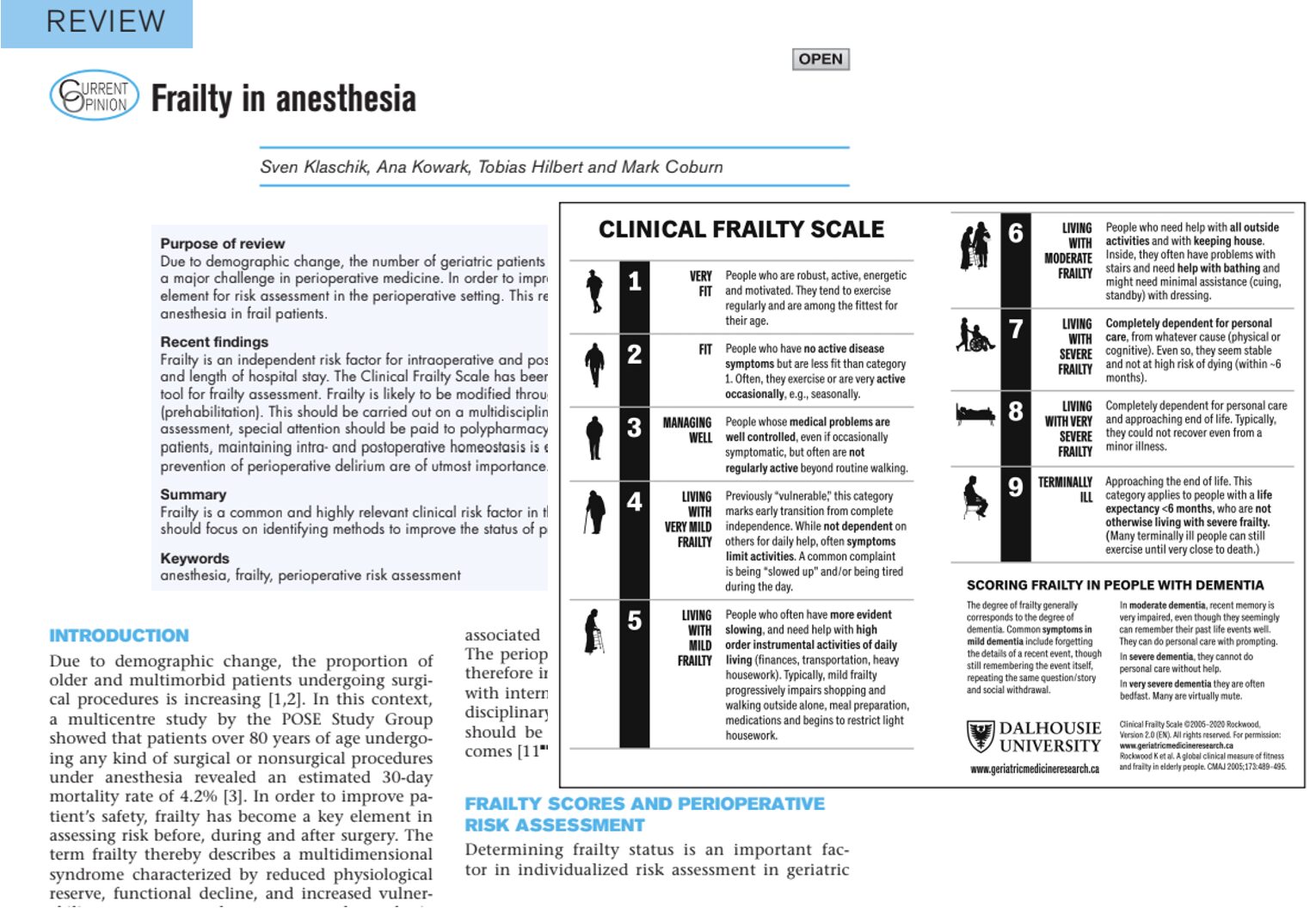
The Clinical Frailty Scale (CFS) is a widely used nine-point tool that helps clinicians assess a patient’s overall fitness, independence, and vulnerability. The European Society of Anaesthesiology and Intensive Care recommends the CFS as a practical screening tool for perioperative frailty assessment.

Patients with higher CFS scores have a significantly increased risk of postoperative complications, prolonged hospitalization, postoperative delirium, and mortality. Frailty assessment using the CFS can help clinicians identify high-risk patients and implement targeted optimization strategies before surgery.
Prehabilitation: preparing frail patients for surgery
One of the most promising developments in perioperative medicine is prehabilitation.
The concept is often described as: Better in, better out.
The goal is to improve a patient’s functional reserve before surgery, enabling better recovery afterward.
Components of prehabilitation
A comprehensive prehabilitation program may include:
- Physical exercise training
- Nutritional optimization
- Respiratory muscle training
- Psychological support
- Smoking cessation
- Alcohol reduction strategies
Several studies suggest that frail and sarcopenic patients may experience meaningful benefits from structured preoperative exercise and nutritional programs.
Nutritional optimization
Malnutrition and sarcopenia are major contributors to poor surgical outcomes.
Important nutritional interventions include:
- Early identification of malnutrition
- Increased protein intake
- Adequate caloric support
- Oral nutritional supplementation when indicated
- Medical nutrition therapy for high-risk patients
Comprehensive preoperative evaluation
Frail patients require more than routine preoperative assessment.:
- Detailed medical history
- Functional assessment
- Frailty screening
- Medication review
- Evaluation of cognitive status
- Shared decision-making with patients and families
Key optimization targets
Before surgery, clinicians should address:
- Anemia
- Heart failure
- Chronic respiratory disease
- Polypharmacy
- Deliriogenic medications
- Nutritional deficiencies
Polypharmacy deserves special attention because many older adults take multiple medications that may interact with anesthetic drugs or increase delirium risk.
Preventing postoperative delirium
Postoperative delirium is one of the most serious complications affecting frail surgical patients.
The condition may present as:
- Confusion
- Disorientation
- Agitation
- Hallucinations
- Reduced awareness
- Cognitive decline
Patients over 85 years of age face particularly high risk.
Effective prevention strategies
Evidence-based interventions include:
- Maintaining orientation
- Ensuring adequate sleep
- Early mobilization
- Proper hydration
- Nutritional support
- Use of hearing aids and glasses
- Family involvement in care
Avoiding medications with strong anticholinergic properties is particularly important for delirium prevention.
Rethinking benzodiazepines
For many years, benzodiazepines were viewed with caution in older surgical patients because of concerns regarding postoperative delirium.
However, recent studies have challenged this assumption.
Research suggests that:
- Low-dose perioperative midazolam may not increase delirium risk
- Carefully selected patients may benefit from anxiolysis
- Treatment decisions should be individualized rather than universally avoided
This evolving evidence highlights the importance of balancing risks and benefits for each patient.
Modern fasting strategies
Traditional prolonged fasting can be harmful to frail patients.
Extended fasting may lead to:
- Dehydration
- Electrolyte disturbances
- Reduced physiological reserve
- Increased perioperative stress
Current recommendations generally support:
- Clear liquids up to 2 hours before surgery
- Solid food up to 6 hours before surgery
Some institutions have adopted the “Sip til Send” approach, allowing patients to drink small amounts of water until transfer to the operating room.
Intraoperative management of frail patients
The anesthetic management of frail patients focuses on maintaining physiological stability.
Major priorities include:
- Avoiding hypotension
- Preventing hypoxia
- Maintaining organ perfusion
- Preserving normothermia
- Minimizing excessive anesthetic depth
Blood pressure management
Intraoperative hypotension is associated with:
- Acute kidney injury
- Myocardial injury
- Increased mortality
Maintaining adequate arterial pressure is therefore essential.
Temperature management
Hypothermia can contribute to:
- Increased oxygen demand
- Cardiac stress
- Delayed recovery
- Prolonged hospitalization
Careful thermal management is particularly important in elderly and frail patients.
Regional anesthesia versus general anesthesia
A common question is whether regional anesthesia is superior to general anesthesia in frail patients.
The answer is not straightforward.
Anesthetic choice should be individualized based on:
- Surgical requirements
- Patient preference
- Comorbidities
- Technical feasibility
- Expected recovery needs
Benefits of regional anesthesia
Potential advantages include:
- Reduced opioid requirements
- Improved analgesia
- Enhanced recovery
- Greater patient satisfaction in selected cases
Postoperative care: where recovery begins
The postoperative period is often the most vulnerable phase for frail patients.
Complications may include:
- Delirium
- Infection
- Respiratory compromise
- Functional decline
- Nutritional deterioration
Essential postoperative interventions
- Early mobilization
- Multimodal pain management
- Respiratory therapy
- Early enteral or oral nutrition
- Cognitive monitoring
- Family engagement
- Interdisciplinary care planning
Coordinated care by anesthesiologists, surgeons, geriatricians, nurses, physiotherapists, and nutrition specialists can significantly improve outcomes.
Conclusion
Frailty has emerged as one of the most important determinants of perioperative risk in modern anesthesia practice. As the global population ages, identifying and managing frailty will become increasingly essential for improving surgical outcomes.
The evidence reviewed by Klaschik and colleagues demonstrates that frailty assessment, prehabilitation, meticulous anesthetic management, delirium prevention, and interdisciplinary postoperative care can significantly enhance patient safety and recovery. Rather than focusing solely on age, healthcare teams must evaluate the physiological resilience of each patient and tailor care accordingly. This patient-centered approach represents the future of geriatric perioperative medicine.
Reference: Klaschik S et al. Frailty in anesthesia. Curr Opin Anaesthesiol. 2026;39:409-416.
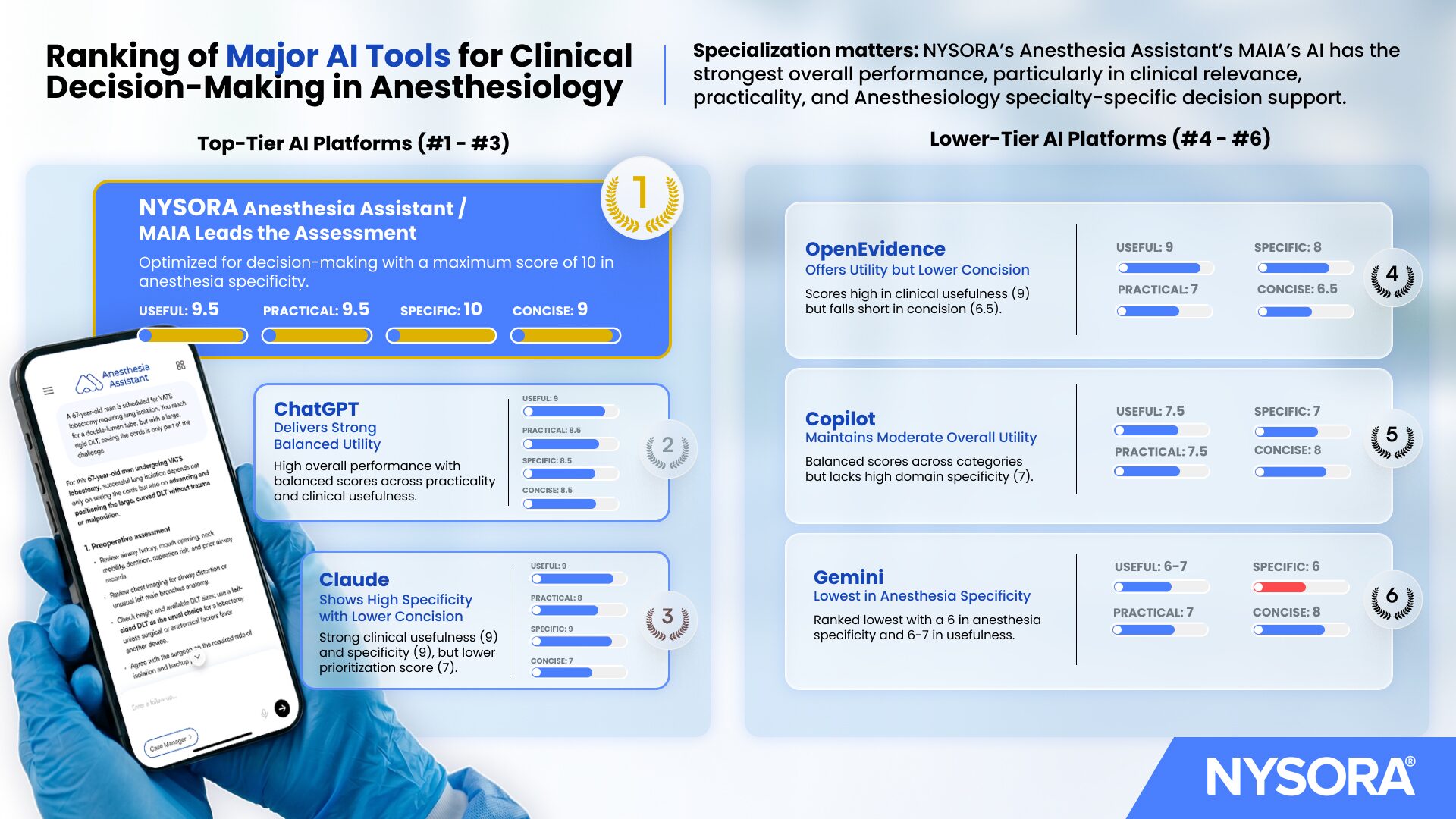
Read more about recent evidence like this in NYSORA’s Anesthesia Assistant app. Simulate case, check dosages and search through NYSORA knowledge database!