 Nerve Blocks App
 Anesthesia Assistant App
 US Pain Management App
 Pain Medicine Assistant App
 POCUS App
 IV Access App
 MSK Knee App
 VetRA App
 Nerve Block Manual
 Regional Anesthesia Updates
 Anesthesiology Manual
 Anesthesiology Review
 Anesthesia Updates 2025
 Anesthesia Updates 2026
 Pediatric Anesthesia Updates
 Airway Management Updates
 US Interventional Pain Manual
 Pain Medicine Updates
 Mastering Difficult IV Access
 PACU Nursing Manual
 RA Veterinary Manual
 Books
Books About
About
 Back to News
 2 min read
Our team treated a patient with multiple fractures and a history of angina pectoris and hypertension recently. In this case study, we will walk you through the steps of our patient management process, shedding light on the strategy, considerations, and outcome.
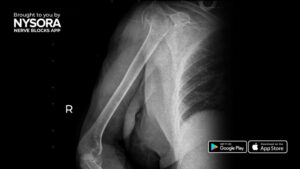
An 81-year-old patient was scheduled for emergency surgery due to multiple fractures (subcapital fracture of the humerus, comminuted fracture of the distal radius, and fracture of the neck of the femur).
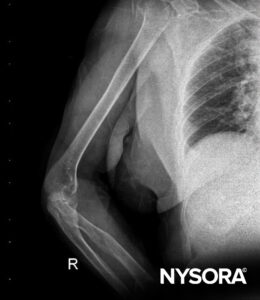
Subcapital fracture of the humerus.
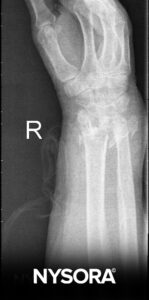
Comminuted fracture of the distal radius.
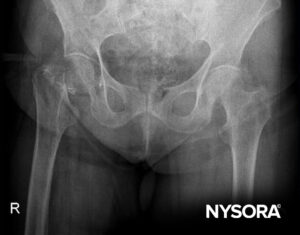
Fracture of the neck of the femur.
The patient has a history of angina pectoris and hypertension. Before the operation, the patient had an ECG with a sinus rhythm and blood pressure of 150/90 mmHg. In the operating room, the monitor displayed atrial fibrillation with a ventricular rate of 150 bpm. After 300 mg of amiodarone, the rate stabilized at around 100 bpm.
The chosen anesthesia techniques were:
- Supraclavicular block: 15 mL of 0.5% isobaric levobupivacaine.
- Spinal block: 2 mL of 0.5% isobaric levobupivacaine + 25 mcg of fentanyl.
The patient was stable during the surgery, and blood pressure was maintained via small boluses of norepinephrine (10 mcg). In the PACU the conversion to sinus rhythm occurred postoperatively. The patient was transferred to the ward as stable the day after.
For more case studies like these and the complete guide to the 60 most frequently used nerve blocks, download the Nerve Blocks App HERE. Don’t miss the chance to get the bestselling NYSORA Nerve Blocks App also in book format – the perfect study companion with the Nerve Blocks app!