 Nerve Blocks App
 Anesthesia Assistant App
 Ultrasound Pain App
 Pain Medicine Assistant App
 POCUS App
 IV Access App
 MSK Knee App
 VetRA App
 Nerve Block Manual
 Regional Anesthesia Updates
 Anesthesiology Manual
 Anesthesiology Review
 Anesthesia Updates 2025
 Anesthesia Updates 2026
 Pediatric Anesthesia Updates
 Airway Management Updates
 US Interventional Pain Manual
 Pain Medicine Updates
 Mastering Difficult IV Access
 PACU Nursing Manual
 RA Veterinary Manual
 Books
Books About
About

Learning objectives
- Diagnose and treat cocaine toxicity
Definition and mechanisms
- Cocaine intoxication refers to the subjective, desired and adverse effects of cocaine on the mind and behavior of users
- Cocaine has an indirect sympathomimetic effect
- It is often mixed with adulterants which can cause health problems on their own
- The drug was the first local anesthetic discovered
- Cocaine is available in two forms – the hydrochloride (white powder) and free-base (‘crack’ cocaine) made by combining the hydrochloride and an alkali
- Intranasal or intravenous administration results in rapid euphoria and a sensation of power and tirelessness
- In higher doses, agitation, insomnia, hallucinations, and seizures may occur
- These effects are mediated by an increase in catecholamines acting at central receptors, but peripheral effects of sympathetic stimulation (e.g. raised heart rate and blood pressure) are also prominent
- The main danger in an overdose are cardiovascular complications
- Levamisole is an anti-anthelmintic agent found in up to 70% of cocaine samples and can cause agranulocytosis and vasculitis
Signs and symptoms
| Cardiovascular | Tachycardia and hypertension Arrhythmia and cardiac conduction abnormalities Acute coronary syndromes: vasospastic and /or coronary thrombotic QT prolongation Aortic dissection |
| Neurological | Euphoria Anxiety, dysphoria, agitation, and aggression Paranoid psychosis Hyperthermia, rigidity and myoclonic movements Seizures Depression, sometimes with tentamen suicide |
| Respiratory | Pulmonary edema Pneumothorax Pneumomediastinum |
| Peripheral sympathomimetic | Hyperthermia Muscle fasciculations Mydriasis, sweating and tremor |
| Other | Hyperthermia induced rhabdomyolysis, renal failure, and cerebral edema Subarachnoid/intracerebral hemorrhage Ischemic colitis Ileus (body packers) Epistaxis |
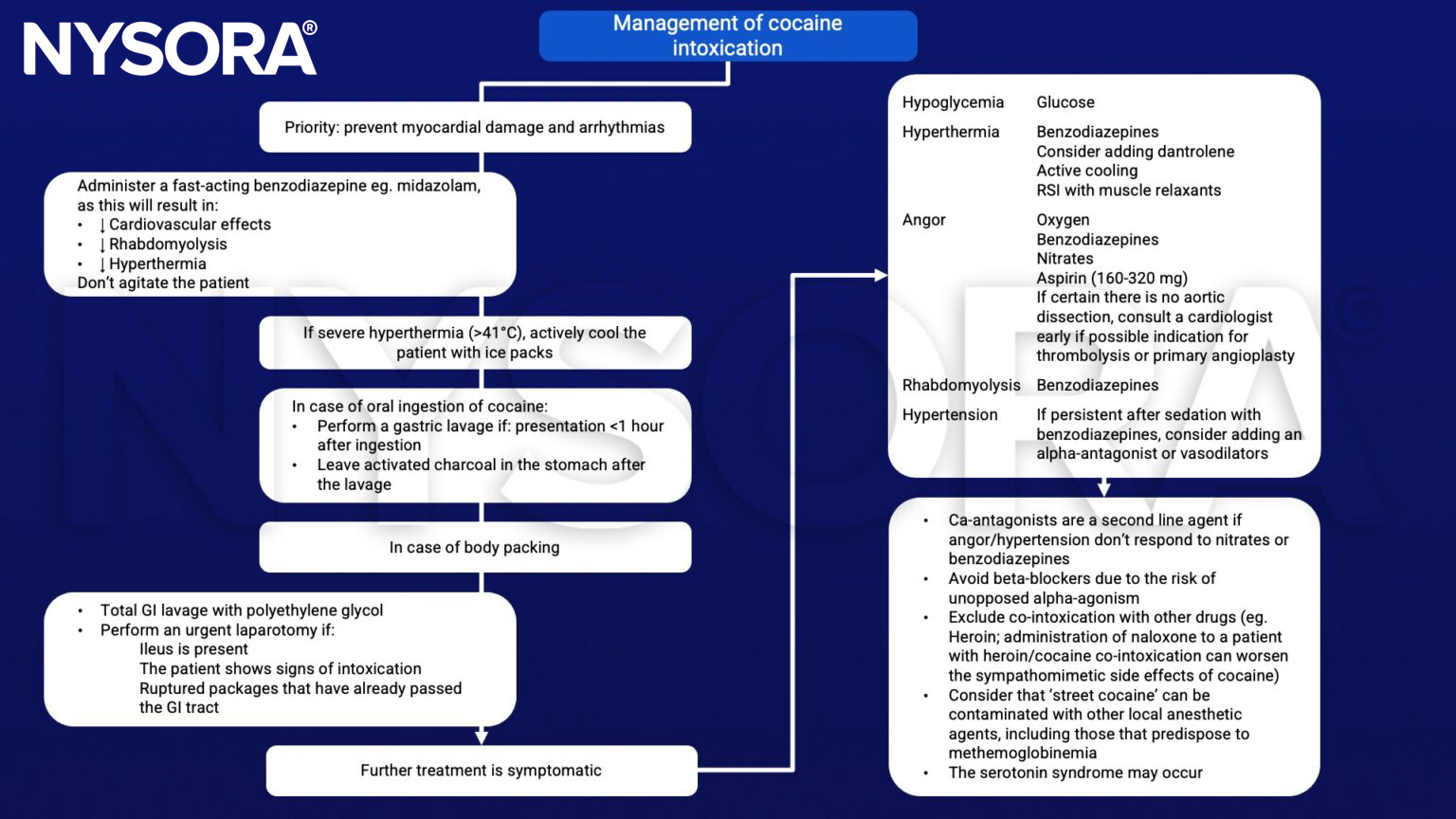
Management
Suggested reading
- Kramers C. et al. Toxicologische behandel informatie: Cocaïne, 2020, accessed 25/01/2023, https://toxicologie.org/cocaine
- Nicholson Roberts, T., Thompson, J.P., 2013. Illegal substances in anaesthetic and intensive care practices. Continuing Education in Anaesthesia Critical Care & Pain 13, 42–46.
- Jenkins BJ. 2002. Drug abusers and anaesthesia, BJA CEPD Reviews. 2;1:15-19.