Back to News
 3 min read
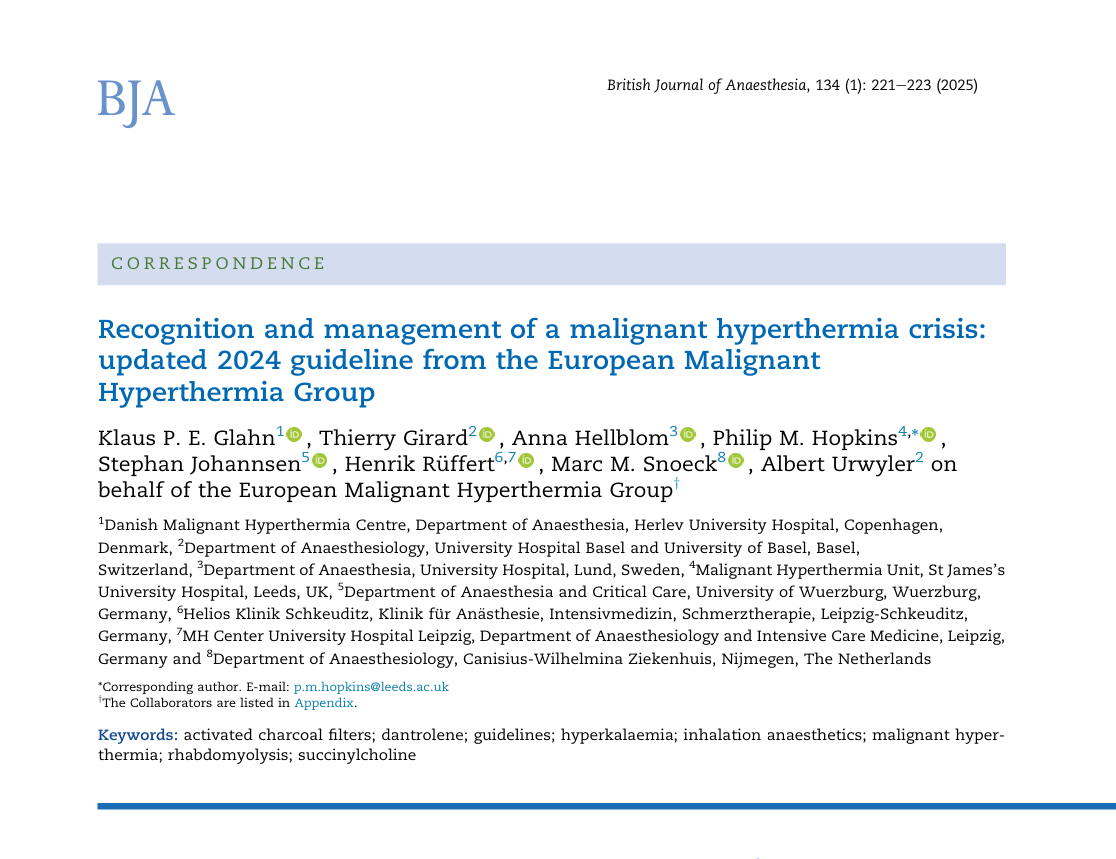
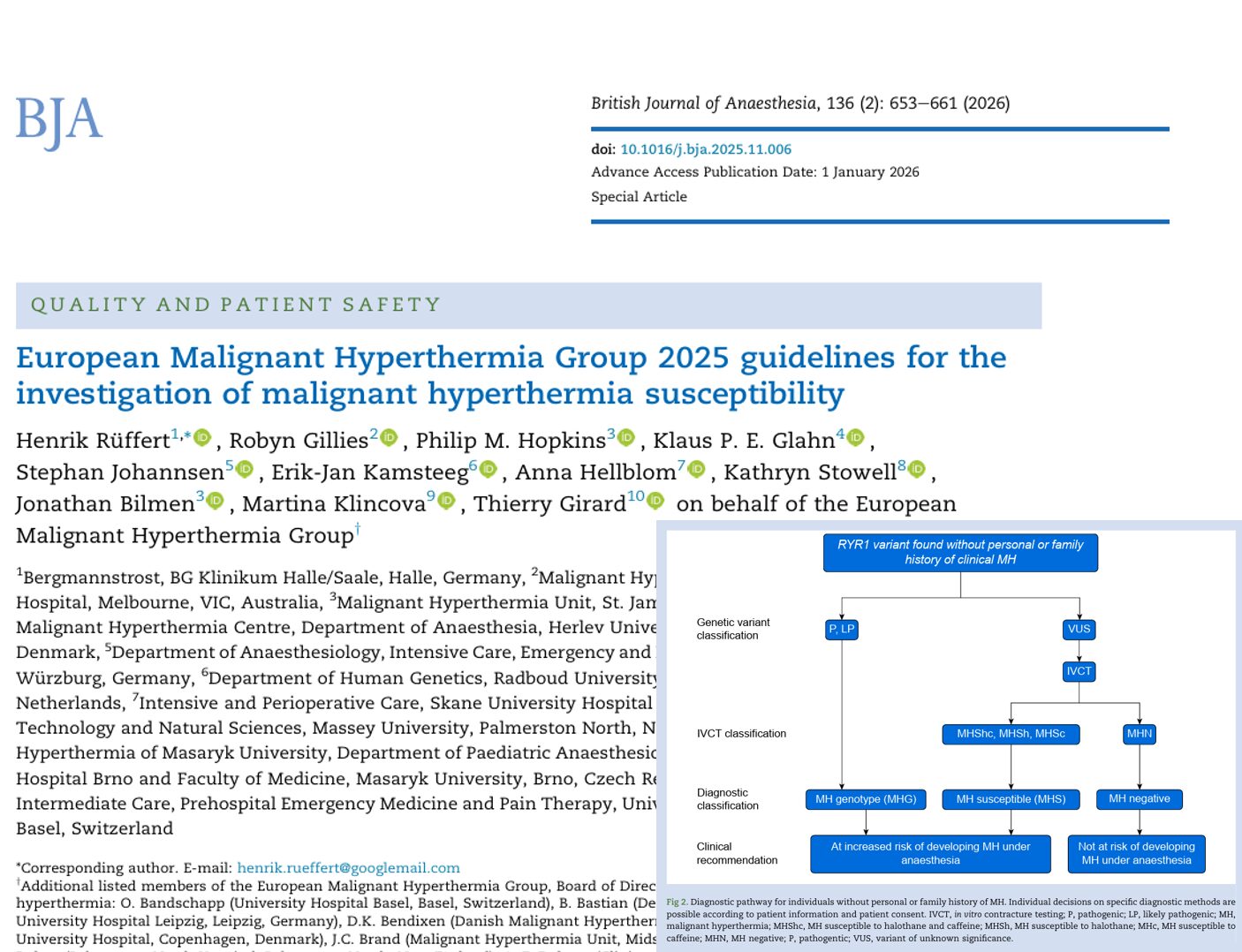
The European Malignant Hyperthermia Group (EMHG) has released its 2025 updated diagnostic guidelines for malignant hyperthermia (MH), representing the most comprehensive revision in over a decade. These updates reflect significant advances in genetic testing and provide clearer classifications to guide clinical decision-making and patient safety during anesthesia.
What is malignant hyperthermia?
Malignant hyperthermia is a rare but potentially fatal pharmacogenetic disorder triggered by certain anesthetic agents (notably volatile inhalation anesthetics and suxamethonium). It manifests as uncontrolled calcium release in skeletal muscle, leading to:
- Rapid onset of hypermetabolism
- Muscle rigidity
- Hypercapnia
- Rhabdomyolysis
- Hyperthermia
Key updates in the 2025 EMHG guidelines
-
Introduction of the “MH genotype” (MHG)
The most significant conceptual addition is the diagnostic classification MHG (malignant hyperthermia genotype). This label applies to individuals carrying a pathogenic or likely pathogenic variant linked to MH but who have not undergone confirmatory in vitro contracture testing (IVCT).
- MHG individuals are considered at risk and should avoid MH-triggering agents during anesthesia.
-
Refined definition of a clinical MH event
For the first time, EMHG provides a consensus definition:
“A potentially life-threatening clinical reaction originating from uncontrolled calcium release in skeletal muscle cells triggered by potent inhalational anesthetic agents and/or suxamethonium.”
This indicates that MH is exclusively triggered pharmacologically, not by exertion or heat alone.
Diagnostic pathways: step-by-step
Pathway A: For patients with personal or family MH history
- Start with genetic testing (preferably full RYR1/CACNA1S panel, not hotspot sequencing).
- If a pathogenic or likely pathogenic variant is found → patient is classified as MHG.
- If no variant or VUS (variant of uncertain significance) → proceed to IVCT.
- IVCT result determines final classification:
- MHShc, MHSh, MHSc → patient is MHS (susceptible)
- MHN → patient is not at risk
- MHShc, MHSh, MHSc → patient is MHS (susceptible)
Pathway B: For individuals with incidental genetic findings but no MH symptoms
- If a pathogenic/likely pathogenic variant is found, classify it as MHG.
- IVCT is not mandatory unless a deeper phenotypic correlation is required.
Diagnostic methods
Genetic testing
- Focuses on RYR1, CACNA1S, and occasionally STAC3.
- Uses two variant scoring systems:
- EMHG Scoring Matrix (stricter, includes functional data)
- ClinGen Variant Curation Expert Panel (VCEP)
- EMHG Scoring Matrix (stricter, includes functional data)
As of 2025, 72 RYR1 variants are considered pathogenic or likely pathogenic by the EMHG.
In vitro contracture test (IVCT)
IVCT remains the only method to rule out MH risk.
Conducting the IVCT:
- Muscle biopsy (vastus medialis or lateralis, minimum 100–200 mg)
- Static caffeine and halothane challenge in lab baths at 37°C
- Diagnostic criteria:
- Positive if contracture ≥ 2 mN with caffeine ≤ 2 mM and/or halothane ≤ 0.44 mM
- Positive if contracture ≥ 2 mN with caffeine ≤ 2 mM and/or halothane ≤ 0.44 mM
- Classifications:
- MHShc (positive to both agents)
- MHSh (positive to halothane only)
- MHSc (positive to caffeine only)
- MHN (negative to both)
- MHShc (positive to both agents)
Clinical interpretation of results
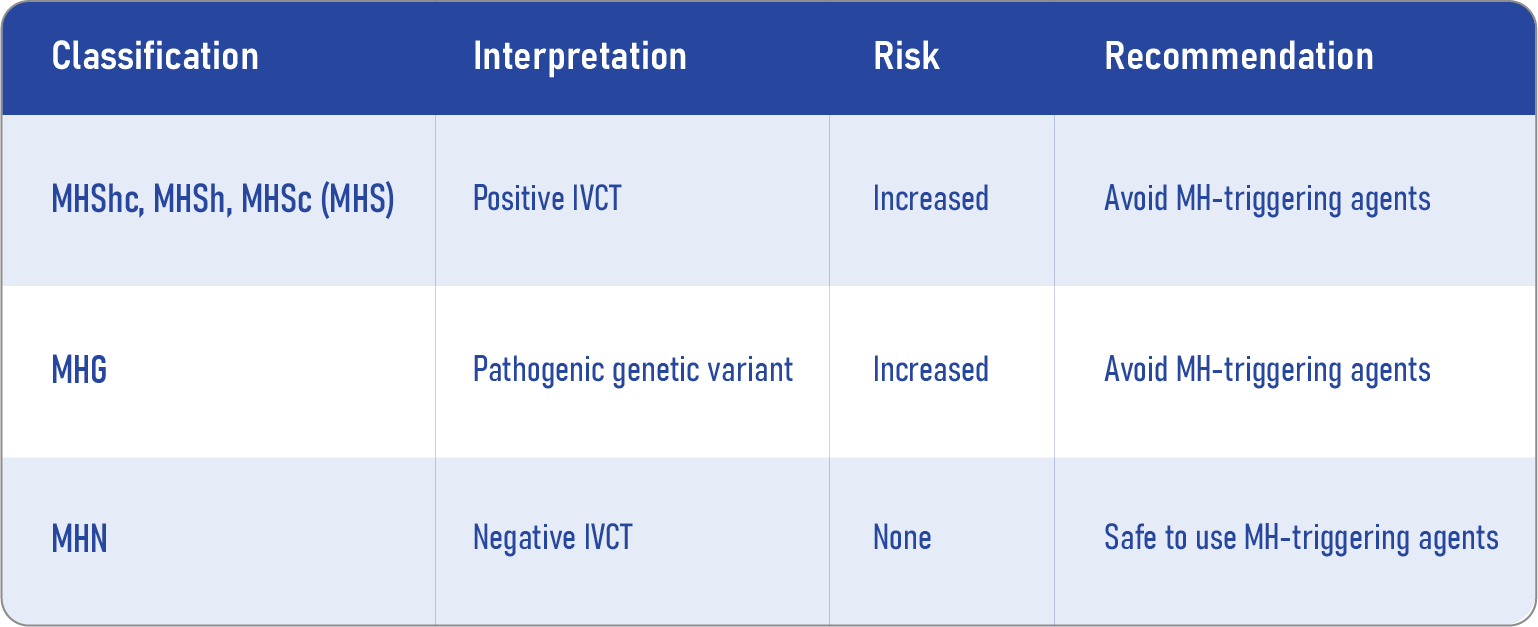
- Only MHN individuals are cleared of risk.
- VUS results or negative genetic screens do not exclude MH susceptibility without IVCT confirmation.
Best practices for clinicians
- Never expose MHS or MHG patients to suxamethonium or volatile anesthetics.
- Consider non-triggering anesthetic techniques for at-risk patients.
- Refer patients with family history, unexplained perioperative death, or clinical signs of MH for further investigation.
- Report suspected MH events to the EMHG registry to contribute to global research.
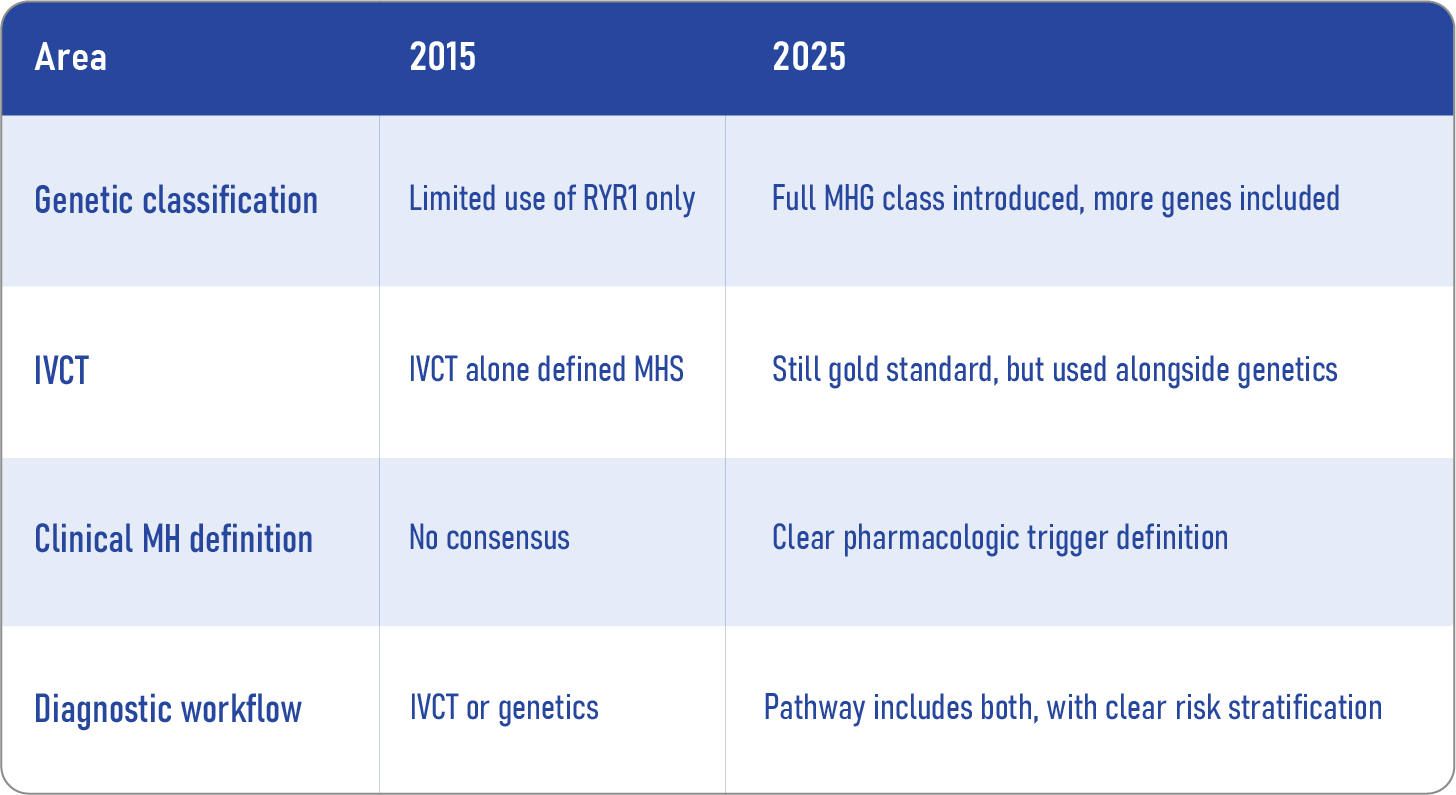
Summary of changes from previous (2015) guidelines
Final thoughts
These 2025 EMHG guidelines elevate diagnostic precision and patient safety by integrating modern genomics with legacy gold-standard muscle testing. The addition of the MHG category bridges genetic insights with clinical caution, empowering anesthetists and patients alike to manage risk wisely.
Reference: Rüffert H et al. European Malignant Hyperthermia Group 2025 guidelines for the investigation of malignant hyperthermia susceptibility. Br J Anaesth. 2026;136:653-661.
Read more about malignant hyperthermia in our Anesthesiology Module on NYSORA 360—an essential learning resource for residents with up-to-date, practical guidance across perioperative care.