Back to News
 3 min read
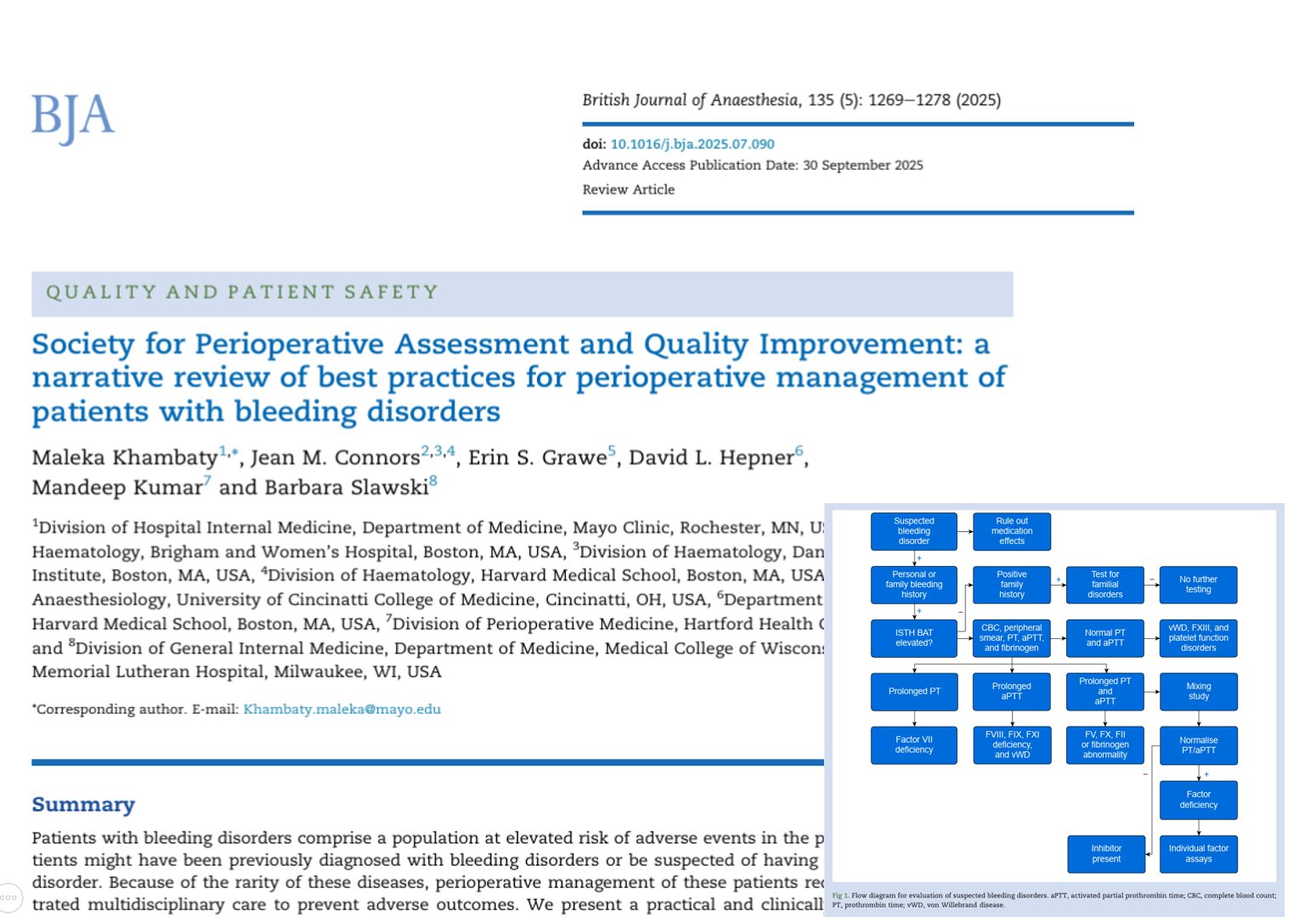
Managing patients with bleeding disorders in the perioperative setting requires highly specialized, individualized care. A new review from Khambaty et al. outlines a robust, multidisciplinary approach to safely navigating surgical procedures in this high-risk population.
Understanding the risks
- Approximately 1% of the population has a diagnosed or suspected bleeding disorder.
- These patients are at significantly higher risk of surgical complications such as major hemorrhage and prolonged bleeding.
- Inherited disorders like von Willebrand disease (vWD), hemophilias, and factor deficiencies are most common.
Why multidisciplinary care matters
A cohesive team of specialists including anesthesiologists, hematologists, surgeons, pharmacists, and lab professionals is crucial. The article emphasizes:
- Early and coordinated planning.
- Custom hemostatic strategies.
- Clear perioperative communication plans.
Key bleeding disorders and perioperative strategies
1. Hemophilia A and B
- Deficiencies: Factor VIII (A), Factor IX (B).
- Treatment:
- Recombinant factor replacement.
- DDAVP for mild hemophilia A.
- Antifibrinolytics like tranexamic acid.
- Bypassing agents for inhibitor patients.
- Recombinant factor replacement.
- Intraoperative goal: Factor levels > 80–100% for major surgery.
2. Factor XI deficiency (Hemophilia C)
- Prevalent among Ashkenazi Jewish populations.
- Symptoms: Mucosal bleeding, postoperative hemorrhage.
- Treatment:
- Fresh frozen plasma (FFP) in the U.S.
- Antifibrinolytics for minor surgery.
- Recombinant FVIIa in patients with inhibitors.
- Fresh frozen plasma (FFP) in the U.S.
3. Von Willebrand disease (vWD)
- Most common inherited bleeding disorder.
- Three types:
- Type 1: Partial deficiency – DDAVP effective.
- Type 2: Qualitative defect – vWF concentrates needed.
- Type 3: Severe – Requires regular factor replacement.
- Type 1: Partial deficiency – DDAVP effective.
- Pregnancy consideration: Factor levels must be maintained >50 IU/dL at delivery.
4. Inherited platelet function disorders
- Often require tertiary center testing.
- Diagnosis: ISTH Bleeding Assessment Tool (BAT) > 6 predictive of future bleeding.
- Management: Platelet transfusions, antifibrinolytics, and expert hematology guidance.
5. Fibrinogen disorders
- Types: Afibrinogenemia, hypofibrinogenemia, dysfibrinogenemia.
- Treatment: Fibrinogen concentrate preferred over cryoprecipitate.
- Target levels:
- 1 g/L for minor bleeding.
- 1.5 g/L for major procedures.
6. Disorders of fibrinolysis
- Delayed bleeding is a hallmark.
- Examples:
- α2-Antiplasmin deficiency.
- Plasminogen activator inhibitor-1 deficiency.
- α2-Antiplasmin deficiency.
- Treatment: Antifibrinolytics such as tranexamic acid.
Step-by-step perioperative planning
1. Preoperative
- Obtain bleeding history and lab work.
- Coordinate with hematologist.
- Formulate individualized hemostatic plan.
2. Intraoperative
- Monitor factor levels and coagulation status.
- Ensure availability of blood products and replacement therapy.
3. Postoperative
- Regular lab monitoring for 5–7 days post-surgery.
- Continue antifibrinolytics and factor support as needed.
Practical considerations for institutions
- Lab turnaround: Factor testing should be processed within 1–4 hours.
- Pharmacy coordination: Ensure pre-stocking of required factor concentrates.
- Blood bank alert: For transfusion needs or patients with antibodies.
- Written plan: Shared with all members of the surgical and recovery team.
Conclusion
Effective perioperative care for bleeding disorders hinges on personalized management, interprofessional collaboration, and vigilant monitoring. The framework provided by Khambaty et al. serves as an essential guide for improving outcomes and reducing risks for this vulnerable population.
Reference: Khambaty M et al. Society for Perioperative Assessment and Quality Improvement: a narrative review of best practices for perioperative management of patients with bleeding disorders. Br J Anaesth. 2025;135:1269-1278.
For more detailed information on perioperative management of bleeding disorders, download NYSORA’s Anesthesia Assistant app!