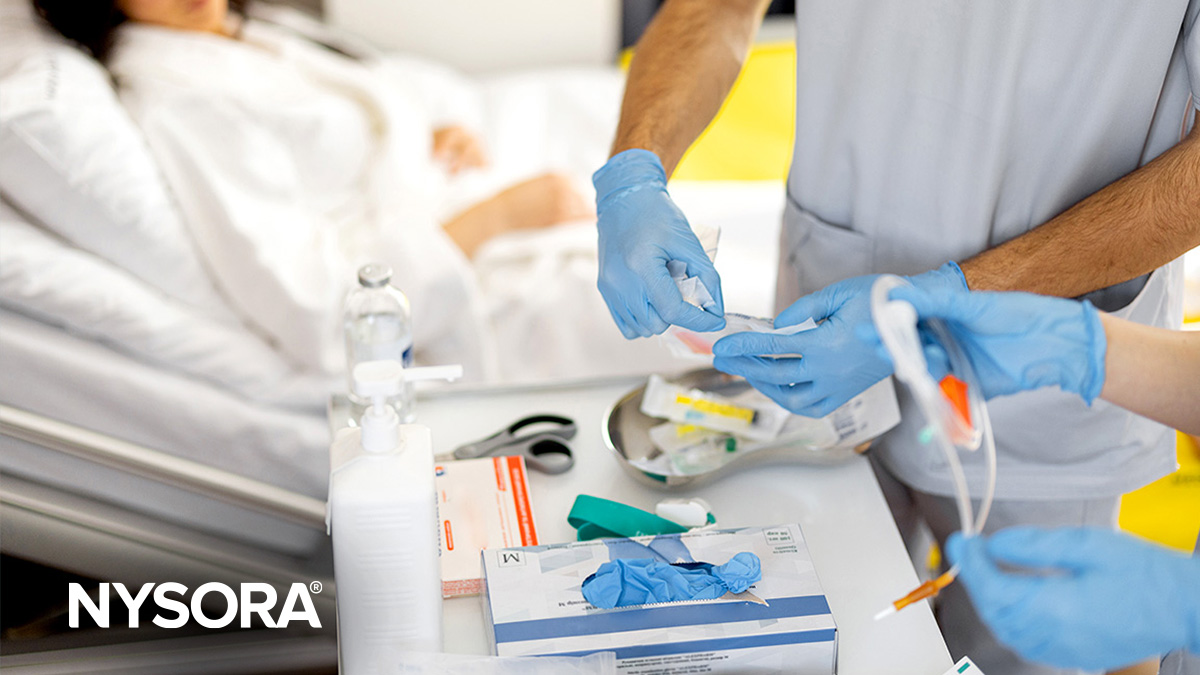
Patient identification and preparation
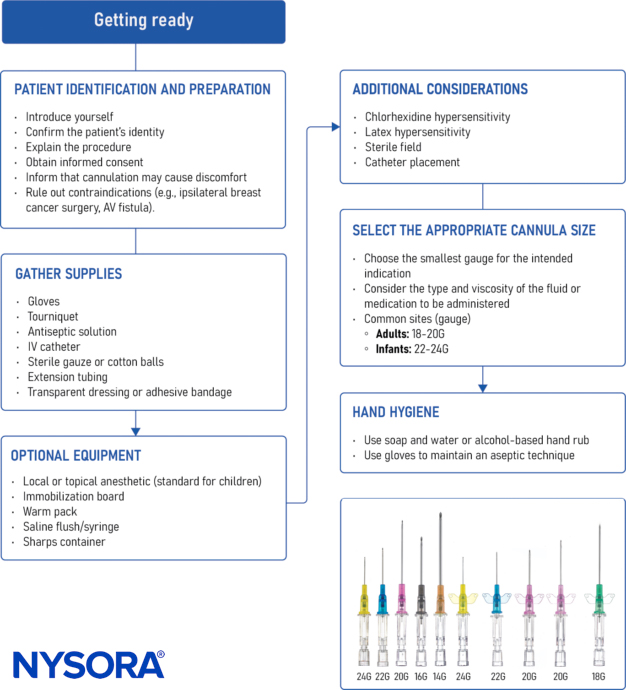
- Introduce yourself to the patient.
- Confirm the patient’s identity using the appropriate hospital protocol (checklist).
- Explain the procedure to the patient: Why, how, and where.
- Obtain informed consent if not covered elsewhere.
Have the equipment ready
Before initiating IV access, prepare by gathering all necessary equipment and ensuring it’s readily accessible. The preparation is key to facilitating a smooth IV cannulation process and preventing potential difficulties that could arise during the procedure. Having everything at hand increases efficiency and enhances patient comfort and safety by minimizing delays and the need for repeated attempts.
Here’s a list of what is typically needed for IV cannulation:
- Tourniquet: Results in venostasis and makes veins more prominent.
- Transparent dressing or adhesive bandage: Secures the IV cannula after insertion.
- Sterile gauze or cotton balls: Useful for applying pressure post cannulation or if the attempt is unsuccessful.
- IV catheter: Typically, over-the-needle design. Available in various sizes to match specific clinical needs and the patient’s vein size.
- Sharps container: A dedicated space for disposing of used needles.
- Antiseptic solution: Needed for skin disinfection (typically: alcohol, chlorhexidine, or povidone-iodine).
- Gloves: Maintain an aseptic technique for the patient’s and your safety.
- Extension tubing: A flexible connection to the main IV after the cannulation.
- Saline flush/syringe: Occasionally used to test the IV and detect paravenous injection.
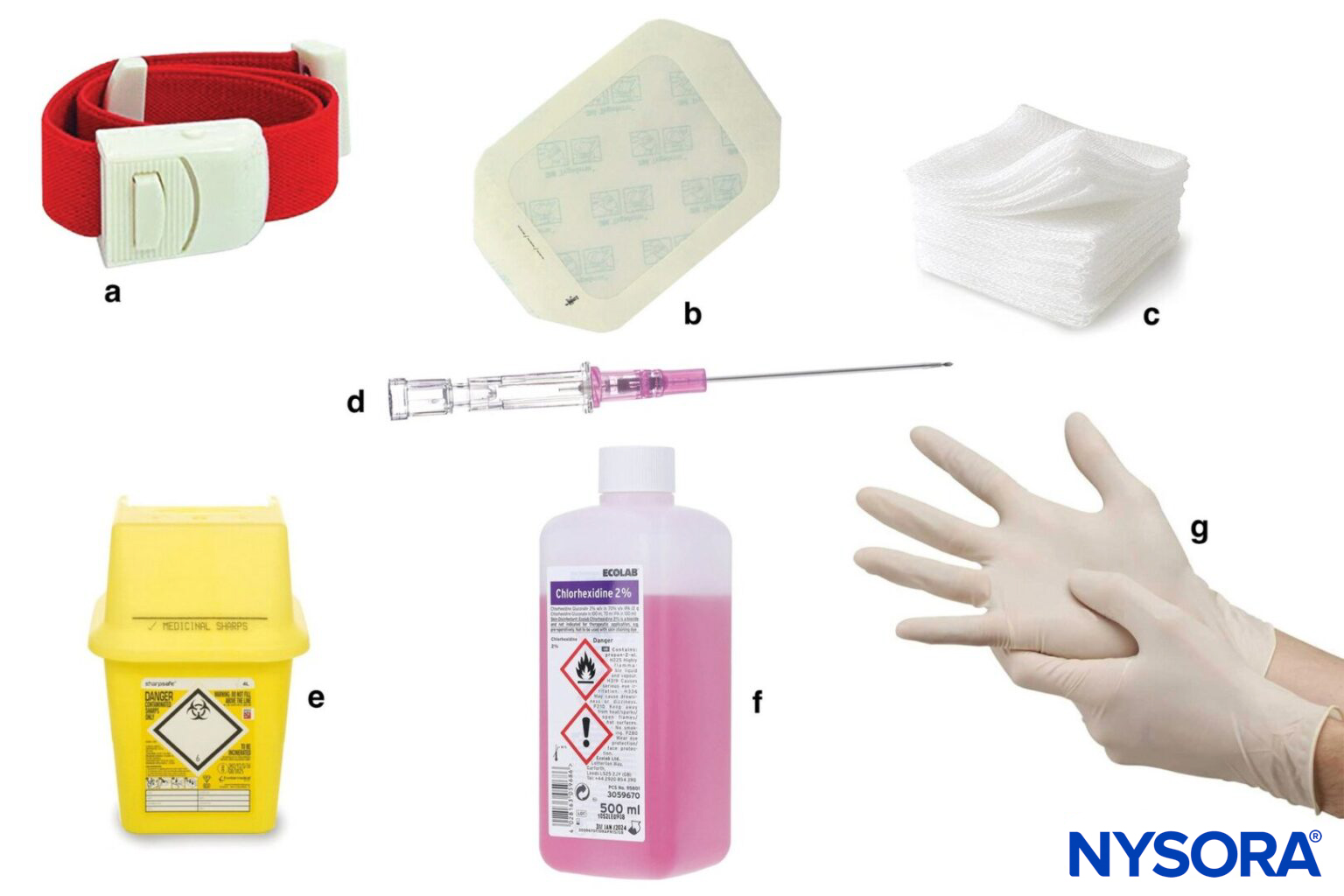
The equipment needed to insert a peripheral IV catheter. A) A tourniquet. B) Transparent dressing or adhesive bandage. C) Sterile gauze. D) IV catheter. E) Sharps container. F) Antiseptic solution. G) Sterile or non-sterile gloves.
Optional equipment
Local or topical anesthetic (commonly used for children):
- Injectable 1% lidocaine without epinephrine.
- A cream or gel with various mixtures of lidocaine, tetracaine, or prilocaine.
Immobilization board: Utilized when inserting a catheter over a joint to maintain stability and safety during the procedure.
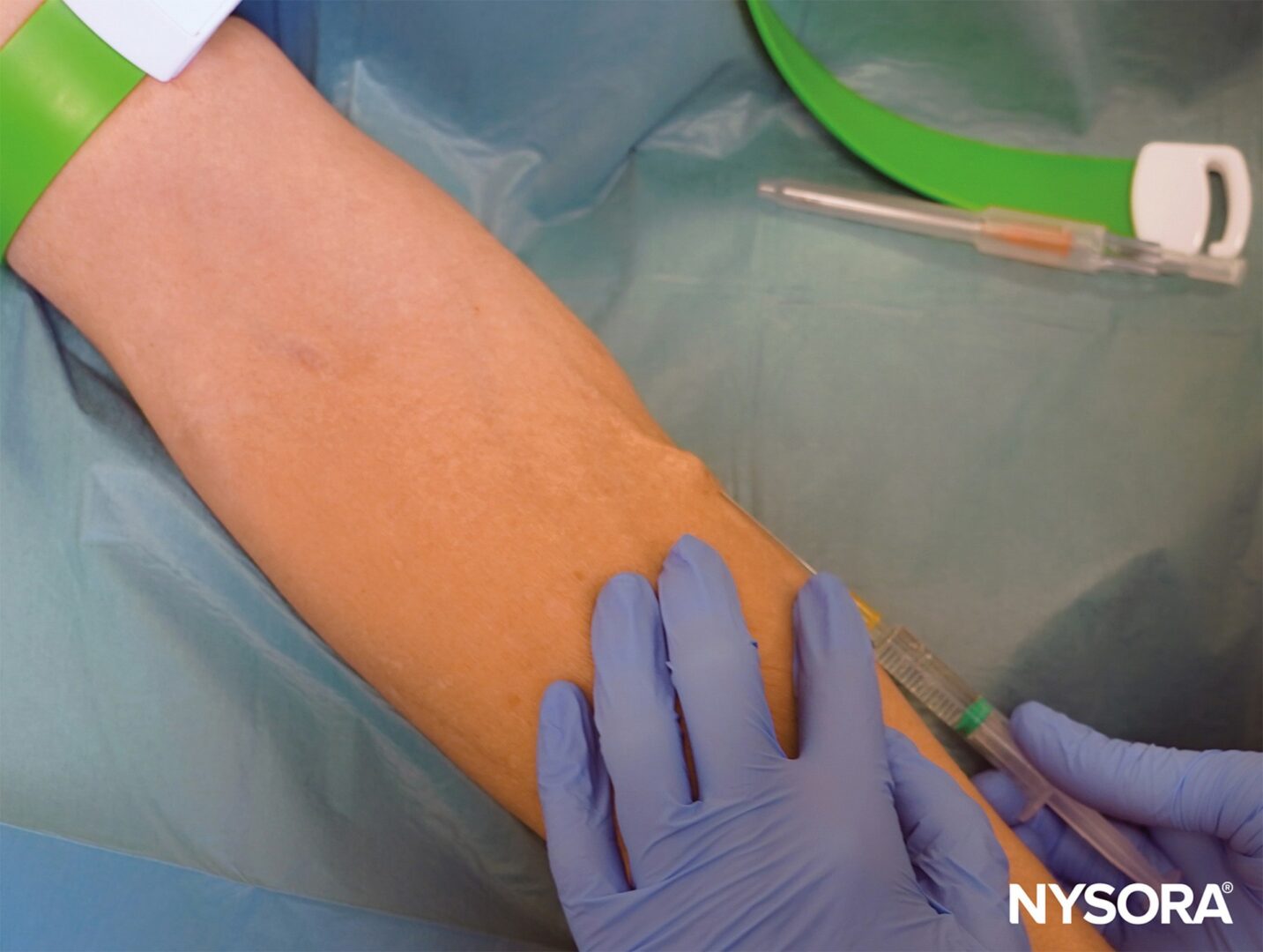
Local anesthetic infiltration with 1% lidocaine subcutaneously can be used to decrease the discomfort during insertion of a large-bore IV.
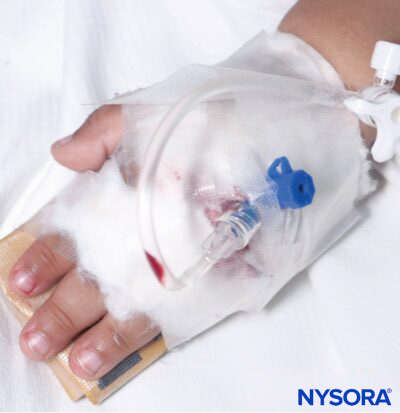
Immobilization board to maintain stability and safety during IV insertion.
Additional considerations
- Chlorhexidine hypersensitivity: In patients with a history of sensitivity to chlorhexidine, opt for an alternative skin disinfectant to avoid allergic reactions.
- Latex allergy: Use latex-free gloves and tourniquets.
- Sterile field: Typically unnecessary for peripheral venous cannulation. Regardless, always adhere to aseptic, no-touch techniques.
Catheter-securement devices
IV catheter-securing devices play a critical role in medical care by ensuring that IV catheters remain in place to deliver fluids and medications or to draw blood. These devices are designed to reduce the risk of catheter-related complications, such as dislodgement or infection. Various designs are available, including adhesive tapes, suture-based devices, and advanced adhesive dressings. Each type offers unique benefits, catering to different patient needs and clinical situations. For instance, adhesive dressings are often preferred for their ease of use and comfort, while suture-based devices may be used in situations requiring a more secure attachment. The choice of an IV catheter-securing device should consider factors such as the duration of IV therapy, patient activity level, and skin sensitivity. Proper selection and application of these devices are essential for enhancing patient comfort, minimizing complications, and ensuring the effective delivery of IV therapies.
Additionally, several securing devices are available also to secure the IV tubing, providing an additional layer of protection against accidental catheter dislodgement.
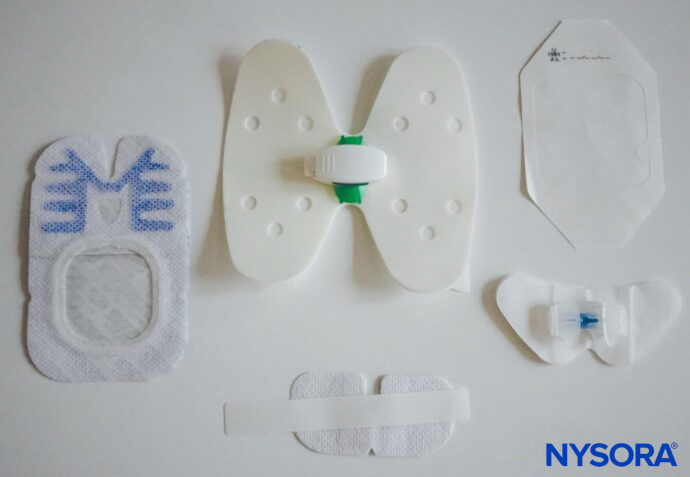
Examples of different types of catheter securing systems that can be used to tape down the IV catheter.
IV starter kits
An IV starter kit is a pre-packaged sterile set containing all essential tools for inserting a peripheral IV.
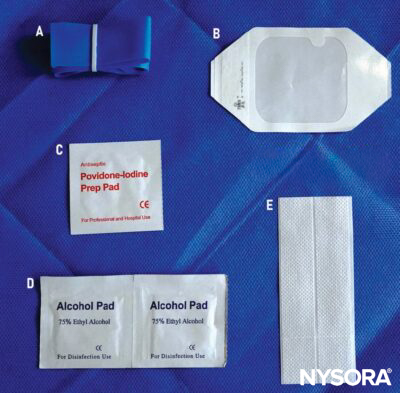
An IV starter kit containing A) A tourniquet. B) An occlusive dressing. C) A povidone-iodine pad to disinfect. D) Two alcohol pads to disinfect. E) A catheter-securing device.
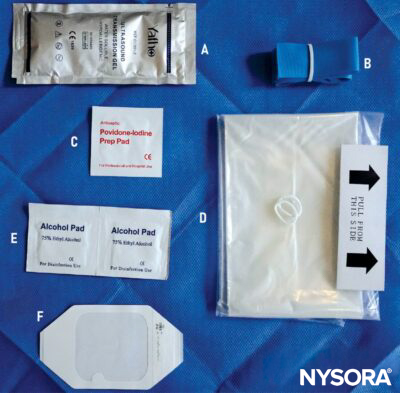
An IV starter kit containing all suplies for ultrasound-guided IV cannulations. A) Ultrasound gel. B) A tourniquet. C) A povidone-iodine pad to disinfect. D) A probe cover with two elastic bands to secure the probe cover. E) Two alcohol pads to disinfect. F) An occlusive dressing to secure the catheter.
Select the best cannula size
- Choose the smallest gauge for the planned IV flow rate needed for the prescribed IV therapy. This helps minimize injury to the vein and patient discomfort. Use common sense in selection – the larger the gauge of the catheter the more risk for vein thrombosis and inflammation.
- The type and viscosity of the fluid or medication to be administered are important for the selection of the catheter gauge size and site for venous access. The higher viscosity of the IV fluids and injectables that cause vein irritation requires a larger IV cannula gauge and larger veins.
- 18G or 20G IV cannulas are most commonly used for routine infusions in adults (14G or 16G for high-volume infusions).
- 22G or 24G IV cannulas are more suitable for infants and small children.
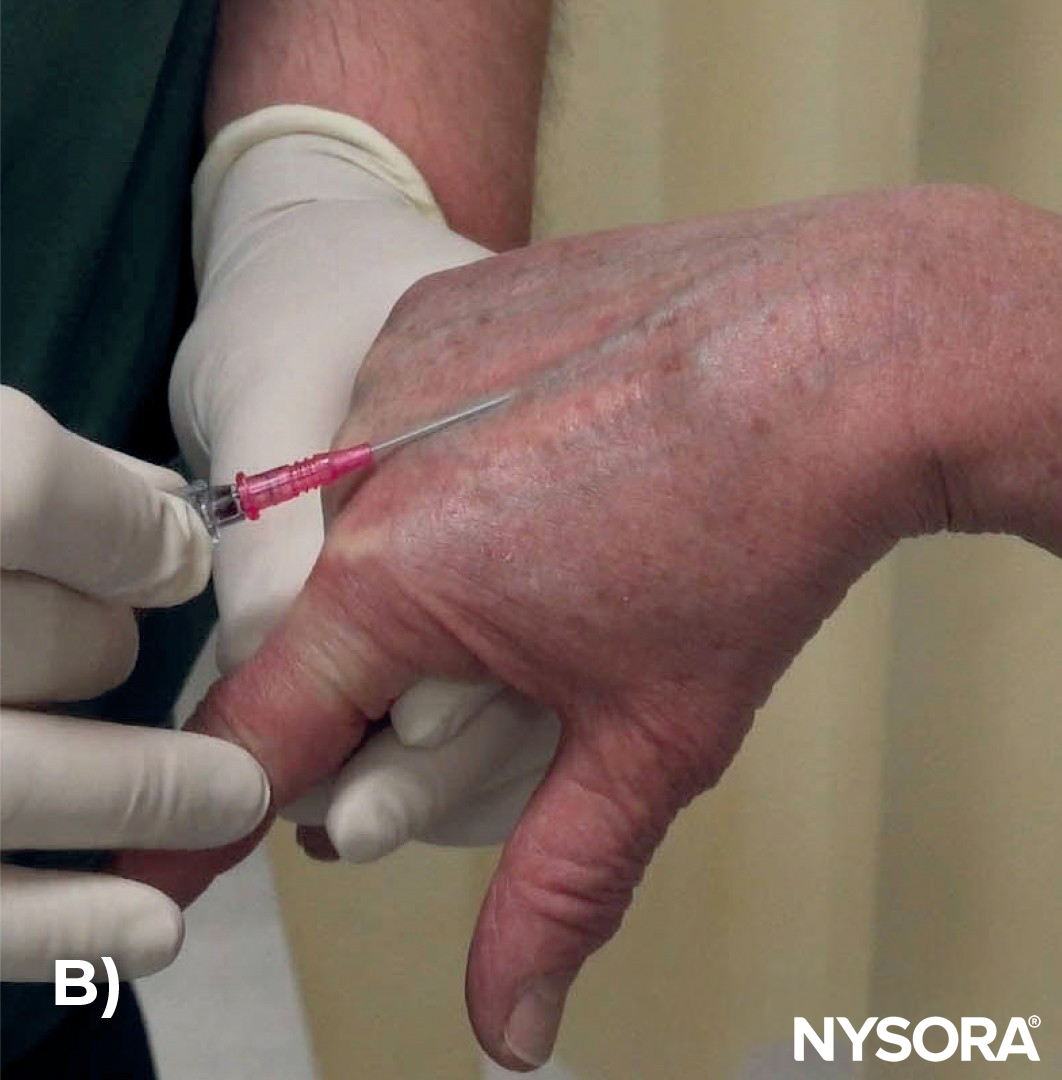
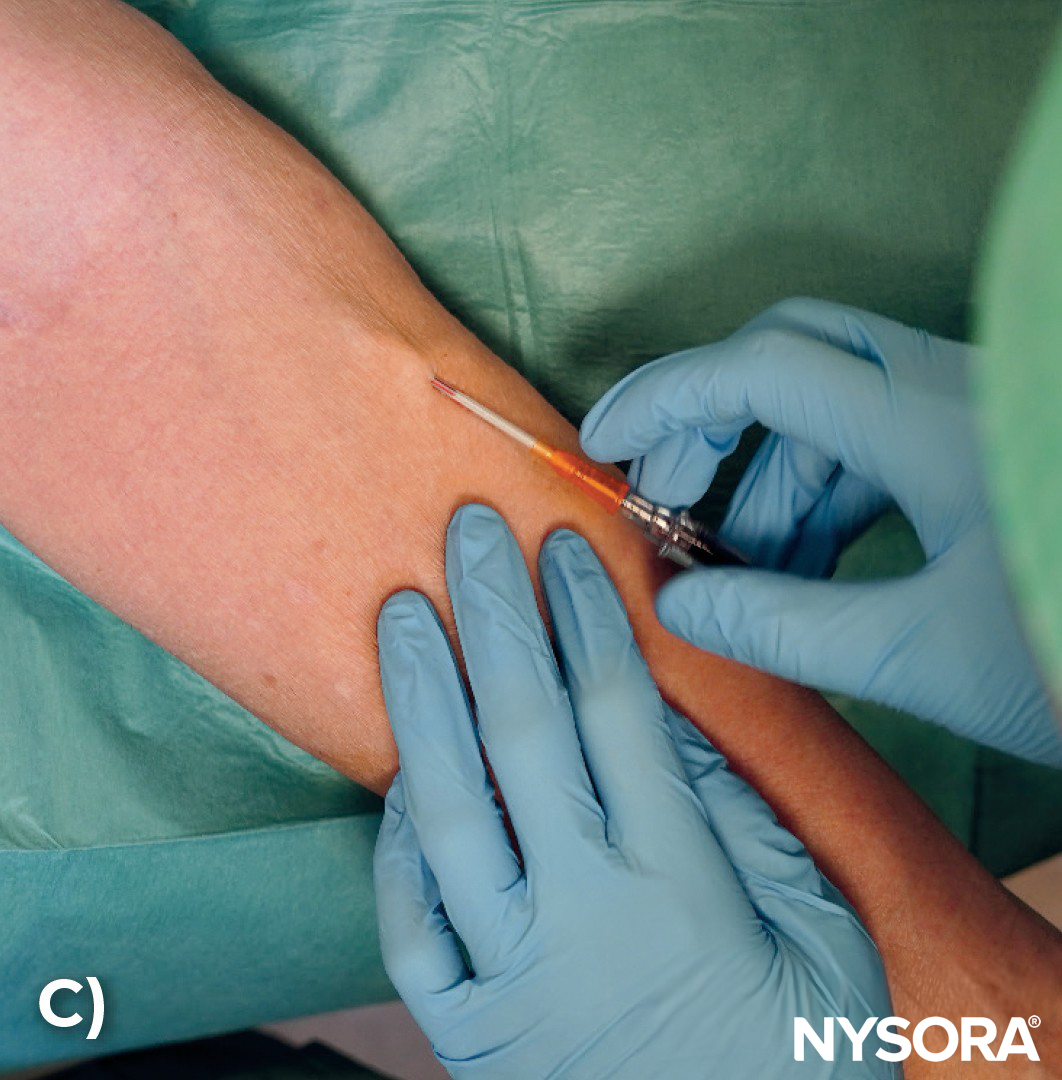
22G (blue) (A) is used for pediatric patients. 20G (pink) (B) is used most commonly for routine infusions in adults. 14G (orange) (C) is used for large vein cannulation.
Hand hygiene and gloves
Hand hygiene and the use of gloves are important in ensuring the safety and effectiveness of IV cannulations. Washing hands thoroughly with soap and water or using an alcohol-based hand rub removes potentially harmful microorganisms that could be introduced into the patient’s bloodstream during the procedure. Wearing sterile or non-sterile gloves creates a barrier between the healthcare provider’s hands and the patient, reducing the risk of contaminating the IV site. Gloves protect the patient and healthcare provider by preventing cross-contamination from touching non-sterile surfaces or equipment before cannulation. Hand hygiene and gloves are fundamental components of infection control practices in healthcare settings, significantly lowering the incidence of catheter-related bloodstream infections and enhancing patient outcomes.

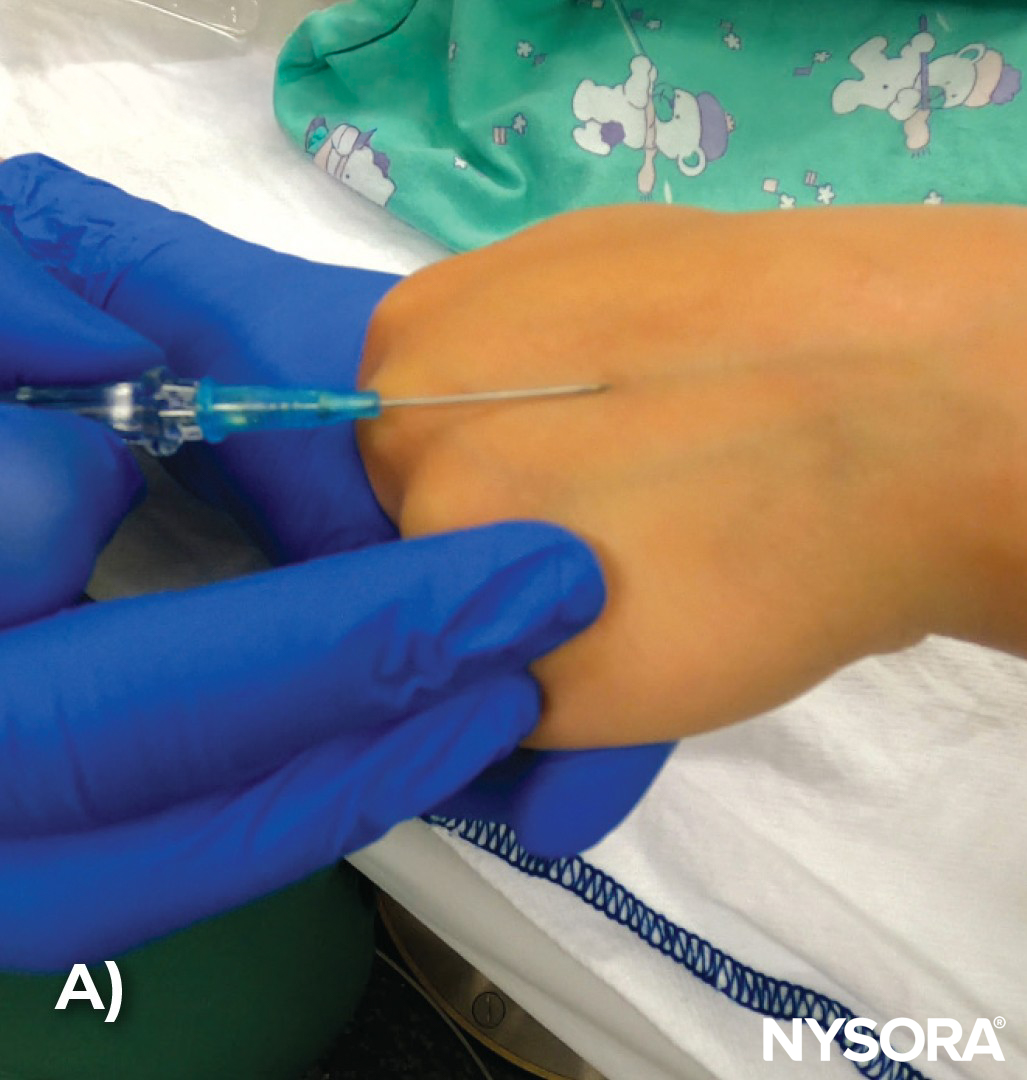
Use sterile or non-sterile, disposable gloves to maintain an aseptic technique throughout the procedure.
DO NOT FORGET:
- Wash hands using soap and water or an alcohol-based hand rub.
- Use sterile or non-sterile, disposable gloves to maintain an aseptic technique throughout the procedure.