 Nerve Blocks App
 Anesthesia Assistant App
 Ultrasound Pain App
 Pain Medicine Assistant App
 POCUS App
 IV Access App
 MSK Knee App
 VetRA App
 Nerve Block Manual
 Regional Anesthesia Updates
 Anesthesiology Manual
 Anesthesiology Review
 Anesthesia Updates 2025
 Anesthesia Updates 2026
 Pediatric Anesthesia Updates
 Airway Management Updates
 US Interventional Pain Manual
 Pain Medicine Updates
 Mastering Difficult IV Access
 PACU Nursing Manual
 RA Veterinary Manual
 Books
Books About
About

Learning objectives
- Recognize end-stage liver disease (ESLD)
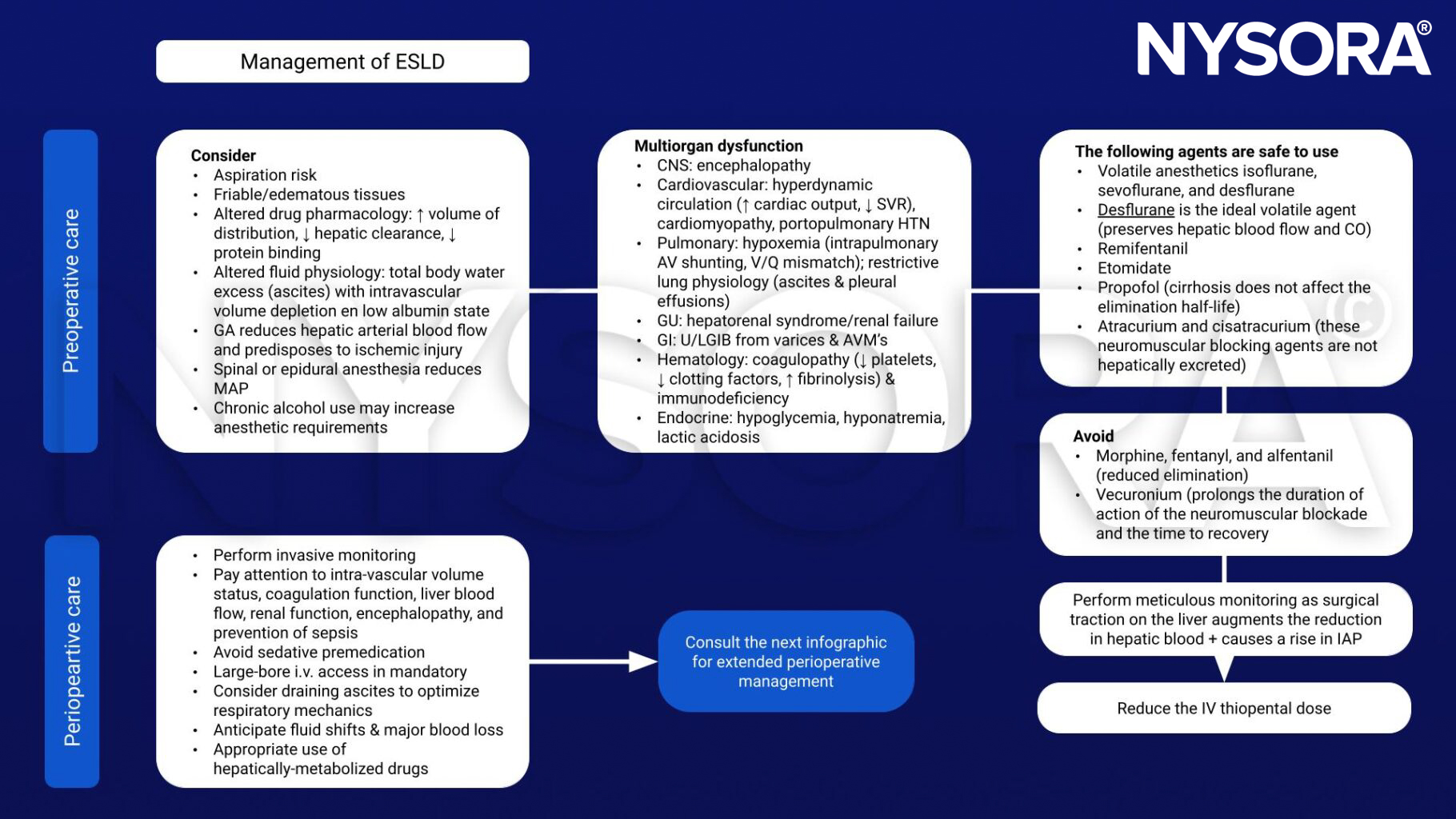
- Management of ESLD
Definition and mechanisms
- Chronic liver failure progresses over months to years
- Often the result of cirrhosis of the liver
- ESLD is the final stage of acute and chronic liver failure accompanied by ascites, variceal bleeding, hepatic encephalopathy, or renal impairment
- Patients with severe symptoms of cirrhosis may benefit from a liver transplant
Signs & symptoms
- Weakness
- Fatigue
- Loss of appetite
- Nausea
- Vomiting
- Weight loss
- Abdominal pain and bloating
- Itching
Decompensated cirrhosis
- Bleeding varices
- Ascites
- Encephalopathy
- Jaundice
Complications
- Edema and ascites
- Bruising and bleeding
- Portal hypertension
- Esophageal varices and gastropathy
- Splenomegaly
- Jaundice
- Gallstones
- Sensitivity to medications
- Hepatic encephalopathy
- Insulin resistance and type 2 diabetes mellitus
- Liver cancer
Anesthetic management
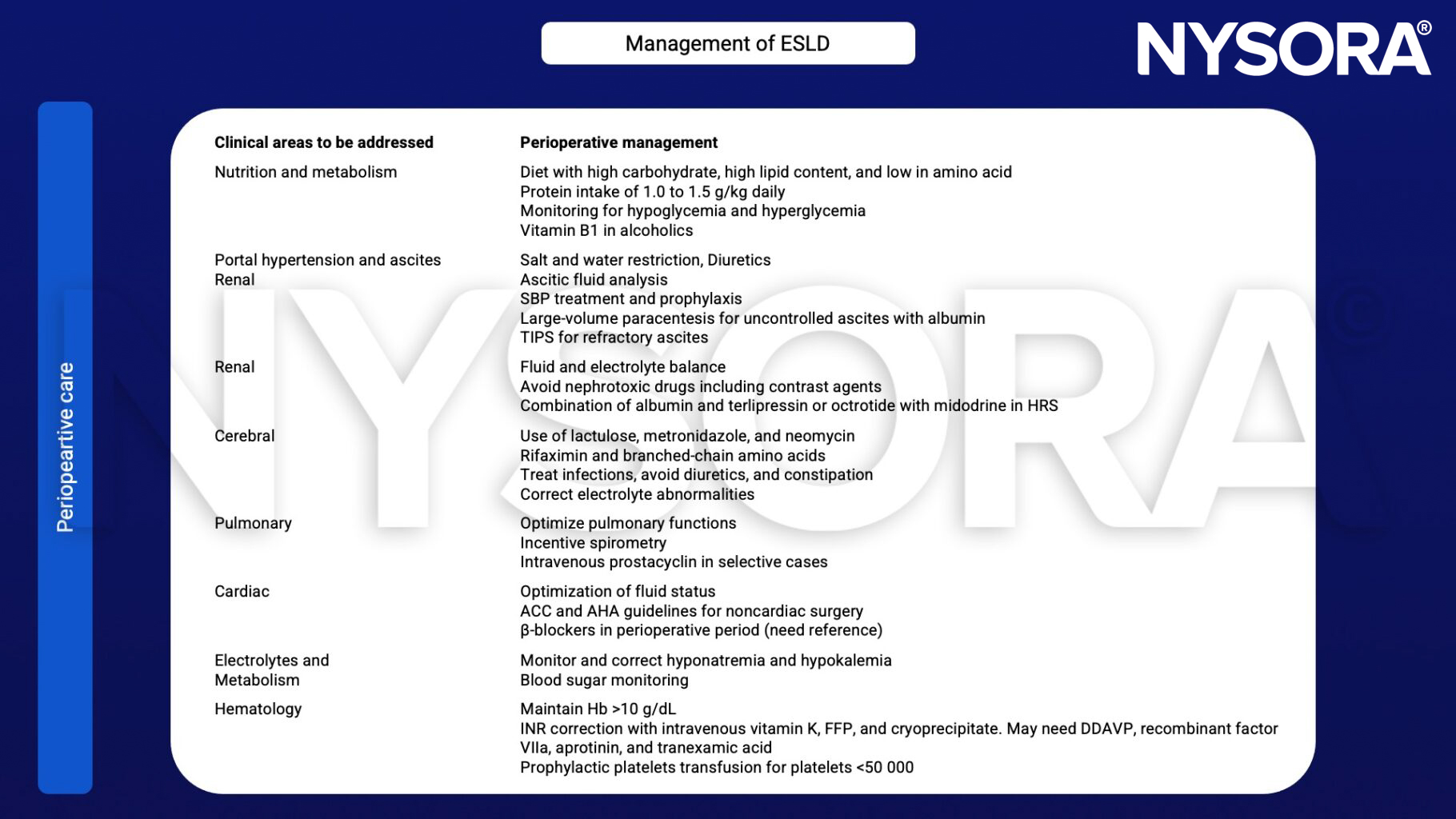
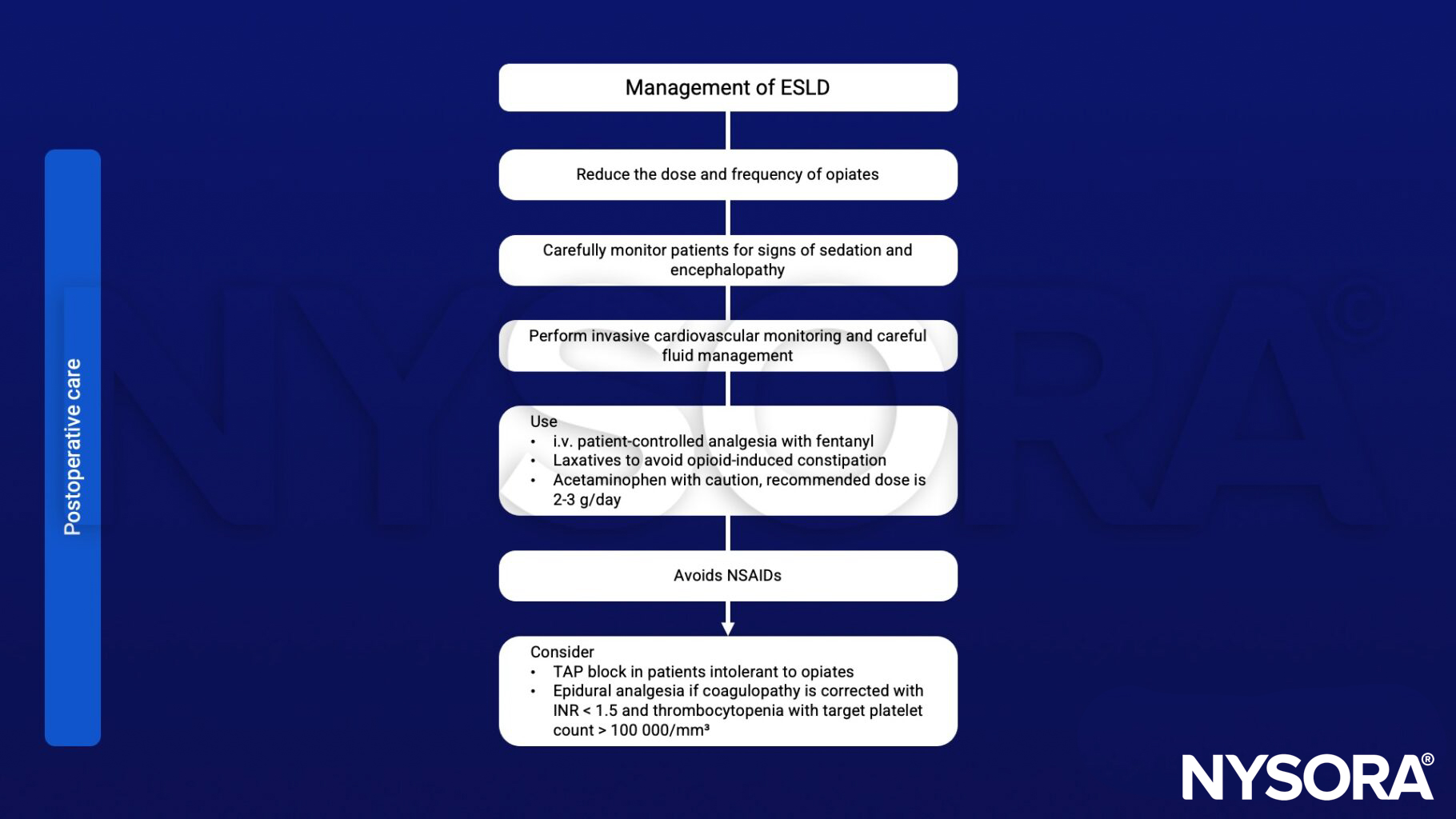
Keep in mind
- Patients with end-stage liver disease can also develop kidney failure
- This is often reversible with a liver transplant but some patients may need a combined liver and kidney transplant
Suggested reading
- Abbas N, Makker J, Abbas H, Balar B. Perioperative Care of Patients With Liver Cirrhosis: A Review. Health Serv Insights. 2017;10:1178632917691270. Published 2017 Feb 24.
- Rakesh Vaja, BSc MBChB FRCA, Larry McNicol, MBBS (Hons) FRCA FANZCA, Imogen Sisley, MBChB MRCP FRCA, Anaesthesia for patients with liver disease, Continuing Education in Anaesthesia Critical Care & Pain, Volume 10, Issue 1, February 2010, Pages 15–19
Clinical updates
Philips et al. (Journal of Clinical and Experimental Hepatology, 2023) explain when to start palliative care in end-stage liver disease, noting that high MELD or Child-Pugh scores, repeated hospitalizations, persistent ACLF, rapid MELD rise, and worsening frailty should prompt early palliative involvement rather than waiting until hospice. They emphasize structured goals-of-care discussions and proactive management of high-burden symptoms, safe acetaminophen use (dose-adjusted), avoidance of NSAIDs, cautious opioid selection (hydromorphone preferred in renal dysfunction), treatment of muscle cramps (taurine, baclofen), pruritus (cholestyramine, rifampin, naltrexone), and sleep disturbance, alongside selected disease-modifying interventions such as TIPS, long-term albumin (ANSWER trial context), alfapump®, and shunt embolization when appropriate to improve quality of life and transplant-free survival.
Gilbert-Kawai et al. (BJA Education, 2022) outline updated perioperative management strategies for patients with liver disease, emphasizing the use of contemporary risk stratification tools (CTP, MELD, and VOCAL-Penn) and early multidisciplinary involvement, particularly for high-risk or decompensated patients. The authors highlight the paradigm shift toward “rebalanced haemostasis,” advising against routine prophylactic FFP for elevated INR and instead recommending viscoelastic testing (e.g., ROTEM/ROTEG) to guide transfusion, with platelet transfusion generally reserved for counts <50×10⁹ L⁻¹. They further stress careful intraoperative hemodynamic management to prevent AKI and hepatic decompensation, avoidance of nephrotoxic/hepatotoxic drugs, and postoperative ICU/HDU monitoring for early detection of encephalopathy, infection, and synthetic dysfunction.