 Nerve Blocks App
 Anesthesia Assistant App
 Ultrasound Pain App
 Pain Medicine Assistant App
 POCUS App
 IV Access App
 MSK Knee App
 VetRA App
 Nerve Block Manual
 Regional Anesthesia Updates
 Anesthesiology Manual
 Anesthesiology Review
 Anesthesia Updates 2025
 Anesthesia Updates 2026
 Pediatric Anesthesia Updates
 Airway Management Updates
 US Interventional Pain Manual
 Pain Medicine Updates
 Mastering Difficult IV Access
 PACU Nursing Manual
 RA Veterinary Manual
 Books
Books About
About

Learning objectives
- Describe diabetes insipidus
- Recognize the symptoms and signs of diabetes insipidus
- Anesthetic management of a patient with diabetes insipidus
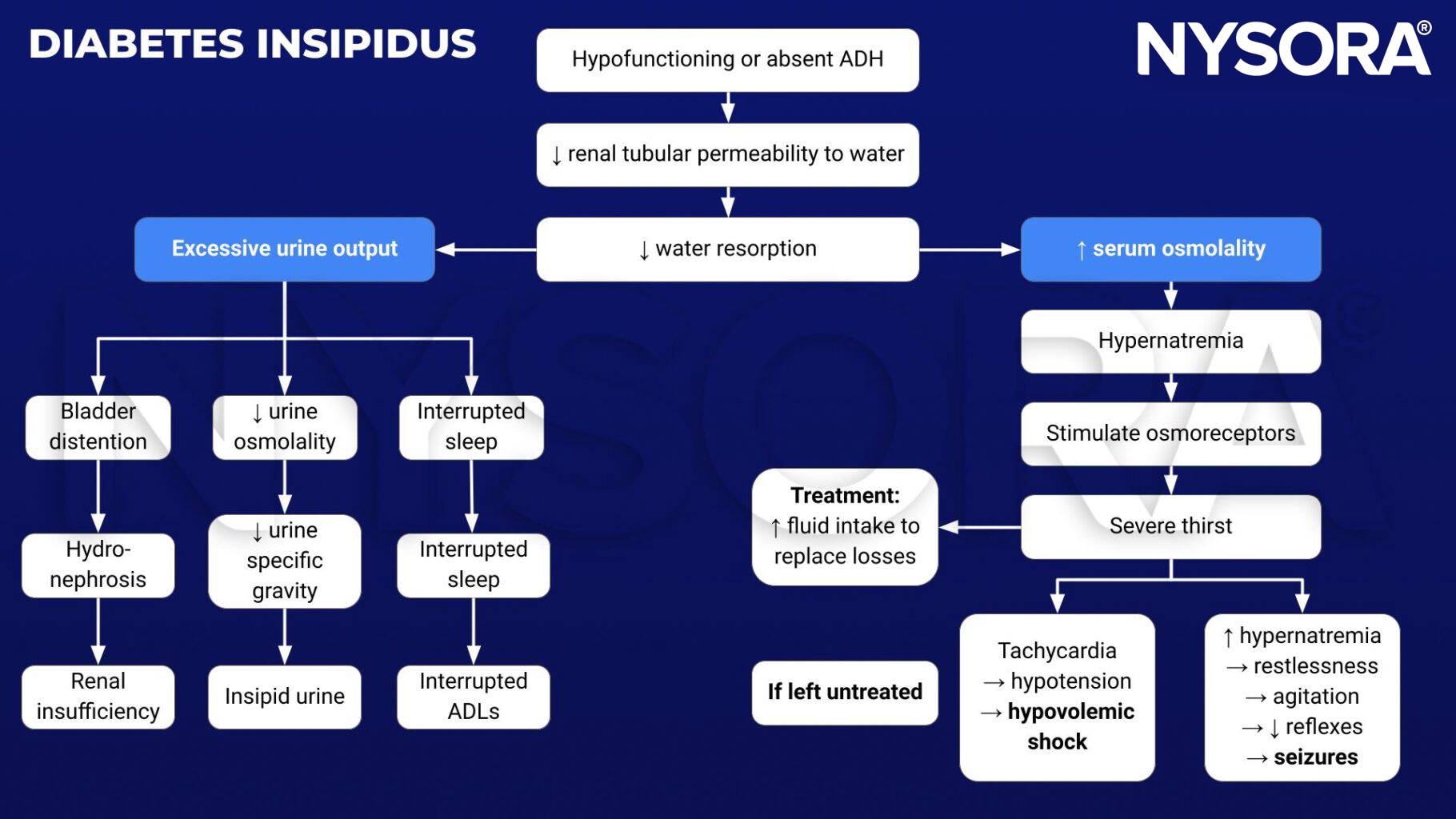
Definition and mechanisms
- Diabetes insipidus (DI) is a disorder of urinary concentration caused by a temporary or chronic deficiency of or insensitivity to antidiuretic hormone (ADH) or vasopressin
- The condition renders the kidneys unable to effectively autoregulate water balance, resulting in polyuria, polydipsia, and electrolyte abnormalities (e.g., hypernatremia, hypokalemia)
Classification
- Central DI or ADH deficiency: Reduced ADP secretion due to damage to the pituitary gland or hypothalamus or genetics
- Nephrogenic DI or ADH resistance: Normal ADP secretion, but the kidneys are unable to properly respond to ADH due to an inherited genetic disorder or chronic kidney disorder
- Gestational DI: A very rare condition that occurs during pregnancy when an enzyme made by the placenta destroys ADH
- Primary polydipsia (dipsogenic DI): Damage to the hypothalamic thirst center causes excessive fluid intake leading to polyuria
Signs and symptoms
| Adults | Children | Infants |
|---|---|---|
| Polyuria Polydipsia Nocturia Craving for ice water | Anorexia Growth defects Enuresis Sleep disturbance Fatigue | Irritability Chronic dehydration Growth retardation Neurologic disturbance Hyperthermia |
Clinical findings
- If the thirst mechanism is intact: Hydronephrosis and distended bladder due to excessive urinary volume
- If there is no access to free water or damage to the hypothalamic thirst center: Hypernatremia, dehydration, hypertonic encephalopathy, obtundation, coma, seizure, subarachnoid hemorrhage, and intracerebral hemorrhage
Complications
Dehydration, which may cause:
- Dry mouth
- Changes in skin elasticity
- Thirst
- Fatigue
Electrolyte imbalance, resulting in:
- Weakness
- Nausea
- Vomiting
- Loss of appetite
- Muscle cramps
- Confusion
Pathophysiology
Treatment
There is no cure → treatments aim to relieve thirst, decrease urine output, and prevent dehydration
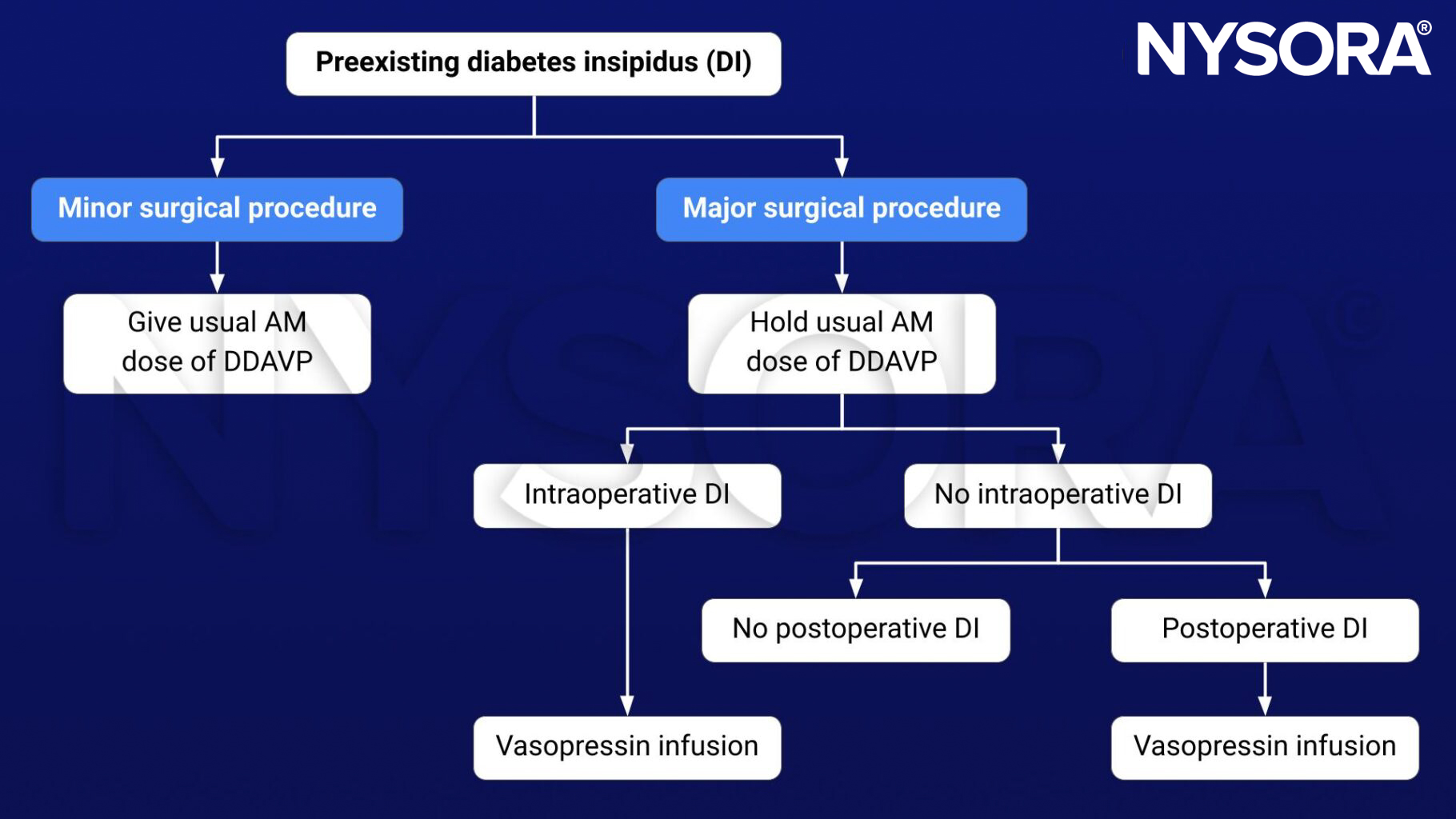
- Central and gestational DI: Desmopressin (DDAVP)
- Nephrogenic DI: Treat the underlying cause or use a thiazide, aspirin, or ibuprofen
- Primary polydipsia: Decrease fluid intake
Management
- Hypernatremia: ↑ MAC requirements
- Treat hypernatremia by estimating water deficit and replacing it with free water:
- Water deficit = total body water x (Serum Na [ ]/140-1)
- Volume depletion: Resuscitate with normal saline initially
- Central DI: DDAVP 1-2 mcg i.v. BID
- Nephrogenic DI: Hydrochlorothiazide/amiloride
Keep in mind
- Avoid rapid overcorrection if chronic hypernatremia (goal = <10 mEq/day)
- Be careful of cerebral edema, water intoxication, and volume overload
Suggested reading
- Mutter CM, Smith T, Menze O, Zakharia M, Nguyen H. Diabetes Insipidus: Pathogenesis, Diagnosis, and Clinical Management. Cureus. 2021;13(2):e13523.
- Dharshan AC, Kohli-Seth R. Chapter 117. Diabetes Insipidus. In: Atchabahian A, Gupta R. eds. The Anesthesia Guide. McGraw Hill; 2013. Accessed January 17, 2023.