 Nerve Blocks App
 Anesthesia Assistant App
 Ultrasound Pain App
 Pain Medicine Assistant App
 POCUS App
 IV Access App
 MSK Knee App
 VetRA App
 Nerve Block Manual
 Regional Anesthesia Updates
 Anesthesiology Manual
 Anesthesiology Review
 Anesthesia Updates 2025
 Anesthesia Updates 2026
 Pediatric Anesthesia Updates
 Airway Management Updates
 US Interventional Pain Manual
 Pain Medicine Updates
 Mastering Difficult IV Access
 PACU Nursing Manual
 RA Veterinary Manual
 Books
Books About
About
 Back to News

 2 min read


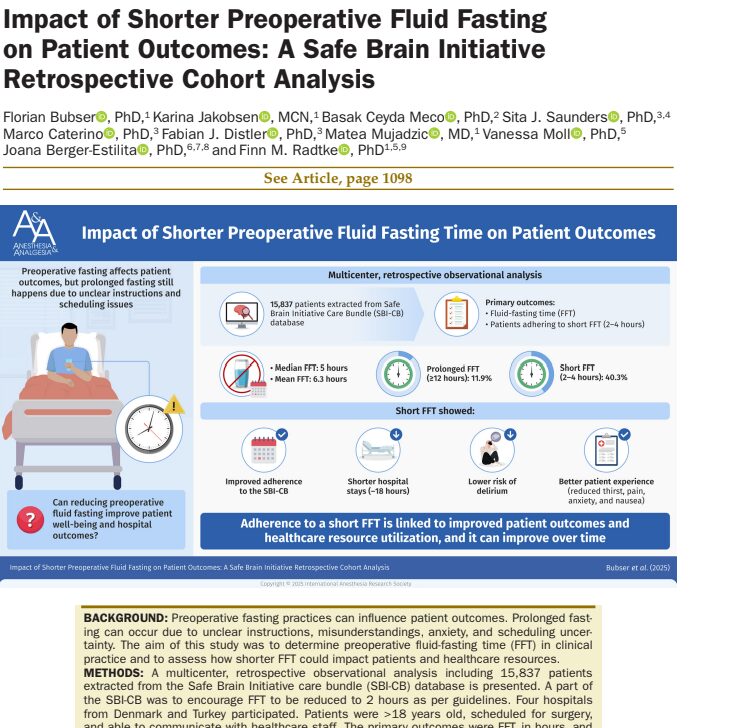
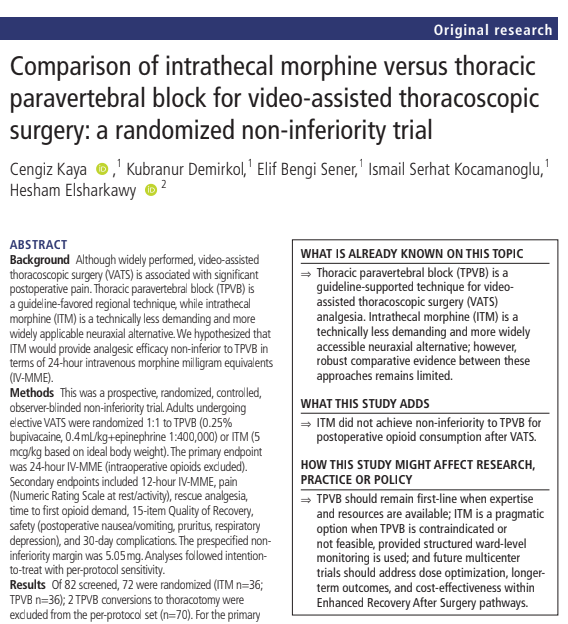
A paravertebral block is indicated for analgesia after breast surgery, thoracotomy, rib fractures, and procedures involving the thoracic and upper abdominal wall.
Here are our 3 go-to tips to perform a paravertebral block with the transducer placed in a transverse oblique orientation
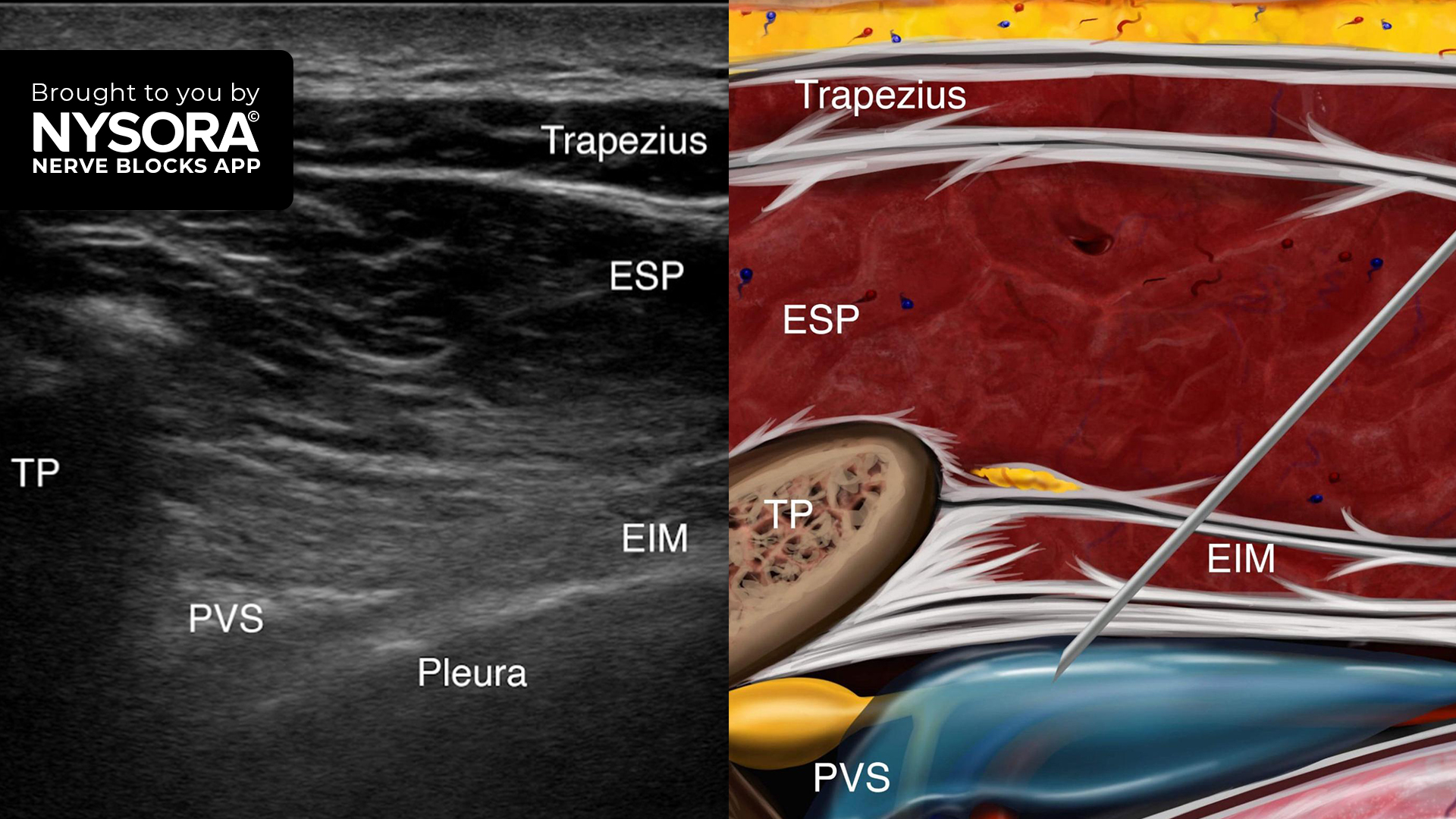
- Place the transducer just lateral to the spinous process at the targeted level in a transverse oblique orientation parallel to the course of the ribs. Visualize the transverse processes and ribs as hyperechoic structures with acoustic shadowing below them.
- Move the transducer slightly caudad into the intercostal space to identify the tip of the transverse process and the hyperechoic line of the pleura. The hyperechoic internal intercostal membrane can be visualized limiting the thoracic paravertebral space and the adjoining intercostal space as a wedge-shaped hypoechoic layer.
- Insert the needle in-plane, from lateral to medial, toward the paravertebral space. The goal is to inject the local anesthetic below the internal intercostal ligament, resulting in a downward displacement of the pleura, indicating the proper spread of the local anesthetic.
Watch the video below to get a better picture of the process and see how the NYSORA Nerve Blocks App brings these instructions to life:
Unlock the art of paravertebral blocks and explore 60 frequently used nerve blocks! Download the Nerve Blocks App HERE for expert tips and a complete guide. Don’t miss the chance to get the bestselling NYSORA Nerve Blocks App also in book format – the perfect study companion with the Nerve Blocks app!