At NYSORA events, conversations around pain management are evolving. Clinicians are increasingly focused on one shared goal: how to improve recovery while reducing reliance on opioids, especially in complex surgical populations.
One of the most impactful industry spotlight sessions at a recent NYSORA event addressed exactly this challenge – postoperative pain management in cardiac and thoracic surgery, with a strong focus on multimodal, non-opioid strategies.
From the Bedside to Innovation
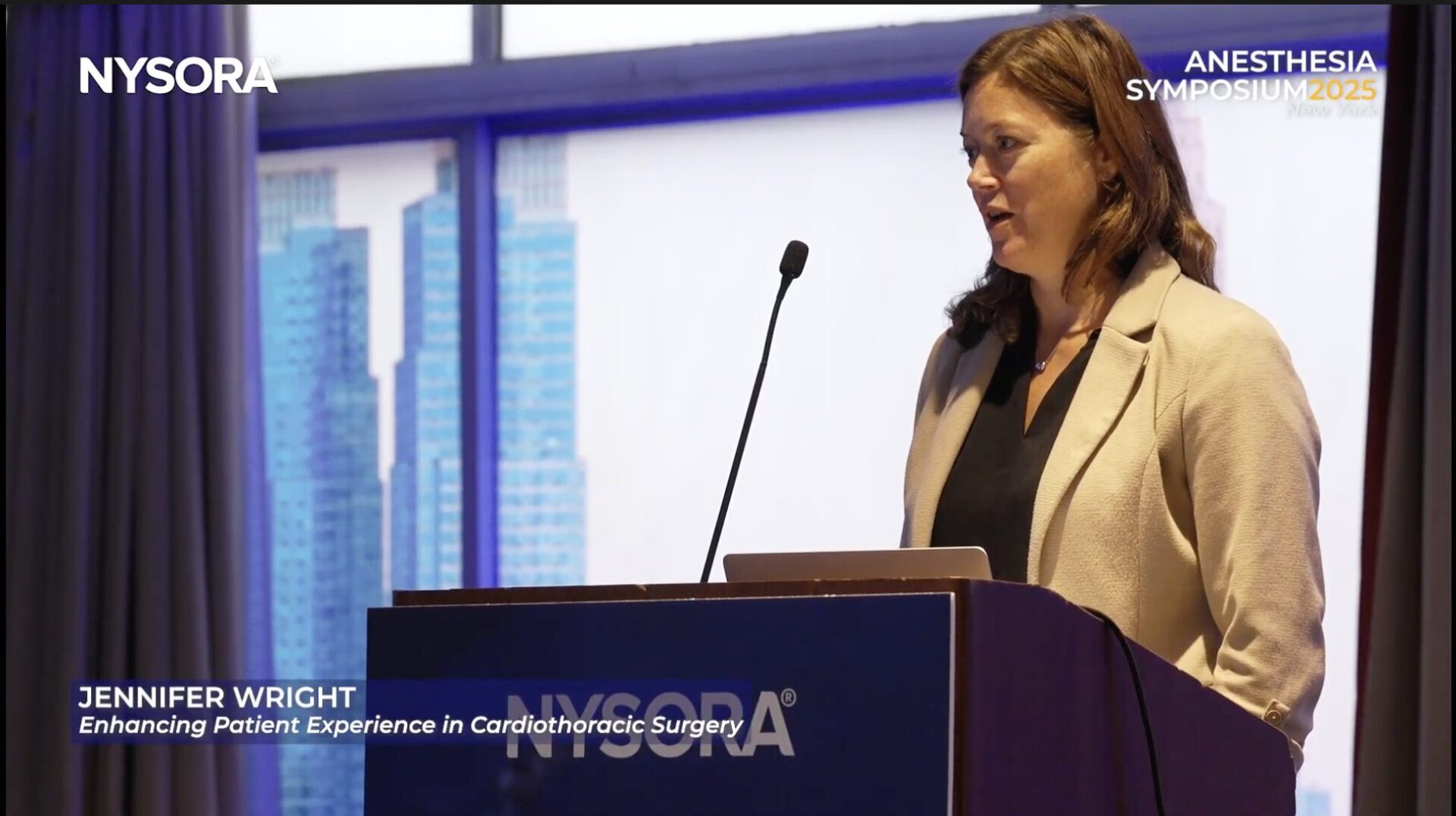
Drawing on years of perioperative clinical experience, Jennifer Wright – a physician assistant with extensive exposure to cardiac and thoracic surgical patients – shared insights gained from firsthand experience caring for patients before, during, and after major surgery.
After transitioning into the medical industry, their focus remained clear:
how to better manage surgical pain without defaulting to prolonged opioid use.
This session centered on understanding where postoperative pain truly comes from – and how teams can work together to address it more effectively.
Understanding the Sources of Pain
Thoracic Surgery
Thoracic procedures range from open thoracotomy to minimally invasive approaches such as VATS (Video-Assisted Thoracic Surgery) and RATS (Robot-Assisted Thoracic Surgery). While minimally invasive techniques reduce tissue trauma, they are not pain-free.
Key contributors include:
- Multiple small port-site incisions (typically 8–12 mm)
- A larger, heavily manipulated “dynamic port”
- Intercostal nerve injury, especially during robotic procedures where tactile feedback is reduced
The takeaway: even minimally invasive thoracic surgery can cause significant incisional and nerve-related pain.
Cardiac Surgery
Despite advances in closure techniques, sternotomy remains highly painful.
CABG patients, in particular, experience greater tissue manipulation, pleural involvement, and inflammation – often resulting in more severe and prolonged postoperative pain compared to valve procedures.
The Postoperative Reality
For many cardiac and thoracic patients, pain does not resolve quickly. Symptoms may persist for three to four weeks or longer, and in some cases progress to chronic post-thoracotomy or post-sternotomy pain syndromes.
Extended pain often leads to extended opioid exposure – and with it, increased risk:
- Approximately 1 in 7 thoracotomy patients
- And 1 in 11 minimally invasive surgery patients
may go on to develop opioid dependence
These numbers highlight why opioid-minimizing strategies are no longer optional – they’re essential.
ERAS, Multimodal Care, and the Importance of Team Communication
The session highlighted the growing role of ERAS (Enhanced Recovery After Surgery) pathways, particularly the 2024 Cardiac ERAS Society guidelines, which emphasize multimodal, opioid-sparing pain management.
The pathway spans three phases:
- Preoperative: patient education, expectation setting, multidisciplinary planning
- Intraoperative: collaboration between anesthesia and surgery, regional anesthesia, local infiltration
- Postoperative: continuity of care and sustained opioid-reduction strategies
A key message echoed throughout the talk:
multimodal pain management only works when teams communicate.
A Collaborative Path Forward
The session concluded with a clear and practical message:
better pain outcomes depend on teamwork.
When anesthesiologists, surgeons, and postoperative care teams align around shared goals – and expand their toolbox beyond opioids – patients benefit through safer recoveries, better experiences, and lower long-term risk.
“Partner with your surgeon, communicate with your team, and think beyond opioids.”
Non-Opioid Pain Management in Cardiac and Thoracic Surgery
View this post on Instagram