 Nerve Blocks App
 Anesthesia Assistant App
 Ultrasound Pain App
 Pain Medicine Assistant App
 POCUS App
 IV Access App
 MSK Knee App
 VetRA App
 Nerve Block Manual
 Regional Anesthesia Updates
 Anesthesiology Manual
 Anesthesiology Review
 Anesthesia Updates 2025
 Anesthesia Updates 2026
 Pediatric Anesthesia Updates
 Airway Management Updates
 US Interventional Pain Manual
 Pain Medicine Updates
 Mastering Difficult IV Access
 PACU Nursing Manual
 RA Veterinary Manual
 Books
Books About
About

Learning objectives
- Diagnose and treat intoxication with the toxic alcohols methanol and ethylene glycol (EG)
Background
- EG is a common component of antifreeze and de-icing solutions
- Methanol is present as a solvent in many household products, such as antifreeze, cleaning solutions, dyes, and paint removers
- Onset of symptoms of methanol poisoning can range from 40 minutes to 72 hours, depending on the dose and co-ingestion of ethanol
Pathophysiology
- Toxicity of methanol and EG is related to the production of toxic metabolites by the hepatic enzyme alcohol dehydrogenase (ADH)
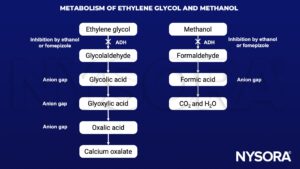
- Oxalic acid
- The main toxic metabolite of EG
- Binds to calcium, forming insoluble calcium oxalate crystals, this can cause hypocalcemia and crystal deposition in several organs causing organ dysfunction
- Formic acid
- The main toxic metabolite of methanol
- Directly toxic to the retina which can cause visual disturbances and even blindness
- Inhibits the mitochondrial cytochrome oxidase, which deranges ATP synthesis
Signs and symptoms
| Ethylene glycol | Methanol | |
|---|---|---|
| Early | Confusion Stupor Nausea Vomiting | Mild euphoria Drunkenness Headache Lethargy Confusion |
| Progression | Metabolic acidosis Küssmaul breathing Hypocalcemia Hyperreflexia | Vision abnormalities Extrapyramidal symptoms (in severe intoxication) Seizures Metabolic acidosis Küssmaul breathing |
| Late | Coma Acute renal failure (earlier in severe intoxication) Cardiovascular shock Multi organ failure Death | Blindness Coma Cardiovascular shock Respiratory failure Sudden respiratory arrest Death |
Management
- Decreased consciousness
- Requires endotracheal intubation if airway is at risk
- Administer a pre-intubation bolus of 1-2 mmol/kg sodium bicarbonate to avoid exacerbating acidosis, which will worsen symptoms
- Supportive care
- IV fluids
- Vasopressors as needed
- Correct acidemia (pH<7.3) by administering sodium bicarbonate
- Supplement calcium in EG intoxication
- Decontamination
- Activated charcoal and gastric lavage have no place in the treatment of toxic alcohol intoxication
- Seizures
- Treat with a benzodiazepine
- Antidotal therapy:
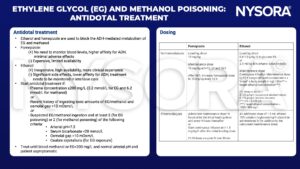
- Hemodialysis
- Start hemodialysis if
- Methanol/EG intoxication with: Coma, convulsions, renal failure, metabolic acidosis pH<7.15, persisting acidosis despite treatment or serum anion gap>24 mmol/L
- Plasma concentration ≥500 mg/L if not yet antidotal treatment, ≥600 mg/L if ethanol, ≥700 mg/L if fomepizole
- Start hemodialysis if
Suggested reading
- Rietjens SJ at al. Ethylene glycol or methanol intoxication: which antidote should be used, fomepizole or ethanol? Neth J Med. 2014 Feb;72(2):73-9. PMID: 24659589
- Grouls R. et al. Toxicologie behandel informatie: Methanol, 2022, accessed 25/01/2023 https://toxicologie.org/methanol