Back to News
 4 min read
Some professions define themselves by what is seen.
Anesthesiology is defined by what is not.
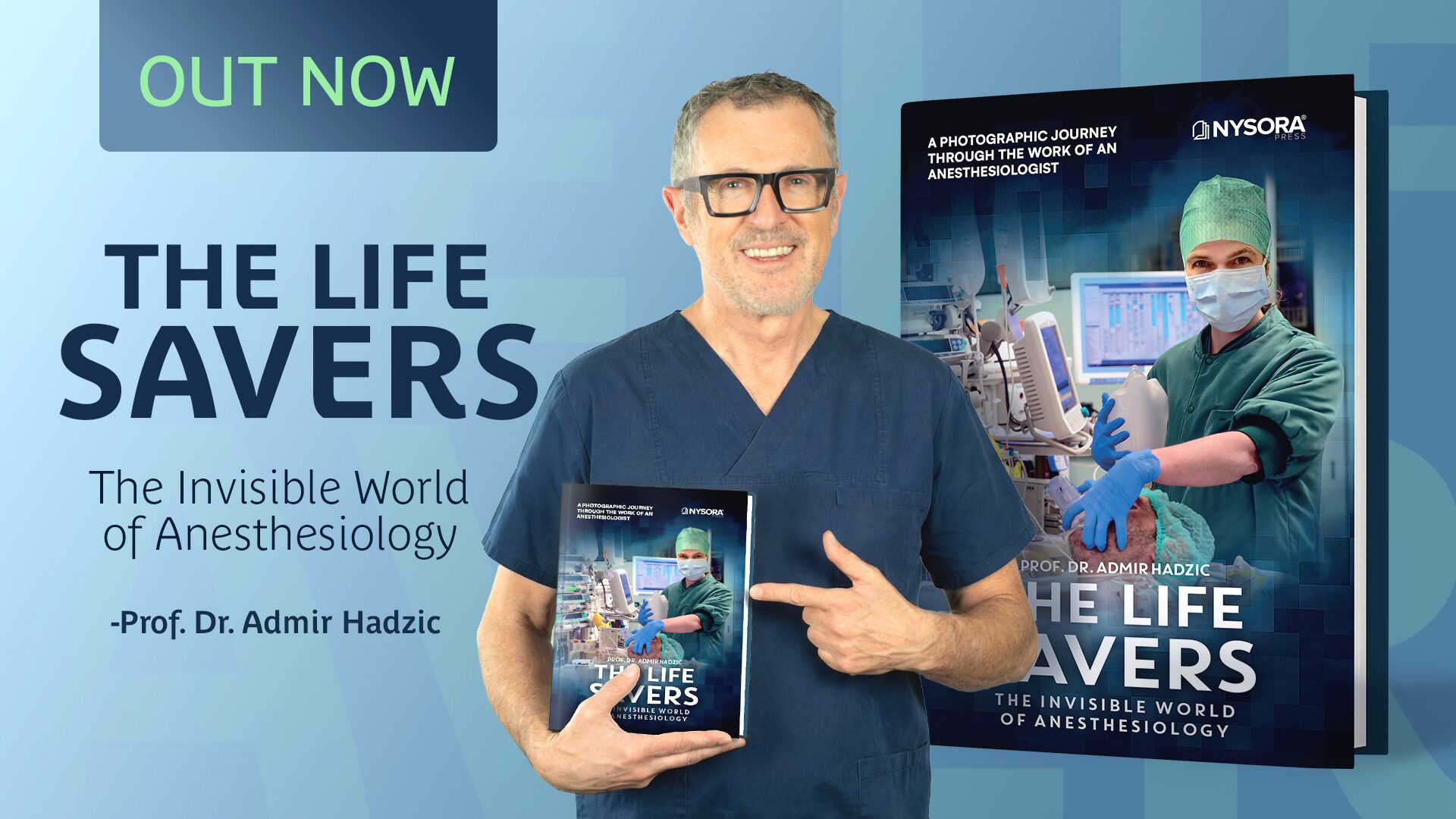
Now available on Amazon, The Life Savers: A Photographic Journey into the Invisible World of Anesthesiology brings that unseen world into focus, without dramatization, without spectacle, and without apology.
“This book wasn’t written to glorify anesthesiology,” says Prof. Admir Hadzic, MD, PhD. “It was written to reveal it.”
For more than three decades, Dr. Hadzic worked at the head of the operating room table; early mornings, night calls, holiday shifts, and moments when patients’ physiology balanced on seconds. Along the way, he did something extraordinary; he documented the work as it actually happened. Not the moments medicine likes to showcase, but the ones that disappear the instant they succeed.
“I started recording memories writing notes because I realized how much of our work vanishes when it goes right,” he reflects. “There’s no incision to admire, no dramatic ending. A patient wakes up. Breathing. Recovery. And the evidence of everything you did is… the absence of visibility. Absence of pain. Absence of memory.
The Life Savers book combines original photography from actual operating rooms in the United States and Europe with reflective, narrative prose, while protecting subjects privacy. The narrative begins in an empty OR at dawn, anesthesia machines silent, monitors asleep and follows the arc of anesthesiology through induction, crisis, recovery, fatigue, and continuity across generations of clinicians.
“The images in the book were never staged,” Hadzic says. “They picture moments with hands steady at the airway, eyes fixed on a life monitor, a pause before anesthesia induction.” “Writing this meant reliving years of blood, sweat, and tears,” and human drama that we anesthesiologists witness daily in and out of the operating rooms, Hadzic admits.
The book writing was written after the OR lights dimmed, after the adrenaline faded, after the hospital emptied. Late nights. Early mornings. Sitting alone with photographs and notes, replaying moments when things nearly went wrong. You don’t process those experiences in real time. You carry them.”
Those reflections shape the book’s tone: calm, restrained, and deeply human. There are chapters on risk, trust, fatigue, complications, and decision-making under pressure, alongside questions patients and clinicians rarely ask out loud: Is anesthesia dangerous? What happens when something goes wrong? Should doctors anesthetize their own family members?
“This isn’t a textbook, and it isn’t a collection of war stories,” Hadzic explains. “It’s an honest exploration of responsibility; what it feels like to hold someone’s life steady while everything else moves around you.”
Photography reinforces that honesty. There are no heroic poses. No spotlight moments. Instead, readers see what anesthesiologists recognize instantly: the choreography of vigilance, the rhythm of monitors, the quiet leadership that keeps the operating room aligned.
“When you execute an anesthetic perfectly well, it looks like nothing happened,” Hadzic says. “That’s not an accident. That’s the result of years of training, preparation, restraint, and constant anticipation.”
While deeply grounded in anesthesiology, The Life Savers speaks to a broader audience. Surgeons, nurses, medical students, hospital leaders, and non-medical readers alike gain insight into a profession that underpins modern surgery while rarely explaining itself.
“For patients, this book is about trust,” Hadzic adds. “You may meet your anesthesiologist for only a few minutes. And then you hand over everything; breathing, circulation, survival. That kind of trust deserves to be understood.”
In the end, The Life Savers is not about recognition. It is about visibility. It is about a profession that works in the background, carries responsibility quietly, and measures success by the absence of disaster.
“When the room is quiet again,” Hadzic writes, “you would never know what happened there. And if that’s the case; then we did our job well.”
For the anesthesiologists who recognize this work instantly, get your own copy.