Back to News

 4 min read


Anesthesiologists Do Use AI
There is a quiet stillness before anesthesia begins. A moment where judgment settles, knowledge aligns, and preparation becomes instinct.
Anesthesiologists know it well. It isn’t dramatic – it’s discipline.
And in that space, before drugs are drawn and monitors sound, trust anchors everything:
Trust in knowledge. Trust in systems. Trust in oneself. So when artificial intelligence entered medicine, it challenged that foundation.
How do you trust technology when trust is your core currency? You don’t – not immediately, not blindly, and never without proof and purpose. Yet quietly, something has shifted.
Most AI does not belong in medicine – and likely never will.
But a new category is emerging: technology not trying to lead anesthesia, but learning from it.
Tools built not for noise, but for routine. Not to replace clinical reasoning, but to reinforce it.
Not to interrupt preparation, but to accompany it.
Preparation is not optional in anesthesiology – it is identity
Anesthesiologists do not begin in the OR. They begin the night before, the hour before, or in the brief pause between cases – reviewing even when they already know, confirming even when they are certain.
This is the culture of the specialty:
Read. Reflect. Rehearse. Reaffirm.
Technology that respects this rhythm feels different.
A concise evidence update with morning coffee doesn’t intrude – it fits.
A quick dosing check in the hallway doesn’t weaken judgment – it steadies it.
A system built for anesthesia, trained on anesthesia, and shaped by anesthesiologists does not threaten identity – it protects it.
Trust is not given to a machine. It is given to what the machine values. And when technology values preparation, safety, and humility, it earns its place.
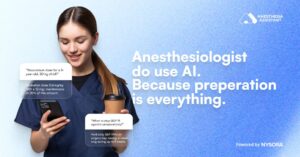
How NYSORA’s Anesthesia Assistant App Is Redefining Confidence in the OR
While much of the world still debates AI in healthcare, anesthesiologists are already quietly integrating it into their professional routine – not to replace expertise, but to reinforce it.
That’s the idea behind NYSORA’s Anesthesia Assistant App:
AI designed for anesthesiologists and their daily routine.
A tool that strengthens judgment rather than competing with it.
“It’s like having a colleague in your pocket – one who’s done this a thousand times.”
Sara Amaral
“It’s become my go-to for anesthesia information on the go.”
Joey Sabularce
A Responsible Approach to AI in Anesthesia
While many healthcare AI tools emphasize automation, NYSORA focused on trust, preparation, and clinical discipline. The Anesthesia Assistant – and MAIA, the AI engine inside – is built around the realities of anesthesia, not generic medicine.
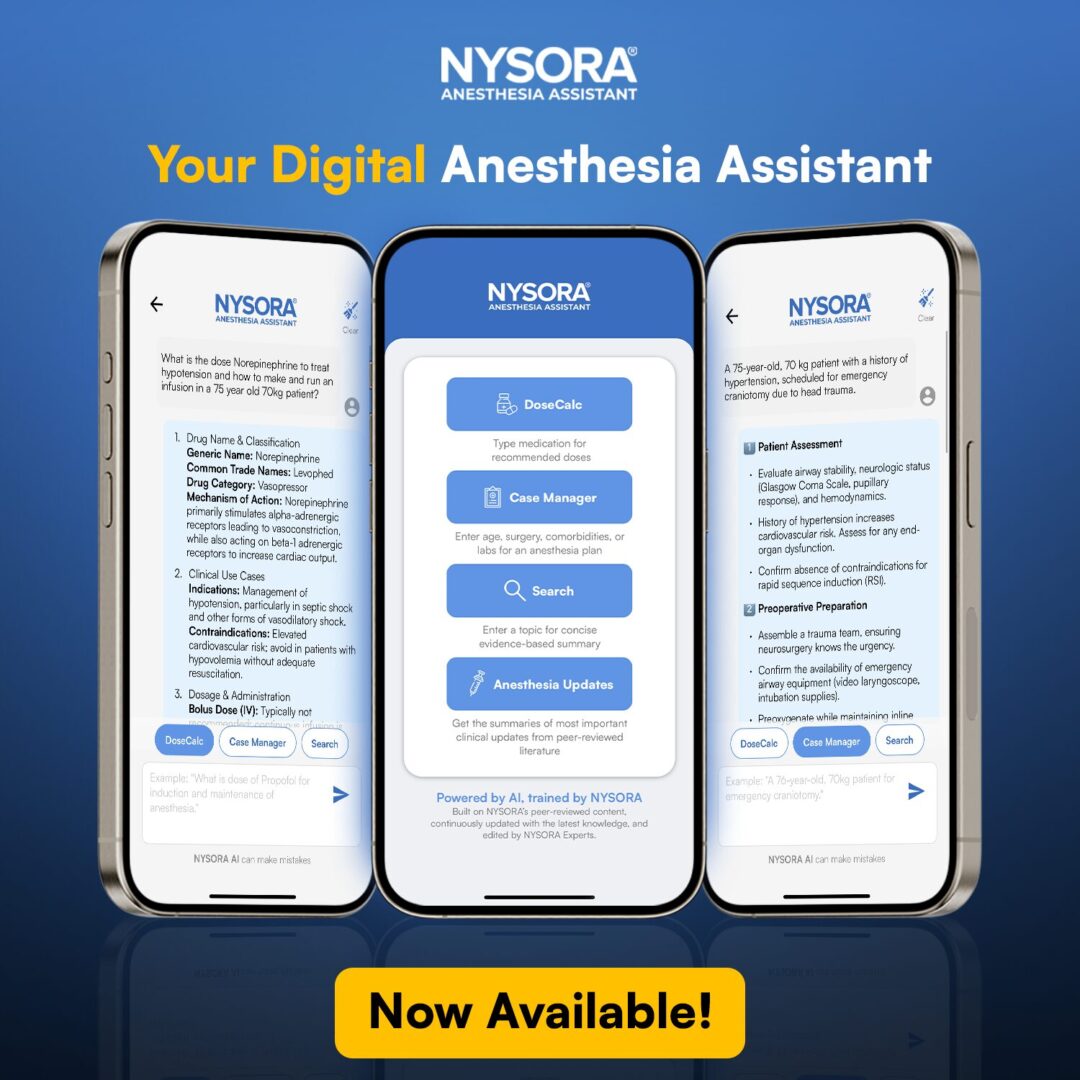
It does not diagnose or replace clinical reasoning. Instead, it strengthens preparedness through anesthesia-specific tools:
- DoseCalc – rapid dosing & infusion protocols
- Case Manager – simulate and refine anesthetic plans
- Advanced Search – fast access to anesthesia workflows and knowledge
At its core is MAIA, an anesthesia-trained AI assistant designed to answer anesthesia questions, support cognitive readiness, and provide clarity when clinicians want to double-check details.
The New Reality: AI as Quiet Support, Not Disruption
AI in anesthesia is not about replacement – it is about preparedness and precision. Clinicians who use NYSORA’s tools aren’t seeking shortcuts. They uphold the culture of the specialty:
- Stay current
- Stay disciplined
- Stay prepared
- Stay accountable
When technology earns trust, it becomes routine – and in anesthesiology, routine means safety.
This is not AI leading medicine. This is medicine choosing the right AI.
About Anesthesia Assistant
Built for anesthesiologists and shaped by anesthesiologists, NYSORA’s Anesthesia Assistant App brings modern clinical support into the daily routine of perioperative care – quietly, responsibly, and with respect for the field.
Learn more: https://nysora.ai/