Back to News
 6 min read
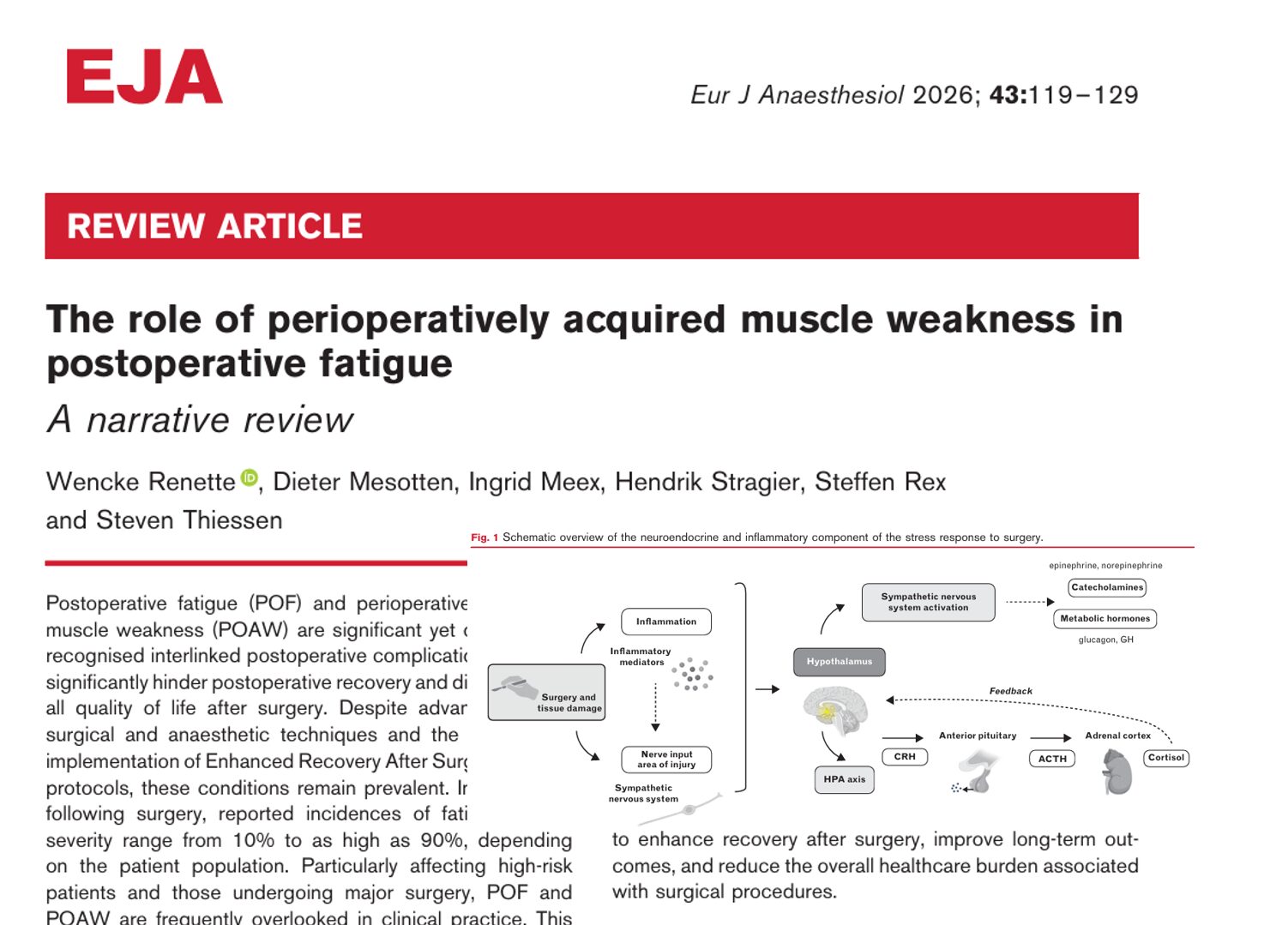
Postoperative recovery is often associated with pain, surgical wound healing, and restoration of organ function. However, postoperative fatigue (POF) is one of the most common yet frequently overlooked complications following surgery. Patients often describe persistent exhaustion, reduced physical capacity, and difficulty concentrating during the recovery period.
Recent research has highlighted the role of perioperatively acquired muscle weakness (POAW) as a key contributor to postoperative fatigue. These two conditions are closely interconnected and significantly affect patient recovery, functional capacity, and quality of life. Despite advancements in Enhanced Recovery After Surgery (ERAS) protocols and surgical techniques, both POF and POAW remain prevalent complications across a wide range of surgical procedures.
Studies show that fatigue following surgery may affect 10% to 90% of patients, depending on the type of surgery and patient characteristics. Major surgeries such as abdominal, cardiac, and gynecological procedures are particularly associated with a higher incidence of these complications.
Understanding postoperative fatigue
What is postoperative fatigue?
Postoperative fatigue refers to a persistent physical, mental, and emotional exhaustion following surgery that interferes with normal daily activities and recovery.
It typically develops during the early postoperative period but may persist for weeks or even months.
Common symptoms include
- Persistent tiredness
- Loss of physical energy
- Reduced exercise tolerance
- Cognitive impairment or difficulty concentrating
- Emotional distress or depressive symptoms
Unlike postoperative pain, which usually improves rapidly with treatment, fatigue can persist longer and significantly impair rehabilitation and return to work.
Incidence and clinical impact
Postoperative fatigue occurs across many surgical specialties and remains a major clinical challenge.
Reported incidence includes:
- 92% of abdominal surgery patients experience fatigue in the immediate postoperative period
- 10% still report fatigue three months later
- 54% of cardiac surgery patients report fatigue three weeks postoperatively
- 30% continue experiencing fatigue six weeks after surgery
Clinical consequences
Postoperative fatigue can lead to:
- Prolonged hospital stays
- Delayed mobilization
- Reduced quality of life
- Increased healthcare costs
- Delayed return to work
Despite its significant impact, fatigue is often considered a normal part of recovery and is not routinely assessed in clinical practice.
The link between muscle weakness and fatigue
What is perioperatively acquired muscle weakness?
Perioperatively acquired muscle weakness (POAW) refers to an acute reduction in muscle mass, strength, and functional capacity occurring after surgery.
It differs from sarcopenia, which develops gradually with aging.
Key characteristics of POAW
- Acute onset after surgery
- Reduction in muscle strength and endurance
- Associated with systemic inflammation
- Often reversible with appropriate rehabilitation
Evidence of postoperative muscle loss
Studies have demonstrated significant muscle loss following surgery.
Examples include:
- 25% of cardiac surgery patients lose more than 5% of skeletal muscle mass within two months postoperatively
- 52% of patients undergoing major abdominal cancer surgery experience surgery-related muscle loss
- Handgrip strength decreases by approximately 16% after surgery in some patients
Muscle weakness can significantly affect recovery and may predict postoperative complications.
Biological mechanisms behind postoperative fatigue
Postoperative fatigue and muscle weakness result from a complex interaction of inflammatory, hormonal, metabolic, and neurological mechanisms.
Surgical stress response
Surgery triggers a powerful neuroendocrine stress response.
Surgical tissue injury activates:
- The sympathetic nervous system
- The hypothalamus
- The hypothalamic–pituitary–adrenal (HPA) axis
This leads to the release of several stress hormones, including:
- Cortisol
- Catecholamines
- Glucagon
- Growth hormone
These hormones promote a catabolic metabolic state, which results in:
- Glycogen breakdown
- Lipolysis
- Skeletal muscle proteolysis
Ultimately, these processes contribute to muscle weakness and fatigue.
Central vs peripheral fatigue
Postoperative fatigue can be classified into two main categories.
Central fatigue
Central fatigue originates in the central nervous system (CNS).
Key mechanisms include:
- Neuroinflammation
- Cytokine signaling to the brain
- Neurotransmitter imbalance
- Increased serotonin production
Inflammatory cytokines such as IL-6 and TNF-α can alter brain signaling and produce the subjective feeling of fatigue.
Peripheral fatigue
Peripheral fatigue results from skeletal muscle dysfunction.
This includes:
- Reduced muscle strength
- Decreased endurance
- Loss of muscle mass
Peripheral fatigue is strongly linked to perioperatively acquired muscle weakness, making it a critical factor in postoperative recovery.
Mechanisms of muscle breakdown after surgery
Key processes include:
1. Cytokine-mediated inflammation
Surgical trauma triggers the release of inflammatory cytokines.
Important cytokines involved:
- IL-6
- TNF-α
These activate protein degradation pathways, including the ubiquitin-proteasome system, which leads to muscle atrophy.
2. Hormonal imbalance
Several hormones regulate muscle metabolism.
Catabolic mediators
- Growth differentiation factor-15 (GDF-15)
- Myostatin
These promote muscle breakdown.
Anabolic mediators
- Insulin-like growth factor-1 (IGF-1)
This hormone stimulates muscle protein synthesis through the PI3K/Akt/mTOR pathway.
After surgery, IGF-1 levels often decrease, favoring muscle catabolism.
3. Oxidative stress
Reactive oxygen species (ROS) produced during surgical stress can:
- Damage mitochondria
- Trigger apoptosis
- Activate protein degradation pathways
This further accelerates muscle loss.
4. MicroRNA regulation
MicroRNAs regulate gene expression related to muscle metabolism.
Examples include:
- miR-542-3p
- miR-29b
- miR-181a
Changes in these molecules influence muscle protein synthesis and degradation.
5. Physical inactivity
Postoperative immobilization contributes significantly to muscle loss.
Causes include:
- Pain
- Sedation
- Reduced mobility
- Surgical recovery restrictions
Even 5–10 days of inactivity can lead to measurable muscle loss.
6. Nutritional deficiencies
Patients often experience reduced nutritional intake after surgery due to:
- Preoperative fasting
- Postoperative nausea and vomiting
- Delayed return to normal diet
Insufficient protein intake further accelerates muscle breakdown.
Clinical assessment
Measuring postoperative fatigue
Several validated tools can assess fatigue.
Common questionnaires
- Postoperative fatigue scale (PO-FS)
- Christensen fatigue scale
- Chalder fatigue questionnaire (CFQ)
The CFQ is particularly useful because it assesses both physical and mental fatigue.
Measuring muscle weakness
Currently, there is no standardized diagnostic tool for POAW.
However, handgrip strength dynamometry is widely used.
Benefits include:
- Simple bedside measurement
- Reproducible results
- Sensitive to postoperative changes
Changes in handgrip strength over time can help detect postoperative muscle weakness.
Strategies to reduce postoperative fatigue
Although research is still evolving, several strategies may help reduce POF and POAW.
1. Prehabilitation
Prehabilitation programs aim to improve patients’ physical fitness before surgery.
Components include:
- Strength training
- Aerobic exercise
- Nutritional support
- Psychological preparation
2. Nutritional optimization
Adequate perioperative nutrition is critical.
Important aspects include:
- High protein intake
- Early enteral feeding
- Avoiding prolonged fasting
3. Minimally invasive surgical techniques
Laparoscopic and minimally invasive procedures may reduce:
- Surgical stress response
- Inflammatory activation
- Recovery time
4. Anesthetic techniques
Some evidence suggests that spinal anesthesia may reduce perioperative muscle weakness compared with general anesthesia.
However, larger clinical trials are required to confirm these findings.
5. Corticosteroid administration
Perioperative corticosteroids may reduce inflammation and fatigue.
Potential benefits include:
- Reduced postoperative pain
- Decreased inflammatory response
- Improved early mobilization
However, the relationship between corticosteroids and muscle weakness requires further investigation.
Conclusion
Postoperative fatigue and perioperatively acquired muscle weakness represent important but underrecognized complications of surgery. They result from a complex interaction of inflammatory responses, metabolic changes, hormonal imbalance, oxidative stress, and physical inactivity.
These conditions significantly impact patient recovery, functional capacity, and healthcare outcomes.
A better understanding of the relationship between muscle weakness and postoperative fatigue has the potential to transform perioperative care and improve long-term surgical outcomes.
Reference: Renette W et al. The role of perioperatively acquired muscle weakness in postoperative fatigue: A narrative review. Eur J Anaesthesiol. 2026;43:119-129.
Read more about postoperative fatigue in the Anesthesia Assistant App. Try out our NYSORA chatbot, MAIA, your medical AI assistant for clinical support, when seconds count.