Back to News
 3 min read
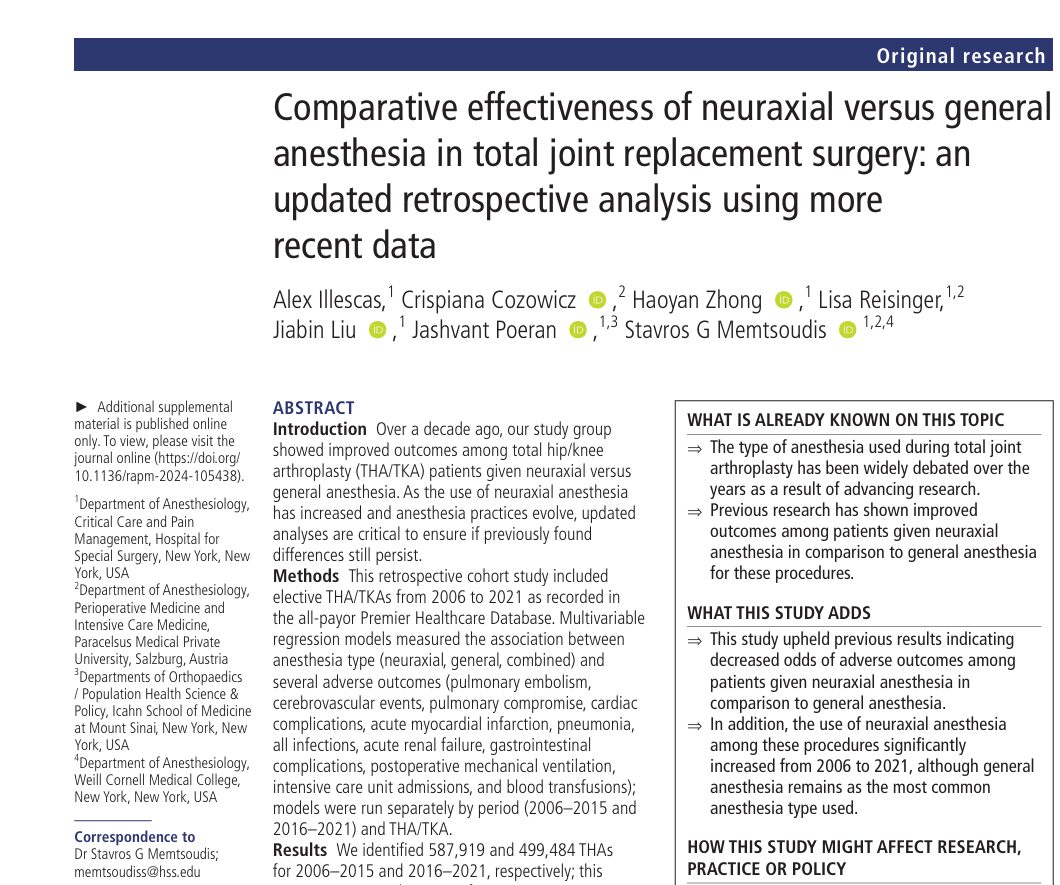
A 2025 large-scale retrospective study published in Regional Anesthesia & Pain Medicine reaffirms a decade-old finding: neuraxial anesthesia is associated with significantly better outcomes than general anesthesia in patients undergoing total hip (THA) and knee arthroplasty (TKA).
Drawing on data from over 2.5 million procedures across the United States from 2006 to 2021, the research underscores the growing clinical advantages and adoption of neuraxial anesthesia, while also highlighting why it still trails general anesthesia in overall usage.
Key takeaways from the study
- Data source: Premier Healthcare Database (all-payer, 700+ hospitals).
- Study size:
- THA: 1,087,403 procedures
- TKA: 1,989,807 procedures
- THA: 1,087,403 procedures
- Time periods compared: 2006–2015 vs. 2016–2021
- Anesthesia types analyzed:
- Neuraxial anesthesia
- General anesthesia
- Combined neuraxial + general
- Neuraxial anesthesia
What’s new in this updated analysis?
- Neuraxial anesthesia usage increased from 10.7% in 2006 to 25.7% in 2021 for THA and from 13.0% to 27.1% for TKA.
- General anesthesia remains the most common, despite evidence favoring neuraxial techniques.
- The benefits of neuraxial anesthesia became more pronounced in the later period (2016–2021).
Benefits of neuraxial anesthesia
Compared to general anesthesia, neuraxial anesthesia showed:
- Lower odds of major complications:
- Acute renal failure (THA OR 0.56–0.72)
- Blood transfusion (THA OR 0.44–0.91)
- Pneumonia, cardiac, and pulmonary complications
- Acute renal failure (THA OR 0.56–0.72)
- Reduced ICU admissions and mechanical ventilation
- Fewer infections and gastrointestinal issues
- Shorter hospital stays
“Protective effects were stronger in the recent years, suggesting that advancements in practice may be enhancing the benefits of neuraxial anesthesia.” — Illescas et al.
How to choose the right anesthesia: a step-by-step guide
- Assess patient health:
- Check comorbidities using tools like the Charlson Index.
- Check comorbidities using tools like the Charlson Index.
- Evaluate procedural factors:
- Determine if surgery is inpatient or outpatient.
- Determine if surgery is inpatient or outpatient.
- Discuss risks and preferences:
- Engage patients in shared decision-making.
- Engage patients in shared decision-making.
- Match with anesthesia technique:
- Favor neuraxial where appropriate.
- Favor neuraxial where appropriate.
- Plan for contingencies:
- Have backup plans in case of neuraxial block failure.
Policy and clinical implications
- Supports ICAROS guidelines recommending neuraxial anesthesia for THA/TKA.
- Encourages systemic shifts in hospital protocols and anesthesiologist training.
- Highlights the need for education on the benefits and execution of regional techniques.
Final thoughts
The findings by Illescas and colleagues provide reassuring confirmation that neuraxial anesthesia remains a superior choice for major joint replacement surgeries. With a clear trend toward its increased use and better patient outcomes, the onus now lies on clinical institutions to remove barriers to its widespread adoption.
Reference: Illescas A. et al. Comparative effectiveness of neuraxial versus general anesthesia in total joint replacement surgery: an updated retrospective analysis using more recent data. Reg Anesth Pain Med. 2025;50(11):891-900.
Download the AA App now to put trusted anesthesia guidance in your pocket.