 Nerve Blocks App
 Anesthesia Assistant App
 Ultrasound Pain App
 Pain Medicine Assistant App
 POCUS App
 IV Access App
 MSK Knee App
 VetRA App
 Nerve Block Manual
 Regional Anesthesia Updates
 Anesthesiology Manual
 Anesthesiology Review
 Anesthesia Updates 2025
 Anesthesia Updates 2026
 Pediatric Anesthesia Updates
 Airway Management Updates
 US Interventional Pain Manual
 Pain Medicine Updates
 Mastering Difficult IV Access
 PACU Nursing Manual
 RA Veterinary Manual
 Books
Books About
About
Learning objectives
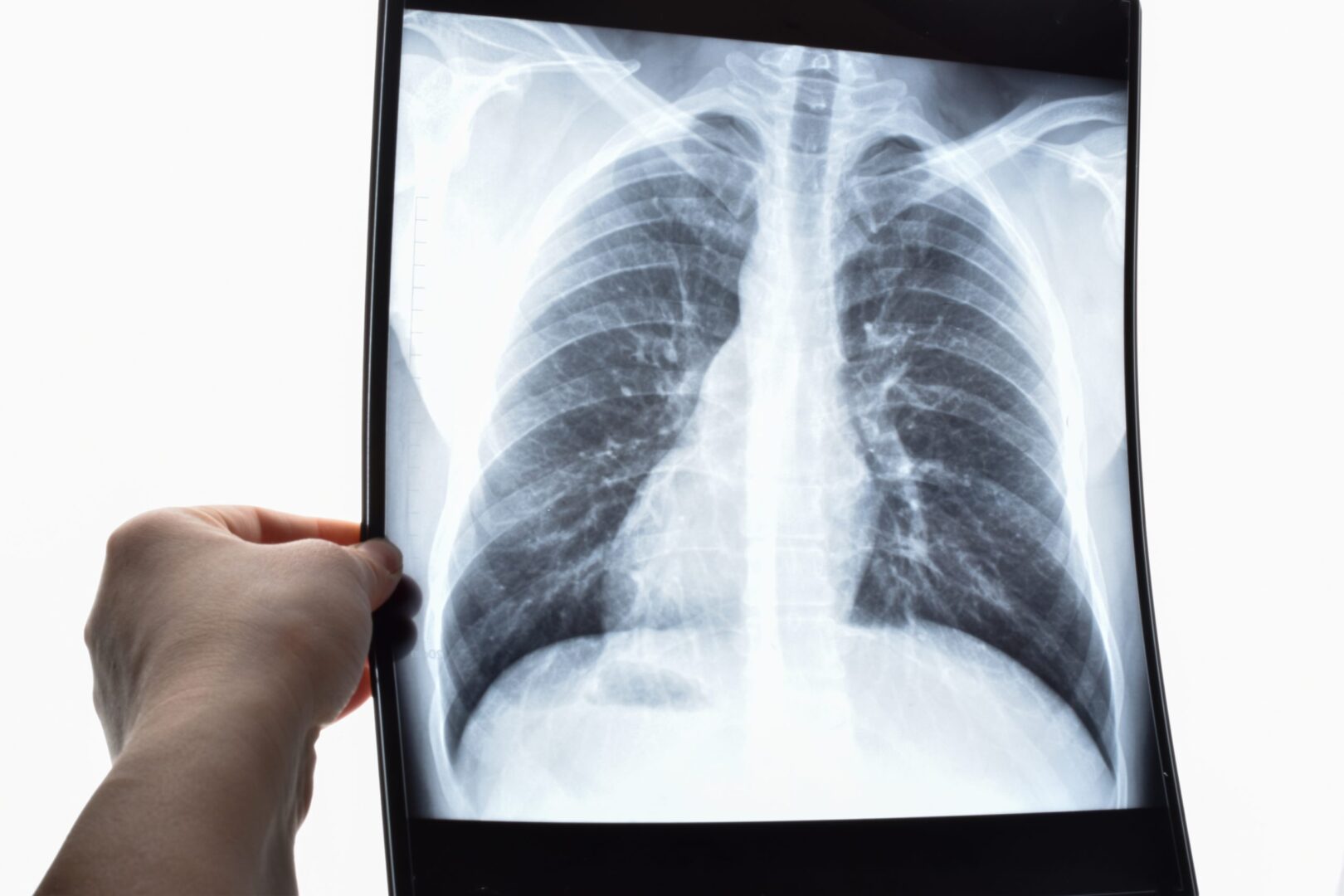
- Describe the pathophysiology and clinical manifestations of cystic fibrosis
- Diagnose cystic fibrosis
- Manage patients with cystic fibrosis
Definition
- Cystic fibrosis is a multisystem autosomal recessive disease
- Most common lethal genetic disease in Caucasians
- Best considered as a disease spectrum rather than a distinct single clinical entity
Pathophysiology and clinical manifestations
| Site | Pathology | Clinical manifestation |
|---|---|---|
| Lower respiratory tract | Viscid mucous secretions, hypertrophy of goblet cells, decreased mucociliary clearance | Frequent LRTI, chronic hypoxaemia, cor pulmonale |
| Upper respiratory tract | Abnormal viscid nasal secretions | Sinusitis, nasal polyposis |
| Hepatobiliary system | Obstruction of bile ductules | Focal biliary cirrhosis, portal hypertension, multinodular biliary cirrhosis |
| Gastrointestinal tract | Abnormally viscid intestinal secretions at the level of the terminal ileum in the neonate | Meconium ileus, recurrent abdominal pain (distal intestinal obstruction syndrome) |
| Pancreas | Obstructed pancreatic ducts, fibrosis | Pancreatic exocrine insufficiency, CF-related diabetes (CFRD) |
| Reproductive system | Congenital absence of vas deferens, viscid cervical secretions | Infertility in men (98%), decreased fertility in women |
| Bone | Impaired calcium, vitamin D absorption, increased catabolism | Osteoporosis |
| Skin | Increased chloride levels | Abnormal ‘sweat test’, diminished thermoregulation |
Diagnosis
- Based on the presence of:
- One or more characteristic clinical features
Or
-
- History of cystic fibrosis in a sibling
Or
-
- Positive newborn screening (NBS) test
- PLUS laboratory evidence of an abnormality in the CF transmembrane conductance regulator (CFTR) gene or protein:
- Sweat testing: Transdermal administration of pilocarpine by iontophoresis to stimulate sweating and analysis of electrolyte concentrations
- Genetic testing
Treatment
- No curative treatment is available
- Treatment is supportive and aims to
- Minimize pulmonary infection
- Optimize nutritional status
- Slow disease progress
- Ease symptoms
| Respiratory | Physical therapy |
| Inhaled bronchodilators and mucolytics |
|
| Oscillatory devices, positive expiratory pressure devices, and high-frequency chest compression devices | |
| Oxygen therapy | |
| Pharmacologic | Mucolytics: DNA-ase, inhaled hypertonic saline |
| Anti-inflammatories: Oral corticosteroids, ibuprofen, azithromycin | |
| Antibiotics | |
| Nutrition | Enteral supplementation or parenteral nutrition |
| Subcutaneous insulin when needed | |
| Gene therapy | Under investigation |
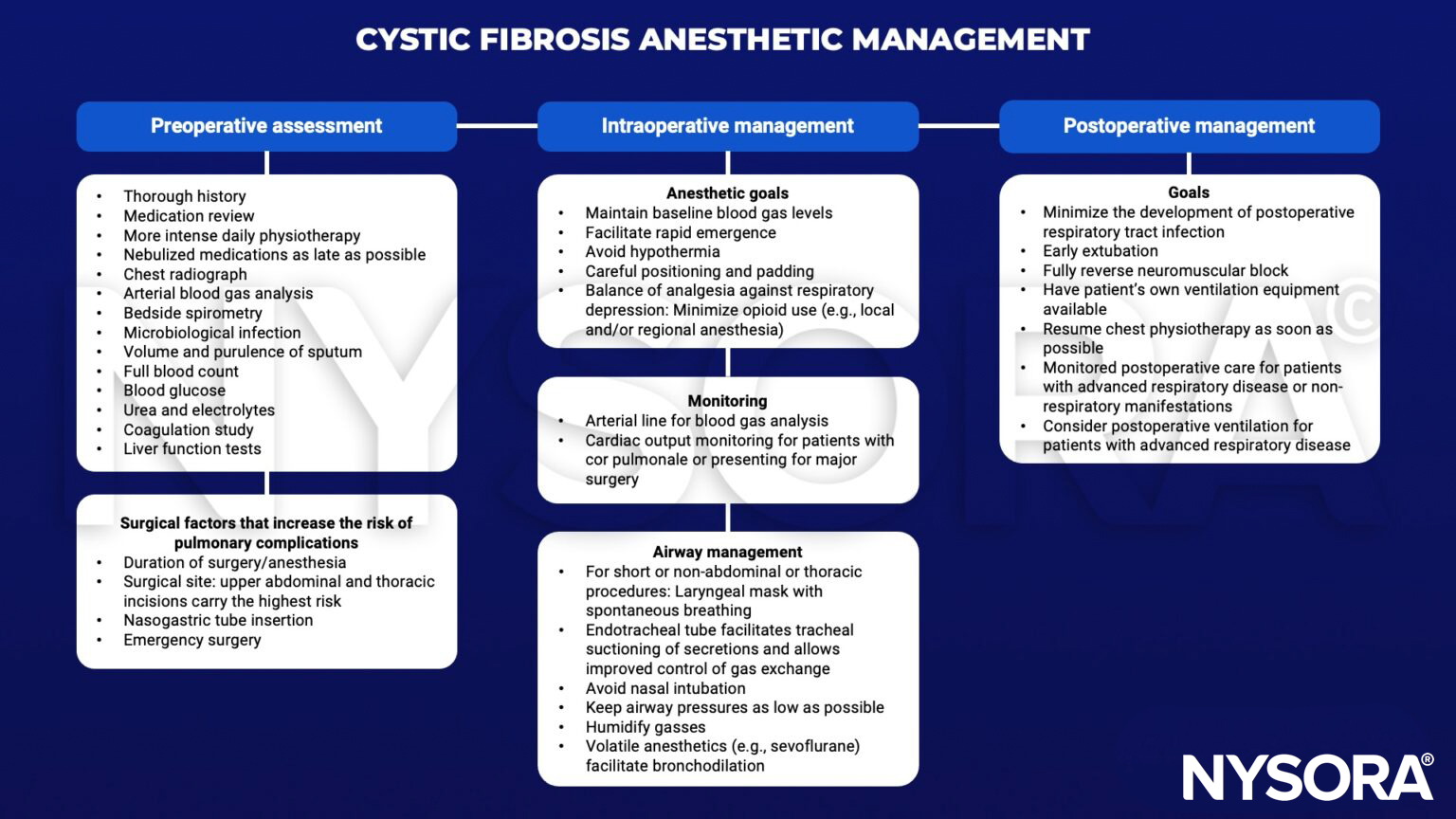
Anesthetic management
Suggested reading
- Fitzgerald M, Ryan D. Cystic fibrosis and anaesthesia. Continuing Education in Anaesthesia Critical Care & Pain. 2011;11(6):204-9.
- Huffmyer JL, Littlewood KE, Nemergut EC. Perioperative Management of the Adult with Cystic Fibrosis. Anesthesia & Analgesia. 2009;109(6).