Pain Medicine Assistant App - NYSORA

Explore NYSORA knowledge base for free:

Back to All Apps
Pain Medicine Assistant

Pain Medicine Assistant

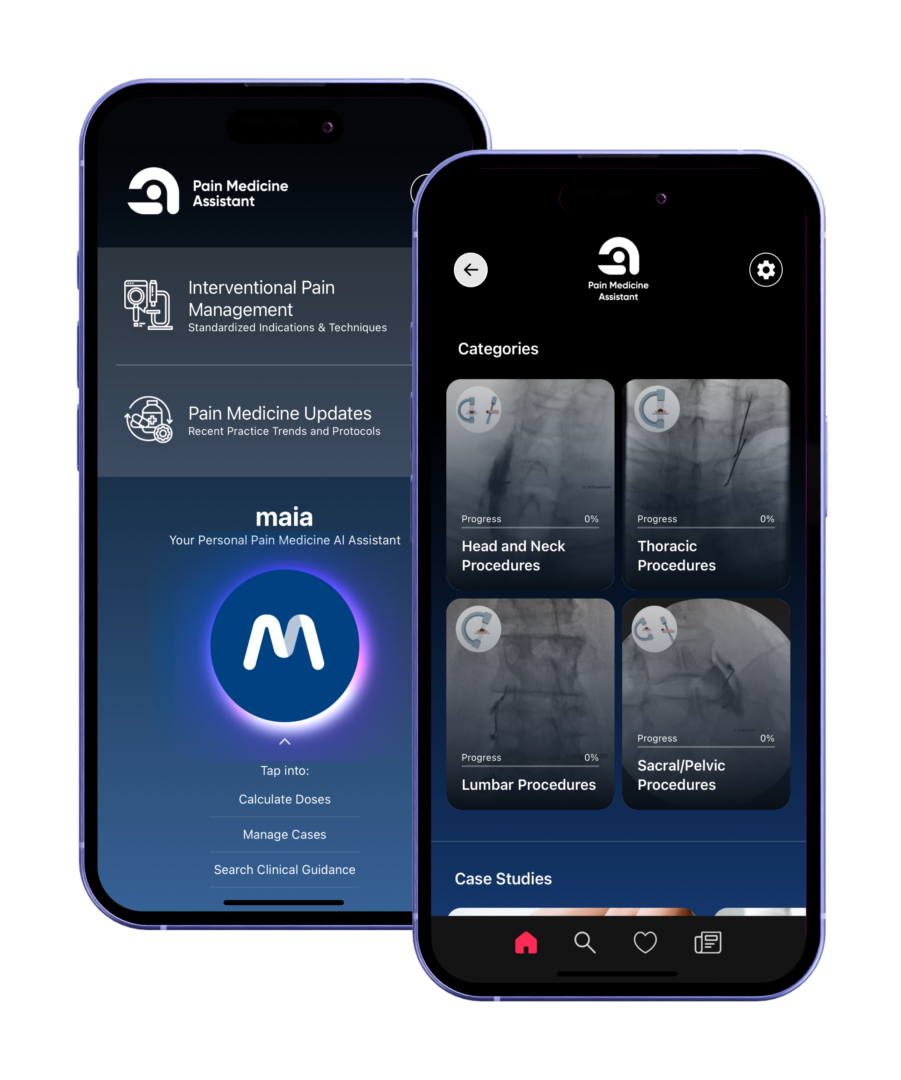
Structured reference for chronic pain procedures, standardized techniques, literature updates, and AI-powered support - right at your fingertips.


Overview

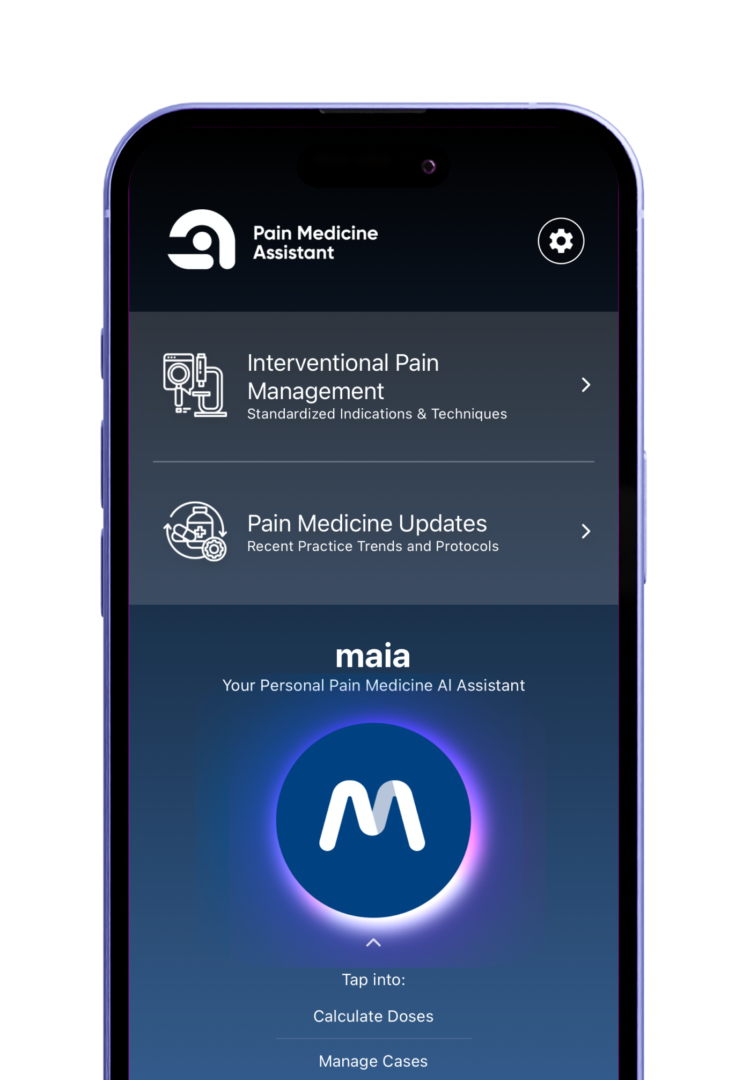
Get step-by-step, visual guidance for interventional pain procedures and stay current with the latest protocols and trends in chronic pain management—curated from high-impact literature and updated regularly. With MAIA, get the answer to all your questions at your fingertips.
01
Step-by-step techniques for fluoroscopy-guided interventional pain procedures.
02
Pain Medicine Updates: Stay current with the latest literature insights.
03
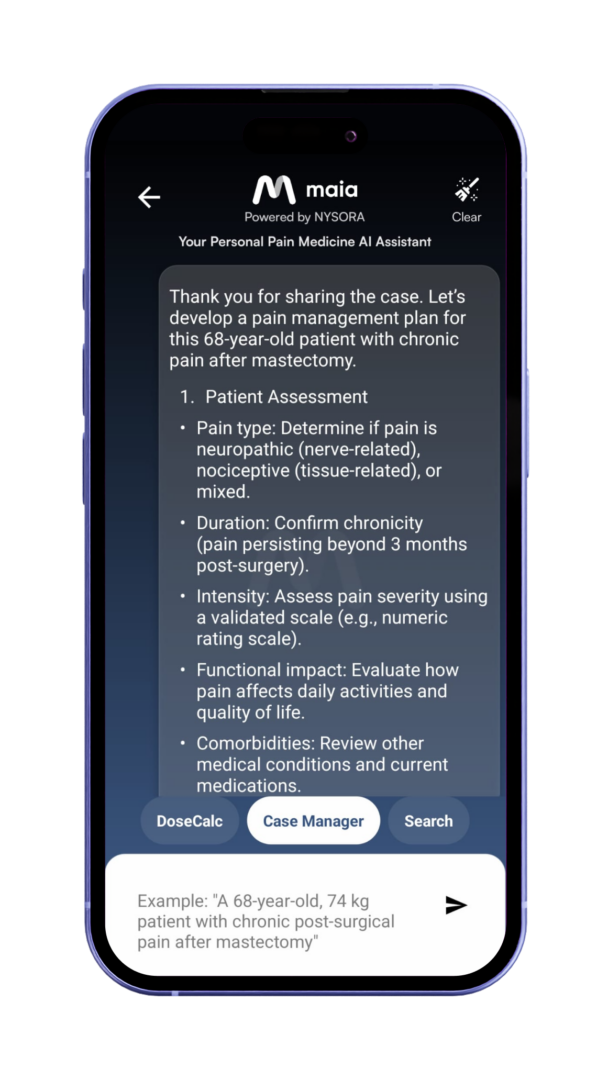
DoseCalc: Enter any medication to instantly get recommended dosing and concentrations based on clinical standards.
04
Case Manager: Enter case details to simulate treatment plans.
05
Search: Type a topic and get focused, evidence-based summaries in seconds - ideal for daily use and learning.
06
Case studies: Apply your knowledge to real-life cases.
01
Step-by-step techniques for fluoroscopy-guided interventional pain procedures
02
Pain Medicine Updates: Stay current with the latest literature insights.
03
DoseCalc: Enter any medication to instantly get recommended dosing and concentrations based on clinical standards.
04
Case Manager: Enter case details to simulate treatment plans.
05
Search: Type a topic and get focused, evidence-based summaries in seconds - ideal for daily use and learning.
06
Case studies: Apply your knowledge to real-life cases.

Discover the Pain Medicine Assistant

Everything you need to learn or teach IV Access

App features

Developed as a quick reference guide with fluoroscopy-guided techniques, literature updates, and AI-assistance, NYSORA's Pain Medicine Assistant is your guide for chronic pain management.
Techniques and updates
Stay up to date with pain medicine updates, distilled from the latest guidelines.
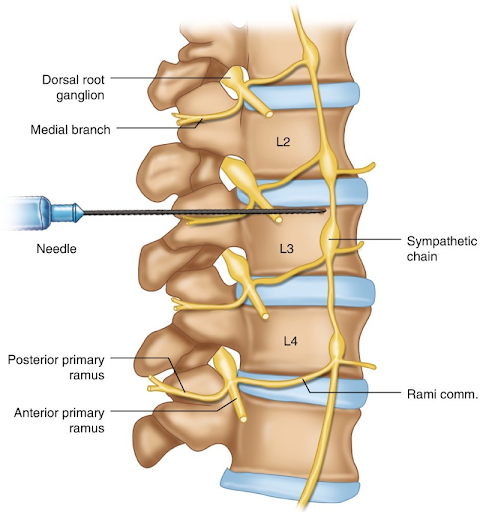
Step-by-step techniques for fluoroscopy-guided chronic pain interventions.
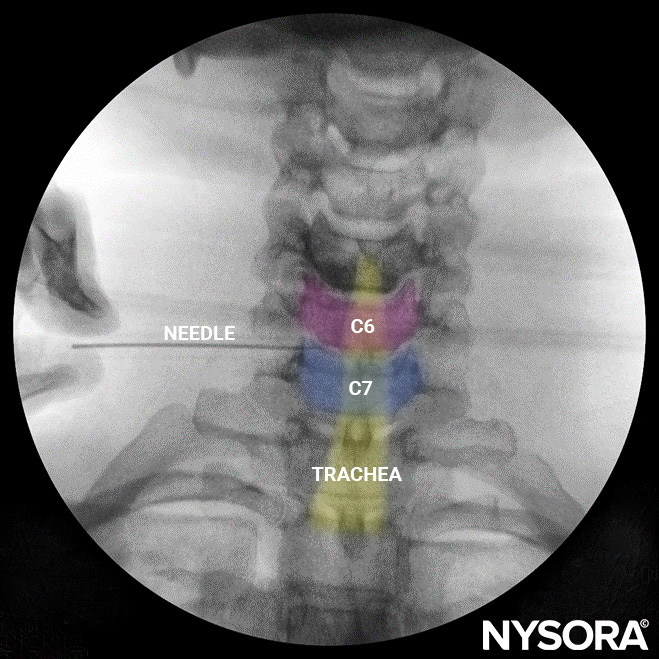
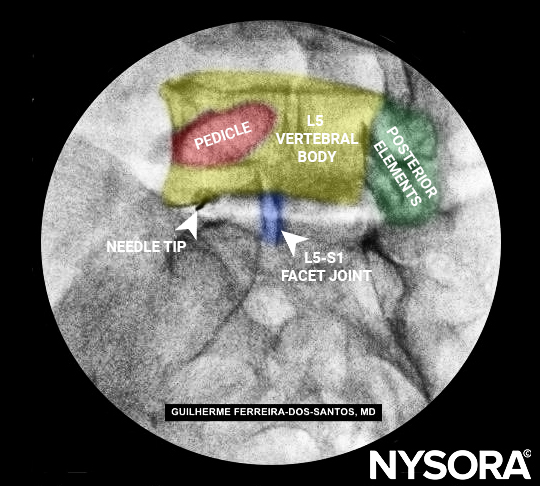
Clinical and fluoroscopic images to guide learning.
Apply knowledge to clinical case studies.
Your Medical AI Assistant (MAIA)
Quickly reference medication doses and administration protocols with DoseCalc.
Enter case details to simulate pain treatment plans using Case Manager.
Benefit from clinician-built, peer reviewed decision support.
Trust MAIA's continuous supervision by NYSORA’s global Educational Board of 50+ pain medicine experts.

Master chronic pain management

Interventional pain procedures, trusted by clinicians worldwide.

Step-by-step guides

From patient positioning to injection.

Stay current

With Pain Medicine Updates.

Assistant in your pocket

MAIA supports clinical decision-making.
Step-by-step guides

From patient positioning to injection.

Stay current

With Pain Medicine Updates.

Assistant in your pocket

MAIA supports clinical decision-making.

Everything in one place.

Easily navigate a well-organized collection of chronic pain procedures, literature updates, and AI-support.
Download Now

Pain Medicine Assistant

The first mobile AI-supported guide for pain medicine. Trusted by pain physicians and students worldwide.

Try It out with

Nerve blocks, neuraxial anesthesia, and pain management procedures trusted by veterinarians worldwide.
Sabina Saljic
Insert Title Here
Admir Hadzic
Insert Title Here
Charles Nyugen
Insert Title Here
Sabina Saljic
Insert Title Here
Admir Hadzic
Insert Title Here
Charles Nyugen
Insert Title Here
Sabina Saljic
Insert Title Here
Admir Hadzic
Insert Title Here
Charles Nyugen
Insert Title Here
Hand-Drawn Illustration

Gallery

Take a closer look inside the Pain Medicine Assistant.

Pain Medicine Assistant in Numbers

Downloads 0 K+
Active users 0 K+
Lessons 0 +

Newest Updates

Newest Updates

Low-volume bupivacaine proves just as effective in continuous adductor canal blocks for total knee arthroplasty

Total knee arthroplasty (TKA) is one of the most commonly performed orthopedic procedures worldwide, with increasing emphasis on enhanced recovery after surgery (ERAS) protocols. Effective postoperative analgesia is crucial to support early mobilization, reduce opioid consumption, and improve patient satisfaction. The adductor canal block (ACB) has become a cornerstone of regional anesthesia in TKA due to its motor-sparing profile and targeted analgesia of the anteromedial knee. In continuous ACB, boluses of local anesthetic are often administered via catheter to extend pain relief. However, there is little consensus on the optimal concentration and volume of local anesthetic for these boluses. This randomized non-inferiority trial, led by Kampitak et al., aimed to determine whether a low-volume, low-concentration bupivacaine bolus could provide pain relief comparable to a higher-volume, higher-concentration alternative. The results carry important implications for minimizing local anesthetic use while maintaining analgesic efficacy in TKA patients. Study objective and methods The study’s primary objective was to assess whether a 10 mL bolus of 0.15% bupivacaine is non-inferior to a 20 mL bolus of 0.25% bupivacaine in managing postoperative pain via continuous adductor canal block in patients undergoing total knee arthroplasty. This was a prospective, randomized, non-inferiority trial conducted at King Chulalongkorn Memorial Hospital in Bangkok, Thailand. The study enrolled 140 adult patients scheduled for primary unilateral TKA under spinal anesthesia, all of whom received multimodal analgesia including: Continuous adductor canal block with 0.15% bupivacaine at 5 mL/hour. Intraoperative local infiltration analgesia. A single-shot iPACK (interspace between the popliteal artery and capsule of the knee) block. Participants were randomized into two groups: 20/0.25 group: Received a 20 mL bolus of 0.25% bupivacaine. 10/0.15 group: Received a 10 mL bolus of 0.15% bupivacaine. The bolus was administered at the end of surgery through the catheter. Pain scores were assessed using an 11-point numeric rating […]

Read more

Assessing erector spinae plane blocks for improved recovery in adolescent spinal fusion surgery

Adolescent idiopathic scoliosis (AIS) is a condition affecting 1-3% of adolescents aged 10-16, characterized by a curvature of the spine with no identifiable cause. For most patients, this condition remains mild and manageable, but in severe cases, surgical intervention through posterior spinal fusion (PSF) becomes necessary. Effective pain management following PSF is crucial to ensuring a smooth recovery and enhancing patient outcomes. Currently, multimodal analgesia, which involves combining various pain relief methods, is the standard approach. However, the role of advanced regional anesthesia techniques, such as the erector spinae plane block (ESPB), remains under-explored in pediatric populations. The ESPB is a novel regional anesthesia technique that involves injecting a local anesthetic near the spine to block pain transmission effectively. This technique has shown promising results in managing pain in adult spine surgeries and some pediatric procedures. However, its use in pediatric patients undergoing PSF for AIS has been limited. This study aimed to evaluate the practicality and effectiveness of integrating ESPB into a rapid recovery pathway for pediatric patients following PSF. Study objective and methods This prospective, randomized controlled trial enrolled 24 patients aged 10-19 years, all of whom were undergoing multilevel PSF for AIS correction. Patients were excluded if they had chronic pain conditions requiring neuromodulating medications, neuromuscular scoliosis, a history of chronic opioid therapy, or allergies/contraindications to the study medications or techniques.  Participants were randomly assigned to two groups: one group of 12 patients received bilateral ESPB before the surgical incision, while the other 12 patients served as the control group and did not receive ESPB. ESPBs were administered using ultrasound guidance to inject a mixture of 0.25% bupivacaine and dexamethasone near the T7 vertebrae. Patients were evaluated at multiple time points for pain scores, satisfaction, and opioid consumption (oral morphine equivalents) during their hospital stay. The primary […]

Read more

Low-volume bupivacaine proves just as effective in continuous adductor canal blocks for total knee arthroplasty

Total knee arthroplasty (TKA) is one of the most commonly performed orthopedic procedures worldwide, with increasing emphasis on enhanced recovery after surgery (ERAS) protocols. Effective postoperative analgesia is crucial to support early mobilization, reduce opioid consumption, and improve patient satisfaction. The adductor canal block (ACB) has become a cornerstone of regional anesthesia in TKA due to its motor-sparing profile and targeted analgesia of the anteromedial knee. In continuous ACB, boluses of local anesthetic are often administered via catheter to extend pain relief. However, there is little consensus on the optimal concentration and volume of local anesthetic for these boluses. This randomized non-inferiority trial, led by Kampitak et al., aimed to determine whether a low-volume, low-concentration bupivacaine bolus could provide pain relief comparable to a higher-volume, higher-concentration alternative. The results carry important implications for minimizing local anesthetic use while maintaining analgesic efficacy in TKA patients. Study objective and methods The study’s primary objective was to assess whether a 10 mL bolus of 0.15% bupivacaine is non-inferior to a 20 mL bolus of 0.25% bupivacaine in managing postoperative pain via continuous adductor canal block in patients undergoing total knee arthroplasty. This was a prospective, randomized, non-inferiority trial conducted at King Chulalongkorn Memorial Hospital in Bangkok, Thailand. The study enrolled 140 adult patients scheduled for primary unilateral TKA under spinal anesthesia, all of whom received multimodal analgesia including: Continuous adductor canal block with 0.15% bupivacaine at 5 mL/hour. Intraoperative local infiltration analgesia. A single-shot iPACK (interspace between the popliteal artery and capsule of the knee) block. Participants were randomized into two groups: 20/0.25 group: Received a 20 mL bolus of 0.25% bupivacaine. 10/0.15 group: Received a 10 mL bolus of 0.15% bupivacaine. The bolus was administered at the end of surgery through the catheter. Pain scores were assessed using an 11-point numeric rating […]

Read more

Assessing erector spinae plane blocks for improved recovery in adolescent spinal fusion surgery

Adolescent idiopathic scoliosis (AIS) is a condition affecting 1-3% of adolescents aged 10-16, characterized by a curvature of the spine with no identifiable cause. For most patients, this condition remains mild and manageable, but in severe cases, surgical intervention through posterior spinal fusion (PSF) becomes necessary. Effective pain management following PSF is crucial to ensuring a smooth recovery and enhancing patient outcomes. Currently, multimodal analgesia, which involves combining various pain relief methods, is the standard approach. However, the role of advanced regional anesthesia techniques, such as the erector spinae plane block (ESPB), remains under-explored in pediatric populations. The ESPB is a novel regional anesthesia technique that involves injecting a local anesthetic near the spine to block pain transmission effectively. This technique has shown promising results in managing pain in adult spine surgeries and some pediatric procedures. However, its use in pediatric patients undergoing PSF for AIS has been limited. This study aimed to evaluate the practicality and effectiveness of integrating ESPB into a rapid recovery pathway for pediatric patients following PSF. Study objective and methods This prospective, randomized controlled trial enrolled 24 patients aged 10-19 years, all of whom were undergoing multilevel PSF for AIS correction. Patients were excluded if they had chronic pain conditions requiring neuromodulating medications, neuromuscular scoliosis, a history of chronic opioid therapy, or allergies/contraindications to the study medications or techniques.  Participants were randomly assigned to two groups: one group of 12 patients received bilateral ESPB before the surgical incision, while the other 12 patients served as the control group and did not receive ESPB. ESPBs were administered using ultrasound guidance to inject a mixture of 0.25% bupivacaine and dexamethasone near the T7 vertebrae. Patients were evaluated at multiple time points for pain scores, satisfaction, and opioid consumption (oral morphine equivalents) during their hospital stay. The primary […]

Read more

PR Articles

PR Articles

Title Goes Here

Lorem ipsum, dolor sit amet consectetur adipisicing elit. Aliquam, esse quam exercitationem veniam placeat, minima fugiat modi harum laudantium distinctio quos fugit a itaque laboriosam consequatur unde magni, saepe vitae?

Read More

Title Goes Here

Lorem ipsum, dolor sit amet consectetur adipisicing elit. Aliquam, esse quam exercitationem veniam placeat, minima fugiat modi harum laudantium distinctio quos fugit a itaque laboriosam consequatur unde magni, saepe vitae?

Read More

Testimonials

Dr. Maria S.
The Pain Medicine Assistant is my go-to tool for fluoroscopy-guided injections. Clear steps, practical images, and easy navigation—it saves me time and helps me stay consistent in my approach.!
Dr. James L.
Having access to both procedure guides and drug dosage calculations in one app is a game-changer. The Case Manager feature is particularly useful when planning complex cases.
PM&R specialist
No fluff, no endless scrolling. Just clear techniques, organized well. MAIA is actually useful—especially the Case Manager when planning full injection days.
Download Now

Pain Medicine Assistant

The first mobile AI-supported guide for pain medicine. Trusted by pain physicians and students worldwide.

Frequently Asked Questions

Common questions about our app.

The NYSORA Pain Medicine Assistant App is a comprehensive, mobile-friendly resource designed to help pain professionals perform and review interventional pain management procedures. It provides step-by-step techniques, high-resolution fluoroscopic images, and expert clinical pearls to improve procedural accuracy and patient outcomes.

The app is ideal for pain management specialists, pain residents, and other healthcare professionals involved in interventional pain management.

The app includes:

  • High-resolution fluoroscopic images
  • Step-by-step procedural guides for pain management
  • Clinical tips from experts
  • Fluoroscopic interventions for chronic pain conditions
  • Clinical case studies

The NYSORA Pain Medicine Assistant App provides on-the-go access to expertly-curated techniques, helping you:

  • Perform precise and effective interventional pain procedures
  • Improve patient safety and comfort
  • Reduce procedural time and improve confidence in fluoroscopic imaging techniques
  • Stay updated on best practices for pain management

Absolutely. The app is designed as a real-time reference tool, providing structured guidance that can be used at the point of care.

Download the NYSORA Pain Medicine Assistant App from your preferred app store, create an account, and explore the free content. For extended features, subscribe to unlock the full library and advanced tools.

The app covers:

  • Fluoroscopy-guided injections
  • Epidural steroid injections
  • Facet joint injections
  • Radiofrequency ablation techniques
  • Advanced interventional pain management techniques

The app can be used in multiple ways:

  1. Refresher before the case – Quickly refresh your knowledge before performing a fluoroscopy-guided pain procedure.
  2. Exam preparation – Study the standardized techniques for the FIPP exam.
  3. Live guidance – Follow step-by-step instructions during the procedure.

It’s a mobile-friendly reference tool offering:

  • Step-by-step instructions for fluoroscopy-guided pain procedures
  • High-quality fluoroscopic images
  • The single best resource for preparing for the FIPP examination
  • Evidence-based best practices for over 20 interventional pain management techniques

The NYSORA Pain Medicine Assistant App is developed by NYSORA’s team of experts. The content is rigorously reviewed and updated to provide evidence-based, clinically relevant information trusted by pain specialists worldwide.

From Fundamentals to Advanced Joint Interventions with Live Demonstrations Join us at the Hong Kong Pain Conference in May 2026!

X

Spots are limited for NYSORA’s Boutique Workshop in Toronto, join our focused, hands-on training!

X